
Direct Support Deposited Directly into Your Bank Account Every Month: Income Preservation & Tax Reductions
This is a main text draft written in a friendly, engaging tone using dividing lines, bold emphasis, key summary boxes, and tables to optimize readability for Naver blog readers.
- Direct Support Deposited Directly into Your Bank Account Every Month: Income Preservation & Tax Reductions
When regular salary payments stop after retirement, the very first thing you feel is the heavy weight of monthly living expenses. However, the government has established a solid safety net that provides monthly cash benefits or eases essential tax expenditures to stabilize retirement income for seniors aged 65 and older.
If you do not apply, you could miss out on rights worth hundreds of thousands of won each month, so here is a summary of the 3 key income support programs you must check without fail.
① Basic Pension: A Dependable Monthly Salary Received by 7 Out of 10 Seniors
The basic pension is a flagship income preservation program paid monthly to seniors aged 65 and older whose recognized income falls within the lower 70% bracket.
- Eligibility Age: Republic of Korea nationals aged 65 or older
- Payment Date: 25th of every month (deposited the previous day if it falls on a holiday)
- Payment Amount: Up to approximately 330,000–340,000 KRW per month (based on single-person households, adjusted annually reflecting inflation)
💡 Beware of Couple Deductions and National Pension-Linked Reductions!
- Couple Deduction: When both spouses receive the basic pension, each benefit is reduced by 20% from the single-person household standard rate.
- National Pension-Linked Reduction: If the National Pension receipt amount exceeds 150% of the basic pension standard amount, the basic pension may be partially reduced.
- How to Apply: You can apply at the Administrative Welfare Center (community service center) of your residential address, a branch office of the National Pension Service, or online at ‘Bokjiro’, starting 1 month before the month of your 65th birthday.
② Housing Pension (Reverse Mortgage): Receiving a Monthly Pension While Continuing to Live in Your Own Home
This is the most suitable alternative for those who own a home but lack immediate cash flow after retirement. Because it is backed by the government (Korea Housing Finance Corporation), lifelong pension payments are guaranteed.
| Category | Key Details |
|---|---|
| Enrollment Age | At least one spouse aged 55 or older |
| Eligible Housing | Houses and residential officetels with a publicly announced price of 1.2 billion KRW or less |
| Advantages | Lifelong residence in your home, lifelong fixed-amount payments until both spouses pass away |
| Settlement Method | Settled by disposing of the home after both spouses pass away (surplus balance inherited by children, no claims even if funds fall short) |
If you lack fixed monthly living expenses, this can serve as a practical pipeline that generates your own cash flow without burdening your children.
③ Tailored Tax Reductions & Deduction Benefits for Seniors
Just as important as increasing income is saving on ‘outgoing taxes.’ Representative tax benefits available to seniors aged 65 and older include the following:
- Senior Citizen Property Tax & Comprehensive Real Estate Tax Deductions:
- For single-household single-home owners, tax credits by age and holding period apply, significantly lowering the Comprehensive Real Estate Tax burden by up to 80%.
- Year-End Tax Settlement / Comprehensive Income Tax Senior Citizen Additional Deduction:
- If a senior aged 70 or older is among the family members eligible for basic deductions, an additional deduction of 1 million KRW per year per person applies.
- Eligibility for Tax-Free Comprehensive Savings:
- Residents aged 65 and older can open a ‘Tax-Free Comprehensive Savings’ account, completely exempting taxes (15.4%) on interest income and dividend income up to a principal limit of 50 million KRW per person.
📌 Blogger’s One-Line Summary
By covering basic living costs with the basic pension and combining it with a housing pension and tax-exempt accounts depending on your asset situation, you can build a secure ‘salary account’ that never runs dry even after retirement!

Top Priority Defense Against Post-Retirement Expenses: Medical Expenses & Healthcare Welfare
This is a draft designed for Naver blog readers to grasp at a glance and bookmark, easily organizing key figures, eligibility criteria, savings tips, and tables.
- Top Priority Defense Against Post-Retirement Expenses: Medical Expenses & Healthcare Welfare
In retirement life, the most unpredictable item that requires a large lump sum at once is hospital bills. In fact, medical expenses are ranked as the number one cause of household financial collapse in old age.
Fortunately, national health insurance and local government support programs offer a variety of substantial medical expense reduction systems for seniors aged 65 and older. Be sure to keep in mind these four essential senior medical benefits that can reduce your treatment cost burden by millions of won or more.
① Dental Implants & Dentures Support for Ages 65 and Older: 2 in a Lifetime, Only 30% Copayment
Dental health is directly linked to meals and significantly affects the quality of life in old age, but non-covered treatments easily exceed 1 million to 1.5 million won per tooth, creating a heavy burden. However, receiving National Health Insurance coverage significantly reduces this burden.
- Eligible Recipients: National Health Insurance subscribers or dependents aged 65 and older
- Copayment Rate: 30% based on regular National Health Insurance subscribers (5–20% level for Near-Poverty and Medical Aid recipients)
- Dental Implant Support Limit: 2 per person in a lifetime (for partially edentulous patients; applies only if at least one natural tooth remains)
- Denture Support Limit: Once every 7 years (benefits apply to both full dentures and partial dentures)
💡 Checkpoint Before Dental Treatment
Once registered for health insurance-covered implants, it is difficult to change (transfer to another) dental clinic during treatment. It is important to carefully choose and register with a clinic that provides meticulous follow-up care and has extensive experience right from the start.
② Free Local Government Vaccinations: From Pneumococcal & Flu to Shingles
In old age when immunity easily weakens, keeping up with vaccinations alone can prevent major illnesses in advance.
- Influenza (Flu) & Pneumococcal (23-valent polysaccharide):
- Seniors aged 65 and older can get vaccinated completely free of charge at designated entrusted medical institutions and public health centers nationwide.
- Free (or Discounted) Shingles Vaccination:
- While not a mandatory national vaccination item, local governments (city, county, and district public health centers) providing free vaccinations or subsidizing part of the medication costs for residents aged 65 and older according to local ordinances are increasing significantly.
- Since it costs around 150,000 to 200,000 won at general hospitals, be sure to first check eligibility on the jurisdiction public health center website or via telephone inquiry.
③ Knee Artificial Joint & Senior Eye Disease (Cataracts, etc.) Surgery Cost Support
This is a national foundation support project for low-income seniors who have difficulty walking due to degenerative arthritis or suffer from reduced vision due to cataracts and retinal diseases, yet hesitate to seek treatment due to financial burdens.
| Category | Knee Artificial Joint Surgery Cost Support | Low-Income Senior Eye Disease Surgery Cost Support |
|---|---|---|
| Supervising Organization | Ministry of Health and Welfare / Senior Medical Sharing Foundation | Ministry of Health and Welfare / Korean Foundation for the Prevention of Blindness |
| Target Age | Ages 60 and older | Ages 60 and older |
| Income Criteria | Basic Livelihood Security recipients, Near-Poverty class, single-parent families, etc. | Basic Livelihood Security recipients, Near-Poverty class, single-parent families, etc. |
| Support Scope | Examination fees, treatment fees, and surgery costs (up to 1.2 million won per knee, limit of 2.4 million won for both knees) | Full copayment amount for prior examinations and surgery costs for cataracts, glaucoma, retinal diseases, etc. |
- Application Caution: You must apply and receive approval through the public health center in your registered residential area before surgery (prior to hospitalization) to receive support. It cannot be applied retroactively after completing surgery and being discharged.
④ Long-Term Care Insurance for the Elderly: Easing Caregiving & Care Burden
This system serves as the most dependable support when mobility becomes impaired or when geriatric diseases such as dementia and cerebrovascular diseases strike.
- Eligibility: Seniors aged 65 and older, or individuals under age 65 suffering from geriatric diseases such as dementia, cerebral hemorrhage, and Parkinson’s disease
- Grade Certification: Levels 1–5 and Cognitive Support Level granted through the National Health Insurance Service home visit investigation and Grade Determination Committee
- Key Benefits:
- In-Home Care Benefits (15% copayment): Home care where caregivers visit homes to assist with bathing, housekeeping, and daily life; day and night care center usage
- Facility Care Benefits (20% copayment): Subsidies for admission costs to elderly medical welfare facilities such as nursing homes
- Welfare Equipment Support: Affordable rental or purchase support within an annual limit of 1.6 million won for electric beds, wheelchairs, adult walkers, safety grab bars, etc.
📌 Blogger’s One-Line Summary
Trying to resolve hospital bills after they occur is too late. Secure regular benefits such as dental implants and vaccines as soon as you turn 65, and take note of the ‘advance application’ requirements for welfare such as surgery support and long-term care in advance to ease your family’s caregiving burden!

Trimming Monthly Fixed Expenses: Housing & Living Reduction Programs
This is a main text draft neatly organized with tables and callout boxes covering practical reduction amounts, eligible qualifications, application channels, and precautions so that Naver blog readers can bookmark it and immediately call telecommunications carriers or community service centers to apply.
- Trimming Monthly Fixed Expenses: Housing & Living Reduction Programs
‘Monthly fixed expenses’ that go out just by breathing feel especially heavier in the face of reduced income after retirement. Because telecommunications costs, electricity bills, gas bills, and public transportation fees are billed regularly every month, they often become the main culprits eating away at retirement bank accounts like a slow drizzle soaking clothes.
The government and local governments run various public utility and living cost reduction benefits to reduce living expenses for senior households. Here is a summary of 4 key fixed-cost reduction items that are deducted from bills immediately only if you apply directly.
① Telecommunications Cost Reduction: Up to 12,100 KRW Monthly Discount for Basic Pension Beneficiaries
Through senior welfare discounts, smartphone telecommunications rates can also save approximately 140,000 KRW or more per year.
- Eligible Recipients: Basic pension beneficiaries aged 65 or older
- Reduction Benefits:
- 50% reduction on the sum of basic fee and calling charges (up to a monthly limit of 12,100 KRW)
- If you use a rate plan with a monthly billed fee of 22,000 KRW (24,200 KRW including VAT) or more, up to 12,100 KRW is automatically deducted every month.
- How to Apply:
- Customer service center of your current telecommunications provider (114 without area code from a mobile phone) or nearby agency
- Government24 online application or visit your jurisdictional community service center
- Precautions:
- Budget phone (MVNO) rate plans with already inexpensive basic fees are mostly excluded from welfare discounts, so verification is necessary when using the three major mobile carriers (SKT, KT, LGU+).
② Utility Bill (Electricity, Gas, Heating) Reductions & Energy Vouchers
If you worry about cooling and heating bill spikes each season, you must check into housing utility bill reduction programs.
| Category | Key Support Details | Application & Inquiries |
|---|---|---|
| Electricity Bill Reduction | In addition to Basic Livelihood Security recipients, near-poverty class, and large families/childbirth households, fee reductions for vulnerable senior households (expanded limits during summer/winter seasons) | Korea Electric Power Corporation (KEPCO) Customer Center (123 without area code) |
| City Gas & District Heating Reduction | Monthly fixed-amount fee reductions for cooking and heating targeting vulnerable senior households (intensive reductions in winter season) | Jurisdictional city gas company / Korea District Heating Corporation |
| Energy Voucher | Issuance of vouchers to pay for electricity, gas, briquettes, etc., to households meeting income criteria (livelihood, medical, housing, or educational benefit recipients) and household member characteristics (including seniors aged 65 or older) | Administrative welfare center of your residential area / Energy Voucher website |
💡 Tip for Utilizing Bokjiro ‘Welfare Membership’
Applying for utility fee reductions across multiple institutions one by one can be cumbersome. When visiting your jurisdictional administrative welfare center, stating “I came to apply for package utility fee reductions” allows you to apply for reductions across electricity, gas, and TV license fees all at once in an integrated manner.
③ Public Transportation Welfare: Free Subway Rides & Senior Bus Fare Support
Transportation expenses incurred when going out are an essential factor in social activities and maintaining health.
- Free Subway Rides:
- Seniors aged 65 or older can use urban rail transit (subways) in the Seoul Metropolitan Area and nationwide 100% free of charge. (Issue a preferential transportation card at a community service center or designated bank with your ID card)
- Senior Bus Fare Free/Support Project (Varies by local government):
- Local governments that fully support city bus and town shuttle bus (maeul bus) fares or refund them on a quarterly basis are gradually expanding beyond just subways.
- Example: Checking with the transportation department of your jurisdictional city, county, or district office is essential, as bus fares are refunded and subsidized in the form of free transportation cards or vouchers in Daegu, Chungnam, Jeju, and some cities and counties in Gyeonggi-do.
- Linkage with K-Pass:
- If you regularly use public transportation 15 times or more per month, you can save frugally by combining K-Pass, which refunds a certain percentage of public transit expenses (regular 20%, low-income households up to 53.3%).
④ Senior Citizen Preferential Discounts on Rail, Air, Coastal Passenger Ships, and Cultural Facilities
Statutory discounts also apply to long-distance transportation and cultural facilities used during leisure time or family visits after retirement.
- KTX & SRT: 30% discount on weekday (Mon–Fri) fares (excluding weekends and public holidays)
- Saemaeul & Mugunghwa: 30% regular discount at all times with no day-of-the-week restrictions
- Domestic Flights: 10% discount on domestic airfare with major airlines such as Korean Air and Asiana Airlines (excluding certain conditions such as peak seasons)
- Coastal Passenger Ships: 20% discount on domestic passenger ship fares
- National & Public Cultural Facilities: 100% free admission to historic palaces, royal tombs, national museums, the National Museum of Modern and Contemporary Art, and national/public parks
📌 Blogger’s One-Line Summary
Combining monthly telecommunications savings of 12,100 KRW, 30% off KTX, and public utility bill reductions makes it easy to save at least 500,000 to 1,000,000 KRW or more in fixed expenses per year. Starting tomorrow, reclaim your hidden benefits right away by calling your telecom carrier at 114 and visiting your community service center!
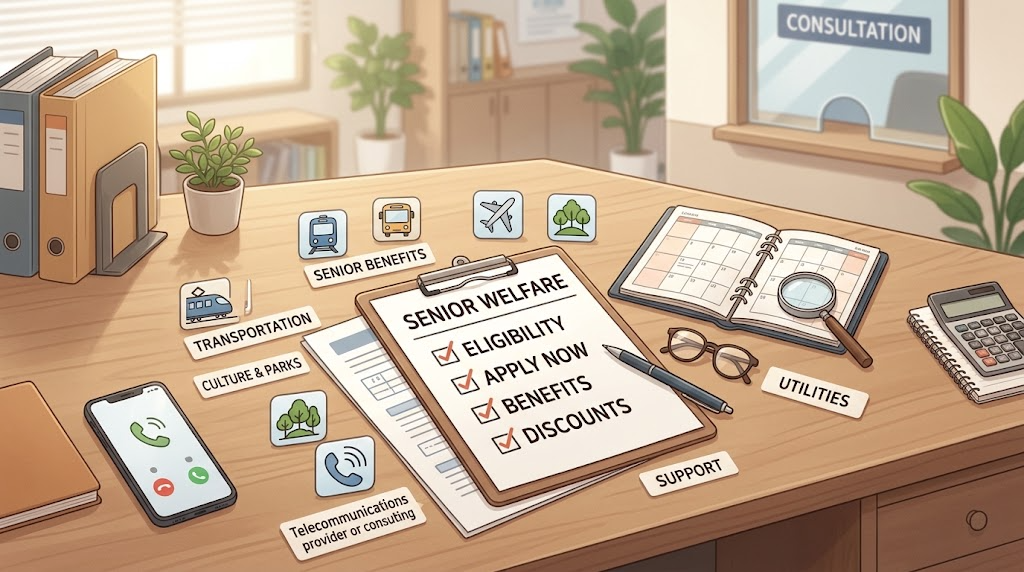
Vibrant Daily Life and Re-Employment: Senior Employment & Social Activity Support
The most bewildering change after retirement is not only the reduction in bank account balances, but also the sense of loss stemming from ‘the absence of a place to go and things to do every morning.’
The government’s Senior Employment and Social Activity Support Project serves as a core safety net that maintains social networks and protects physical and mental health beyond simple income assistance. In particular, the options are diversified and categorized according to retirees’ health status, past careers, and desired working hours.
Here is a summary of 3 representative job types worth considering to match your lifestyle and application know-how.
① Comparison of 3 Major Job Types Tailored to Physical Fitness and Career Experience
Government-supported senior jobs are broadly divided into Public Interest Activity, Social Service, and Private/Market-Oriented types.
| Category | Public Interest Activity (Volunteer Type) | Social Service (Professional Type) | Market-Oriented / Employment Placement Type |
|---|---|---|---|
| Participating Age | Basic pension recipients aged 65 and older | Aged 65 and older (aged 60 and older for some projects) | Aged 60 and older |
| Key Duties | School zone traffic safety guidanceThe representative welfare program that relieves the emptiness arriving after retirement and provides economic help and social solidarity at the same time is precisely **’Senior Employment and Social Activity Support Projects.’** Here is a summary of the key types and application methods that help you design a vibrant second act in life beyond simple pastime chores. |
- 4 Senior Job Types That Fit Me
The project is broadly divided into four types depending on participants’ age, health status, and job career.
- Public Type (Public Interest Activities)
- Target: Basic pension recipients aged 65 and older
- Key Activities: Activities promoting public interest such as school zone traffic guidance, park environmental cleanup, checking on seniors living alone (No-No Care), etc.
- Work Hours / Activity Allowance: Payment of an activity allowance of around 290,000 KRW for 30 hours of activity per month (3 hours per day)
- Social Service Type
- Target: Aged 65 and older (some types available from age 60 and older)
- Key Activities: Fields utilizing specialized knowledge or social experience such as child care facility assistant teachers, disability welfare facility assistance, administrative work support for public institutions, etc.
- Work Hours / Activity Allowance: Working 15 hours per week (60 hours per month), salary in the mid-700,000 KRW range per month including weekly holiday allowances, and coverage by 4 major social insurances
- Market-Oriented Business Group
- Target: Aged 60 and older
- Key Activities: Operating small-scale shops such as silver cafe baristas, joint workshops (shopping bag manufacturing, food processing), parcel and delivery services
- Work Hours / Activity Allowance: Monthly salary distributed differentially based on business group profits
- Employment Placement Type
- Target: Aged 60 and older
- Key Activities: Connecting job seekers with private enterprises for positions such as apartment security guards, cleaners, facility managers, domestic helpers, etc.
- Work Hours / Activity Allowance: Salary received based on the enterprise with which the employment contract is signed
- Application Period and Essential Eligibility Requirements
- Intensive Recruitment Period: Trainees and participants for the upcoming year are recruited intensively between late November and mid-December each year. (However, ongoing rolling recruitment is conducted throughout the year when mid-course dropouts occur)
- Participation Restriction Criteria:
- Livelihood benefit recipients under the National Basic Living Security Act (medical, housing, and education benefit recipients can participate)
- Individuals already participating in 2 or more other financially supported job programs promoted by the government or local governments
- National Health Insurance workplace-insured individuals (excluding certain exceptions such as the employment placement type)
- Individuals determined to have a long-term care insurance grade (Levels 1–5, Cognitive Support Level)
- Application Method and Selection Process
- Online Submission:
- Seniorro (www.seniorro.or.kr): Search your residential area to check eligible business groups and apply for participation
- Bokjiro (www.bokjiro.go.kr) or Government24: Online civil service application
- In-Person Submission:
- Jurisdictional administrative welfare center (community service center) of your resident registration address
- Directly visit designated operating organizations such as senior clubs, Korea Senior Citizens Association branch offices, senior welfare centers, etc.
- Selection Criteria:
- Selection in order of top scores after qualification verification (income, age, health status) through computer networks
- Must bring ID card, resident registration certificate copy, and copies of relevant licenses/certificates (if applicable) when submitting documents
Shall we explore the required application documents and how to find operating organizations step by step in more detail?
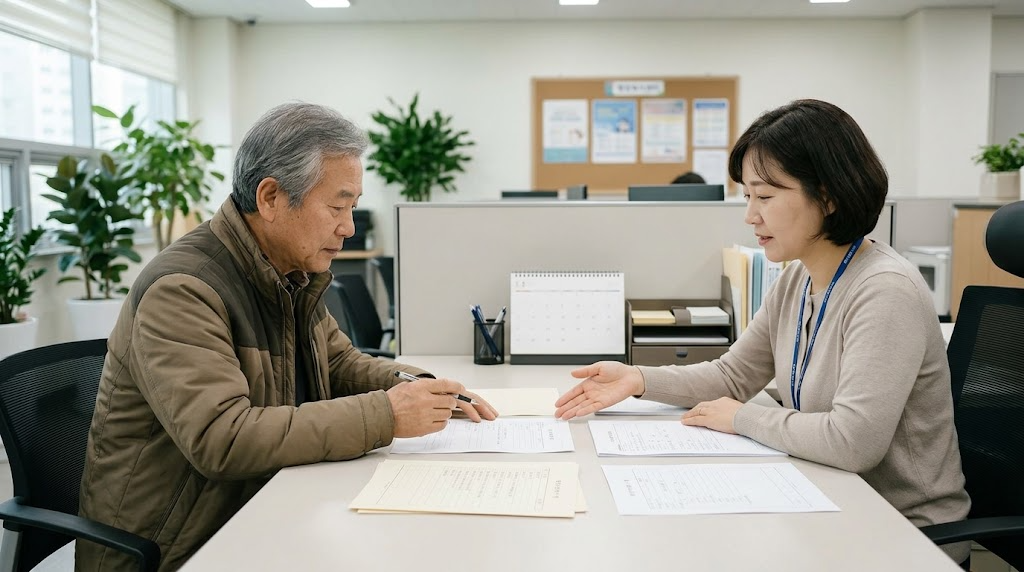
Practical Tips to Check at a Glance and Apply Immediately
No matter how excellent a government support system is, “they will not find even a single won for you unless you apply” is the principle of welfare administration.
To prevent giving up halfway due to complicated documents and application procedures, here is a summary of key know-how for completing applications fastest and most accurately both online and offline.
① Enrolling in Bokjiro’s ‘Welfare Membership (Customized Benefit Guidance)’
This is a core service where the system finds welfare benefits you can receive and sends notification text messages without the need to search for them one by one.
- What is Welfare Membership?
- A system where the system periodically analyzes age, number of household members, and income/asset information of individuals or households to proactively notify welfare programs with a high likelihood of eligibility via text message or KakaoTalk.
- Application Method:
- Online: Access ‘Bokjiro (bokjiro.go.kr)’ and log in with identity verification → Click [Apply for Welfare Membership] at the top of the screen (enrollment completed within 5 minutes)
- In Person: Fill out a Welfare Membership enrollment application form at the welfare counter of the administrative welfare center (community service center) having jurisdiction over your residential address
② Checking and Applying at Once via Government24 ‘Subsidy24’
An integrated portal where you can check hundreds of senior benefits provided by central government ministries, local governments, and public agencies on a single screen.
- Login: Access the Government24 (gov.kr) website or mobile app, then log in using simple authentication (KakaoTalk, PASS, etc.)
- Access Subsidy24: Click the [Subsidy24] menu on the main screen
- Check Customized Benefits:
- [Benefits Being Received]: Check welfare details currently being supported for your household
- [Benefits Eligible for Application]: Check the list of local government and state benefits that you can apply for immediately by meeting eligibility requirements
- [Benefits Requiring Verification]: Categorized items requiring additional income verification or document review
③ One-Stop Application Know-How When Visiting Administrative Welfare Centers (Community Service Centers)
If using online certificates or smartphone apps is inconvenient, visiting your residential administrative welfare center is the most reliable option. Keep the following preparation checklist and talking points in mind to avoid unnecessary trips.
| 구분 | 필수 준비 사항 및 행동 요령 |
|---|---|
| 필수 지참 서류 | 본인 신분증, 본인 명의 통장 사본 (기초연금 등 수급 계좌 등록용) |
| 추가 구비 서류 (해당자) | 전·월세 거주 시 임대차계약서, 의료비/장기요양 관련 시 진단서 및 의사소견서 |
| 창구 전달 핵심 멘트 | “기초연금 신청과 함께 공공요금(전기·가스·통신비) 일괄 감면 등록도 같이 해주세요.” |
💡 Public Utility Batch Reduction Tip
Once you are determined as a basic pension recipient, there is no need to call KEPCO or telecommunications carriers individually; submitting just one integrated reduction application at the community service center counter automatically links and processes reductions for electricity, city gas, and telecommunications costs.
④ Precautions When Applying on Behalf of Parents (Proxy Application Checklist)
When adult children apply on behalf of elderly parents, family relationship verification and proxy authorization procedures are mandatory.
- Scope of Eligible Proxies: Spouse, blood relatives within the 8th degree of kinship, relatives by marriage within the 4th degree of kinship
- Mandatory Items to Bring for Proxy Application:
- Original ID card of parents (principal)
- Original ID card of proxy (visitor)
- Power of attorney (available at the community service center or downloaded from Bokjiro, bearing the parents’ handwritten signature or personal seal)
- Family Relationship Certificate (Detailed) (issued based on parents)
📌 Blogger’s One-Line Summary
Welfare is a right only for those who seek it. Sign up for ‘Welfare Membership’ right now on your smartphone today, and when visiting your local community service center, bring your ID card and bankbook copy to finish everything at once, including batch reductions for public utility fees!
Korean version: 한국어로 읽기