
Basic Eligibility Requirements for Beotimmok Jeonse Loan Refinancing
In order to switch from a commercial bank’s high-interest jeonse loan in the 4–5% range to the Housing and Urban Guarantee Corporation’s Beotimmok Jeonse Loan in the 1–2% range, you must first verify the basic eligibility requirements set by the fund. Just like a new loan execution, you must meet all household head, income, asset, and housing criteria without exception to receive approval on the pre-asset screening.
① Household Head and Non-Homeowner Requirements
- Household Head Qualification: Must be a non-homeowner household head who is an adult under the Civil Act as of the loan application date (or a prospective household head scheduled to become one within 1 month through household separation or combination).
- Non-Homeowner Standard: Not only the household head but also all household members registered on the resident registration certificate must be non-homeowners. (Even if a spouse is on a separate resident register, they are deemed the same household and included in the non-homeowner verification.)
② Income Requirements (Combined Annual Gross Income of Couple)
Determined by combining the pre-tax income of the applicant and spouse from the preceding year.
| Household Category | Couple Combined Gross Income Standard | Remarks |
|---|---|---|
| General Household | 50 million KRW or less | Basic single-person / general household |
| Newlywed Household | 75 million KRW or less | Within 7 years of marriage or scheduled to marry within 3 months |
| Multi-Child / 2-Child Household | 60 million KRW or less | 2 or more minor children |
| Newborn Special Household | 130 million KRW or less | Childbirth within 2 years of the application date (up to 200 million KRW for dual-income) |
③ Net Asset Requirements
- Net Asset Standard Value: The combined net assets of the loan applicant and spouse must be 345 million KRW or less.
- Calculation Method: Calculated by deducting financial institution liabilities (existing loans, card loans, etc.) from the sum of real estate, financial assets (deposits/savings, stocks), general assets, and automobile valuations.
- When submitted through Gigeum e-Deundeun, it is automatically calculated electronically via the Social Security Information Service; exceeding this standard results in immediate disqualification in either the pre- or post-asset screening.
④ Target Housing and Lease Deposit Requirements
Beotimmok refinancing can only be executed if the currently occupied house and the lease deposit amount also fall within the specified upper limits.
- Target Housing Area: Exclusive residential area of 85㎡ or less (100㎡ or less in eup/myeon areas outside the metropolitan area)
- Residential officetels are also included in eligible housing if their exclusive area is 85㎡ or less.
- Jeonse Deposit Upper Limit:
- General Beotimmok: 300 million KRW or less in the metropolitan area / 200 million KRW or less in non-metropolitan areas (400 million KRW or less in the metropolitan area and 300 million KRW or less in non-metropolitan areas for multi-child households with 2 or more children)
- Newlywed Exclusive: 400 million KRW or less in the metropolitan area / 300 million KRW or less in non-metropolitan areas
- Youth Exclusive: Deposit of 300 million KRW or less
💡 Essential Caution When Applying for Refinancing
Refinancing is only possible if the existing commercial bank jeonse loan is a normal guaranteed jeonse loan from a tier-1 financial institution (secured by HUG, HF, or SGI guarantee certificates). Additionally, the lease contract under the housing lease agreement must be normally maintained or in a renewed contract state, and there must be no delinquencies or delinquency history on existing loans, making prior inspection essential.
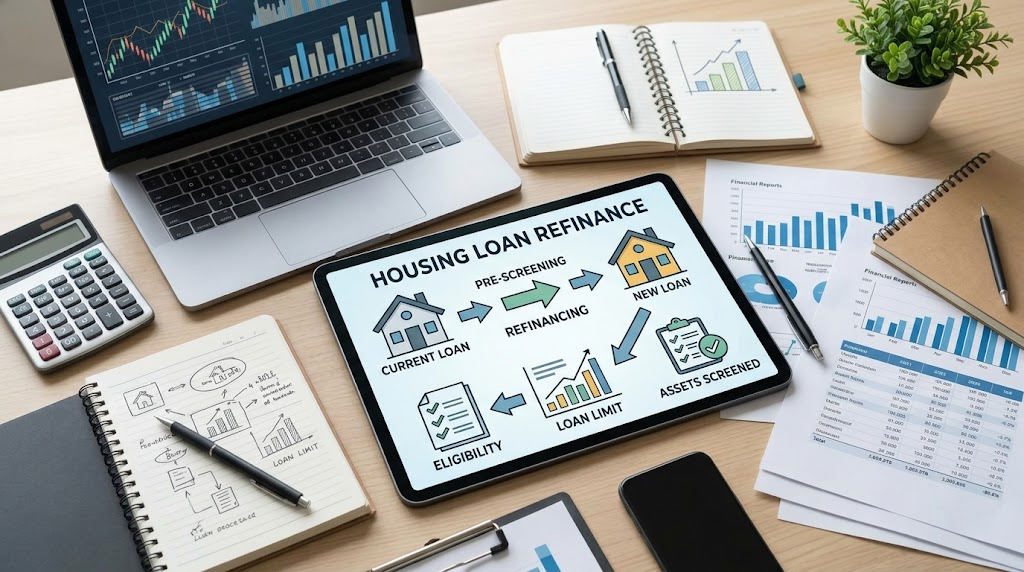
From Commercial Bank Loans to Beotimmok: Essential Conditions for ‘Refinancing (Switching)’
Even if you are currently using a commercial bank jeonse loan at an annual rate of 4–5%, having only the basic Beotimmok qualifications (non-homeowner, income, assets) does not guarantee refinancing approval unconditionally.
Because fund regulations strictly apply refinancing-specific screening standards regarding the nature of existing loans, application timing, and the condition of the leased property, you must meticulously verify the following four essential requirements.
① Verifying the ‘Type’ of Current Existing Loan (Tier-1 Financial Institution Guaranteed Loan)
The first point to verify is whether your currently active loan is an officially guaranteed jeonse loan from a tier-1 financial institution.
- Eligible for Refinancing: Jeonse fund loans secured by guarantee certificates from the Korea Housing Finance Corporation (HF), Housing and Urban Guarantee Corporation (HUG), or SGI Seoul Guarantee handled by tier-1 commercial banks (Kookmin, Shinhan, Woori, Hana, NongHyup, etc.)
- Ineligible for Refinancing:
- Loans from secondary financial institutions (savings banks, capital finance companies, Saemaul Geumgo, credit unions, etc.)
- Credit loans or P2P/private financial jeonse loans
- Private borrowing forms contracted directly with the lessor
💡 Checkpoint: If the existing loan is financed through the Housing and Urban Fund such as a Beotimmok loan, it is not eligible for regular refinancing; the refinancing scheme applies exclusively when converting a commercial bank’s proprietary-funded jeonse loan into a Beotimmok Fund loan.
② Eligible Application Timing for Refinancing: ‘When’ Can You Apply?
Refinancing loans cannot be applied for at any arbitrary time during the contract period; there are established timeframe rules.
- Refinancing During Lease Contract Period (While Contract Is Maintained):
- Eligible to apply starting from the point when 3 months or more have elapsed since the signing date (or remaining balance payment date / move-in date) of the existing lease contract.
- Switching immediately after contracting is impossible; a track record of normally residing and maintaining the loan for at least 3 months is required.
- Refinancing at the Time of Contract Renewal (Deposit Increase or Contract Renewal):
- Must apply within 3 months from the date the lease renewal contract is concluded.
- Generally, it is safe to initiate Gigeum e-Deundeun submission and bank consultations 1 to 2 months prior to the maturity of the existing loan.
③ Property Maintenance Conditions: Same House vs. Moving (Property Change)
Refinancing procedures differ depending on whether your residential circumstances change.
- Refinancing While Retaining Same House: Converting only the loan into a low-interest Beotimmok loan without moving from your current residence; screening is relatively straightforward as there is no change in the property.
- Refinancing Accompanied by Moving (Property Change): Repaying the existing bank loan while moving to a new residence and executing Beotimmok for the new house. In this case, you must closely coordinate the schedule based on the final payment date under the new lease agreement and the return timing of the existing jeonse deposit with the bank.
- Maintaining Move-In Report and Fixed Date: The loan applicant must have actually completed moving-in reporting, occupy the target residence for refinancing, and have a properly granted certified fixed date.
④ Standards for Calculating Refinancing Loan Limits
The loan amount approved during refinancing execution is not automatically granted up to the maximum Beotimmok limit unconditionally. In accordance with fund regulations, it is executed up to the lesser (lower amount) limit between the two standards below.
| Limit Calculation Standard | Detailed Content |
|---|---|
| Standard 1: Scope of Existing Loan Balance | Within the principal balance of the commercial bank jeonse loan as of the refinancing application date |
| Standard 2: Limit by Beotimmok Deposit Standard | Within 70–80% of the deposit and the statutory maximum limit by product (General 120 million, Youth 200 million, Newlywed 300 million KRW, etc.) |
- Example: Even if the existing bank loan balance is 100 million KRW and the maximum Beotimmok limit is 200 million KRW, refinancing is approved only up to the existing loan balance of 100 million KRW. (However, if the deposit increased due to a renewal contract, the limit may be recalculated taking the increased amount into account.)
- On the day of refinancing, the newly executed Beotimmok loan proceeds are not deposited into the borrower’s account, but transferred directly from the trustee bank to the bank handling the existing loan to process repayment.
⚠️ Essential Pre-Checks Before Refinancing
- Check Prepayment Penalties: Because you are terminating your existing bank jeonse loan early, you must verify whether prepayment penalty fees from the bank apply depending on the loan execution period (typically in the range of 0.5%–1.5%, exempt after 3 years).
- Credit Evaluation and Guarantee Agency Limits: Final approval is completed only when individual credit scores and income-to-DTI limits are satisfied according to HUG (Housing and Urban Guarantee Corporation) or HF (Korea Housing Finance Corporation) guarantee issuance standards.

Complete Preparation Guide for Gigeum e-Deundeun ‘Pre-Asset Screening’
When proceeding with Beotimmok loan refinancing, the very first hurdle to clear before visiting a trustee bank is the non-face-to-face pre-asset screening through the Housing and Urban Fund portal ‘Gigeum e-Deundeun.’
Even if you visit a bank branch with documents in hand, application submission for the main review is impossible unless an ‘Eligible’ determination from the pre-asset screening is confirmed. Here is a step-by-step breakdown from application sequence to screening scope and required duration.
① Gigeum e-Deundeun Non-Face-to-Face Application Procedure at a Glance
After preparing a joint certificate (or financial certificate / simple authentication), proceed with application on the Gigeum e-Deundeun website or mobile app in the following order.
- Log In and Complete Application Form: Authenticate the applicant’s identity, then check and agree to household member information on the resident registration certificate
- Select Loan Product: Select Beotimmok Jeonse Loan (Refinancing)
- Enter Subject Property and Lease Information: Enter the address of the currently occupied house, jeonse deposit, and information on the existing loan targeted for refinancing
- Designate Trustee Bank and Branch: Select desired bank branch to proceed with refinancing (Kookmin, Shinhan, Woori, Hana, NongHyup, etc.)
- Spouse Information Provision Consent: For married individuals, consent to provide personal and financial information via the spouse’s identity verification must be completed
- Complete Pre-Asset Screening Submission: Automated data linkage to the Social Security Information Service
② Pre-Asset Screening vs. Post-Asset Screening: Comparing Differences
To ensure swift loan execution, Gigeum e-Deundeun asset screening is divided into two stages: pre-screening and post-screening. The two screenings clearly differ in data collection scope and the consequences of disqualification.
| Category | Pre-Asset Screening | Post-Asset Screening |
|---|---|---|
| Screening Point | Immediately after loan application (before visiting bank) | After completion of loan execution |
| Data Collection Scope | Real estate, automobiles, general assets, trustee bank financial information | All financial assets and liabilities across all financial institutions (including secondary financial sector) |
| Required Duration | Approximately 3 to 5 business days | 4 to 6 weeks after loan execution |
| Result Upon Ineligibility | Loan progression impossible (application rejected) | Imposition of penalty interest rate or forfeiture of term benefit (loan recall) |
📌 Caution: Even if determined ‘Eligible’ in pre-screening, if secondary financial institution deposits/savings, stocks, etc., are captured belatedly in post-screening after loan execution and exceed the net asset standard (345 million KRW), penalty interest rates are imposed, so you must accurately calculate total asset holdings in advance.
③ Items Included in Asset Calculation and Precautions
Net asset value is calculated as [Total Assets (Real Estate + Financial + Automobile + General) – Liabilities].
- Real Estate: Reflected based on publicly announced prices for land, housing, commercial properties, etc. (Beware that pre-sale rights and occupancy rights can also be deemed homeownership under non-homeowner criteria)
- Automobiles: Calculated based on the Ministry of Land, Infrastructure and Transport vehicle valuation (Korea Insurance Development Institute standard) (excluding commercial and livelihood vehicles, etc.)
- Financial Assets: Deposits, savings, stocks (funds), capital contributions, insurance cancellation refunds, etc.
- Financial Liabilities (Deduction Items): Officially registered financial institution loan proceeds such as bank credit loans and mortgage loans
- ⚠️ Overdraft Account Note: Overdraft accounts (negative balance accounts) require caution because even if there is an actual utilized balance, they are often classified electronically as limit loans and excluded from liability deduction items.
④ Required Duration and Action Steps After Receiving Approval Notification via Alimtalk
- Required Duration: Because it is a computer scraping method without uploading separate documents, results are usually released within 2 to 4 business days (up to 1 week), excluding weekends.
- Checking Results: An Alimtalk notification stating “[Housing and Urban Fund] Pre-Asset Screening Eligible Determination Notice” will be sent via KakaoTalk or SMS.
- Things to Do Immediately After Receiving the Alimtalk Notification:
- Print screening results statement or check status screen from Gigeum e-Deundeun My Page
- Call the trustee bank branch designated during application to schedule a visit for submitting Beotimmok refinancing documents
- Begin preparing bank-required documents (lease agreement, resident registration certificate/abstract, income and employment verification documents, financial transaction confirmation for the refinancing target, etc.)

How to Respond When Determined Ineligible in Asset Screening (Objection Filing Know-How)
Even if you suddenly receive an “Ineligible for Pre-Asset Screening” KakaoTalk message from Gigeum e-Deundeun, there is no need to panic and immediately give up on the loan.
This is because the Social Security Information Service’s computerized network data is not updated in real time, or loans already repaid and assets already disposed of often remain recorded due to system errors or time lags, causing assets to exceed the standard threshold (net assets of 345 million KRW). These administrative errors can be normally converted to “Eligible” once clarified through the official objection filing process.
① 4 Common Representative Cases of Ineligibility
The major cases most frequently relieved through actual objections are as follows:
- Reflecting Valuations of Already Disposed/Deregistered Vehicles: When a vehicle that was scrapped or sold as a used car in the past remains registered under the borrower’s name due to delays in updating vehicle registration database records
- Non-Reflection of Fully Repaid Debts: When existing credit loans or mortgage loans were already repaid in full, but were not timely reflected as debt deductions at the time of computerized scraping, causing net assets to be overestimated
- Misclassification of Business/Commercial Assets: When items that should be excluded or discounted from asset aggregation—such as personal freight trucks, commercial vehicles, or livelihood assets—are counted as general assets
- Duplicate Accounting of Lease Deposit Return Claims: When financial assets and deposit assets are temporarily counted twice during the process of transferring between the existing deposit and the new deposit
② Objection Filing Deadline and Submission Channels
Because filing an objection has a statutory processing deadline, you must move swiftly as soon as you receive notification.
- Application Deadline: Within 10 business days from the date of ineligibility notification (date of receiving KakaoTalk or text message) (excluding weekends and public holidays)
- Exceeding the deadline automatically cancels the existing application, creating the inconvenience of having to reapply from the start on Gigeum e-Deundeun.
- Submission Method:
- Gigeum e-Deundeun Portal (PC/Mobile): Click [My Page] ➔ [Loan Application Status] ➔ [File Objection] menu
- Verify the detailed item that caused the ineligibility reason (automobiles, financial assets, real estate, etc.)
- Write explanation details for each reason, then attach and submit supporting document files (PDF or image)
③ Essential Explanatory Document Checklist by Reason
| Ineligibility Reason Category | Essential Explanatory Documents | Issuing Agency |
|---|---|---|
| Vehicle Disposal / Sale | Certificate of Fact of Vehicle Deregistration, Vehicle Transfer Certificate (Sales Contract) | Government24, Vehicle Registration Office |
| Debt Fully Repaid | Financial Transaction Confirmation (proving full loan repayment), Debt Certificate | Relevant loan-handling financial institution |
| Financial Asset Error / Termination | Account Termination Certificate, Balance Certificate, Unpaid Insurance Cancellation Refund Confirmation | Bank, brokerage, insurance company counter/app |
| Real Estate Sale Completed | Real estate sales contract, Certificate of Registered Matters (for cancellation confirmation) | Supreme Court Internet Registry Office |
💡 Practical Tips for Passing Objections (Know-How to Shorten Approval Duration)
- Phone Call to the Examiner Immediately After Uploading Documents: Rather than waiting quietly after submitting documents, contacting the jurisdictional branch of the Housing and Urban Guarantee Corporation (HUG) or the relevant department of the Social Security Information Service by phone to state that “objection explanation documents have been submitted” significantly speeds up the review process.
- Updating Issuance Dates of Explanatory Documents: All supporting documents must be issued after the ineligibility determination date or within 1 week of the determination date to be officially recognized as valid.
- Coordinating Bank Visit Schedule: Objection reviews typically take about 3 to 5 business days after submission. If existing loan maturity or contract renewal timelines are tight, inform the trustee bank loan officer in advance that an objection is in progress and coordinate so that the document review schedule is not delayed.

Bank Branch Visit and Final Loan Execution Checklist
If you have received an ‘Eligible’ determination in the pre-asset screening from Gigeum e-Deundeun, the most important practical steps remain: applying for the main review at the trustee bank and executing the loan.
Unlike a new loan, Beotimmok refinancing involves existing loan repayment and guarantee certificate replacement processes; therefore, if prepared documents are missing or schedules conflict, setbacks may occur in loan approval. Review the essential step-by-step checklist from visiting the bank to the day of loan execution.
① Preparation in Advance and Reservation Tips Before Visiting the Bank
- Selecting a Trustee Bank: Among the 5 major fund-handling trustee banks (Woori, KB Kookmin, Shinhan, Hana, NH NongHyup), you must visit the specific branch designated during your Gigeum e-Deundeun application.
- Tip: If possible, designating the branch currently managing your existing commercial bank jeonse loan or your primary transaction bank branch makes computerized verification and business handling significantly easier.
- Visit Timing: Since bank reviews and guarantee certificate issuances typically take 2 to 3 business days, it is safe to visit at least 3 to 4 weeks prior to your existing loan maturity date or renewal remaining balance payment date.
- Prior Inquiry to Branch: Minor differences may exist in detailed supporting documents requested by each branch and loan officer, so double-check the required document list by speaking with the loan counter officer before visiting.
② Essential Documents Checklist for Bank Submission (Issued Within 1 Month)
All documents must be issued with all 13 digits of the Resident Registration Number visible.
| Document Category | Mandatory Submitted Document List | Issuing Agency |
|---|---|---|
| Identity Verification | ID card (Resident Registration Card or Driver’s License), Resident Registration Certificate, Resident Registration Abstract (including entire address change history) | Government24, Community Service Center |
| Family Relationship Verification | Family Relationship Certificate (Detailed), Marriage Relation Certificate (mandatory when applying as newlyweds) | Supreme Court Electronic Family Relationship Registration System |
| Income Verification (Choose 1) | • Salaried Workers: Withholding Tax Receipt for Earned Income (stamped with official seal), recent monthly pay stubs
• Business Operators: Income Certificate, Business Registration Certificate • Freelancers: Certificate of Commission, Withholding Tax Receipt for Resident Business Income |
National Tax Service Hometax, Employer |
| Employment Verification | Certificate of Employment (issued by employer), Health Insurance Eligibility Acquisition/Loss Confirmation | Employer, National Health Insurance Service |
| Housing and Contract Related | • Original lease agreement with certified fixed date granted (bring both old and new contracts upon renewal)
• Certificate of Registered Matters (including canceled matters) • Receipt of deposit payment of 5% or more |
Community Service Center, Internet Registry Office, Real Estate Agency |
| Refinancing Exclusive Documents | • Financial Transaction Confirmation of existing jeonse loan (loan balance, maturity date, and household loan purpose designation mandatory)
• Virtual Account Number Confirmation for repayment of existing loan |
Bank handling existing loan |
③ Bank Screening Stage: Selecting Guarantee Agency (HUG vs HF)
When submitting at the bank counter, the product is finalized considering the characteristics of the collateral guarantee agency.
- HF (Korea Housing Finance Corporation): Calculates loan limits focusing on the applicant’s income and credit score. It is suitable for typical salaried workers as it is less sensitive to property loans or complex rights relationships on the subject housing.
- HUG (Housing and Urban Guarantee Corporation): Calculates limits focusing on the price of the subject housing and senior debts; it is advantageous for deposit protection as it is combined with a Jeonse Deposit Return Guarantee. However, lessor cooperation, such as receiving notice of bond assignment, is essential.
④ Process on the Day of Loan Execution (Repayment and Cancellation)
On the day of Beotimmok refinancing execution, financial transactions are processed electronically between banks without the borrower directly exchanging money.
[Beotimmok Trustee Bank]
│
▼ (Direct remittance of loan amount)
[Existing Commercial Bank] ➔ Automatic repayment of existing jeonse loan principal
│
▼ (After repayment completion)
[Receipt Issuance] ➔ Full loan payoff receipt transmitted to trustee bank & cancellation of collateral mortgage / pledge establishment
- Direct Remittance of Loan Amount: The Beotimmok trustee bank directly remits the approved loan amount to the repayment virtual account of the bank handling the existing loan.
- Settlement of Differences and Interest:
- If the existing loan principal is larger than the Beotimmok loan amount, the difference must be withdrawn immediately from the borrower’s own account on the morning of execution and applied toward repayment.
- The prorated daily calculated interest on the existing loan accrued up to that day and prepayment penalties must also be settled directly by the borrower.
- Proof of Full Loan Payoff and Cancellation of Rights: Once the existing loan is paid in full, the existing bank issues a full loan payoff receipt and sends it to the trustee bank, and officially cancels the previously established pledge or transfer of claim rights, thereby finalizing the refinancing procedure.
Korean version: 한국어로 읽기