The First Step in Senior Care: Long-Term Care Insurance Benefits and Grade Criteria
This is a body draft formatted with mobile line breaks, quotes, and callout boxes to maximize readability for Naver Blog readers. It has been written so you can copy and paste it right away.
- The First Step in Senior Care: Long-Term Care Insurance Benefits and Grade Criteria
When parents suddenly fall ill or begin to have difficulty moving around, the first thing that flusters adult children is “the caregiving and care costs going out every month.”
However, many people miss the fact that there is a social insurance system supported by the government, and they face financial limits after paying for private caregiver fees entirely or bearing nursing expenses 100% out of pocket.
Here is an easy-to-understand summary of the eligibility requirements and grading system for ‘Long-Term Care Insurance for the Elderly,’ the most fundamental and core senior welfare benefit.
💡 What is Long-Term Care Insurance for the Elderly?
It is a system that provides long-term care benefits—such as physical activity support, housekeeping support, and nursing facility admission—to seniors who have difficulty performing daily life activities alone for 6 months or longer due to advanced age or geriatric illnesses such as dementia and cerebrovascular diseases.
- Application Eligibility:
- Seniors aged 65 or older (regardless of disease type, based on difficulties in movement and daily life)
- Persons under aged 65 who suffer from geriatric diseases such as dementia, cerebrovascular disease, Parkinson’s disease, etc.
📋 Long-Term Care Grade Criteria (Grade 1 ~ Cognitive Support Grade)
Based on a home visit assessment conducted by National Health Insurance Service staff (evaluating 52 items across physical function, cognitive function, behavioral changes, etc.) and a physician’s written opinion, the Grade Determination Committee assigns scores, categorizing individuals into a total of 6 grades.
| Grade | Care Recognition Score | Senior Health Status and Main Characteristics | Primary Support Type |
|---|---|---|---|
| Grade 1 | 95 points or higher | Completely unable to move on one’s own and bedridden all day | Facility benefits / Home-based benefits full-scale support |
| Grade 2 | 75 points or higher to less than 95 points | Uses a wheelchair; requires substantial assistance with most daily activities such as eating and toileting | Facility benefits / Home-based benefits |
| Grade 3 | 60 points or higher to less than 75 points | Partially able to move around, but requires partial help with toileting, bathing, etc. | Home-based benefits as a rule (facility conditional) |
| Grade 4 | 51 points or higher to less than 60 points | Movement is somewhat unstable; requires some help with cleaning, laundry, going out | Home-based benefits |
| Grade 5 | 45 points or higher to less than 51 points | For seniors with dementia (confirmation of geriatric disease required, cognitive activity support) | Customized home-based benefits for cognitive rehabilitation |
| Cognitive Support | Less than 45 points | Seniors with mild dementia (prevention and care for cognitive decline such as memory loss) | Day and night care center (daycare) use |
📌 One-Line Check!
Those in Grades 1 and 2 can freely choose between facility admission (nursing home) and home-based care at home, while Grades 3 through 5 are, in principle, eligible for ‘home-based benefits’ received at home. (However, even those in Grades 3 through 5 may be admitted to a facility after review if reasons such as difficulties in cohabiting family care are recognized.)
🏠 Home-Based Benefits vs 🏢 Facility Benefits: What’s the Difference?
Once a grade is determined, you will receive government support through one of two main formats.
- Home-Based Benefits (Receiving care at home):
- Includes home-visit care where a care worker visits the home, day and night care (daycare center) known as senior kindergarten, home-visit bathing using a mobile bathing vehicle, and welfare equipment support for renting or purchasing electric beds, wheelchairs, etc.
- Government support 85% / Out-of-pocket 15% (general standard)
- Facility Benefits (Entering a nursing facility):
- A format where one is admitted to a skilled nursing home staffed with professional nursing personnel or a small-scale senior group home for 9 or fewer people to receive 24-hour care.
- Government support 80% / Out-of-pocket 20% (based on covered service costs; non-covered costs such as meal expenses are separate)
💡 Author Tip!
Even if you think, “Our parents aren’t at the point of going to a nursing home yet…”, simply securing Grade 4, 5, or the Cognitive Support Grade allows you to receive assistance from a day and night care center or a visiting care worker for several hours a day at an 85% discounted price, dramatically reducing the family’s caregiving fatigue.
Please select the work direction for the next step posting:

Support Items and Out-of-Pocket Cost Ratios When Caring at Home (Home-Based Benefits)
This is the body draft corresponding to table of contents number 2. It has been prepared by applying sentence layout, subheading division, tables, and quote formatting optimized for high readability on Naver Blog.
- Support Items and Out-of-Pocket Cost Ratios When Caring at Home (Home-Based Benefits)
“My parents want to stay in their familiar home rather than an unfamiliar nursing facility.”
In fact, more than 70% of seniors who receive a long-term care grade use ‘home-based benefits’ first to receive care at home. Hiring a private caregiver on a daily basis costs upwards of 3,000,000 to 4,000,000 KRW per month, but utilizing home-based benefits significantly lowers actual out-of-pocket expenses because the government covers 85%.
Here is a detailed breakdown of the five representative support services that can be used at home and the structure of out-of-pocket copayments.
🛠️ The 5 Major Home-Based Care Services Received at Home
- Home-Visit Care
- A nationally certified care worker visits your home directly.
- They provide support for physical activities (washing, meal assistance, posture changes) and daily housekeeping (cleaning, laundry, accompanying on walks).
- Services are usually planned and used in units of 3 to 4 hours per day.
- Day and Night Care (Senior Kindergarten / Daycare Center)
- This is a pick-up and drop-off (shuttle) service that brings seniors to the center during daytime hours to provide meals, physical therapy, and cognitive rehabilitation programs, and takes them back home in the evening.
- Satisfaction is highest among dual-income families where caregivers must go to work during the day.
- Home-Visit Bathing
- A specialized mobile bathing vehicle equipped with bathtub facilities and two care workers visit to safely help with bathing. (Using a home bathroom is also possible.)
- Home-Visit Nursing
- In accordance with a physician’s home-visit nursing order, a nurse (dental hygienist, etc.) visits to manage blood pressure/blood sugar checks, medication guidance, bedsore treatment, oral hygiene, and more.
- Welfare Equipment Support (Separate Limit)
- For seniors with mobility difficulties, wheelchairs, electric beds, portable toilets, bath chairs, walking canes, and other aids can be rented or purchased affordably with 85% government support within an annual limit of 1,600,000 KRW.
💰 Monthly Benefit Limit by Grade and Actual Out-of-Pocket Expenses
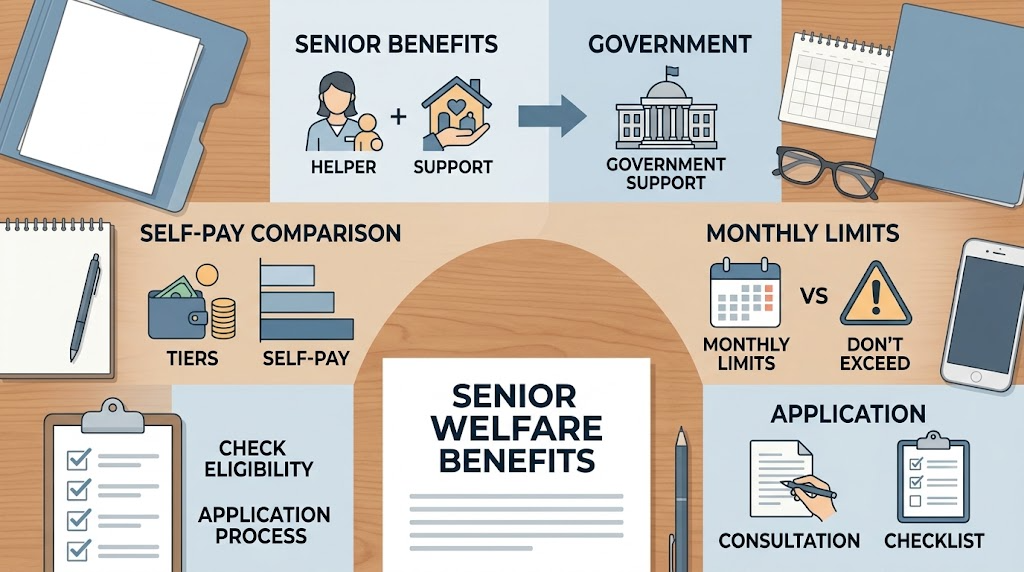
Home-based benefits cannot be used without limit; instead, there is a designated monthly ‘usage limit’ for each grade. Within this limit, you can freely combine and use services like home-visit care and daycare.
- General Beneficiary: 15% out-of-pocket (85% government support)
- Reduced Copayment Beneficiary: 6% to 9% out-of-pocket depending on income and health insurance premium level
- Basic Livelihood Security Beneficiary (Medical Aid): Full exemption from out-of-pocket costs (0 KRW)
📊 Monthly Benefit Limit and Out-of-Pocket Cost Standards by Grade
(Unit: KRW, maximum out-of-pocket expense when using 100% of the benefit limit)
| Grade | Monthly Limit | General (15%) | 9% Reduction | 6% Reduction |
|---|---|---|---|---|
| Grade 1 | 2,512,900 KRW | Approx. 376,900 KRW | Approx. 226,100 KRW | Approx. 150,700 KRW |
| Grade 2 | 2,331,200 KRW | Approx. 349,600 KRW | Approx. 209,800 KRW | Approx. 139,800 KRW |
| Grade 3 | 1,528,200 KRW | Approx. 229,200 KRW | Approx. 137,500 KRW | Approx. 91,600 KRW |
| Grade 4 | 1,409,700 KRW | Approx. 211,400 KRW | Approx. 126,800 KRW | Approx. 84,500 KRW |
| Grade 5 | 1,208,900 KRW | Approx. 181,300 KRW | Approx. 108,800 KRW | Approx. 72,500 KRW |
| Cognitive Support | 676,320 KRW | Approx. 101,400 KRW | Approx. 60,800 KRW | Approx. 40,500 KRW |
⚠️ Points to Note!
If you use services beyond the monthly limit, the excess amount is 100% borne out of pocket without any government support. Therefore, it is essential to consult with a social worker or center manager to set up a schedule so that the monthly limit is not exceeded.
💡 Blogger’s Practical Tip: How to Increase the Limit by 20%
If you use a day and night care center (daycare) for 15 days or more per month (based on 8 hours or more per day), under government support regulations, additional usage within the scope of 20% of that month’s limit becomes available.
- Example: Combined usage becomes possible where the senior attends a day and night care center during the day and adds home-visit care services after returning home in the evening for remaining chores or mobility assistance, perfectly filling any caregiving gap.
Please select the chapter to proceed with next:
Cost Structure Analysis When Entering a Nursing Facility (Facility Benefits)
This is the draft body text corresponding to section 3 of the table of contents. It has been prepared by applying clear paragraph breaks, an easy-to-read table, quote blocks, and cautionary note formatting optimized for Naver Blog.
- Cost Structure Analysis When Entering a Nursing Facility (Facility Benefits)
“Taking care of them at home completely disrupts the caregiver’s daily life, but placing them in a nursing facility makes me dread the monthly bill.”
When close, 24-hour care is needed due to a decline in a senior’s physical or cognitive functions, “facility benefits (nursing homes, etc.)” are what people consider.
However, many guardians often wonder, “They said the government supports 80%, so why does the bill exceed 700,000 to 1,000,000 KRW?” This is because the actual billed amount for facility benefits is determined by the sum of “covered items” that receive government support and “non-covered items” that must be paid entirely out of pocket.
🏢 Types of Nursing Facilities: Nursing Homes vs Group Homes
Facility benefits are mainly intended for seniors with Long-Term Care Level 1 or 2. Those with Levels 3 to 5 can receive benefits only if they pass a facility admission screening due to reasons such as “difficulty in family caregiving.”
- Senior Nursing Homes (capacity of 10 or more): These facilities are large in scale, featuring physical therapy rooms and activity rooms, with professional staff on-site to provide systematic management.
- Senior Group Homes (capacity of 5 to 9): These offer small-scale, close care in a cozy setting similar to an ordinary home.
💰 The Secret of the Facility Benefit Cost Structure (Covered vs Non-Covered)
A nursing home bill is broadly divided into two portions.
Actual Billed Amount = [20% out-of-pocket cost for NHIS-supported covered services] + [100% of non-covered items]
- Long-Term Care Benefit Costs (Government Supported)
- Basic care costs including caregiving labor, nursing, physical therapy, and daily living support.
- General beneficiaries: 20% out of pocket (80% supported by NHIS)
- Reduced rate beneficiaries: 8% to 12% out of pocket depending on income level
- Basic livelihood security recipients: 0 KRW out of pocket (fully free)
- Non-Covered Costs (100% Paid by Guardian)
Items not covered by NHIS that guardians must pay in full. This is the biggest factor creating price differences across nursing homes.
- Meals and snacks: Cost of each meal and snack (typically around 10,000 KRW to 15,000 KRW per day / 300,000 to 450,000 KRW per month)
- Upgraded room charges: Additional costs incurred when using a single or double room (no extra charge for multi-occupancy rooms)
- Others: Personal request items such as hair salon services, outpatient hospital escort fees, nutritional supplements, etc.
📊 Daily Benefit Costs by Level and Estimated Monthly Out-of-Pocket Expenses
(Based on a 30-day stay in a senior nursing home, estimated out-of-pocket costs for covered benefits)
| Level | Daily Total Benefit Cost | General (20%) Monthly Expense | Reduced Rate (8–12%) Monthly Expense |
|---|---|---|---|
| Level 1 | Approx. 86,400 KRW | Approx. 518,400 KRW | Approx. 207,300 KRW ~ 311,000 KRW |
| Level 2 | Approx. 80,100 KRW | Approx. 480,600 KRW | Approx. 192,200 KRW ~ 288,300 KRW |
| Levels 3–5 (If reason is recognized) | Approx. 75,500 KRW | Approx. 453,000 KRW | Approx. 181,200 KRW ~ 271,800 KRW |
📌 Example Calculation of Total Actual Monthly Out-of-Pocket Cost (Based on General Level 2)
- Covered out-of-pocket cost (20%): Approx. 480,000 KRW
- Non-covered meals/snacks (12,000 KRW per day × 30 days): Approx. 360,000 KRW
- Estimated total payment: Approx. 840,000 KRW to 900,000 KRW (Based on a 4-person shared room)
(※ If a 1- or 2-person room is selected, upgraded room fees of 300,000 to over 1,000,000 KRW per month may be added.)
⚠️ 3 Things You Must Check Before Signing a Contract
- Verify meal unit prices and menu composition: Meal costs are non-covered and set autonomously by the facility. During consultation, verify whether meals tailored to the senior (porridge, liquid food, diabetic diet, etc.) are properly provided relative to the meal cost.
- Whether an upgraded room is used: Facilities sometimes recommend single or double rooms for adjustment purposes during the initial admission period. Because upgraded room fees are entirely non-covered, they become a significant monthly fixed expense during a long-term stay.
- Hospital treatment and outpatient escort rules: Check whether nursing home staff accompany the senior when regular outpatient hospital visits are needed, and whether separate non-covered charges (hourly fees or vehicle transportation fees) apply for escort services.
Please select the chapter to proceed with next:
‘Integrated Nursing and Caregiving Service’ to Relieve Hospitalization Caregiving Costs
This is the draft body text corresponding to section 4 of the table of contents. Designed for Naver Blog readers’ readability, it clearly lays out the cost gap compared to private caregivers, an intuitive comparison table, usage procedures, and practical precautions.
- ‘Integrated Nursing and Caregiving Service’ to Relieve Hospitalization Caregiving Costs
“My parent was hospitalized for an acute illness or fracture surgery, and the daily rate for a private caregiver is said to exceed 150,000 KRW a day. That amounts to 4,000,000 to 5,000,000 KRW a month—how can anyone afford that?”
Indeed, the moment many families feel the term ‘caregiving bankruptcy’ most acutely is during the period of inpatient hospital treatment. Because a private caregiver is a purely private service not covered by National Health Insurance, caregivers must pay all costs entirely in cash out of pocket.
A representative medical welfare program introduced by the government to prevent such financial catastrophes is the ‘Integrated Nursing and Caregiving Service.’
🏥 What is the Integrated Nursing and Caregiving Service?
It is a ward where family guardians or private caregivers do not stay in the patient room; instead, the hospital’s professional nursing personnel (registered nurses, nursing assistants, and ward support staff) work as a team to fully handle 24-hour medical care and caregiving (meal assistance, position repositioning, hygiene management, etc.) for inpatients.
The most decisive advantage is that, unlike private caregiving fees, it is covered by National Health Insurance.
💰 Cost Comparison: Private Caregiver vs. Integrated Nursing and Caregiving Service
The daily cost difference is more than 5 times.
| Classification | Private Caregiver (Individually Hired) | Integrated Nursing and Caregiving Service (Covered by NHI) |
|---|---|---|
| Daily Cost Incurred | Approx. 130,000 KRW to 160,000 KRW | Approx. 20,000 KRW to 30,000 KRW range (Copayment including hospitalization fee) |
| Estimated Monthly (30 Days) Cost | Approx. 3,900,000 KRW to 4,800,000 KRW | Approx. 600,000 KRW to 900,000 KRW |
| Additional Cost Burden | Meal fees (caregiver meals), paid leave allowances, etc. | None (Combined and billed on hospital inpatient bill) |
| Health Insurance Benefit | Entirely non-covered (Insurance not applicable) | Benefit coverage applied (20% copayment rate) |
| Year-End Tax Settlement / Private Health Insurance | Receipt processing not possible (mostly cash expenditures) | Eligible for medical expense tax credit and private health insurance claims |
📌 Key Point!
Using the Integrated Nursing and Caregiving Service not only saves over 3,000,000 KRW per month in caregiving expenses, but because it is issued on an official hospital medical expense receipt, you can also take advantage of year-end tax settlement medical expense deductions and private health insurance coverage.
🔍 How to Find an ‘Integrated Nursing and Caregiving Ward’ in Our Neighborhood
Not all hospitals and not all wards offer this service. Before admission, you need to check in advance whether an integrated ward is operating at the relevant hospital.
- Access the National Health Insurance Service website (www.nhis.or.kr)
- Top Menu: [Health iN] → [Hospital and Medical Checkup Center Guide] → [Find Hospitals Participating in Integrated Nursing and Caregiving Service]
- Search by selecting region (city/province, district/county) and hospital category (tertiary general hospital, general hospital, hospital)
- Check with the relevant hospital’s administrative department or reservation desk in advance to ask “whether admission to an integrated nursing and caregiving ward is possible”
⚠️ Precautions You Must Know Before Using
- Doctor’s Admission Decision Required: Admission is not granted unconditionally simply because the patient or guardian requests it. The attending physician must evaluate the patient’s condition and determine that they are a “patient suitable for integrated ward admission” before a bed can be assigned.
- Not 1:1 Dedicated Close Care: It is not a format where one person stays by the bedside all day running small errands like a personal caregiver. Because it is a system where one nursing staff member cares for multiple patients, if severe delirium is present or 24-hour 1:1 dedicated restraint/observation care is required, you may be advised to be admitted to a general ward and hire a private caregiver.
- Nursing Hospitals Excluded: Currently, the Integrated Nursing and Caregiving Service is operated primarily in acute care hospitals (general hospitals, specialized hospitals, etc.), and general long-term care hospitals, which are chronic-phase long-term inpatient facilities, are excluded from the program.
Please select the chapter to proceed with next:
At-a-Glance Copayment Comparison Table by Situation
This is the body draft corresponding to section 5 of the table of contents. It has been prepared with clear classification criteria, emphasized key figures, an at-a-glance comparison table, and a situational selection guide so that it can be grasped at a glance even on Naver Blog mobile screens.
- At-a-Glance Copayment Comparison Table by Situation
“Given our parent’s condition, is it better to care for them at home, or are a nursing home or a long-term care hospital better?”
When deciding on a place of care, the two things guardians struggle with most are ‘the elder’s health status (need for medical care)’ and ‘the actual monthly out-of-pocket costs they will have to handle.’
Here is a neat summary table comparing the costs and support systems of home-based care, senior nursing homes, long-term care hospitals, and the integrated nursing and caregiving service discussed earlier.
📊 Core Comparison Table of the 4 Major Caregiving and Care Services
(Based on general beneficiaries, estimated 30-day conversion)
| Classification | 🏠 Home-Based Care (Visiting / Day and Night) | 🏢 Senior Nursing Home | 🏥 Long-Term Care Hospital | 🩺 Integrated Nursing and Caregiving Ward |
|---|---|---|---|---|
| Applicable System | Long-Term Care Insurance for the Elderly | Long-Term Care Insurance for the Elderly | National Health Insurance | National Health Insurance |
| Main Target | Long-Term Care Grades 1–5, Cognitive Support (capable of living at home) | Long-Term Care Grades 1–2 (Grades 3–5 when reason is approved) | Chronic illness patients requiring continuous treatment and medical procedures | Patients requiring short-term hospitalization for surgery or acute illnesses |
| Statutory Benefit Copayment Rate | 15% (85% Corporation support) | 20% (80% Corporation support) | 20% (based on medical care and hospitalization fees) | 20% (hospitalization and nursing care fees) |
| Non-Covered Items | Amounts exceeding the limit, non-covered meals | Meals (300,000–450,000 KRW/month), upgraded room charges, etc. | Caregiver fees (entirely non-covered), meals, diapers, etc. | Meals, non-covered treatment costs (no separate caregiving fee) |
| Estimated Monthly Actual Expenditure | Approx. 150,000 ~ 350,000 KRW | Approx. 750,000 ~ 900,000 KRW (based on shared room) | Approx. 2,000,000 ~ 3,500,000 KRW (including private shared caregiving) | Approx. 600,000 ~ 900,000 KRW (based on one month hospitalization) |
| Availability of Medical Procedures | Limited (visiting nursing procedures) | Nurse / contracted physician (basic care) | Physician on-site (treatment and medication administration) | Physicians and nurses on-site 24 hours |
📌 One-Line Summary of Key Differences!
- Nursing homes are centered on “care (welfare),” so caregiving expenses are covered by insurance, resolving costs at around 800,000 KRW per month.
- Long-term care hospitals are centered on “treatment (medical care),” so medical consultation fees are covered by health insurance, but caregiving costs are not covered by health insurance (non-covered), jumping to over 2,000,000 KRW per month even when using private shared caregivers.
💡 Optimal Selection Guide by Situation
- “The guardian must go to work during the day, but can stay together at night.”
👉 Day and Night Care (Daycare Center) + Home-Visit Care combination
- At the 150,000 to 300,000 KRW per month level, you can maintain the guardian’s social life while simultaneously supporting the senior’s cognitive rehabilitation.
- “Underlying conditions are stable, but mobility is completely impossible or dementia wandering is severe.”
👉 Apply for Long-Term Care Grade 1–2, then enter a ‘Senior Nursing Home’
- At around the 700,000 to 900,000 KRW range per month, you can safely entrust meal, bathing, and excretion care to professional 24-hour caregivers.
- “Continuous medical procedures are required, such as intensive bedsore treatment, nasogastric tube (L-tube), or urinary catheter management.”
👉 Hospitalization in a Long-Term Care Hospital
- Even though care costs are higher, 24-hour treatment by medical staff is essential, making the hospital choice inevitable.
- “Intensive recovery is needed for 2 to 4 weeks after hip fracture surgery or acute stroke treatment.”
👉 Hospitals operating Integrated Nursing and Caregiving Services
- Compared to private caregivers (150,000 KRW per day), care costs can be reduced by more than 80% to the 20,000–30,000 KRW per day range, allowing full focus on recovery.
Please select the chapter to follow next:
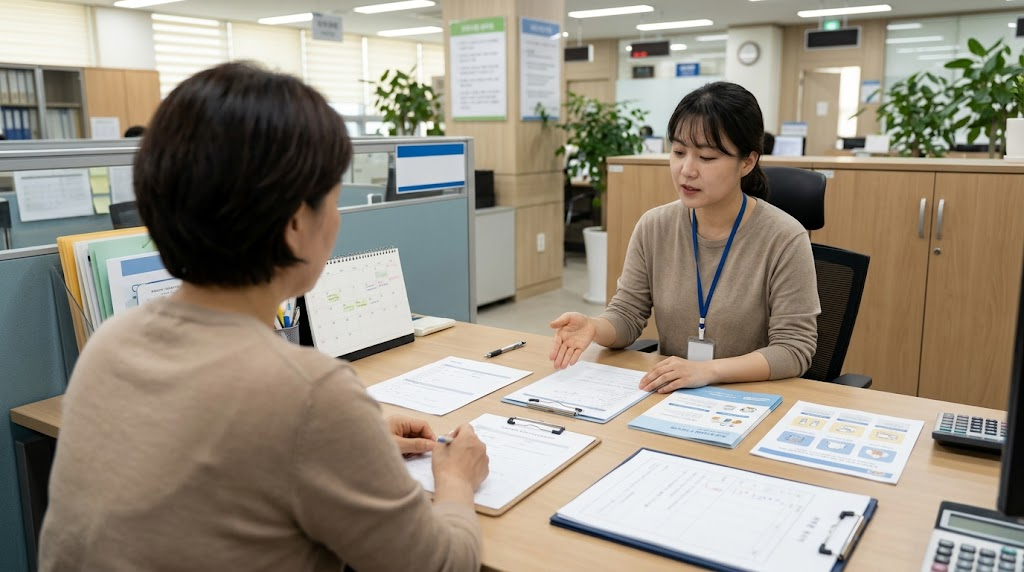
Additional Reduction and Refund Tips You Lose Out On If You Don’t Know
This is the draft body text corresponding to section 6 of the table of contents. To maximize readability for Naver Blog readers, it includes subheadings for key benefits, checklists, tax-saving and refund condition tables, and a practical application guide.
- Additional Reduction and Refund Tips You Lose Out On If You Don’t Know
Securing long-term care insurance or health insurance benefits is not the end of the story.
To alleviate household financial burdens resulting from caregiving, the national government, local governments, and the National Tax Service operate various “post-refund systems” and “cost-reduction support measures.” However, these benefits are not automatically provided by the government; rather, they are structured so that guardians must apply for and substantiate them directly to receive refunds.
Be sure to check these 4 essential refund and reduction tips that disappear if you do not apply.
- Essential for Long-Term Care Hospital Inpatients: Health Insurance ‘Out-of-Pocket Maximum’ Post-Refunds
If a patient is hospitalized in a long-term care hospital for an extended period, the first system to secure is the Out-of-Pocket Maximum system.
- What kind of system is this?
If the total amount of health insurance out-of-pocket copayments paid to hospitals during one year exceeds an upper limit determined by individual income brackets (ranging from the 800,000 KRW level up to around 10,000,000 KRW maximum), the National Health Insurance Service refunds the excess amount entirely in cash.
- Points to note:
- Only covered items are summed: Non-covered items such as caregiver fees, upgraded hospital room fees, and diaper costs are excluded from the maximum ceiling calculation. Only statutory out-of-pocket expenses among medical consultation and hospitalization fees qualify.
- Payment timeline: Around August each year, annual medical expenses from the preceding year are settled, and the Corporation sends refund notification notices (by mail/mobile). Once the notice is received, you can register your bank account via the NHIS website or by phone to receive the refund.
- Year-End Tax Settlement Tax-Saving Cheat Key: Long-Term Care Copayment & Disability Tax Credit
Parents’ caregiving costs return as powerful tax deduction benefits during year-end tax settlement.
- Medical Expense Tax Credit for Long-Term Care Copayments:
Receipts for out-of-pocket copayments for home-based care and facility benefits spent on parents are entirely included as subjects of the ‘Medical Expense Tax Credit (15%)’ during year-end tax settlement.
(※ Print the ‘Long-Term Care Benefit Payment Certificate’ from the National Health Insurance Service Long-Term Care Insurance website and submit it to your company.)
- Additional Basic Deduction for Dementia Seniors as ‘Disabled under Tax Law’:
Even if one is not registered as disabled under the Welfare of Persons with Disabilities Act, if they are in a state that always requires treatment due to severe dementia or inability to move around, they can receive a ‘Certificate of Disability’ from the hospital to qualify for a personal deduction (an additional deduction of 2,000,000 KRW per year per person).
- Public Health Center Dementia Relief Center Vouchers: Free Support for Medication & Hygiene Products
If a senior has been diagnosed with dementia, you should immediately visit the public health center (Dementia Relief Center) that has jurisdiction over your address.
| Support Item | Key Support Details | Application Conditions and Benefits |
|---|---|---|
| Dementia Treatment and Management Expense Support | Support for out-of-pocket copayments for dementia medication and treatment expenses | Real-time actual-cost support within a monthly limit of up to 30,000 KRW (360,000 KRW per year) (at or below 120% of standard median income) |
| Free Provision of Care Supplies | Diapers, wet wipes, non-slip socks, waterproof mats, etc. | For registered seniors with dementia (provided free of charge for up to 1 year from the application date; varies by local government) |
| Wandering Prevention Service | Distribution of wandering detectors (GPS), issuance of identification tags for wander-prone seniors | Any senior with dementia who is at risk of missing can apply for free |
💡 Blogger Tip!
Diaper costs are non-covered consumables, generating a fixed expense of 50,000 to 100,000 KRW every month. If you apply for care supplies support from the Dementia Relief Center, you can substantially save on diaper costs for the initial 1 year.
- Copayment Reduction Application for Basic Livelihood Security Recipients and the Near-Poor Class
If your household’s economic situation changes after receiving a long-term care grade or if your income level is low, you must check the reduction system.
- Reduction Criteria: If the health insurance premium amount falls within the lower 25% to 50% range, the out-of-pocket copayment is reduced without a separate application or through a simple eligibility verification.
- Scope of Reduction:
- Home-based benefits: Copayment rate reduced from 15% ➔ 6% to 9%
- Facility benefits: Copayment rate reduced from 20% ➔ 8% to 12%
- Inquiries: You can check whether your household qualifies as a beneficiary for copayment reductions through the National Health Insurance Service Customer Center (1577-1000).
Please select the next task to improve posting completeness:
Korean version: 한국어로 읽기