Hello! To all the young adults preparing for independence or looking for a new home, do you happen to know what essential requirement you must check first before stamping your contract?
Amid soaring monthly rent and jeonse (lump-sum deposit) prices, the government and local authorities are pouring out various housing support policies and financial benefits to help young people stabilize their housing. However, to make these benefits entirely your own and to safely protect your precious deposit, there is one single core keyword you must never miss. That is ‘transfer registration’ (jeonip-singo).
In particular, officetels and studio apartments, which are frequently chosen by young adults due to their relatively low entry barriers, have many variables related to transfer registration depending on the contract type or building use, requiring even more meticulous verification.
In today’s post, under the theme of ‘Essential Requirements for Officetel and Studio Apartment Transfer Registration under Youth Housing Support Conditions’, we will explore why transfer registration is an absolute prerequisite for youth housing support. Shall we take a closer look together step by step?
The housing types that young adults encounter first when becoming independent are undoubtedly officetels and studio apartments. To utilize the various housing welfare benefits and loan products supported by the government and local authorities, you must meet the clear criteria required by each system. Let’s examine the core requirements that must be checked for successful subsidy receipt.
1. Major Housing Support Programs for Young Adults Living in Officetels and Studio Apartments
Representative current youth housing support projects include the Jeonse Funds Loan for Key-Money Deposit (Butimmok Loan), which supports jeonse and monthly rent deposits at lower interest rates than commercial banks, and the Special Youth Monthly Rent Support, which directly eases the burden of monthly rent. These programs share the purpose of alleviating the housing cost burden for homeless young adults, but there are income and asset criteria that must be met to receive support.
- Age and Income Criteria: Most youth housing support projects target young adults aged 19 to 34 (or varying by local government ordinance), and the income of the individual or household members must be within a certain percentage of the standard median income (e.g., 60% or less, 150% or less, etc.).
- Housing Criteria: Housing eligible for support must meet limit amounts for exclusive floor area (generally 85 square meters or less, or 60 square meters or less) and rental deposits (jeonse deposit or monthly rent deposit). Both studio apartments and officetels are included in the target if they are suitable for residential use.
2. Why Transfer Registration and Fixed Date Must Accompany the Process
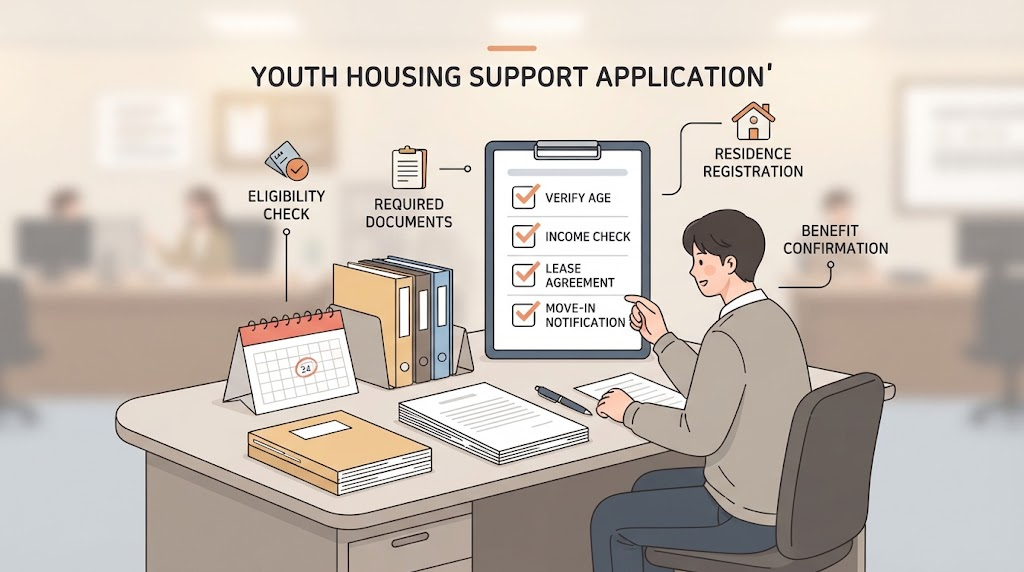
When applying for loans or deposit support by meeting youth housing support conditions, one of the first documents requested by financial institutions or local authorities is a Resident Registration Copy showing the fixed date on the lease agreement and completed transfer registration. Even if you meet the eligibility requirements for subsidies, if your actual residency facts do not match your official registered address or if counter-claim power (right to claim/defense) is not secured, you may be excluded from support or fund execution may be refused.
💡 Check Point:
In the case of officetels, even if the use on the building ledger is listed as an ‘office facility’, transfer registration is possible if it is actually used for ‘residential purposes’ where people live. However, because landlords frequently demand special clauses refusing transfer registration before signing, you must clearly verify whether residential transfer registration is possible starting from the contracting stage.
Next, let’s take a closer look at the fatal disadvantages and risks that can occur when transfer registration is omitted or neglected during officetel and studio apartment contracts.
Many young adults postpone or completely skip transfer registration due to hurrying into contracts or demands from landlords. However, in officetel and studio apartment contracts, transfer registration goes beyond a simple change of address and acts as a legal shield protecting your deposit and residential stability. The fatal disadvantages and risks you face when transfer registration is not performed are as follows.
1. Loss of ‘Right of Defense (Daehangnyeok)’ and ‘Right to Priority Repayment’ under the Housing Lease Protection Act
To receive the protection of the Housing Lease Protection Act, three core elements must be met: transfer registration (resident registration), actual residence (possession), and a fixed date on the lease agreement.
- Absence of Right of Defense: If you do not complete transfer registration, when the landlord changes or the housing goes to auction or public sale, you lose the right to proudly claim to the new owner or successful bidder that “I am a tenant lawfully renting and living in this house” (right of defense).
- Difficulty in Recovering Deposit: If a problem occurs with the building without securing the right to priority repayment, your dividend ranking may fall behind senior creditors (such banks holding mortgages) or you may receive no dividend at all, resulting in the worst-case scenario where you cannot get a single penny of your precious deposit back.
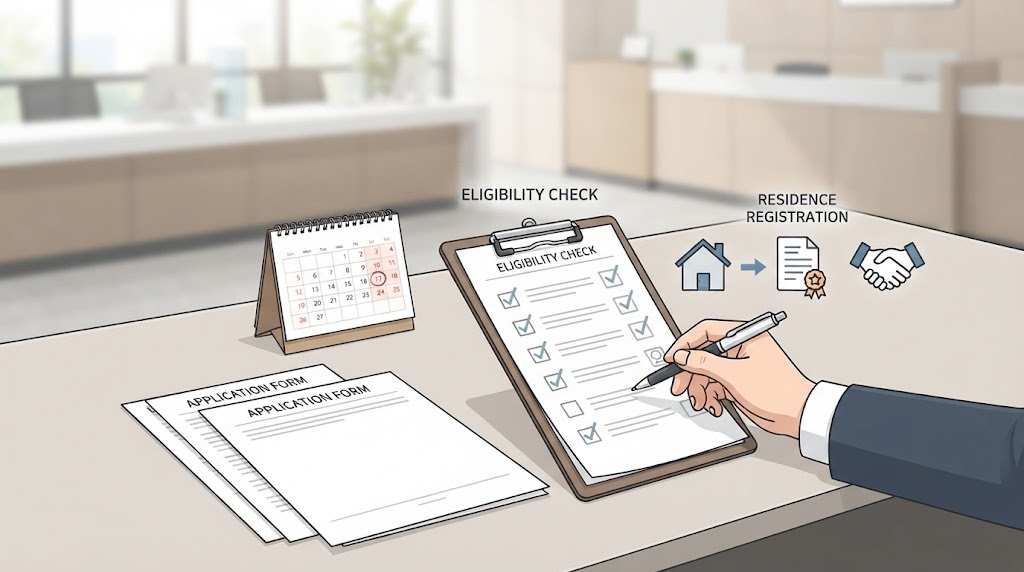
2. Risk of Full Recovery (Rejection) of Government Housing Support Benefits and Loans
Various government subsidies and financial products, such as the Butimmok Jeonse Funds Loan or Special Youth Monthly Rent Support, usually set maintaining actual residence and transfer registration as post-verification conditions.
- If you fail to complete transfer registration and submit the resident registration copy within a certain period after executing a loan, or if you arbitrarily move your transfer to another place during your residence, not only can subsidy recovery measures be taken, but the loan may also be recovered in full.
- Even in the case of local government monthly rent support, the address on the resident registration and the actual rented address must match, so omitting transfer registration directly leads to disqualification from support.

3. Exposure to Blind Spots in Legal Protection Due to Landlord’s Demands for Tax Evasion Purposes
Among some landlords, there are cases where they offer a slight reduction in monthly rent or offer a jeonse lease under the “condition of not registering a transfer” to reduce tax burdens such as comprehensive real estate holding tax or value-added tax, or to avoid adding to their total number of houses. If you go along with this and give up transfer registration, you are essentially taking on a massive legal risk yourself, where you might lose your entire deposit amounting to tens of millions of won just to save a small amount of money in the immediate present.
💡 Check Point:
If you are occasionally forced to accept a special clause during an officetel contract stating that “transfer registration is not possible because it is for business use,” you must pay special attention. If you are entering an officetel for residential purposes, transfer registration is the tenant’s legitimate right and legal obligation.
Next, let’s examine the core matters related to mortgages (mortgage rights) and special clauses that require special attention when contracting for an officetel.
Unlike studio apartments, officetels have their uses on the building ledger divided into ‘business facilities’ and ‘housing’, and because there are many variables depending on the landlord’s tax issues or loan situation, much greater caution is needed when signing a contract. In particular, let’s point out two core elements that must be checked to safely protect your deposit and smoothly complete transfer registration.
1. The Risks of ‘Special Clauses’ Refusing or Restricting Transfer Registration
When proceeding with an officetel lease contract, landlords often demand special clauses such as “I will adjust the monthly rent on the condition that you do not register a transfer” or “Transfer registration is impossible because it is a business officetel.”
- The Landlord’s Hidden Reason: The main reasons landlords make such requests are often to maintain residential rental business registration, avoid returning value-added tax refunds, or save on capital gains tax and comprehensive income tax.
- Impact on Tenants: As seen previously, if you cannot register a transfer, you cannot receive the protection of the Housing Lease Protection Act, resulting in the loss of your right of defense and right to priority repayment. In addition, since you will not be able to receive government youth housing subsidies or jeonse loans in the first place, this is a toxic clause that you must never agree to. Before signing a contract, you must clearly verify with the certified real estate agent and landlord that “residential transfer registration for actual residence purposes is possible.”
2. Analysis of ‘Mortgage Rights’ (Geunjeodang) and Senior Claims on the Building Registry Transcript
Compared to studio apartment buildings, officetels often have loans (mortgages) attached to them. If the landlord has received a large loan from a bank using the building or unit as collateral, major disruptions will occur in recovering your deposit if it goes to auction.
- Mandatory Verification of Registry Transcript: You must check the mortgage rights (maximum bond amount) set in Section Eul (Part B) of the building registry transcript a total of three times: right before signing the contract, on the day of balance payment, and immediately after transfer registration.
- Drawing a Safe Line for Your Deposit: You must thoroughly evaluate whether the sum of the senior mortgage amount and your deposit relative to the officetel market price (sale and jeonse price) is within a safe level of 70 to 80%. If excessive debt is tied to the building, no matter how much you meet the youth housing support conditions and complete transfer registration, it may be difficult to fully protect your deposit in the event of an auction.
💡 Check Point:
Sometimes landlords pull a trick of taking out additional loans between the contract date and the balance payment date. To prevent this, it is safe to make sure the contract special clauses include the provision: “Until the day following the balance payment date, the landlord shall maintain the current mortgage status and not set any new mortgage, and in case of violation, the contract shall be void and the landlord shall pay damages.”
Next, let’s look at the conclusion and closing remarks that will neatly wrap up the entire content of today’s post.
💡 Check Point:
For safe receipt of housing support benefits and the protection of your precious deposit, transfer registration is not an option but a requirement. Carefully check whether residential transfer registration is possible before signing the contract and thoroughly review the mortgage status on the building registry transcript to choose a valuable, risk-free home.
Based on everything we’ve covered so far, let’s summarize today’s key points.


Conclusion: Essential Practical Guide for Receiving Safe Housing Support Benefits
So far, we have thoroughly examined from A to Z the ‘Youth Housing Support Conditions and Essential Transfer Registration Requirements’ that young adults preparing for independence must know when contracting for officetels and studio apartments.
Amid soaring housing cost burdens, utilizing the government’s various youth housing support benefits and the Butimmok Jeonse Funds Loan is a crucial stepping stone for beginners in society and young adults. However, no matter how perfectly you meet the eligibility requirements of a great support system, if **transfer registration and a fixed date**, which prove actual residence and grant the right of defense, are omitted, all support becomes meaningless. In particular, when contracting for an officetel, wisdom is required to thoroughly filter out the landlord’s unfair clauses refusing transfer registration or excessive mortgage settings.
Rather than having a complacent mindset that “nothing bad will happen” or making compromises to save a few pennies of monthly rent right now, the surest and wisest path is to examine every corner of the contract and establish legal safety devices with the proactive attitude of “protecting my precious deposit and career myself.”
We sincerely hope that the guidelines shared today during the daunting and anxious independence preparation process will serve as a reliable compass, helping you wisely find the best home tailored to you and proudly become the protagonist of housing support benefits. We will be back with more useful and enriching youth housing and real estate guides next time!
💡 **If this post was helpful, please show your support with a like (♥) and by adding us to your neighbors so you don’t miss out on weekly updated, valuable youth housing and support benefit information!**
Korean version: 한국어로 읽기