
Types of Youth Housing Support Programs and Major Benefits at a Glance
By far the biggest burden approaching young people dreaming of independence is ‘housing costs’. Amidst the pressure of soaring lease/monthly rent prices and raising deposit funds, the government and local governments operate various forms of housing support programs to improve housing stability and housing welfare for youth.
However, because the programs are so diverse, it is easy to get confused about “which benefit suits me” or “what kind of housing support I can apply for”. In this chapter, I will neatly and easily organize the types and major benefits of representative youth housing support programs at a glance! 🎯
- Youth Housing Benefit Separate Payment (Housing Stability Basic Network)
- Support Target: Unmarried youth aged 19 to 30 within low-income households corresponding to a certain percentage of the standard median income (e.g., 50% or less)
- Core Content: A system that separates the housing benefit previously paid to parents and supports it in cash every month to youth residing in other regions or independent spaces with households separate from their parents.
- Features: It serves as a regular monthly contribution to monthly rent for low-income university students and job seekers burdened with heavy housing costs.
- Youth Jeonse Rental and Public Rental Housing (Provision of Living Space)
- Support Target: University students, job seekers, and youth aged 19 to 39 who meet the homelessness requirements
- Core Content: A system where, once a youth selected as a tenant finds a housing unit, LH (Korea Land and Housing Corporation) or a local public corporation signs a lease contract with the owner and then re-leases it to the youth at a low rental fee. (Includes youth purchase rental, happy housing, etc.)
- Features: It has a strong advantage of being able to secure a stable living space for a long period with unusually low deposits and monthly rent compared to market prices.
- Youth Beontimmok Jeonse Fund Loan and Monthly Rent Loan (Financial Support)
- Support Target: Homeless youth borrowers looking for housing (satisfying combined annual income and asset criteria for couples)
- Core Content: A government-supported financial product that lends jeonse deposits or monthly rent at low interest rates much cheaper than commercial bank interest rates to youth who have difficulty raising jeonse deposits.
- Features: It helps early-career workers lacking lump-sum funds escape the burden of high-interest private loans or general loans so they can safely sign lease/monthly rent contracts.
| Program Classification | Major Support Method | Core Benefits and Features |
|---|---|---|
| Housing Benefit Separate Payment | Monthly cash-like support | Separate payment of housing benefit under the youth’s name when living independently from parents |
| Public / Jeonse Rental Housing | Provision of affordable living space | Moving into LH / local public corporation rental housing cheaper than market price |
| Jeonse / Monthly Rent Deposit and Monthly Rent Loan | Low-interest financial loan support | Procuring jeonse and monthly rent funds at an unusually low interest rate compared to the market |
As such, housing support programs vary widely, ranging from directly supporting cash to cheaply renting out living spaces or linking low-interest loans. However, to receive these benefits, there is a strict gateway that must be commonly passed.
It is none other than the ‘income criteria’ and ‘homelessness qualification requirements’ which are the core of this post! In the next chapter, we will thoroughly examine the calculation methods by standard median income and income bracket. ✨
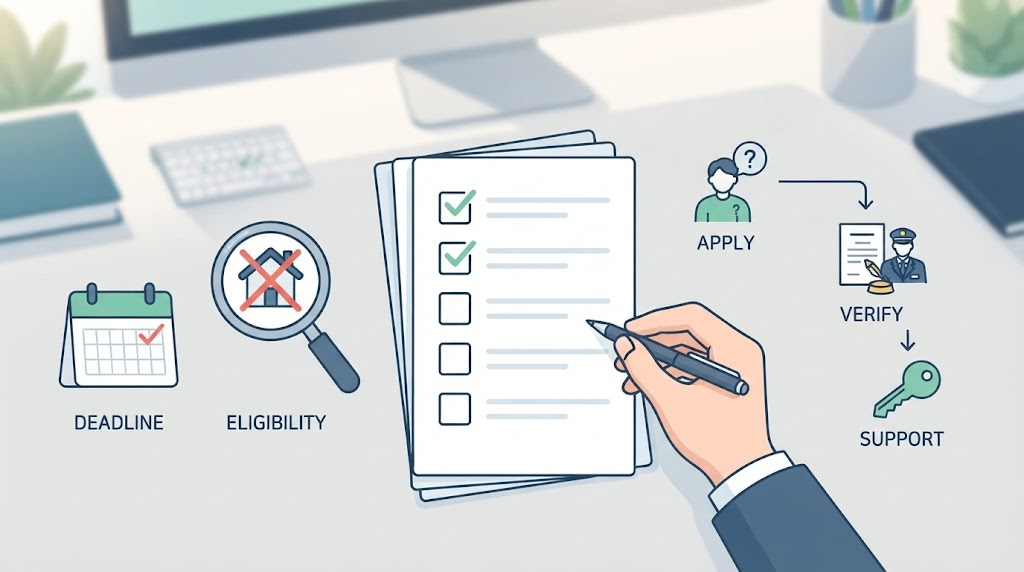
Core of Income Criteria: Standard Median Income and Calculation Method by Bracket
We previously looked at the types and benefits of various youth housing support programs. When writing an application to receive the benefits of this public support, the first and most tricky gateway you encounter is the ‘income criteria’.
Since government support programs must select classes urgently in need of actual housing stability within limited finances, objective income indicators are applied. In this chapter, I will easily explain what the ‘standard median income’, which is the core of youth housing support income criteria, is and how it is calculated by bracket! 🎯
- What is the ‘Standard Median Income’?
- Understanding the Concept: The standard median income refers to the income of the household located exactly in the middle (50th percentile rank) when all households in the Republic of Korea are lined up in order of income.
- Ministry of Health and Welfare Notice: Announced by the Minister of Health and Welfare after deliberation and resolution by the Central Living Security Committee by reflecting economic indicators (inflation rate, household income growth rate, etc.) every year, and utilized as a baseline for selecting beneficiaries of various welfare programs.
- Application Ratio by Support Program: Youth housing support programs have eligibility qualifications divided depending on whether they are below a certain percentage (%) of this standard median income. (e.g., median income 50% or less, 60% or less, 100% or less, etc.)
- Method for Calculating Standard Median Income by Number of Household Members
- Based on Resident Registration Certificate: When calculating income, not only the applicant themselves but also household members listed together on the resident registration table are used as the basis to sum up the total household income. (However, for youth support programs with independent residence, detailed guidelines on whether to include youth single-person households or parents may differ, so checking the announcement is mandatory)
- Monthly Recognized Income Evaluation: It is evaluated whether the ‘recognized income’ calculated by summing not only simple monthly salary (earned income) but also business income, income conversion amount of assets (amounts converting assets such as housing, land, automobiles into income), transferred income, etc. matches the standard median income bracket.
- Examples of Major Support Criteria by Income Bracket
- Low-Income Vulnerable Class (Median Income 50% or Less): Corresponds to the separate payment of housing benefits and top-priority housing support targets, receiving the thickest protection from the government.
- General Youth Class (Median Income 60% to 150% Only): A relaxed income bracket is applied so that a relatively broad youth class can enjoy benefits, such as youth jeonse rental housing or Beontimmok jeonse fund loans.
| Classification | Major Concept and Application Method | Remarks and Precautions |
|---|---|---|
| Definition of Standard Median Income | Income corresponding to exactly the middle (50%) of the income ranking of all households in the Republic of Korea | Amounts fluctuate as the Ministry of Health and Welfare newly announces it every year |
| Calculation of Number of Household Members | Evaluation summing the income of household members living together on the resident registration certificate | Exclusion of parents’ income from the sum possible depending on whether it is an independent household |
| Calculation of Recognized Income | Comprehensive calculation converting earned, business, and property incomes altogether | Check whether real estate and vehicle assets are reflected in addition to simple salary |
As such, income criteria go through a complex process of meticulously examining property and household member composition beyond simple paycheck checks. If you have passed the income requirements, you must obligatorily satisfy the ‘homelessness qualification requirements’, which is another core axis for applying for housing support.
In the next chapter, we will clearly and refreshing organize the confirmation scope of homelessness for all household members and the exact qualification requirements! ✨

Exact Criteria and Scope of Homelessness Qualification Requirements (Confirmation of Homelessness for All Household Members)
We previously carefully examined the income criteria of the youth housing support program. Even if you proudly passed the income requirements, the most powerful and strict condition that you must never miss to receive housing support is the ‘homelessness qualification requirements’.
Because the government’s housing support is literally a system designed to help the housing stability of ‘ordinary people and youth without a home’, it screens house ownership very meticulously. In this chapter, we will thoroughly investigate the exact criteria and screening scope of the homelessness qualification requirements! 🎯
- Exact Criteria and Scope of a ‘Homeless Person’
- Definition of Home Ownership: This refers to a state of not having ownership on the registry copy of a building that can be used for residential purposes excluding land (apartments, villas, detached houses, residential officetels, etc.).
- Shared Equity is Also Included in Home Ownership: You must be careful because even if you own a partial equity rather than the entire house (e.g., co-ownership with parents, equity splitting with others, etc.), you are considered to own a home.
- Past Housing History: If you have a history of buying and then selling (disposing of) a home in the past, you correspond to a homeless person based on the current point in time. (However, in the case of some public rentals or special supplies, there may be restrictions according to past ownership history or disposal timing, so checking the announcement is mandatory)
- Scope of Screening Target: Confirmation of Homelessness for ‘All Household Members’
- Based on Household Members on Resident Registration: Regarding homelessness, not only the applicant themselves but all household members listed together on the resident registration table (spouse, lineal ascendants, lineal descendants, etc.) must not own a home.
- What If My Parents Have a House?: Even for youth residing independently, if their parents are listed together on their resident registration certificate and the parents own a home, they cannot meet the homelessness requirement because a ‘homeowner among household members’ exists.
- Importance of Separate Households: Because of this, many youth take the strategy of separating their resident registration from their parents (forming a separate household) when applying for housing support to secure full homeless youth qualifications.
- Cases Exceptionally Not Considered ‘Home Ownership’ (Precautions)
- Disposal of Shared Equity Due to Inheritance, etc.: Cases where shared equity of a house was inevitably acquired due to inheritance or donation and then the equity was disposed of within a certain period (e.g., within 3 months) from the date the project entity (LH, etc.) notified disqualification.
- Exceptions for Small and Low-Priced Housing: In some jeonse loans or specific support programs, very small houses or franchised houses with extremely low floor space or officially assessed prices are exceptionally recognized as homeless, but in general youth housing support, it is strictly reflected in the calculation of the number of houses, so lowering your guard is forbidden.
| Item | Core Criteria and Scope | Traps to Watch Out For |
|---|---|---|
| Home Ownership Status | Existence of residential building ownership on the building ledger and registry copy | Some shared equities or residential officetels are also included as housing |
| Screening Scope | Mandatory homelessness for all household members on the resident registration certificate | Elimination if parents own a home when households are combined with parents |
| Necessity of Household Separation | Check whether to separate resident registration from parents in case of independent youth | Mandatorily check the address on resident registration and household members before application |
As such, the homelessness qualification requirements multidimensionally screen not only the applicant’s own name but also whether family members grouped together on the resident registration certificate own a home, so you must obligatorily view the resident registration certificate to check the household composition before applying.
If you have understood both the income criteria and the homelessness qualification requirements, you must be curious about how to prevent mistakes commonly occurring during the actual application process. In the next chapter, I will clearly and refreshing organize Frequently Asked Questions (FAQ) and error-prevention tips! ✨
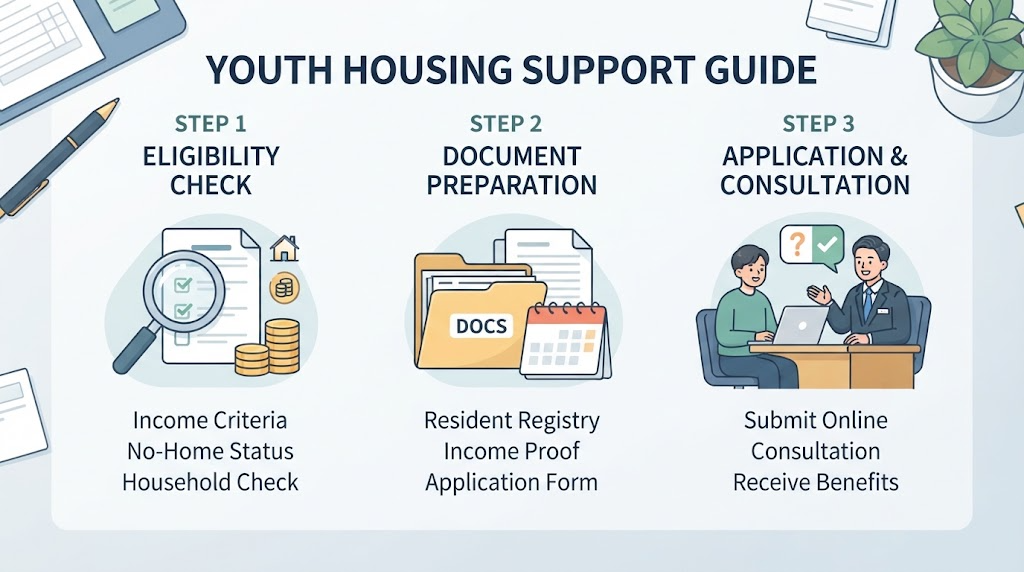
Frequently Asked Questions (FAQ) Related to Income and Housing During Application and Error-Prevention Tips
We previously meticulously examined the income criteria and household member homelessness qualification requirements, which are the core of youth housing support. Even if you know the theoretical criteria, when you actually prepare documents and fill out the application online, you are bound to face exceptional situations such as “What should I do in this case?”
I will clearly and refreshing organize representative curiosities that youth are most confused about during the application process, and error-prevention tips so you don’t miss a precious opportunity! 🎯
- Frequently Asked Questions (FAQ) Related to Income and Housing
- Q1. I am living independently with my resident registration separated from my parents. Is only my income screened?
- A: Yes, if the applying youth forms a separate resident registration certificate with a different household from their parents, as a principle, they are screened based only on the income and homelessness status of the youth themselves (and spouse). However, some programs (e.g., specific housing benefits or special support linked to parental support) require summing parents’ income, so you must check the household member scope in the relevant announcement.
- Q2. I have a small officetels or villa equity under my name. Can I be recognized as a homeless person?
- A: If you own partial equity in an officetels or house that can be used for residential purposes, you are considered a homeowner and the possibility of being eliminated from the homelessness requirements is very high. Even if the use on the building ledger is ‘business facility’, if it is actually used for residential purposes or registered as a house on the official register, it is included in the number of houses, so prior inquiry is essential.
- Q3. If I exceed the income criteria due to a job change or salary increase during the contract period, is the support suspended?
- A: Most housing support programs are screened based on the income and qualification requirements at the initial selection point (at the time of application), so support is not immediately suspended just because income has risen somewhat within the contract period after selection. However, at the time of renewal contracts, re-screening is conducted, so changed income criteria may be applied.
- Error-Prevention Tips to Prevent Document Submission and Screening Elimination
- Utilizing Government24 and My Home Portal Pre-Mock Surveys: Before official application, simulate in advance whether your income and housing ownership status meet the criteria through self-diagnosis and mock calculation services provided by related portal sites or housing welfare-related counseling centers.
- Checking Hidden Household Members on the Resident Registration Certificate: Cases often occur where unexpected relatives or others are bundled as household members on the resident registration certificate due to past school or military issues, or merging with parents. Before applying, you must obligatorily issue the entire resident registration certificate to cleanly organize the household composition.
- Strictly Observing the Issuance Date Criteria for Supporting Documents: All submitted documents such as income amount certificates, health insurance premium payment confirmation certificates, resident registration certificates/extracts, etc. must usually be the latest versions issued within the recent 1 month based on the application date. Prevent the unfortunate incident where you submit old documents and receive supplementation requests or automatic rejection processing.
| Classification | Major Inspection Point | Correct Coping Method |
|---|---|---|
| Check Household Separation | Whether parents and other co-habitants are included on the resident registration certificate | Maintain a clear household separation status upon independent residence and recheck the certificate |
| Check Housing Equity | Whether there is potential home ownership such as officetels, villas, inheritance equity, etc. | Verify the number of houses through advance viewing of the building ledger and registry copy |
| Document Validity Period | Check whether it is a recently issued copy and whether mandatory items are omitted | Issue the latest documents within 1 month based on the application date via Government24, etc. |
As such, in the actual application process, a minor household composition or document validity period becomes an important variable determining success or failure. If you have prevented mistakes through meticulous advance checks, now only the final preparation stage for a successful housing support application remains.
Let’s make a perfect finish in the next chapter! ✨

Essential Preparation Matters and Concluding Guidance for Successful Housing Support Application
So far, we have meticulously examined everything from the types and benefits of youth housing support programs to strict income criteria, homelessness qualification requirements for all household members, frequently asked questions during actual applications, and error-prevention tips.
Government and local government housing support is a reliable stepping stone that eases the economic burden of youth taking their first steps into society and allows them to prepare for the future. For successful subsidy receipt and stable housing settlement, I will summarize the essential preparation matters and concluding guidance that you must check for the last time! 🎯
- Check the Final Checklist by Application Stage
- Recheck Schedules and Announcements: Housing support programs are divided into open-reception types and local government-specific/monthly recruitment types. Be sure to mark the reception period and closing time of the latest announcements posted on the jurisdiction’s local government website, My Home Portal, Bokjiro, etc., on your calendar.
- Advance Signup and Authentication on Online Systems: You must access official websites utilized as reception desks, such as LH Apply Plus and Bokjiro, in advance to check the login and membership status of joint certificates (financial certificates, etc.) to prevent delays due to traffic congestion on the day of application.
- Thorough Preparation of Supporting Documents: Cleanly prepare essential documents in advance, such as income amount certificates, homelessness certificates, resident registration certificates/extracts, and copies of lease contracts in PDF format so there are no delays during actual reception.
- ‘Speed Strategy’ Against Early Budget Closing
- In the case of support programs that close early on a first-come, first-served basis or when the budget is exhausted, submitting the application quickly in the morning on the day reception starts is the shortcut to raising the acceptance rate.
- Since small flaws or omissions in documents can cause your ranking to drop due to requests for supplementation, you must press the final submission button after reviewing the validity period and household separation status emphasized earlier two or three times.
| Final Preparation Stage | Core Action Guidelines | Success Point |
|---|---|---|
| Complete Reading of Announcements | Final confirmation of support eligibility, submitted documents, and reception schedule | Prevention of omission of changed guidelines or local government-specific detailed conditions |
| Advance Document Preparation | Issuance of the latest documents within 1 month via Government24 and HomeTax | Blocking automatic rejection and ranking drops due to insufficient documents |
| Prompt Response on Reception Date | Fast application via online system right after reception begins | Maximizing preemption effects compared to early closing-type programs |
Only when housing stability is supported can you finally have the leisure to fully concentrate on your daily life, career, and studies. If you prepare meticulously using the guide and checklist we shared today as your compass, you will surely become the protagonist of reliable government housing support benefits!
I sincerely cheer for the pleasant and fresh new start and successful housing independence of youth. If you have any further questions regarding housing support applications, please feel free to leave a comment or inquiry anytime. I hope you spend a more peaceful and pleasant day today than yesterday. Thank you! ✨
Korean version: 한국어로 읽기