
Introduction: Why Should We Compare Youth Housing Welfare Policies by Region?
This is the draft body text for the first subheading of a Naver blog post. It examines the reality of housing welfare policies that vary wildly depending on the region of residence, emphasizing the necessity of comparative analysis.
- Introduction: Why Should We Compare Youth Housing Welfare Policies by Region?
Due to soaring monthly rent and deposits, the housing burden on young adults and beginners in society is growing heavier by the day. Amid a reality where monthly housing costs alone leave people breathless, let alone buying a home, the government and local authorities are rolling out various support programs to help stabilize housing for young people.
However, when people actually search to receive support, they often feel thoroughly confused, thinking, “Does my region not have this system?” or “How do benefits differ between Seoul and regional areas?” This is because while some housing welfare policies are provided uniformly nationwide, support amounts, age criteria, and income requirements vary drastically depending on the budget and ordinances of each local government (Seoul, Gyeonggi, Incheon, regional metropolitan cities, etc.).
For young people wondering, “Which region’s policy and what kind of housing benefit is most advantageous for me?”, we will carefully compare and analyze specialized local government housing welfare benefits across major regions in South Korea.
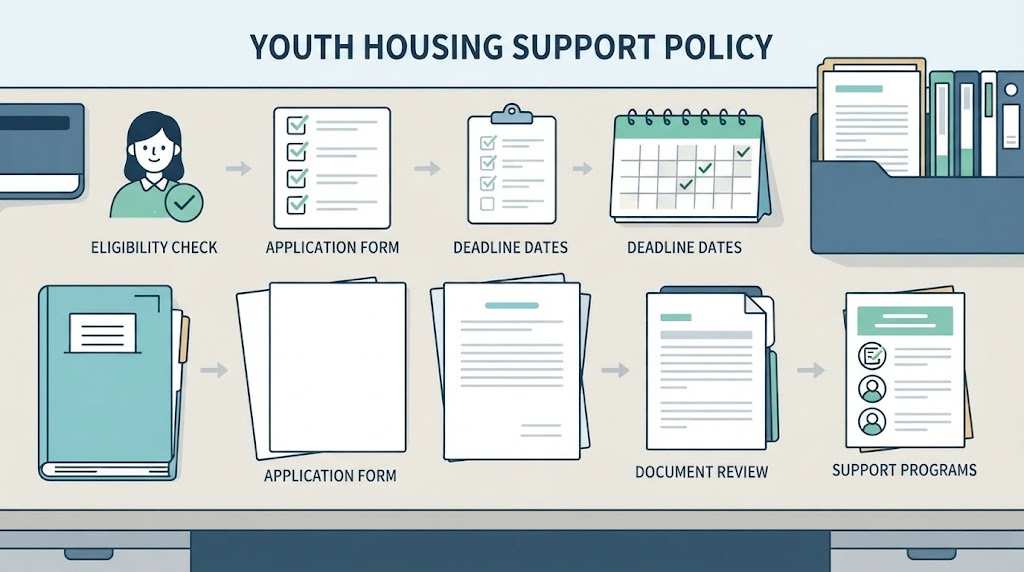
Seoul-style Housing Support: Characteristics of Youth Monthly Rent and Lease Deposit Interest Support
This is the draft body text for the second subheading of a Naver blog post. It easily organizes the characteristics of monthly rent support and lease deposit interest support, which are representative housing welfare policies for young people residing in Seoul.
- Seoul-style Housing Support: Characteristics of Youth Monthly Rent and Lease Deposit Interest Support
As the capital of South Korea and the area with the densest youth population, Seoul operates diverse and unique housing welfare policies to alleviate the housing cost burden. Let us examine the characteristics of two representative support programs that young people residing in Seoul should pay attention to.
- Seoul-type Youth Monthly Rent Support: The Leading Figure in Direct Housing Cost Support
Support Target and Characteristics: Directly supports a certain amount of monthly rent every month for homeless young people who have their address and reside in Seoul (meeting the standard median income and lease deposit/monthly rent criteria).
Practical Effect: Directly reduces the fixed expenditure burden of Seoul youth who face high monthly rent amounts and a large proportion of housing costs, creating an environment where they can fully concentrate on their studies and job preparation.
- Seoul Youth Lease Deposit Interest Support (Deposit Loan Support)
Support Characteristics: A method where commercial banks and Seoul cooperate to support jeonse and monthly lease deposit loans, and Seoul subsidizes a part (or all) of the interest thereon (interest subsidy).
Differentiated Advantages: It helps young people who have difficulty raising a large lump sum to utilize deposit loans under much more favorable conditions than commercial markets without high interest rate burdens, making it a powerful benefit that provides breathing room from jeonse fraud or the loan interest hell of the high-interest era.
💡 Core Tip:
Seoul’s youth housing support projects may have their application timing (first/second half of the year, etc.) and income criteria (median income percentage) adjusted in detail every year. Bookmarking the Seoul Housing Portal and checking announcement schedules in advance is the shortcut to success.

Gyeonggi and Incheon-style Housing Support: Specialized Benefits for Youth Residing in the Metropolitan Area
This is the draft body text for the third subheading of a Naver blog post. It easily organizes the characteristics of specialized housing welfare benefits and support systems for young people residing in Gyeonggi and Incheon, which are the metropolitan areas near Seoul.
- Gyeonggi and Incheon-style Housing Support: Specialized Benefits for Youth Residing in the Metropolitan Area
For young people commuting to Seoul or settling down in the metropolitan area, Gyeonggi Province and Incheon Metropolitan City also provide groundbreaking and practical housing welfare policies that are second to none. Shall we look into the region-specific specialized benefits that young people residing in the metropolitan area must check out?
- Gyeonggi-style Housing Support: Youth Basic Income and Housing Welfare Linkage
Support Characteristics: Gyeonggi Province operates various housing stabilization packages, including youth basic income, to help the characteristics of the residential area and the independence of youth within the province. In particular, through systems such as separate payment of housing benefits, it helps low-income youth separate from their parents and households to receive independent housing cost support.
Practical Advantage: A major strength of Gyeonggi Province’s policy is that welfare benefits closely related to real life, such as public transportation cost support or local currency linkage, and housing support mesh together to create a synergistic effect.
- Incheon-style Housing Support: Homeless Youth Lease Deposit and Monthly Rent Support
Support Characteristics: Incheon Metropolitan City actively implements lease deposit interest support (interest subsidy) and monthly rent support projects targeting homeless youth residing in the region.
Differentiated Appeal: It helps youth settle in Incheon by flexibly designing income criteria and support limits so that youth residing in housing with relatively lower deposit burdens or small officetels can also enjoy practical benefits.
💡 Core Tip:
Compared to Seoul, Gyeonggi Province and Incheon City have a wider range of residential areas, and additional support projects are often divided by basic municipal cities and counties. It is recommended to definitely check whether your place of residence has its own specialized projects through the ‘Gyeonggi Youth Portal’ or ‘Incheon Youth Portal’.
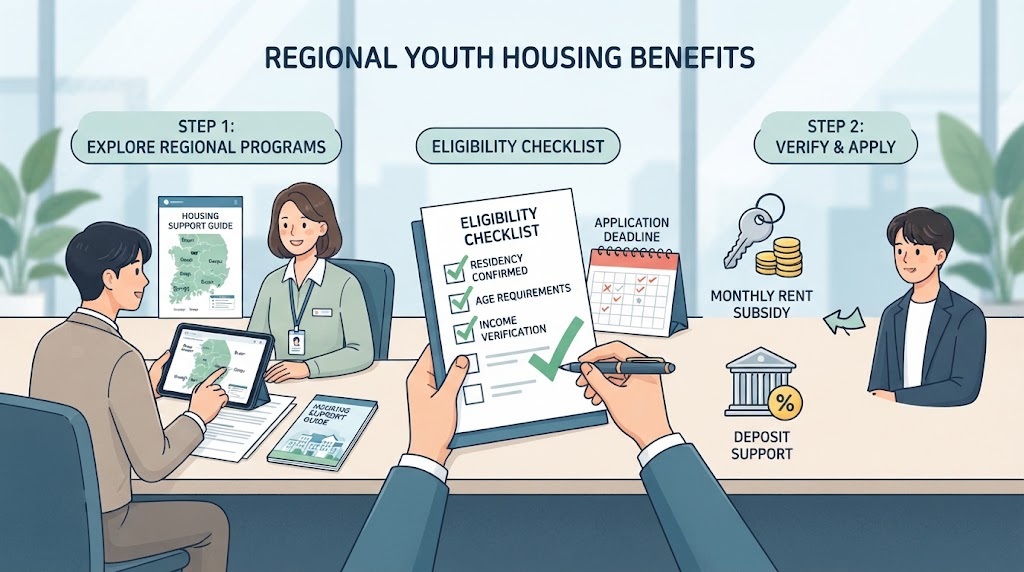
Regional Metropolitan Cities and Provincial Housing Support: Groundbreaking Housing Stabilization Policies
This is the draft body text for the fourth subheading of a Naver blog post. It easily organizes the characteristics of groundbreaking housing stabilization support policies prepared for youth residing or settling in regional metropolitan cities and provincial areas.
- Regional Metropolitan Cities and Provincial Housing Support: Groundbreaking Housing Stabilization Policies
For young people leaving the metropolitan area and settling down and living in regional metropolitan cities or provincial areas, even more groundbreaking and practical housing stabilization policies are waiting to help youth population influx and settlement. Shall we examine representative benefits that non-metropolitan young people should pay attention to?
- Youth Monthly Rent and Housing Cost Support in Major Metropolitan Cities such as Busan and Daegu
Support Characteristics: Major regional metropolitan cities like Busan, Daegu, and Gwangju reflect housing cost market prices that are relatively lower than those in the metropolitan area while operating groundbreaking monthly rent support and housing cost voucher systems to prevent the departure of the youth demographic.
Practical Effect: Income and property criteria are often applied more flexibly than in the metropolitan area, making it very advantageous for regional youth working in small and medium-sized enterprises or seeking jobs to experience practical benefits.
- Youth Settlement-type Housing Support in Provincial (Do) Areas and Regional Small Cities
Support Characteristics: In provincial areas and regional small cities such as Gangwon, Chungcheong, Jeolla, and Gyeongsang, to induce youth settlement in the region, they provide powerful benefits such as priority supply of public rental housing, full support for housing purchase and jeonse fund loan interest, as well as housing cost support.
Differentiated Advantages: Depending on the local government, there are many policies that stand out with distinctive ideas, such as ‘youth share houses’ that remodel empty houses and rent them out cheaply, or free housing support for youth returning to rural farming/fishing villages and local employment.
💡 Core Tab:
In regional metropolitan cities and provincial areas, in addition to central government projects, there are truly many hidden benefits implemented with each city, county, and district’s own budget. Please frequently check the ‘On-tong Youth’ integrated platform or the official website and youth center announcements of your local government to preemptively secure region-customized opportunities.

Conclusion: Wisely Choosing the Most Advantageous Region-specific Housing Support Benefit for Me
This is the draft body text for the fifth and final subheading of a Naver blog post. It is written with a message of encouragement and appeal so that readers can wisely choose the most advantageous housing support benefit for themselves according to their residence or relocation plans.
- Conclusion: Wisely Choosing the Most Advantageous Region-specific Housing Support Benefit for Me
We have carefully looked into region-specific specialized housing welfare benefits for youth in South Korea, ranging from Seoul, the Gyeonggi-Incheon metropolitan area, to regional metropolitan cities and provincial areas. To young people who felt helpless amidst soaring housing costs, the support projects prepared by each local government serve as an excellent escape route and a reliable pillar of support.
Lastly, we summarize 3 wise selection tips that you must keep in mind to find the benefit that suits you best and successfully apply for it.
First, carefully compare based on your current resident registration address and planned relocation site.
Housing support policies mostly determine eligibility based on the resident registration address at the time of application or during the residence period. You should preferentially target announcements from local governments that provide the most advantageous benefits according to your actual place of residence and future plans, such as Seoul, Gyeonggi, or regional areas.
Second, check whether there is duplicate receipt between central government projects and local government self-projects.
For projects of similar nature, such as central government-led projects like the Temporary Special Youth Monthly Rent Support and local government self-projects like Seoul-style Youth Monthly Rent, duplicate receipt may be restricted. The trick is to wisely choose and apply for the policy among your various alternatives that offers a larger support amount or more advantageous eligibility conditions.
Third, bookmark each local government’s official platform and integrated guidance site.
Housing welfare policies are updated frequently due to budget depletion status or detailed criteria every year. Diligently visiting ‘On-tong Youth’ or each regional youth portal to keep track of announcement schedules without missing them is the most certain way to save on housing costs.
We sincerely cheer for all young people who are fiercely moving forward toward their respective dreams even in front of high housing cost barriers, hoping that they can enjoy the reliable welfare benefits of their residential area without missing any and leap forward in a stable environment! We hope that today’s compared region-specific housing support guide serves as a compass for your wise housing independence and successful future planning.
Korean version: 한국어로 읽기