Introduction: Why Financial Support Policies Are Desperately Needed for Beginners in Society
The moment you break through the fierce employment war and take your first step into society, unlike the rosy future that seemed to unfold before your eyes, the walls of reality are higher and rougher than expected. The joy of receiving your first paycheck is short-lived; soaring prices, monthly rent, and lump sums that fall desperately short when you actually try to become independent add to the economic burden weighing on the shoulders of beginners in society, growing heavier by the day.
In particular, for the youth demographic with almost no asset formation, fixed monthly expenses such as housing costs, living expenses, and transportation costs account for a large proportion of expenditures, making it a struggle even to gather seed money. This is precisely why sigh-filled voices burst out saying, “It’s a relief if we just avoid monthly deficits, let alone buying a home.”
However, the government, each local government, and related organizations are rolling out various **Youth Worker Support Funds** and financial support policies to ease the economic hardships of these beginners in society and help them achieve practical independence. When you actually look, benefits are diverse, but there are truly many young people who unfortunately blow away their opportunities because they do not know the systems well or miss the application timing.
Depending on which support funds you secure and how you manage them during your beginner-in-society phase, the size of your assets several years down the line can change completely. We will examine the realistic background of why financial support policies are so desperate for beginners in society, and step by step walk you through the benefits of top-tier support systems that you must check out.

What is the Youth Worker Support Fund? Summary of Core Concepts and Support Targets
This is the draft body text for the second subheading of a Naver blog post. It easily organizes the definition and core concepts of the Youth Worker Support Fund, which beginners in society are most curious about, along with the eligibility requirements for support targets.
Then, what on earth is the Youth Worker Support Fund, and what kind of people can receive benefits? Defined in a single phrase, it broadly refers to a series of support systems where the state or local governments financially back young workers who have entered society after employment so that they can achieve economic independence and form stable assets.
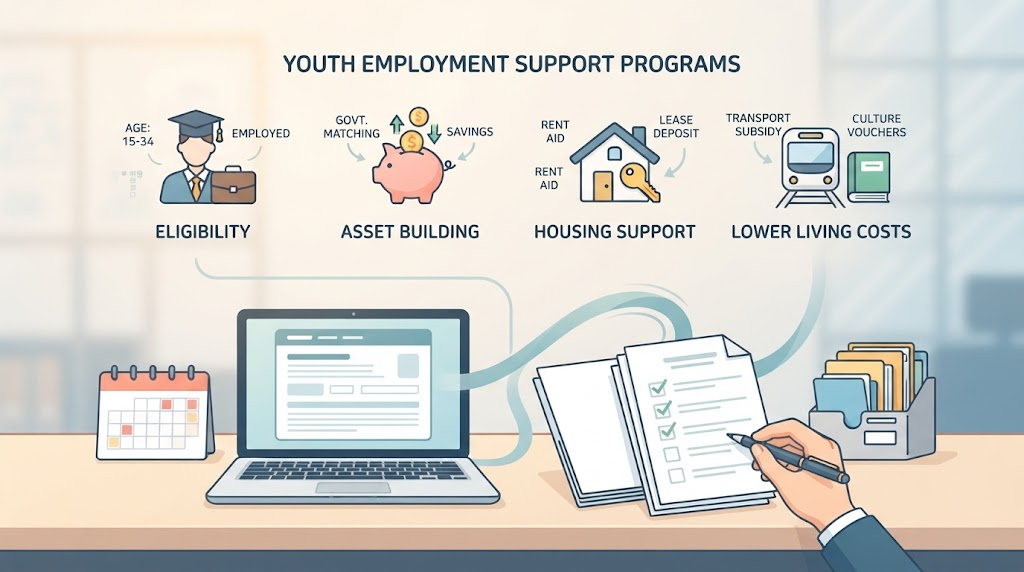
Since income is relatively low during the beginner-in-society phase and opportunities to raise lump sums are lacking, the government intends to boost work motivation and induce long-term tenure through various support funds. Representative support types range from asset formation support projects where the government or companies match support funds to create a lump sum if you save a certain amount every month, to housing support funds that ease housing cost burdens, and indirect support funds supporting public transportation or cultural life expenses.
Then what do the core support target requirements to receive such support funds usually consist of? Although there are slight differences in detailed criteria for each program, you generally have to clear the following common hurdles.
- Age Criteria: Most commonly targets young people aged from 15 years old to 34 years old (can be extended by the service period when fulfilling military service obligations).
- Employment and Income Requirements: The core targets are workers currently employed in small and medium-sized enterprises (SMEs) or mid-sized enterprises, or beginners in society who meet income below a certain standard (median income percentage or annual salary cap).
- Employment Type and Tenure Requirements: Since they often require being enrolled in the 4 major public insurances or a minimum tenure period according to employment type such as regular or contract workers (e.g., 3 months or 6 months or more), you must check your employment status in advance.
💡 Core Tip:
Even if the names are similar, Youth Worker Support Funds are divided into projects supervised by the central government (Ministry of Employment and Labor, Ministry of SMEs and Startups, etc.) and projects operated with the local governments’ (cities, provinces, counties) own budgets. Therefore, depending on where your resident registration address and actual workplace location are, the scope of targets eligible to apply can vary greatly, making it most important to carefully compare the qualification requirements demanded in the announcement.
Comparison of Benefits by Major Support Program and Application Conditions
This is the draft body text for the third subheading of a Naver blog post. It easily compares and organizes the benefits and specific application conditions of major support programs that beginners in society actually pay the most attention to and apply for.
The systems implemented under the name of Youth Worker Support Funds are more diverse than expected, and benefits and conditions vary widely depending on the purpose of support. Let us compare the core contents of representative support programs so that you do not miss out on the most advantageous benefits for yourself.
- Characteristics of Asset Formation Support Funds for SME Employees
Support Benefits: A representative asset formation system that helps youth employed in SMEs receive a lump sum upon maturity by having the government and companies (or local governments) jointly accumulate support funds when they save a certain amount every month in the form of installment savings. (e.g., Youth Tomorrow Savings Account, etc.)
Application Conditions: You must be employed in an SME for a certain period or longer, and meet the standard median income (e.g., exceeding 50% and up to 100%, etc.) and personal income/property criteria. Faithfully maintaining monthly savings is a core condition.
- Youth Worker Living Stability and Housing/Transportation Support Benefits
Support Benefits: Welfare systems that provide direct help in real life through forms such as monthly rent support, lease deposit interest support, and public transportation fee refunds (Youth Donghaeng Card, etc.) to ease the fixed expenditure burden of low-income youth workers.
Differentiated Advantage: While asset formation products focus on long-term lump-sum accumulation, living stability support has the strength of providing very high perceived satisfaction by saving on housing or transportation costs that go out every month right away.
💡 Core Tip:
Major support programs may have their budget allocation situations or income criteria caps slightly adjusted every year. In particular, since duplicate enrollment between central government projects and local government self-projects is often restricted, wisdom is needed to first preempt and apply for the main program with the greatest benefits based on your annual salary, the size of your employed company, and your residence.

Application Tips You Might Easily Miss and Essential Checkpoints
This is the draft body text for the fourth subheading of a Naver blog post. It easily organizes core tips that you might easily miss when applying for the Youth Worker Support Fund and essential checkpoints that must be checked in advance.
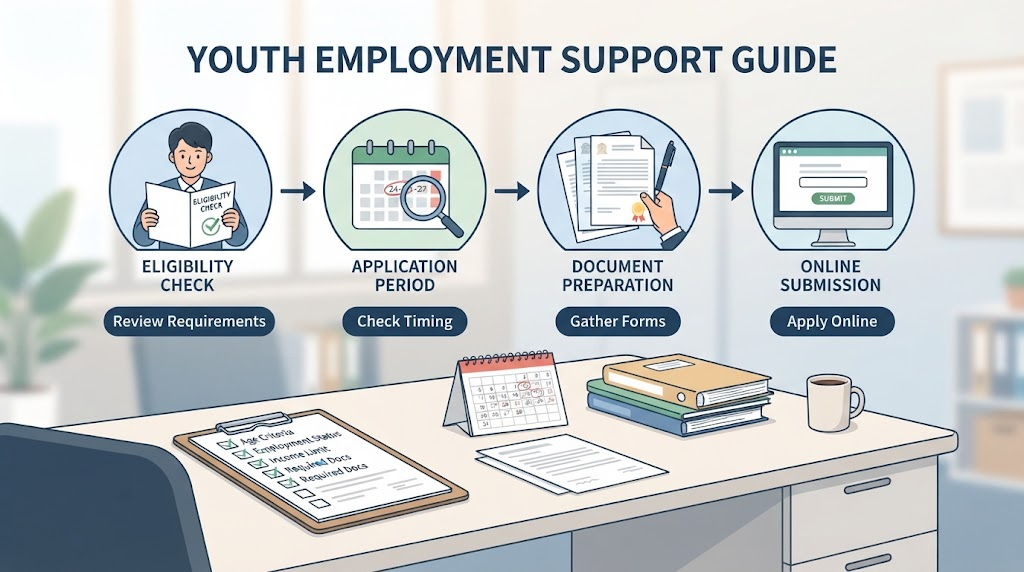
You can commonly see cases around you where people find out about the existence of the Youth Worker Support Fund and make up their minds to apply, only to end up unfortunately failing due to omitted documents or mistaken criteria right around the application. To ensure you do not miss a hard-earned opportunity, we point out 3 application tips and essential checkpoints that you must remember.
- Carefully Examine Duplicate Receipt Availability and Income Criteria
Points to Watch Out For: Asset formation support projects implemented by the central government and youth allowances operated independently by each local government, or welfare benefits of a similar nature, are often classified as similar overlapping projects, restricting simultaneous receipt.
Solution Tip: It is wise to prioritize and choose the main system among the various systems for which you are eligible that offers a larger support amount or more advantageous qualification conditions before applying. In addition, when calculating income criteria (standard median income percentage, etc.), you must figure out your exact income bracket in advance through health insurance premium payment confirmation letters, etc.
- Check Tenure and Employment Type Requirements in Advance
Checkpoint: Most Youth Worker Support Funds require specific tenure requirements such as ‘SME employee’ or ’employment insurance subscription period (e.g., 3 months or more, 6 months or more, etc.)’.
Practical Tip: For beginners in society who are preparing to change jobs or have just entered a company, you must check in advance through the HR team or the employment insurance website whether you accurately meet the requirements on the subscription date calculation reference date (such as the announcement date) to avoid trouble.
- Check Regular Announcement Schedules and Bookmark Integrated Platforms
Core Tip: Since youth support projects have limited budgets, applications are usually open for a brief period only at the beginning of the year or during specific periods in the first and second halves, often closing early.
Recommended Method: Bookmarking the ‘Ontong Youth’ integrated portal, the Ministry of Employment and Labor’s Worknet, or your local government’s official youth center website and setting up notifications is the most surefire weapon to secure easily missed application opening dates faster than anyone else.
Conclusion: The First Step to Wise Financial Life and Solid Asset Formation
This is the draft body text for the fifth and final subheading of the Naver blog posting. It is written with a message of urging and encouragement so that readers can actively utilize funding support systems during their early career years to start a wise financial life and solid asset formation.
- Conclusion: The First Step to Wise Financial Life and Solid Asset Formation
So far, we have carefully examined everything from the concept of the youth worker support fund, benefits by major program, to easily missed application tips. Amid soaring prices and tough realities, for all young people enduring under the name of novices in society, funding support schemes prepared by the government and local governments can serve as sturdy wings.
Finally, here are 3 final pledges you must remember for successful asset formation.
First, knowing information is money itself. Actively search around to find support systems that suit you.
Second, cultivate a habit of periodically checking integrated platforms or local government announcements so you don’t miss application periods.
Third, we hope you use subsidies as a stepping stone to solidly build the framework of a wise financial life consisting of savings and investment.
Small interest and practice during your early career days will completely transform your bank account balance and asset scale a few years down the line. We sincerely cheer for the guide organized today to become the first step toward your solid asset formation and the compass for successful economic independence!

Recommended Posts to Read Together
Korean version: 한국어로 읽기