
Introduction: What Happens When You Alternately Take and Stop Supplements, and Misconceptions About “Rest Periods”
As you start taking supplements like vitamins, probiotics, or omega-3s for your health, you’ve probably wondered at least once, “Am I taking these for too long?”, or “I heard that taking a break of a month or two in between, a so-called ‘rest period,’ is necessary to avoid putting a burden on the body.” Around you, rumors often circulate like folklore that taking supplements consistently puts a strain on the liver or causes tolerance, reducing their effectiveness.
Is a rest period really necessary for supplements? Or is the habit of alternating between taking and stopping actually disrupting our body’s health rhythm? The truth about supplement intake periods and rest periods, which many people misunderstand, might be different from what you think.
In this post, we will thoroughly examine the scientific reasons and internal mechanisms of why you should consume supplements consistently without rest periods, clearly outline the side effects that occur in our bodies when you stop intake midway, and even provide tips on setting the correct intake cycle. If you want to completely clear up your questions about supplement intake periods and experience true health benefits, check it out right now!
Scientific Reasons Why Supplements Do Not Need a Rest Period and Their Internal Mechanism of Action
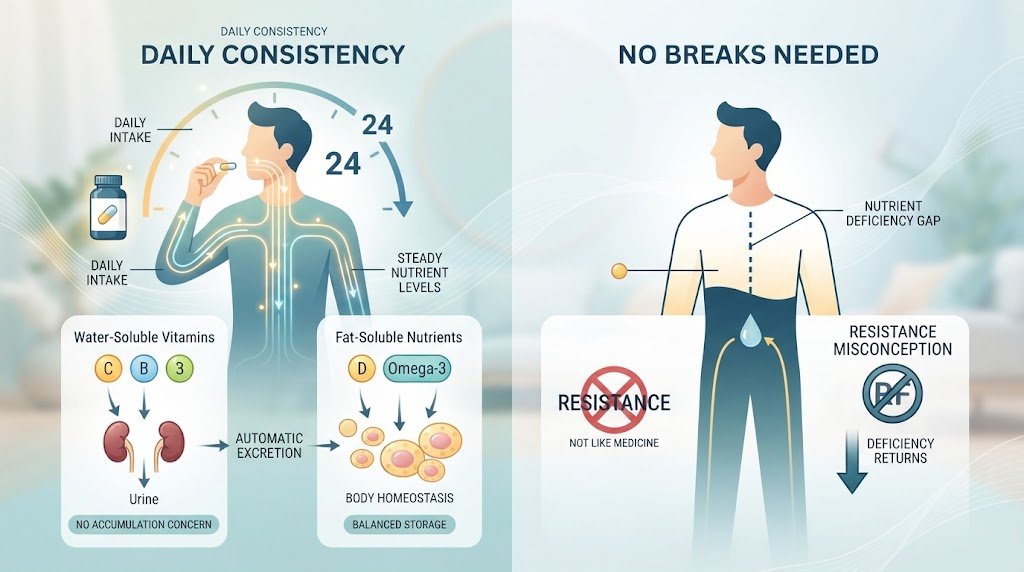
There is a widespread misconception that supplements accumulate excessively in the body or build up tolerance if taken for a certain period, so you must periodically take a “rest period” (a break from taking them). However, according to modern nutritional science and medical research, most of the health functional foods we commonly consume are nutritional sources rather than drugs, so artificial rest periods are not mandatory. We will look into three scientific reasons why supplements do not require rest periods and how they work inside our bodies.
- Nutrients Are an ‘Extension of Food,’ Not ‘Drugs’ (The Difference in Concept Between Tolerance and Rest Periods)
Differences between drugs and supplements: Medicines such as antibiotics or blood pressure medications act forcefully on bodily receptors to treat diseases, so long-term use can lead to tolerance or place a burden on the body’s metabolism, making a rest period necessary. On the other hand, supplements like vitamins, minerals, and omega-3s are a concept of supplementing nutritional components consumed daily through meals, so they do not cause “tolerance” in the same sense as drugs.
Characteristics of essential nutrients: Our bodies live by constantly consuming essential nutrients that they cannot synthesize on their own or of which intake is insufficient. Therefore, having a rest period is equivalent to intentionally stopping the supply of nutrients and reverting back to a deficient state.
- Maintenance of Body Homeostasis and the Excretion Principles of Water-Soluble and Fat-Soluble Vitamins
Automatic excretion of water-soluble components: Water-soluble nutrients such as vitamin C or the vitamin B complex are absorbed by the body, and the remaining amounts are excreted outside the body through urine. Therefore, there is little concern about them accumulating in the body and causing toxicity, making it safe to consume them consistently every day.
Fat-soluble components and homeostasis: Fat-soluble components like vitamin D or omega-3 are stored in bodily tissues, but because our body’s metabolic system tries to maintain homeostasis, taking them within the recommended intake level keeps a balance through the body’s regulatory functions.
- Cell Turnover Cycle and the Scientific Principles of Experiencing Nutrient Effects
Regeneration periods for cells and tissues: The cells in our body are constantly regenerated and replaced over periods ranging from a few days to several months, depending on the skin, blood, intestinal mucosa, and so on. For instance, it takes at least several months of consistent nutritional supply for red blood cells or immune cells to fully and healthily transform.
Essential conditions for experiencing effects: If you place a rest period in the middle and cut off the supply of nutrients, you miss the timing for cells to perform stable metabolic activities and improve their functions. Therefore, you can finally experience true efficacy only by consuming them consistently without interruption for a certain period (usually 3 months or more) during which each supplement acts in our body to bring about meaningful changes.

Adverse Effects and Losses to Health Caused by Taking a Rest Period
Many people arbitrarily stop or take a break from supplements they have been taking diligently for months, thinking that “even supplements need a rest sometimes for the body to be comfortable.” However, a rest period that artificially cuts off nutritional intake can rather cause unexpected adverse effects and time and economic losses to our body. Here are three representative health losses that can occur when taking a rest period.
- Return of Nutritional Status to Its Original State and Relapse of Chronic Fatigue and Decreased Immunity
Drop in blood concentration and delayed recovery of deficiency states: The blood concentrations and tissue storage levels of specific vitamins or minerals that were barely maintained in the body through supplement intake drop sharply during the rest period.
Reversion of symptoms to their original state: Uncomfortable symptoms such as chronic fatigue, decreased immunity, and dry skin caused by nutritional deficiencies return to how they were the moment you stop taking supplements, which can cause the tower of health management you carefully built up over time to collapse in an instant.
- Disruption of Body Metabolic Rhythm and Repetition of Adaptation Processes
Loss of consistent rhythm: The cells and metabolic systems of our body function optimally by adapting to a regular nutritional supply environment. However, repeatedly taking rest periods irregularly forces the body to newly adapt every time nutrients come in or don’t, which can rather cause confusion in the biological rhythm.
Unnecessary energy expenditure to maintain homeostasis: When the process of nutritional supply being cut off and resumed repeats, the body experiences unnecessary metabolic stress to maintain homeostasis, and it can even result in side effects where the absorption efficiency of specific nutrients rather decreases.
- Double Loss of Supplement Purchase Costs and Health Management Efforts
Loss of return on investment: The cost invested in purchasing supplements and the time and devotion spent taking them every day are reset due to the rest period. It is essentially cutting off intake just at the timing when you could experience the effects, ultimately resulting in wasting both money and time.
Fixation of inefficient intake patterns: The habit of alternating between “taking and resting” reduces trust in supplements and eventually makes you lose the momentum to continue health management, becoming a major obstacle to long-term health improvement.
Setting the Right Supplement Intake Cycle and Practical Tips for Consistency
Even after knowing that supplements do not require a rest period, actually remembering to take them every day without missing a dose is not as easy as it sounds. To fully enjoy the effects of taking supplements, it is important to set the correct intake cycle and establish your own practical strategy to maintain consistency in daily life. Here are three practical tips to increase the sustainability of supplement intake and complete your health routine.
- Setting the Intake Cycle and Time Slot According to Product Characteristics
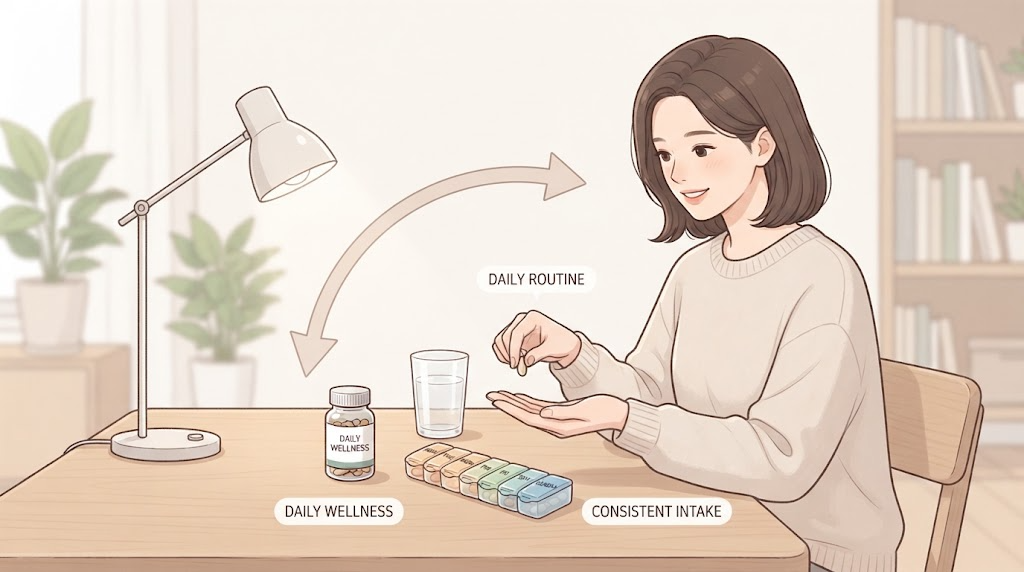
Basic supplements essential for daily intake: Multivitamins, omega-3s, probiotics, and others are accumulated in the body and consumed continuously, so the principle is to consume them at a fixed time every day regardless of the day of the week. In particular, it is best to fix the intake cycle after meals (breakfast or lunch) when there is less burden on the stomach or the absorption rate is high.
Distinction from short-term intensive intake components: Unlike general supplements, only some functional ingredients consumed in high doses for specific purposes or products prescribed by experts should have limited periods set, while supplements for maintaining basic health should be routinized without interruption.
- Utilizing Highly Visible Routes and Building an Alarm System
Visual exposure effect: If you put supplement bottles deep inside kitchen cabinets or drawers, they are easily forgotten, just like the saying “out of sight, out of mind.” Place your supplements on the dining table, next to the water purifier, or along the path you pass every morning before going to work.
Utilizing smartphone alarms: For busy modern people, using the alarm function of a smartphone calendar or health management app to set a “take supplements” alarm at a set time every day is the surest way to prevent forgetting.
- Using Divided Containers and Increasing Portability During Travel and Business Trips
Using portable divided cases: If you put a week’s worth of portions in a divided case in advance and always keep it in your bag or pouch, you can maintain consistency without missing your supplement intake even during outings, sudden overnight stays, or travel schedules.
Recording small achievements: By checking off the days you took your supplements in your smartphone memo pad or diary and completing a one-month routine, health management becomes a pleasant sense of achievement rather than an obligation.

Conclusion: Completing a Healthy Supplement Intake Habit Through Uninterrupted Consistency
So far, we have carefully examined everything from the truth about the “rest period” that many people misunderstand regarding supplement intake periods, to the scientific reasons why rest periods are not necessary, the adverse health effects that occur when intake is stopped, and practical tips to maintain consistency in daily life.
While taking vitamins and supplements for health, quite a few people must have stopped intake in the middle or taken rest periods due to vague anxieties such as, “Wouldn’t taking them for too long put a burden on the liver?”, or “Wouldn’t taking a short break make the effects better?” However, nutrients are not drugs that treat diseases, but rather an “extension of food” that our body needs every day, and only when they are maintained constantly in the body do they exert true health promotion effects in line with cell turnover cycles and metabolic rhythms.
Rather, irregular rest periods lower blood nutrient component concentrations, bringing back existing fatigue or decreased immunity, cause unnecessary stress on body metabolism, and even lead to time and economic losses. The core of supplement intake depends not on “how high the dosage is,” but on “how uninterrupted and consistent it is.”
Based on the correct supplement intake principles and guide shared today, we hope you will boldly let go of the burden of taking them every time and misunderstandings about unnecessary rest periods. If you add small practices such as placing supplements along a highly visible route and utilizing portable divided cases, taking supplements will become a pleasant health routine that cherishes your body rather than a cumbersome obligation.
We hope today’s post served as a reliable guide to completing your healthier and more vibrant daily life, and if you have any further questions regarding supplement intake periods or methods, please feel free to leave a comment anytime. We wish you a healthy and pleasant day today with uninterrupted consistency!
Korean version: 한국어로 읽기