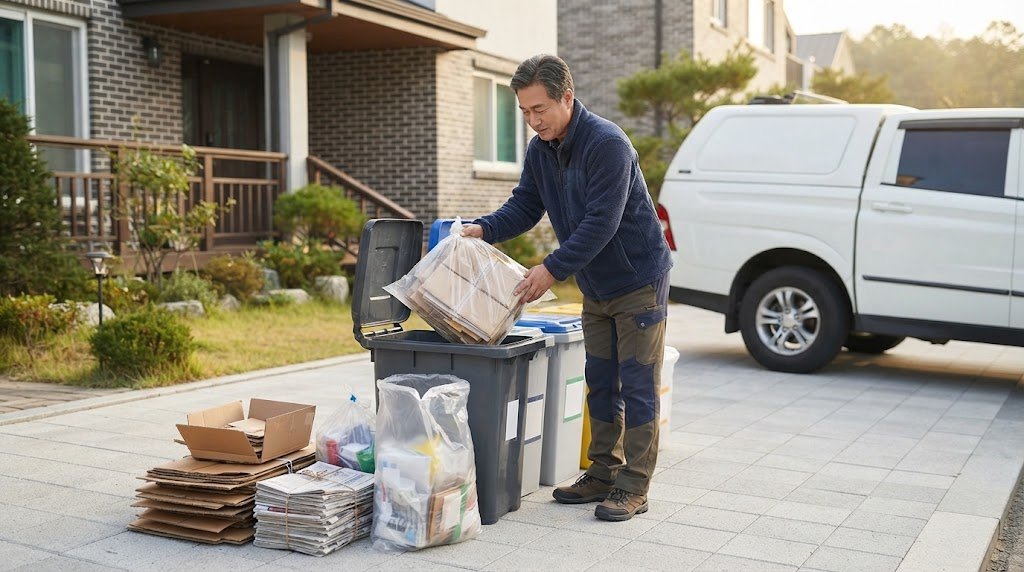
Introduction: “Could My Waste Be Involved, Too?” Why You Can’t Escape Responsibility for Illegal Dumping
When running a business, doing a major cleanup, or carrying out interior remodeling, a massive amount of waste is inevitably generated. Not infrequently, people entrust waste disposal to cheap private services with the complacent thought, “They’ll take care of it properly,” just to save on immediate disposal costs or out of mere convenience.
However, such a careless attitude of “As long as it’s hauled away, that’s all that matters” can return as a massive risk capable of shaking the very foundation of your business.
- The Trap of the Waste Generator Responsibility Principle
One of the core principles of South Korea’s Wastes Control Act is the “Waste Generator Responsibility Principle.” Waste generated from your business remains under the management responsibility of the original business owner who discharged it until it is finally and legally disposed of.
In other words, even if you paid for and entrusted the disposal to a third party, if the entrusted company illegally dumps the waste in a mountain or vacant lot, the waste generator can hardly avoid being held complicit or responsible for negligent management.
- Why the Excuse “I Didn’t Know” Doesn’t Work
When enforcement agencies or local governments catch an illegal dumping site, they primarily apprehend the perpetrator caught in the act, but immediately begin tracing the discharge route. The moment the original source of generation is revealed through receipts inside garbage bags, waste properties, CCTV footage, and more, business owners face absurd and unfair situations such as the following:
The argument that “I simply paid legally and entrusted the job” does not serve as a legal exemption from liability.
If the illegal operator cuts off contact and goes into hiding, the collection costs for the dumped waste and the restoration costs are left entirely on the shoulders of the generator.
- Fines, Damage to Corporate Image, and Disaster Caused by a Moment of Carelessness
Fines and penalties imposed when illegal dumping is detected range from millions to tens of millions of won, and in severe cases, can even lead to business suspension orders. Above all, issues related to environmental pollution and illegal waste deal a fatal blow to a company’s reliability and brand image.
So, how should you handle waste safely while completely escaping the risks of heavy fines and legal punishment? In the next section, we will examine the reality of illegal operators and key guides to avoiding them.
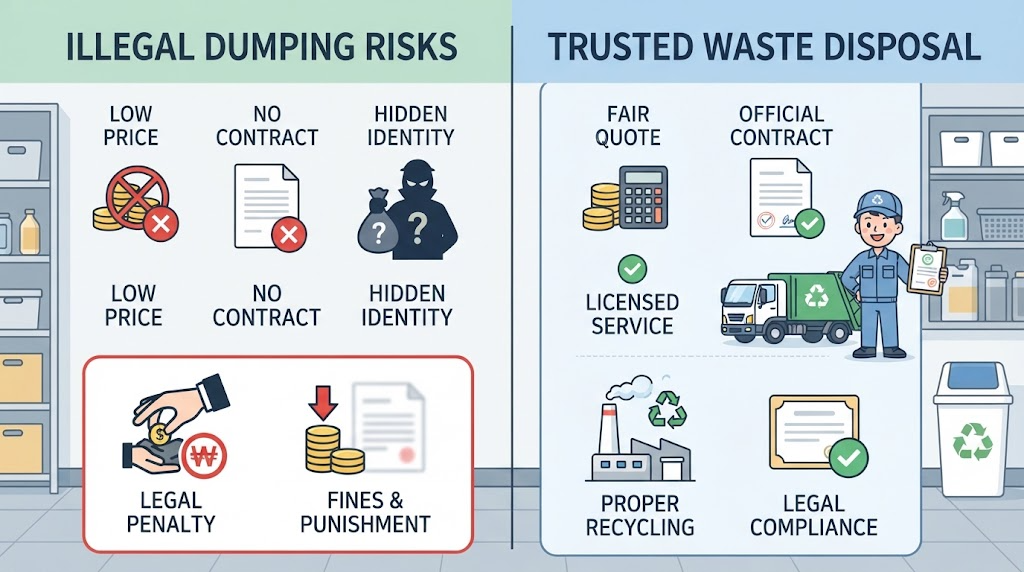
Body Paragraph 1: Characteristics of Illegal Dumping Companies and Standards for Illegal Dumping Fines and Penalties
The primary targets you must watch out for before waste disposal are illegal brokers and unlicensed collection companies that lack official licenses. They lure business owners by offering absurdly low prices compared to legitimate companies, and then use the tactic of secretly dumping trash in secluded mountains, factory vacant lots, or along roadsides before going into hiding.
Let’s take a closer look at which companies are dangerous and exactly what level of legal responsibility business owners must bear if caught.
- Typical Characteristics of Illegal Dumping Companies Luring with Cheap Prices
Avoidance of issuing written contracts and official tax invoices: They induce cash transactions while avoiding the creation of tax invoices or formal contracts, saying, “If you pay in cash, we’ll give you a bigger discount.”
Refusal to present affiliation and licenses: When asked to show an official waste disposal business license registered with the competent local government, they vaguely mumble or refuse to provide a copy.
Absurdly low estimates: They quote prices that are about half of what other companies average, or loudly boast that they will handle it cheaply regardless of the amount of waste.
Unclear contact information and addresses: Often, business cards lack a business registration number, office addresses do not appear on portal maps, or they only use temporary numbers.
- Standards for Illegal Dumping Fines and Penalties Imposed for Violations of the Wastes Control Act
If you entrust disposal to an illegal dumping company and get caught, or if responsibility for negligent management is recognized, you will face severe penalties and a bomb of fines under the Wastes Control Act.
In cases of illegal dumping and unlawful landfilling/incineration:
If waste generated during business activities is illegally dumped, you can be sentenced to up to 7 years in prison or fined up to 70 million won.
Depending on the number of violations and the amount of waste, millions to tens of millions of won in fines are imposed separately.
In cases of improper consignment (handing over to an unlicensed company):
Generators who entrust waste disposal to an unlicensed company without an official permit are also subject to punishment. Even if you claim, “I didn’t know,” you are considered to have failed in your management obligations, making it difficult to avoid criminal prosecution and the imposition of fines.
Restoration orders and claims for disposal costs:
The local government issues a restoration order to clean up the dumped waste as it was and restore the environment, and even administrative execution costs are billed to the business owner, resulting in massive financial losses.
- The Risks Caused by the Complacency of “Surely I Won’t Get Caught?”
Illegal waste dumping has a very high detection rate due to black boxes, security CCTVs, drone enforcement, and citizens’ public interest reports. In particular, since the original generation source is instantly pinpointed by even a single receipt or courier invoice found inside the trash, even victims who were deceived by illegal companies can hardly completely evade legal responsibility.
Then, what kind of company should you choose to fundamentally block such terrifying risks? In the following content, we will look into the 3 core checkpoints for distinguishing legitimate and official collection companies.
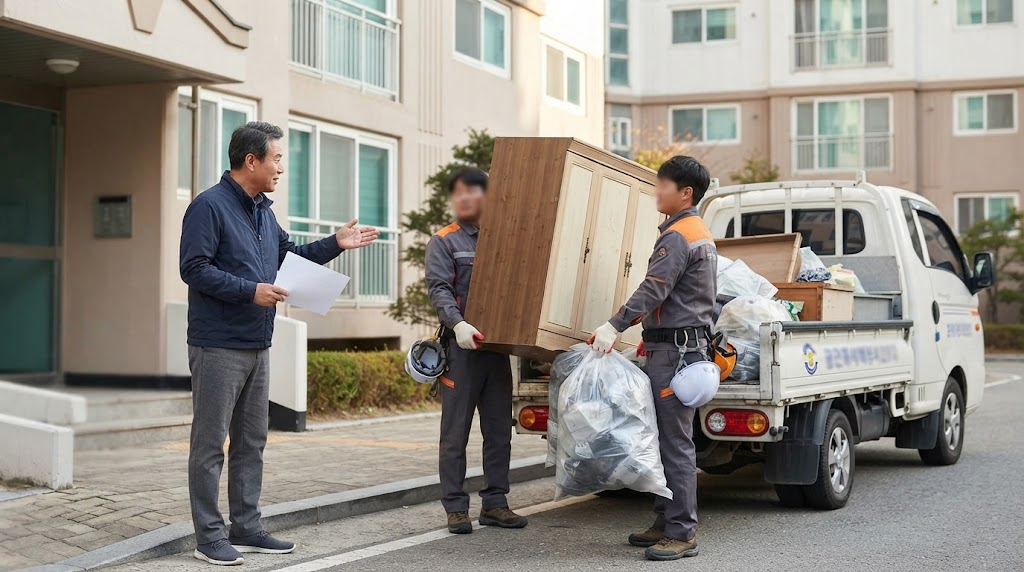
Body Paragraph 2: 3 Core Checkpoints for Distinguishing Legitimate Waste Disposal Companies
To avoid falling for the sweet, cheap temptations of illegal dumping companies and taking on the risks of fines and business suspension, a thorough filtering process to verify whether a company is officially licensed before signing a contract is essential. Here are 3 core checkpoints to help you weed out safe, legitimate companies from among numerous operators.
- First Checkpoint: Verify Competent Local Government “Official License” and Business Scope
The most basic yet certain method is to directly check the documents proving that the company has received lawful permission.
Requesting the original or a copy of the license: Ask for the waste collection and transportation or disposal business license, and verify that the business name, representative’s name, and license number match.
Checking the business area and permitted waste types: The allowable scope of handling waste is determined by its properties (business waste, construction waste, municipal waste, etc.). For example, if a company with only a construction waste permit collects general business waste, it can be illegal, so you must cross-check to ensure it matches the type of waste your business generates.
Querying Government24 or the Allbaro System: It is safe to cross-verify through local government or Ministry of Environment-related portals whether the company is actually operating normally.
- Second Checkpoint: Integration with the “Allbaro System” and Transparent Transfer and Acceptance Procedures
A legitimate waste disposal company actively utilizes a system that transparently records and manages the entire process from waste discharge and transportation to final disposal.
Whether registered in the Allbaro System: In the case of business waste, waste acceptance and transfer details must be entered and managed electronically through the “Allbaro System” operated by the Korea Environment Corporation. You must unconditionally avoid companies that refuse this or pretend to be unfamiliar with the system.
Issuance of official slips and transfer manifests: Be sure to check whether they issue an official transfer manifest containing the type, weight, and transit route of the waste at the time of collection. This document serves as the most powerful defense tool to prove that your business disposed of waste legally during future local government inspections or environmental audits.
- Third Checkpoint: Verify Appropriate Disposal Costs (Suspicion of Excessively Low Prices)
Waste disposal involves a combination of vehicle maintenance costs, labor costs, and fees paid to final disposal sites (incinerators and landfills), forming an objective “market price.”
Wary of absurdly low quotes compared to market prices: Places that quote about half of the average estimate or boast that they will “clean it up at the absolute lowest price no matter what” have a very high probability of committing illegal dumping or unauthorized landfilling.
Checking detailed items in estimates: You should request an official estimate that transparently specifies vehicle tonnage, workforce composition, waste disposal site entry costs, etc., and exclude places that force cash payments and are reluctant to issue tax invoices from your contracting targets.
Simply selecting a safe and transparent company can prevent more than 90% of the risks caused by illegal dumping. Now, let’s check out in the next section how the complete “official collection” process unfolds when actually disposing of waste through these procedures.
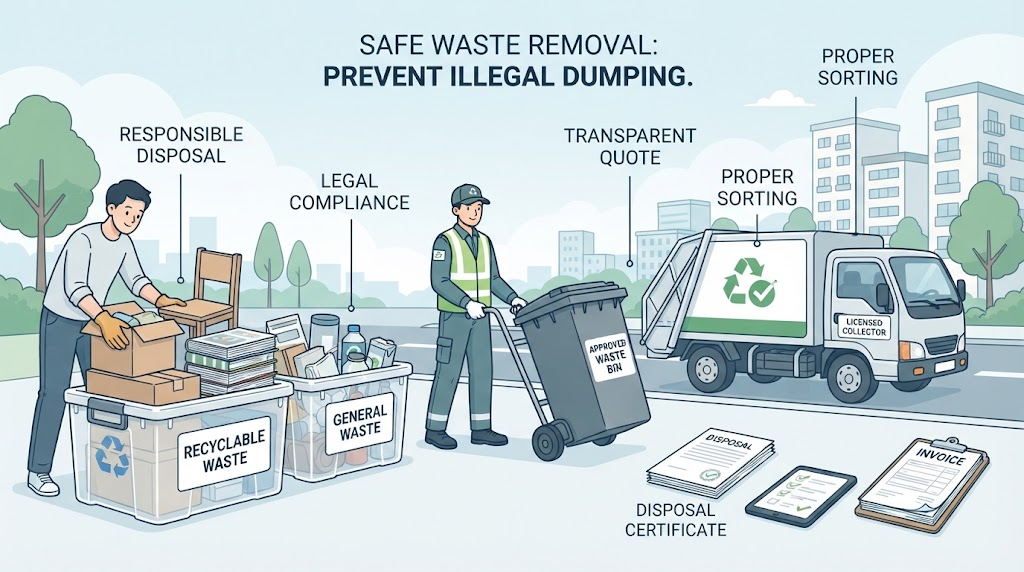
Body Paragraph 3: The Complete “Official Collection” Process Free of Fine Worries
Once you have carefully selected a legally licensed company, it is time to go through the “official collection process” so that your waste is actually handled safely and transparently. Official collection carried out according to systematic procedures completely protects your business from unexpected administrative dispositions or fine risks.
Here is the 5-step official collection process that allows you to dispose of waste with peace of mind without worrying about fines.
- Step 1: Preliminary On-site Assessment and Customized Estimate Calculation
Identifying waste properties and volume: Before requesting collection, take photos or videos of the exact type of waste (construction, furniture, interior remodeling residues, general business waste, etc.) and its approximate amount (tonnage or volume).
Receiving an official estimate: Through an on-site visit or non-face-to-face consultation with the company, obtain an official estimate transparently containing vehicle dispatch, labor input costs, and final disposal costs. At this stage, make sure to clarify whether tax invoices will be issued and card payments accepted.
- Step 2: Formal Contract Execution and Collection Schedule Coordination
Drafting a written contract: Instead of verbal promises, draw up a standard contract specifying the collection date and time, items to be collected, and scope of responsibility.
Clarifying legal liability: Check clauses guaranteeing the prevention of illegal dumping and lawful disposal, and coordinate measures in advance in case problems arise.
- Step 3: Safe On-site Loading and Transportation
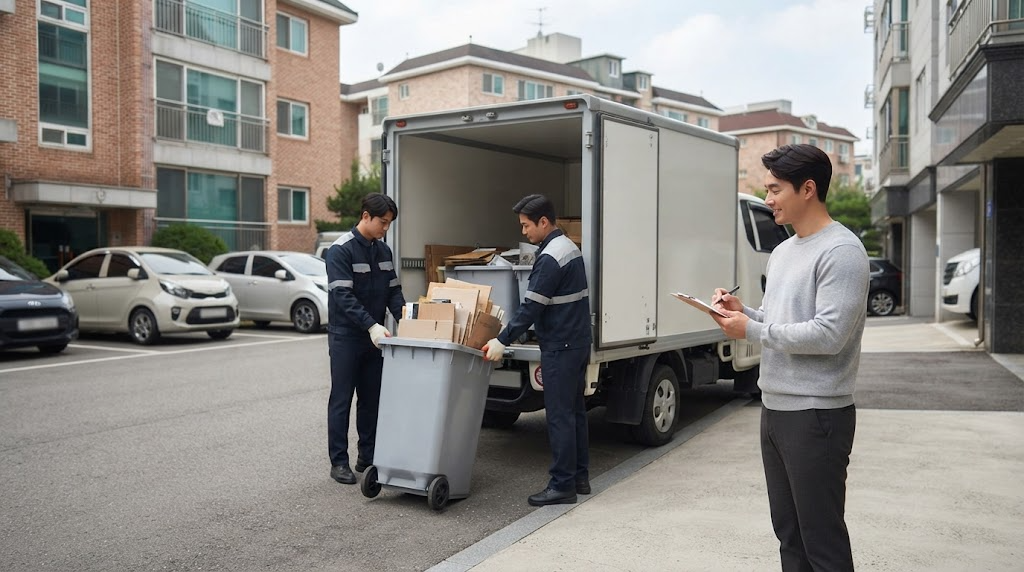
Deploying professional personnel and dedicated vehicles: Licensed collection vehicles (cargo trucks, armroll boxes, wingbody trucks, etc.) and professional personnel arrive at the site to carry out loading work quickly and neatly in accordance with safety guidelines.
Surrounding cleanup: Check whether thorough cleanup is carried out until the end so that garbage does not spill onto roadsides or around buildings during the loading process.
- Step 4: Allbaro System Registration and Entry into Lawful Disposal Facilities
Electronic transfer and acceptance: In the case of business waste, immediately after collection is completed or within the prescribed deadline, electronically register the transfer and acceptance details between the generator and the collector through the “Allbaro System.”
Direct trip to lawful disposal facilities (incinerators, landfills, recycling centers): The collected waste is safely transported to legitimate final treatment facilities registered with the competent local government—not vacant lots for illegal dumping—and handled in accordance with regulations.
- Step 5: Issuance and Storage of Final Disposal Evidentiary Documents (Key Defense Barrier)
Receiving waste disposal confirmation and certificates: Receive documents issued after the final disposal is completed, such as the “Waste Disposal Confirmation,” “Weighing Certificate,” and transfer manifests.
Document storage: These documents serve as the most powerful exculpatory evidence proving that your business went through lawful procedures in the event of future local government crackdowns, Ministry of Environment audits, or tax investigations, so you must keep them safely for at least several years.
Going through a systematic official collection process may cost a bit more than private illegal companies, but it is the wisest investment to fundamentally block massive social and economic costs such as millions of won in fines, business suspension, and damage to corporate image.
Conclusion and Summary: Safe Waste Disposal Is the Shortcut to Reducing Business Risks
Waste disposal generated while running a business, remodeling, or doing major cleanups is not just an auxiliary task, but a very important management item that determines a company’s legal risks.
If you entrust disposal to an unlicensed illegal company offering cheap prices to save a few bucks on immediate disposal costs, and get caught for illegal dumping in a mountain, it can return as a huge bomb where you have to shoulder tens of millions of won in fines, business suspension, and even criminal punishment. The excuse “I didn’t know” does not work in front of the law, and according to the waste generator responsibility principle, the original business owner bears all responsibilities entirely.
Therefore, here is a summary of the core tips for safe waste disposal once again.
First, beware of cheap temptations: Be suspicious of companies that are reluctant to issue tax invoices or quote absurdly low prices.
Second, check official licenses: Meticulously verify whether the company is licensed by the competent local government and whether it matches your business’s waste properties.
Third, secure the correct system and evidentiary documents: Build a solid exculpatory defense barrier to prepare for unexpected crackdowns by registering in the Allbaro System and obtaining a final disposal confirmation.
Disposing of waste in the safest and most lawful manner is the wisest shortcut to preventing unnecessary administrative and economic losses, protecting a clean environment, and enhancing business reliability. Based on the checkpoints shared today, we hope you start risk-free waste disposal with a safe and reliable partner.
Korean version: 한국어로 읽기