Introduction: The Beginning and End of Moving, The Weight of Troublesome Waste Disposal and Cleaning
This is a draft of the introduction subtitle written to elicit empathy from readers preparing to move and increase immersion, tailored to the Naver blog posting style.
Introduction: The Beginning and End of Moving, The Weight of Troublesome Waste Disposal and Cleaning
Moving toward a new stage in life always brings excitement, but the reality hidden within the process is much heavier and more complex than expected. From the daunting task of move-in cleaning when entering a new home to pre-move-out waste collection and restoration to original condition when leaving a long-term residence, not a single task is easy.
Especially when looking around the house before and after moving out the furniture and belongings, it is easy to feel overwhelmed.
All kinds of sundries piled up and neglected for years and bulky large waste
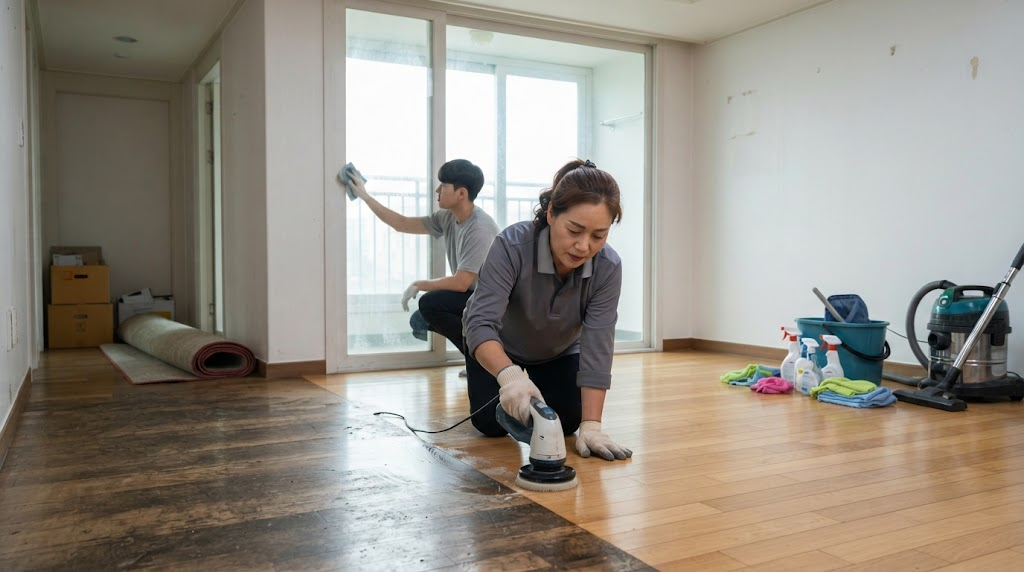
Stubborn grime and yellowish floor stains exposed right where furniture and appliances used to be
Window frames and verandas hardened with a mixture of soot and dust turning pitch black
Sighs naturally escape with thoughts like, “When on earth am I going to clean and clear all this out?” and worries quickly arise about how much house cleaning costs or waste disposal costs will be, on top of the moving expenses. Especially if it is the move-out period ahead of security deposit return, a thorough cleanup is essential to avoid conflicts with the landlord.
Then how should we solve all this waste and cleaning most efficiently? From now on, let’s examine the know-how step by step to wisely save time and money, ranging from pre-move-out waste disposal to pre-move-in space cleaning.
How to Smartly Handle Remaining Waste & Large Waste Before Moving Out
This is a draft of the body content for “How to Smartly Handle Remaining Waste & Large Waste Before Moving Out”, which contains methods to efficiently organize pre-move-out waste and large waste, the most troublesome luggage when moving, tailored to the Naver blog posting style.
How to Smartly Handle Remaining Waste & Large Waste Before Moving Out
The very first mountain you encounter when preparing to move is “discarding things.” As we live, our belongings somehow multiply so much, and when packing, all kinds of household waste and difficult-to-handle large waste pile up like mountains. Especially in situations where the move-out date is tight, trying to throw things away blindly can easily cause panic.
Check out the practical disposal know-how to smartly organize waste and large waste while saving time and money.
- Tips for Perfect Sorting of Small Household Waste and Recyclables
Small pieces of waste generated while packing for a move must be sorted in advance by type to reduce confusion on the day of moving out.
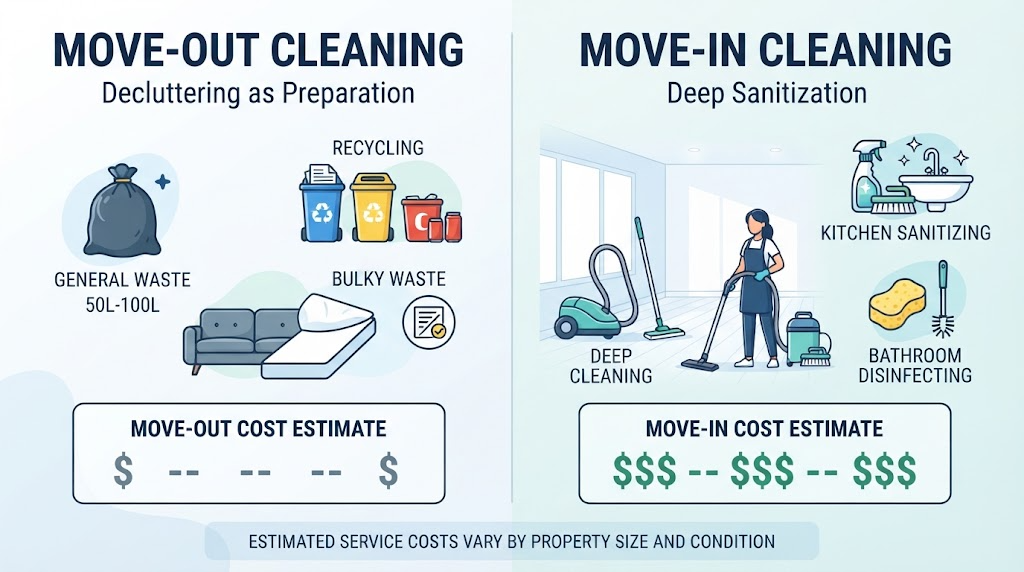
Preparation for heavy consumption of standard waste bags: Keep 2 to 3 large standard waste bags dedicated to moving (50L to 100L) in reserve in advance, and regularly put miscellaneous items and general waste into them for disposal.
Disposal of food and leftovers: Empty food ingredients and seasonings remaining inside the refrigerator beforehand. To prevent bad odors, do not simply pour liquids or sauces down the sink; instead, absorb them with newspaper or kitchen towels and dispose of them in a standard waste bag.
- Methods for Disposing of Large Waste (Community Center Reporting vs. Dedicated Collection App)
Bulky large waste such as bed mattresses, desks, wardrobes, and home appliances is subject to fines if dumped illegally, so you must go through the proper procedures.
Local government reporting (Community Center or District Office website): Visit the administrative welfare center of your residential area or pay the large waste fee on the district office website, then print and attach a disposal certificate (sticker) and place it at the designated location.
Utilizing local government dedicated collection apps: Recently, you can easily report large waste with just a single photo and pay fees through smartphone apps (such as ‘Pbaegi’), which greatly reduces the hassle.
Using free home-visit collection for waste appliances: For large home appliances like refrigerators, washing machines, air conditioners, and TVs, or a certain quantity or more of small appliances, using the ‘Waste Appliance Free Home-Visit Collection’ service is the best way to save money because the technician comes directly to your home to collect them.
- Batch Processing of Neglected Waste: Using a Waste Disposal Agency Service
If time is hopelessly insufficient or there is too much volume to handle alone, it is wise to use a waste disposal company.
Advantages of one-stop processing: Because they clear out everything at once from small waste to large furniture and household waste, it is strongly recommended when the move-out schedule is tight.
Cost verification points: Since each company has different estimation standards (whether a ladder truck is used, presence of an elevator, and the amount and weight of waste), it is best to get comparative estimates from multiple places in advance before moving and carefully check whether additional costs may occur.
Customized Cleaning Guide for Each Space in Our New Home Before Moving In
This is a draft of the body content for “Customized Cleaning Guide for Each Space in Our New Home Before Moving In”, tailored to the Naver blog posting style so that contamination in each space such as the kitchen, bathroom, floors, and window frames can be neatly resolved before moving into a new nest.
Customized Cleaning Guide for Each Space in Our New Home Before Moving In
Before moving, that exact moment when the place is completely empty is your only chance to clean every single nook and cranny of the house most perfectly. Once your belongings move in, cleaning becomes virtually unthinkable, so you must thoroughly perform customized cleaning tailored to the characteristics of each space before moving in to make a pleasant fresh start.
Check out the core strategies for each space for a regret-free move-in cleaning.
- Kitchen and Bathroom: Eradicating Omelet/Grease Stains and Stubborn Mold
These two spaces that require the most effort and suffer severe contamination must be tackled in a definite order.
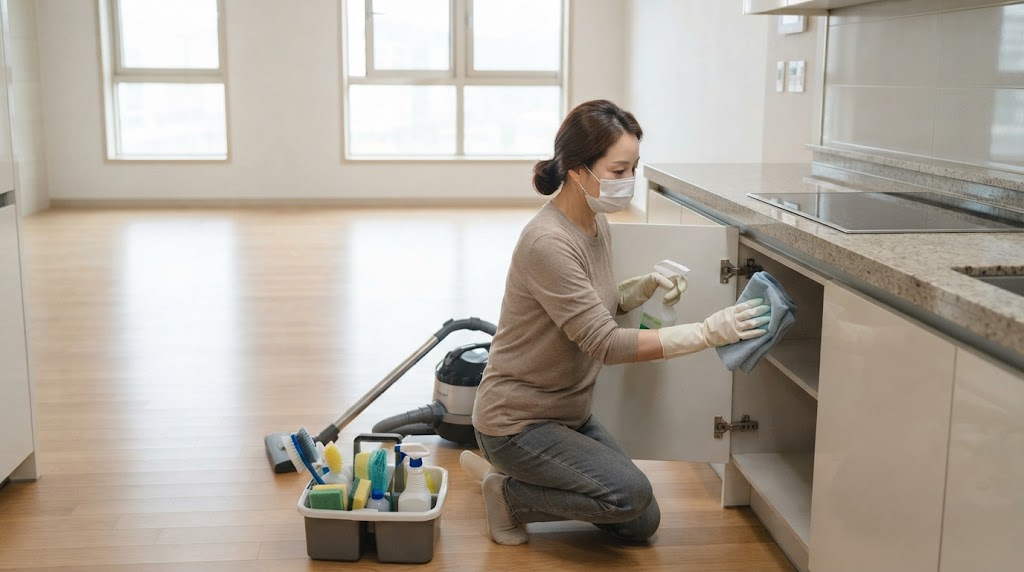
Kitchen (Around the stove and sink): Stubborn grease stains splattered during cooking do not come off easily with a regular wet wipe. Dissolve baking soda and neutral detergent in warm water or apply a grease-specific cleaner, let it soak for about 10 minutes, and then wipe it away for a clean removal. Water stains on the sink faucet can be wiped by spraying a diluted citric acid solution to restore their sparkling shine.
Bathroom (Tile grout and drains): Mold growing on silicone or tile gaps is effectively removed by applying a diluted bleach solution or gel-type mold remover, covering it with a kitchen towel, and then rinsing it off. Before moving in, make sure to open the drain to completely empty out hair and old foreign substances inside, and disinfect it.
- Room Floors and Window Frames: Completely Exterminating Grime and Dust
Floor material custom cleaning: You must clean according to the flooring material, such as linoleum (jangpan), deco tile, or wood flooring (maru). In particular, since wood flooring is vulnerable to moisture, use a microfiber cloth wrung out tightly, and for old grime on linoleum, use baking soda or a magic sponge to erase marks.
Window frames and verandas: For window frames directly exposed to outside air where exhaust fumes and fine dust have piled up layer upon layer, push wet wipes longwise into the gaps, let them soak for about 20 minutes, and then scrape out the dark corners using an old toothbrush or wooden chopsticks to wash away the pitch-black dust refreshingly.
- Ventilation and Odor Removal: Creating Fresh Air
Sick house syndrome and old odor deodorization: After cleaning is finished, open all the windows of the house wide and ventilate strongly for at least 2 to 3 hours.
Bake-out or phytoncide: If wallpaper or linoleum was newly installed, spraying an eco-friendly deodorizer or lightly spraying phytoncide spray can effectively prevent headaches or unpleasant odors while staying in the home after moving.
Self vs Professional Company: House Cleaning Cost Market Prices and Selection Criteria
This is a draft of the body content for “Self vs Professional Company: House Cleaning Cost Market Prices and Selection Criteria” tailored to readers who are agonizing between self-cleaning where you suffer physically to save money and using a professional company where you spend money to gain comfort, matching the Naver blog posting style.
Self vs Professional Company: House Cleaning Cost Market Prices and Selection Criteria
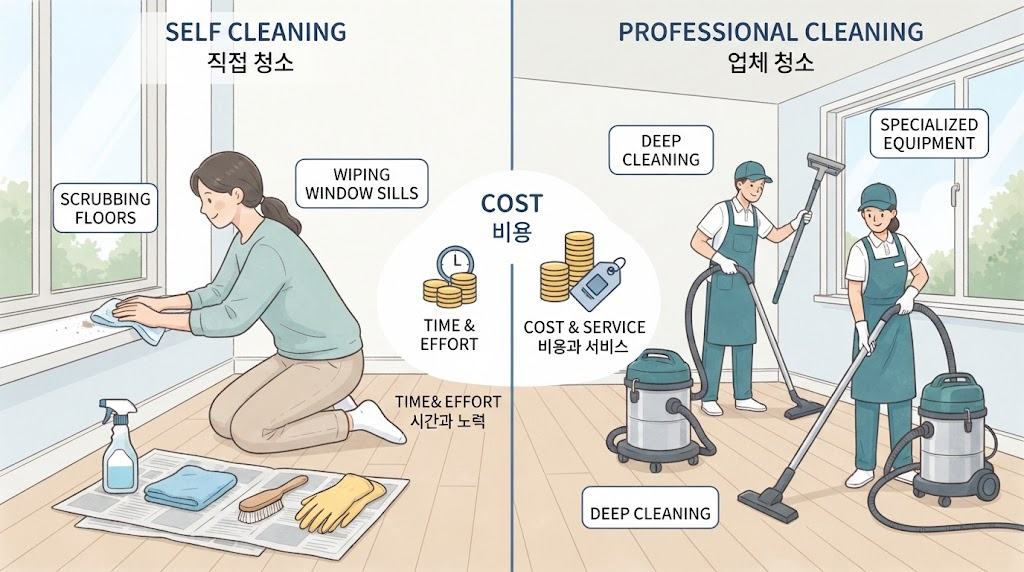
During a time when expenses are already high due to moving preparations, one of the biggest concerns is “cleaning costs.” For those who are pondering, “Can I save money if I suffer physically, or should I really call a company?” or “Is saving time and stamina the best policy?”, we have organized the expected costs and realistic selection criteria when choosing between self-cleaning and using a professional company.
- Expected Costs, Pros, and Cons of Self-Cleaning
Expected cost: Around 30,000 won to 70,000 won (cost of purchasing cleaning supplies such as large standard waste bags, various cleaning detergents, baking soda/citric acid, magic sponges, rubber gloves, and microfiber cloths)
Pros: Economical because you can entirely save on company costs, and satisfaction can be high because you wipe every nook and cranny with your own hands.
Cons: Physical exhaustion is extreme before and after moving, and without professional know-how for stubborn window frame grime, bathroom grunge, and grease stains, you often just waste time and find it difficult to remove them completely.
- Average Market Prices and Additional Cost Factors When Using Professional Cleaning Companies
Average market price (based on studio/one-room & two-room apartments):
Formed around 10,000 won to 15,000 won per pyeong for general studio apartments (officetels/villas), typically costing around 150,000 won to 250,000 won.
Major factors for additional charges:
Age of the building and degree of contamination: Additional fees are attached if heavy grime, nicotine熏증 (fumigation), or severe mold is abundant due to lack of cleaning for a long time.
Special tasks: Separate fees are charged for exterior window glass cleaning, veranda addition, and built-in home appliance interior (refrigerator/washing machine) disassembly cleaning.
Presence of an elevator: For high-rise villas or buildings without an elevator, ladder truck usage fees or stair work fees may be added due to equipment transportation and labor consumption.
- Selection Criteria That Fit Me (Checkpoints)
When recommending self-cleaning:
When the pyeong area of the house you are moving to is relatively small (studio/small officetel), you have plenty of spare time to clean before moving in, and you want to save your budget as much as possible.
When recommending the use of a professional company:
When the move-out schedule and move-in schedule are tight so there is no physical or time slack at all, or when there is severe contamination that is too burdensome to handle alone, such as kitchen grease stains or bathroom mold.
If you want to save time and stamina through a company and make a pleasant fresh start, it is wise to carefully check the A/S regulations (whether they revisit for deficient areas after cleaning) and additional fee generation conditions in advance before signing a contract.

Conclusion and Summary: Final Inspection for a Smooth Move-Out and Pleasant Move-In
This is a draft of the conclusion and summary subtitle body text that wraps up the entire content while presenting practical checkpoints to the reader, tailored to the Naver blog posting style.
Conclusion and Summary: Final Inspection for a Smooth Move-Out and Pleasant Move-In
We have carefully examined everything from troublesome waste disposal before moving out to move-in cleaning in your new nest, and the house cleaning cost market prices that you were most curious about.
Moving goes beyond simply transferring belongings; it is an important process of neatly finishing the past space and welcoming a new beginning. We summarize the final checkpoints to complete a regret-free move until the end.
Prevention of friction upon moving out: After removing all belongings, meticulously record whether there is damage and the cleaning status of the floors, wallpaper, window frames, and sink through photos and videos. This is the surest way to prevent unnecessary friction with the landlord that may occur upon security deposit return.
Efficient budget allocation: Make a wise choice between self-cleaning and a professional company according to your physical strength and remaining time, and actively utilize local government reporting or free home-visit collection services for large waste to reduce unnecessary expenditures.
A pleasant fresh start: If you completely clear out old grime and odors from every nook and cranny before moving in, ventilate sufficiently, and then move in, daily life in the new space will become much fresher and more comfortable.
We cheer for your new beginning through a successful and carefree move. We hope that the cleaning know-how and tips provided today served as a reliable guide for your wise moving preparation!
Korean version: 한국어로 읽기