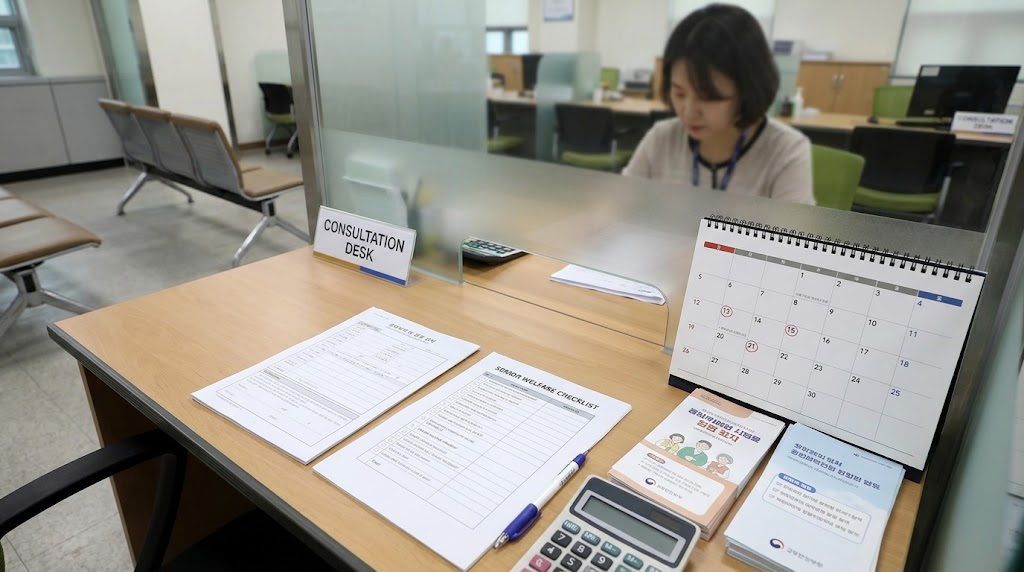
Daily Care and Long-Term Care Support Systems
This is the draft for the section ‘1. Daily Care and Long-Term Care Support Systems,’ written in a friendly tone with clear visual distinctions so Naver Blog readers can read comfortably.
- Daily Care & Long-Term Care Support Systems That Relieve the Burden on Parents and Families
As parents get older, many families worry about declining mobility or failing memory. When families try to shoulder nursing and daily care entirely on their own, the financial and physical burden inevitably grows.
By properly utilizing the care programs run by the central government and local governments, you can receive solid financial support as well as help from professional staff. Here is a summary of the 3 key representative systems.
① Long-Term Care Insurance for the Elderly: Reliable In-Home and Facility Benefit Support
Many people think, “Isn’t that only used when entering a nursing hospital or care facility?”, but the ‘In-Home Benefits’ system, where care workers visit and help at home, is exceptionally well-established.
Eligibility:
Individuals aged 65 and older, or individuals under 65 suffering from geriatric diseases (dementia, cerebrovascular diseases, Parkinson’s disease, etc.)
Seniors recognized as having difficulty performing daily life independently
Grade System (Grades 1 to 5 and Cognitive Support Grade):
Grades 1–2: Those who entirely or largely require help from others due to physical/mental functional impairments (Facility admission or in-home benefits)
Grades 3–4: Those in need of partial help (Mainly in-home benefits such as day/night care and visiting care)
Grade 5 and Cognitive Support Grade: Intensive provision of cognitive training and in-home care programs for dementia patients
Representative Services:
Visiting Care/Bath/Nursing: Care workers visit the home to assist with housework, physical activities, and hygiene management
Day & Night Care: Centers providing meals, cognitive activities, and health programs during the day, commonly known as ‘kindergartens for seniors’
Welfare Equipment Support: Government subsidized rental and purchase costs for wheelchairs, electric beds, adult walkers, safety handrails, etc. (Up to 1.6 million KRW per year)
How to Apply:
Apply in person at a National Health Insurance Service branch office, by mail, by fax, or by proxy through the [National Health Insurance Long-Term Care Insurance website] (An on-site home inspection by an NHIS employee will take place after application)
② Customized Care Service for the Elderly: Tailored Daily Living Care for Parents Living Alone
This program is designed for seniors who may not qualify for long-term care insurance grades, but require periodic checks and care in daily life due to chronic illnesses or advanced age.
Eligibility:
Seniors aged 65 and older who are recipients of the National Basic Living Security, in the near-poverty (Cha-sang-wi) class, or Basic Pension recipients in need of care
(Priority support for care-vulnerable households such as seniors living alone, grandparent-grandchild households, and elderly couples)
Key Provided Services:
Safety Support: A life support worker visits directly 1–2 times a week, and regularly checks safety and health by telephone
Social Participation: Operating cultural programs, outing companionship, and friend-making programs
Daily Living Support: Accompanying for grocery shopping, assisting with hospital visits, and helping with housework activities
Linked Services: Connecting and providing private sponsored meal boxes and groceries if there is a risk of missed meals
How to Apply:
Visit or call the Eup/Myeon/Dong Administrative Welfare Center (Community Service Center) having jurisdiction over the senior’s resident registration address
Simple online application is also available on ‘Bokjiro (bokjiro.go.kr)’
③ Emergency Safety and Reassurance Service: 24-Hour Home Emergency Automatic Detection System
This project installs advanced ICT sensors completely free of charge in the homes of seniors who have difficulty calling for help on their own during urgent crises such as fall accidents or sudden nighttime acute illnesses.
Installed Equipment and Features:
Emergency Pager: Connects immediately to 119 and emergency management personnel with the push of a single button in an emergency
Activity Detection Sensor: Installed in rooms and living areas to check safety if no movement is detected for a certain period, interpreting it as an abnormality
Fire and Gas Detection Sensors: Automatically sound alarms and report to 119 upon detecting leaks or smoke
Eligibility:
Seniors aged 65 and older living alone, elderly couple households, or grandparent-grandchild households who are recipients of Basic Living Security, the near-poverty class, or Basic Pension recipients
Individuals with limited mobility who require constant protection
Cost: Completely free (Equipment installation and telecommunication costs are fully subsidized by the government)
How to Apply:
Apply after inquiring with the welfare team of the local community service center or local operating agencies for the Customized Care Service for the Elderly
💡 Writing Tips & Checkpoints
The most vulnerable moments when parents are alone are “sudden falls” and “accompanying outings and hospital visits.” Even before a long-term care grade determination is issued, applying in advance for customized care for the elderly and emergency safety equipment through the community service center allows parents to receive immediate care without any service gap.
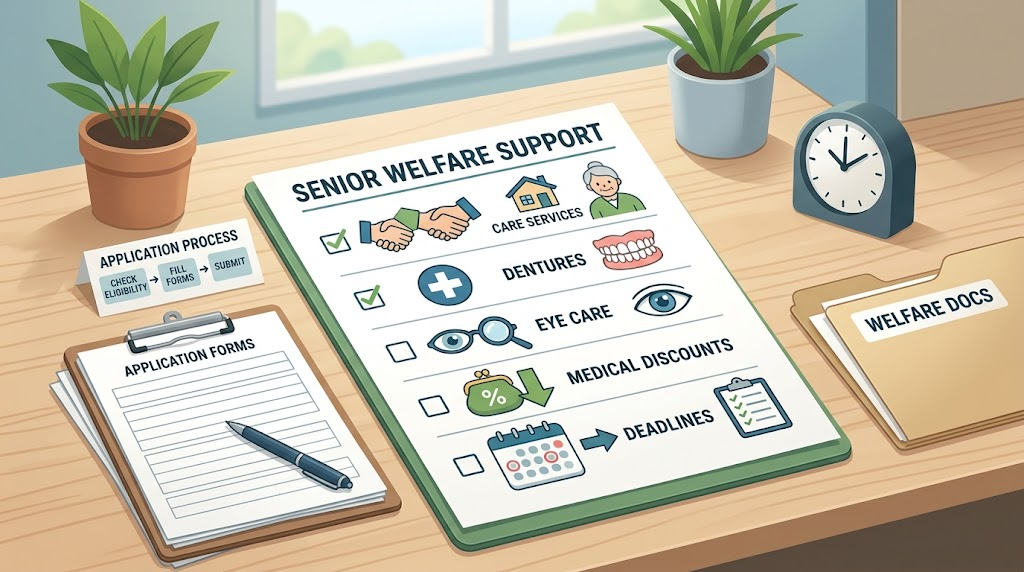
Essential Medical Expense and Health Reduction Benefits That Are Easy to Miss
This is the main draft of section ‘2. Essential Medical Expense and Health Reduction Benefits That Are Easy to Miss,’ designed so that Naver Blog readers can grasp it at a glance and claim actual benefits.
- Essential Medical Expense & Health Reduction Benefits That Drastically Lower Hospital Bills
As you get older, regular hospital visits and treatment expenses increase. In particular, dental treatments, joint surgeries, and ophthalmic conditions often require large sums of money.
By knowing and applying beforehand for senior-specific medical fee reduction systems operated jointly by the National Health Insurance Service, the Ministry of Health and Welfare, and private support foundations, you can significantly reduce your out-of-pocket costs. Here is a summary of 4 essential benefits to keep in mind.
① Dental Implants & Dentures Covered by National Health Insurance (30% Co-Payment)
Dental prosthetic treatments, which used to cost millions of KRW as non-covered items, can receive Health Insurance coverage if you are aged 65 or older.
- Dental Implant Support:
- Eligibility: Health insurance subscribers (or dependents) aged 65 and older who are partially edentulous (seniors who have at least one natural tooth remaining)
- Support Limit: 2 implants per person in a lifetime
- Co-payment Rate: 30% of total cost (10% for near-poverty rare and intractable disease patients, 20% for chronic disease patients, 10% for Medical Care Type 1 recipients / 20% for Type 2)
- Notice: Completely edentulous conditions where not a single tooth remains are not eligible for dental implant health insurance coverage, but are covered under dentures benefits.
- Denture Support:
- Eligibility: Seniors aged 65 and older who are partially edentulous or completely edentulous
- Cycle: Applicable once every 7 years per identical area (maxilla/mandible)
- Co-payment Rate: 30% based on general health insurance subscribers (Applies to both complete dentures and partial dentures)
- How to Apply:
- Fill out an application for registration of health insurance eligibility at a dental clinic or hospital after medical examination (Dental clinics process the computer registration with the NHIS on your behalf).
② Precise Eye Examination and Sight-Restoring Surgery Expense Support for Seniors (Cataracts, Retinal Diseases, etc.)
Cataracts, glaucoma, and retinal diseases, which cause vision to decline rapidly with age, carry a risk of blindness if left unattended. The Ministry of Health and Welfare and the Korean Foundation for the Prevention of Blindness collaborate to support surgery costs for low-income seniors.
- Eligibility:
- Recipients of the National Basic Living Security, the near-poverty class, or single-parent families aged 60 and older
- Covered Conditions:
- Eye diseases requiring surgery according to an ophthalmologist’s diagnosis, such as cataracts, retinal diseases, glaucoma, etc.
- Details of Support:
- Full coverage of out-of-pocket costs including pre-surgery checkups (ultrasound, etc.), surgery fees, and material expenses
- (Approximately 300,000 to 500,000 KRW per eye for cataracts; surgeries on both eyes are supported)
- Application and Precautions:
- You must apply in advance to the public health clinic having jurisdiction and receive approval before undergoing surgery. (Retroactive support is not possible after surgery has already been completed)
③ Knee Artificial Joint Surgery Expense Support for Low-Income Seniors
This is a national support project for seniors who hesitate to undergo surgery due to financial burdens even though walking is difficult due to degenerative arthritis. (Ministry of Health and Welfare & Nanum Medical Foundation for the Elderly)
- Eligibility:
- Those aged 60 and older who are recipients of the National Basic Living Security, the near-poverty class, or single-parent families and require artificial joint replacement (arthroplasty) due to knee arthrosis
- Support Limit and Scope:
- Up to 1.2 million KRW per knee (Up to 2.4 million KRW when operating on both knees)
- Actual reimbursement support for checkup fees, diagnosis/treatment fees, surgery fees, and statutory co-payments (Some non-reimbursable items such as caregiver costs and premium room charges are excluded)
- Application Procedure:
- Obtain a medical diagnosis certificate (or doctor’s opinion letter)
- Submit a support application to the public health clinic having jurisdiction over the residential address before receiving surgery
- Undergo surgery at an affiliated hospital after receiving notification of selection as a beneficiary
④ National Support for Essential Senior Vaccinations (Free Inoculation)
Free vaccinations against major infectious diseases are provided for elderly individuals who are susceptible to weakened immunity.
| Classification | Eligibility | Inoculation Cycle and Details |
|---|---|---|
| Influenza (Flu) | All individuals aged 65 and older | Free quadrivalent vaccine inoculation every autumn (starting around October) at designated contracted medical institutions and public health clinics |
| Pneumococcal (23-valent Polysaccharide) | All individuals aged 65 and older (Once in a lifetime) | Free 23-valent vaccine inoculation at public health clinics and contracted medical institutions (Prevents invasive pneumococcal infections) |
| Herpes Zoster (Shingles) | Varies by local government (Usually vulnerable groups aged 65–70 and older) | Not a uniform nationwide government-funded program, but expanding free/partial support for vulnerable groups or general seniors according to local city, county, and district ordinances |
- Required Items: Identification card such as Resident Registration Card or Driver’s License must be brought
- Vaccination Locations: Available to search for nearby designated medical institutions on the Korea Disease Control and Prevention Agency Vaccination Helper website (nip.kdca.go.kr)
💡 Writing Tips & Checkpoints
Because support for eye surgery fees and knee artificial joint surgery fees is funded within budget limits, “you must apply to and receive approval from the public health clinic having jurisdiction before scheduling a hospital surgery” so that you do not miss out on the benefit. It is recommended to call the visiting health team of the public health clinic having jurisdiction to ask about remaining budget and qualification requirements before scheduling a medical appointment for your parents.
Income Security and Financial & Tax Reduction Benefits
This is the draft for section ‘3. Income Security and Financial & Tax Reduction Benefits,’ structured so that Naver Blog readers can feel the practical effects of tax savings and living cost reductions.
- Income Security & Financial and Tax Benefits That Save Monthly Living Expenses and Protect Assets
During the period after retirement when regular earned income declines, reducing fixed expenses and actively utilizing tax-free systems is the core of asset management.
From the Basic Pension that supplements stable monthly income to automatic telecommunication discounts and financial benefits that completely save interest income tax, here is a summary of 3 representative benefits.
① Basic Pension: Basic Income Guarantee for the Lower 70% of Seniors by Income
The Basic Pension is a state-supported pension paid to seniors aged 65 and older who fall into the lower 70% based on recognized income.
Eligibility:
Domestic residents aged 65 and older holding Republic of Korea nationality
Households whose recognized income amount (monthly evaluated income + monthly property conversion amount) is equal to or less than the selection threshold officially announced by the Ministry of Health and Welfare for the relevant year
Payment Amount:
Mid to upper 300,000 KRW range per month for single-person households (Differentiated based on income, property, whether both spouses receive the pension, and deductions linked to National Pension)
A 20% reduction is applied to each spouse when both spouses receive it
Application Timing and Method:
Available Application Window: Advance application is available starting 1 month before the month of the 65th birthday
Application Locations: Eup/Myeon/Dong Administrative Welfare Center (Community Service Center) having jurisdiction over the address or a National Pension Service branch office
Online Application: Bokjiro (bokjiro.go.kr) website and mobile app
Receiving Tip (Eligibility Hope History Management System):
Even if you unfortunately fail the selection threshold, applying for the ‘Eligibility Hope History Management’ together will automatically send you guidance to reapply if the threshold is raised or property conditions change in the future.
② Mobile Telecommunications Fee Reduction for Basic Pension Recipients (Discount up to 12,100 KRW per month)
If you are receiving the Basic Pension, you can receive direct monthly communication cost reductions on mobile plans of the 3 major telecommunication companies (SKT, KT, LGU+), excluding budget MVNO phones.
Details of Reduction:
50% discount on basic charges and domestic call rates
Discount up to 11,000 KRW per month (12,100 KRW including VAT)
Eligibility:
1 mobile phone line registered under the name of the Basic Pension recipient
How to Apply:
Community Service Center: Apply all at once for the telecommunication discount when applying for the Basic Pension
Telecom Customer Center: Visit a telecommunication carrier dealership or dial the customer service center (114 without area code) to request registration for welfare discounts
Gov24 / Bokjiro: Apply remotely through the online welfare beneficiary fee reduction service
③ Senior Tax-Free Comprehensive Savings: Complete Exemption from Interest and Dividend Income Tax (15.4%)
This is a representative tax-saving financial product that does not levy any taxes on earnings generated when investing in time deposits, installment savings, bonds, dividend-paying funds, etc.
Eligibility:
Residents aged 65 and older (Also includes persons with disabilities, persons of national merit, etc.)
(Those who have not been subject to comprehensive taxation on financial income at least once in the preceding 3 tax years)
Tax-Free Limit:
Up to 50 million KRW per person across all financial institutions combined (Principal basis)
Tax Benefits:
Complete exemption from the 14% interest income tax + 1.4% local income tax = total 15.4% deducted from ordinary financial products
Special Rural Development Tax is also not levied, allowing you to retain the post-tax return intact
How to Open:
Visit a commercial bank, securities firm, savings bank, or mutual finance institution (MG Community Credit Cooperatives, Shinhyup, NongHyup, etc.) or use mobile banking
Select the Tax-Free Comprehensive Savings option when opening regular deposit, installment savings, or investment accounts
💡 Writing Tips & Checkpoints
Even after obtaining eligibility for the Basic Pension, telecommunication fee reductions are frequently not applied automatically in the system, so you must confirm whether the welfare discount is registered by calling the 114 customer center. As for the Tax-Free Comprehensive Savings, accounts can be divided and opened within the combined limit of 50 million KRW across all financial institutions, so it is advantageous to allocate this limit first to term deposits or high-dividend stock investments.
Select the task to proceed to the next step:
Write the next chapter (Transportation and Housing Welfare)
Receive title candidates for high search exposure on Naver
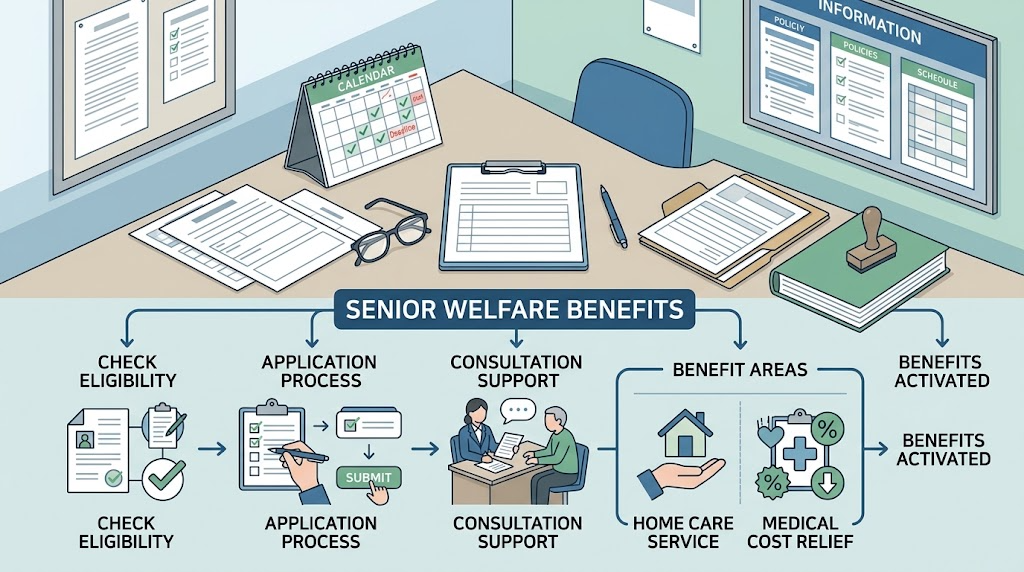
Daily Life Transportation, Housing, and Cultural Welfare
This is the draft for section ‘4. Daily Life Transportation, Housing, and Cultural Welfare,’ focused on practical lifestyle benefits so Naver Blog readers can put them into practice immediately in daily life.
- Make Daily Outings and Living Comfortable! Daily Transportation, Housing, and Cultural Welfare
Senior welfare goes beyond grand medical expenses or financial subsidies, delicately permeating every corner of daily life, such as public transport for daily commutes, home living environments, and leisure activities.
Here is a summary of 3 representative lifestyle-oriented benefits that save outing costs and prevent domestic safety accidents in advance simply by applying.
① Free Public Transportation for Seniors & Local Government City Bus Support
This is the most common transportation welfare with the greatest perceived effect. In addition to free subway rides, several local governments have recently been expanding fare subsidies to city buses.
- Free Subway Transportation (Metropolitan Area and Wide-Area Rail):
- Eligibility: Republic of Korea citizens aged 65 and older
- How to Use: Issue a ‘Senior Preferential Transportation Card (Senior Transit Card)’ at the administrative welfare center (community service center) having jurisdiction over the residence or designated financial institutions (Shinhan Bank, etc.)
- Applicable Scope: 100% free on urban rail and Seoul Metropolitan Area electric trains (However, separate standards apply to some private rail lines like the Shinbundang Line)
- Local Government Free City Bus / Reimbursement Support:
- Metropolitan cities and individual local governments operate separate free bus use cards (or quarterly usage fee reimbursement) for seniors aged 65 or 70 and older.
- (e.g., Daegu, Chungnam, Jeju, and parts of Gyeongbuk operate differently according to local government ordinances regarding eligible ages and methods, making inquiries to your residential community service center essential)
- Rail (KTX, SRT, Mugunghwa-ho) Fare Discounts:
- 30% discount on KTX, SRT, and Saemaeul-ho on weekdays, and 50% discount on commuter trains and Mugunghwa-ho (Excluding weekends and public holidays)
② Improvement of Housing Environment for the Elderly & Senior Welfare Housing for a Safe Old Age
Fall accidents inside the home are fatal risk factors for senior health. The central government and local governments run projects to remodel the inside of homes safely for housing-vulnerable seniors.
- Support for Remodeling Homes for the Housing Vulnerable (Repair and Maintenance Benefits and Local Government Safe Home Projects):
- Eligibility: Senior households aged 65 and older who are recipients of Basic Living Security, the near-poverty class, or earn below a certain threshold of the median income
- Main Support Content:
- Installation of safety handrails in bathrooms and hallways
- Removal of doorsills and installation of access ramps
- Installation of non-slip tiles and safety flooring
- Installation of emergency contact devices and safety circuit breakers
- Benefits of Moving into Senior Welfare Housing:
- Public rental housing where welfare facilities such as social welfare centers, physical therapy rooms, and senior cafeterias are located on lower floors, with barrier-free designs without door sills applied on upper floors.
- Announcements are published periodically through the Korea Land and Housing Corporation (LH) Application Center, so it is worth paying attention to for homeless senior households.
③ Free Admission to National and Public Facilities & Munhwa Nuri Card Voucher
Various ticket fee exemption benefits and dedicated vouchers are prepared to allow seniors to enjoy cultural life and leisure without financial burden.
| Classification | Main Benefits and Details | How to Use |
|---|---|---|
| Free/Discounted National and Public Facilities | Free admission to the 4 Major Palaces (Gyeongbokgung, Changdeokgung, Changgyeonggung, Deoksugung), Jongmyo Shrine, and Royal Tombs of the Joseon Dynasty
Free or 50% discount on special exhibitions at the National Museum of Modern and Contemporary Art and National Museum of Korea Free admission to national recreational forests and national parks |
Present Resident Registration Card at ticket booth |
| Munhwa Nuri Card (Integrated Cultural Voucher) | 130,000 KRW per person per year provided for recipients of the National Basic Living Security and near-poverty class aged 6 and older
Applicable for purchasing books, watching movies/performances, domestic travel, and paying for intercity/express buses |
Apply at Eup/Myeon/Dong community service center or Munhwa Nuri Card website (mnuri.kr) |
| Local Government Senior Welfare Center Cultural Classes | Operating free/low-cost courses for seniors such as smartphone usage, calligraphy, table tennis, health gymnastics, musical instruments, etc. | Register for classes after signing up for membership at the local senior welfare center |
💡 Writing Tips & Checkpoints
If you transfer your resident registration address to another city or province, the senior transit card must be reissued with the card of the new area to keep benefits running normally. Furthermore, when visiting ancient palaces or national parks, free on-site ticketing is available immediately simply by presenting a mobile ID stored on a smartphone or a physical Resident Registration Card, so be sure your parents carry an ID when going out.
Select the task to proceed to the next step:
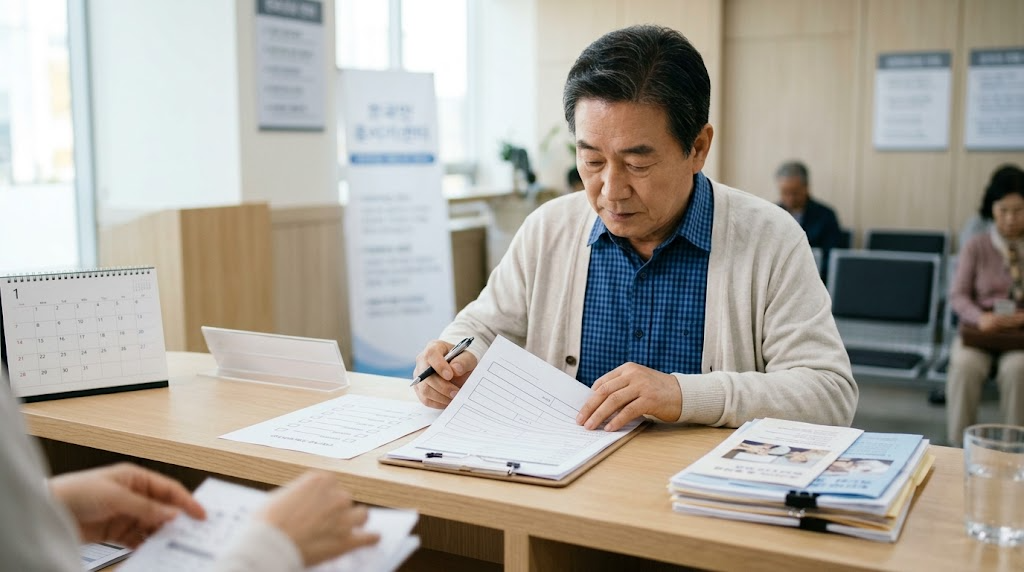
Application Channels at a Glance and Essential Checklist
This is the draft for section ‘5. Application Channels at a Glance and Essential Checklist,’ organized so that Naver Blog readers can read the post and immediately put it into action.
- Application Channels Without Fruitless Trips & Essential Checklist for Adult Children
No matter how great a system is, it is easy to miss if you do not know where and how to apply. In particular, senior welfare services are divided among different governing agencies (community service centers, National Health Insurance Service, public health clinics, etc.), so people often make wasted visits by heading there unprepared.
Here is a comprehensive summary of online and offline application channels alongside the essential documents that adult children must prepare in advance when applying on behalf of their parents.
① Where Should I Apply? Guide to Welfare Desks by Agency
Because each welfare item is administered by a different dedicated agency, check the appropriate counter for your purpose first.
| Visiting/Application Window | Jurisdictional Welfare Item | Notes |
|---|---|---|
| Eup/Myeon/Dong Administrative Welfare Center (Community Service Center) | Basic Pension, Customized Care Service for the Elderly, Emergency Safety and Reassurance Service, telecommunications discounts, Senior Transit Card, Munhwa Nuri Card | Visit the welfare team of the community service center having jurisdiction over the resident registration address |
| National Health Insurance Service (NHIS) Branch Office | Long-Term Care Insurance for the Elderly (Grade application), welfare equipment support consultation | Applications accepted at any NHIS branch nationwide |
| Public Health Clinic having jurisdiction (Visiting Health Team) | Support applications for senior eye diseases (cataracts, etc.) and knee artificial joint surgery expenses, essential vaccinations | Advance application before surgery is mandatory (Retroactive application after surgery is not allowed) |
| Dental Clinic / Medical Hospital | Registration for dental implant and denture Health Insurance benefits (30% co-payment) | The hospital handles electronic registration directly with NHIS systems after consultation |
| Commercial Financial Institutions (Banks, Securities Firms) | Senior Tax-Free Comprehensive Savings (Up to 50 million KRW per person) | Request tax-free limit registration when opening an account |
② Conveniently at Home! Online and Mobile Application Channels
For adult children living far away from parents or those with mobility difficulties, proxy applications and customized searches via online portals are recommended.
- Bokjiro (bokjiro.go.kr / Mobile App):
- Online registration for Basic Pension, Customized Care Service for the Elderly, fee discounts (telecom, etc.)
- Sign up for ‘Welfare Membership (Customized Benefit Guidance)’: Once registered, notifications about eligible welfare benefits based on income, property changes, or age criteria are automatically sent via KakaoTalk or text message
- Gov24 (gov.kr):
- ‘Subsidy24′ Service: Screen available subsidies from the central government and local governments at a glance via the parents’ own authentication (or advance consent of adult children)
- National Health Insurance Service (nhis.or.kr):
- Submit recognition applications for Long-Term Care Insurance grades and search welfare equipment items
③ List of Essential Documents Required When Applying on Behalf of Parents
When adult children visit community service centers or the NHIS as agents, documents proving the power of attorney relationship must be prepared.
- Identification Card (Original):
- The senior’s own Resident Registration Card (or Driver’s License)
- Visiting agent’s (adult child’s) Identification Card
- Family Relationship Certificate (Detailed):
- Issued within the last 3 months, with all digits of the resident registration number disclosed
- Power of Attorney:
- Form provided at community service centers or printed from websites, stamped with the senior’s seal or signed by hand
- Income and Property Verification Documents (When applying for the Basic Pension):
- Copy of bankbook under the senior’s name (For receiving the Basic Pension)
- Lease agreement (In case of rental housing), consent form for provision of financial information, etc.
- Medical Diagnosis / Opinion Letter (When applying for surgery subsidies or long-term care grades):
- Diagnosis certificate for public health clinic sight-restoring/joint surgery application (indicating disease code), doctor’s written opinion for long-term care
💡 Writing Tips & Checkpoints
If it is the year your parents reach the age of 65, visiting the welfare desk of the community service center on the first day of the month preceding their birthday to bundle and apply all at once for ‘Basic Pension + Telecommunication Discount + Senior Transit Card’ is the most efficient method.
Epilogue (Blog Closing Remarks)
Welfare benefits are not “something the government gives you automatically if you stay still,” but rather a “legitimate right you can receive only when you know the standards and apply directly.”
If there are items among today’s summaries that your parents have not yet applied for, please check them thoroughly while visiting your parents’ house or making a check-in phone call this weekend.
If you have acquaintances caring for their parents nearby, please share this article, and feel free to leave any further questions in the comments!
You can proceed immediately with the next task for post publication:
Korean version: 한국어로 읽기