[$0 Cost] How to Use the Free Collection Service for Usable Large and Small Appliances
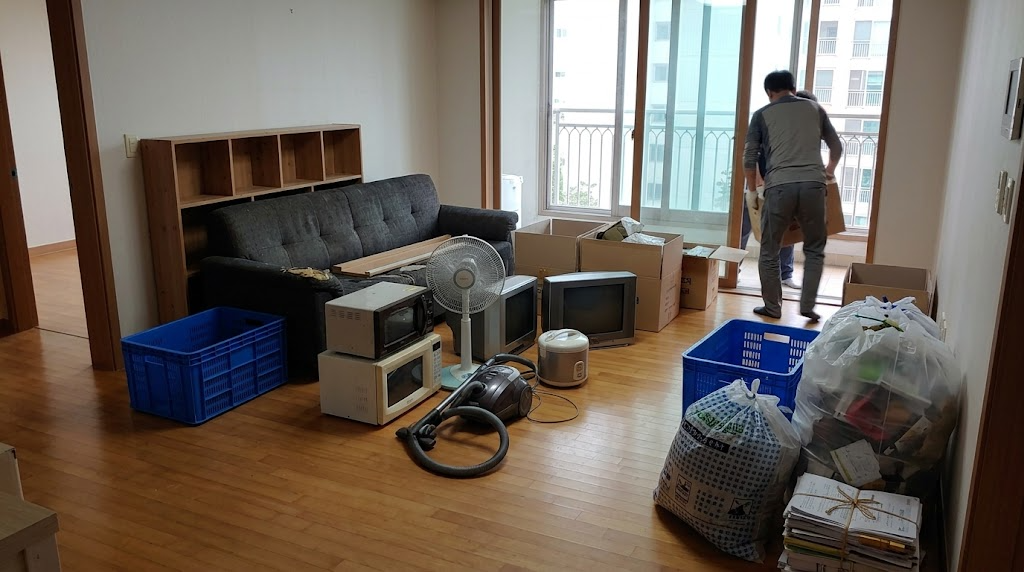
When preparing to move, you inevitably find home appliances that work perfectly fine, but either do not match the interior of your new home or are simply too old and need to be discarded. In this situation, if you blindly buy local government stickers right away, you will incur tens of thousands of won in unnecessary costs.
If you use “e-Circulation Governance (Free Visiting Collection Service for Waste Home Appliances),” operated jointly by the Ministry of Environment, local governments, and electronics manufacturers, a technician will visit in person to safely collect your heavy appliances at a 0 won fee.
Criteria for Single Collection vs. Bulk Discharge Items
Depending on the item, free collection is divided into items that can be collected for a visit even if there is only 1 item, and items that must be bundled together.
Items eligible for single collection (can be collected even if only 1 item is discharged)
Essential large appliances: Refrigerator, washing machine, air conditioner (including outdoor unit), TV, dishwasher, electric oven, air purifier, microwave, treadmill, etc.
Set items: Audio set, desktop PC set (main unit + monitor)
Bulk discharge items (Quantity standard: 5 or more required)
Small appliances: Hair dryer, electric rice cooker, vacuum cleaner, fan, iron, electric kettle, blender, toaster, etc.
Tip: Even if you have fewer than 5 small appliances, if you add them when booking a single collection item (e.g., refrigerator, microwave, etc.), even 1–2 items can be collected at the same time.
Key Checklist You Must Know Before Discharging
- No damage to original form
Products with key components such as motors or compressors arbitrarily removed or damaged are excluded from free collection. They must be complete products with their original form preserved.
- Check dismantling status
For wall-mounted TVs, ceiling/wall-mounted air conditioners, etc., the person discharging them must, in principle, complete dismantling in advance so the technician can collect them. (However, for standard stand-type products, the technician will carry them directly.)
- Application method and deadline schedule
Application channels: Internet (Free Visiting Collection Service for Waste Home Appliances website 15990903.or.kr) or call center (1599-0903)
Application timing based on move date: During peak moving seasons (spring/autumn, auspicious days, etc.), bookings can be backed up for more than a week, so it is safest to set your preferred collection date at least 1–2 weeks before your moving date.
[Money-Making Organizing] Secondhand Disposal Know-How for Furniture and Appliances Too Good to Throw Away
In many cases, it feels like a waste to discard appliances that work fine or furniture in good condition with waste stickers, yet it feels awkward to take them to the new home.
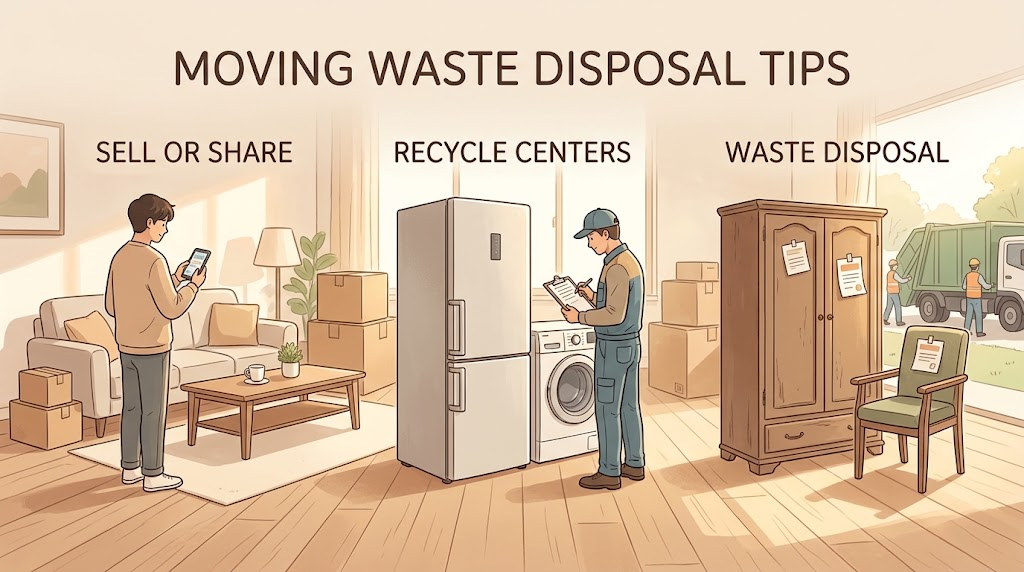
Going beyond saving on moving disposal costs, here are 3 smart secondhand disposal tips to earn decent pocket money or get back year-end tax settlement benefits.
- Danggeun Market / Secondhand Platforms: Utilizing “Moving Special Price” and “Self-Pickup Condition”
Just before moving2. [Money-Making Organizing] Secondhand Disposal Know-How for Furniture and Appliances Too Good to Throw Away
In many cases, it feels like a waste to discard appliances that work fine or furniture in good condition with waste stickers, yet it feels awkward to take them to the new home. As moving day approaches, it is easy to make the mistake of letting them go for dirt cheap under time pressure or ultimately paying disposal fees.
Just by properly understanding disposal timing and strategy by channel, you can not only cut disposal costs, but also secure decent moving settlement funds or even tax credit benefits.
Secondhand Direct Trading Platforms: “Speed Over Price” Strategy
Local-based direct trading like Danggeun Market or Bunjang offers the highest accessibility for disposing of furniture and appliances, but right before moving, turnover rate must be placed as top priority.
Moving D-30 ~ D-14 (Market Price Sales Period):
List the model name, purchase year, exterior scratches, and exact measured dimensions for width, depth, and height in detail.
For furniture, specify whether it fits into a car trunk or requires disassembly to reduce deal cancellations.
Moving D-7 ~ D-3 (Urgent Sale and Price Drops):
Lower the price by 20–30% below market value and include keywords like [Moving Clearance / Quick Sale / Self-Pickup Condition] in the title.
Moving D-2 ~ Day Before (Switching to Free Giveaway):
For bulky items that have not sold, decisively switch them to free giveaways with the mindset of saving the waste sticker cost (5,000 won to 15,000 won).
If you attach the condition “For those who will disassemble and transport it themselves,” you can clear it out immediately on the same day without physical effort.
Bundled On-Site Purchase by Secondhand Recycling Centers (Recycle Shops)
If responding to direct-trade chats and coordinating pickups yourself is a hassle, using a local secondhand recycling center is efficient.
Purchase Eligibility Criteria:
Large home appliances (refrigerators, washing machines, etc.) are generally purchased focusing on normally functioning products manufactured within the past 7 to 10 years.
Large furniture like sofas and wardrobes focuses on branded items or solid wood furniture with little signs of use, while budget plywood furniture may be refused for purchase.
Quote Tips:
Before calling multiple companies, take photos in bright lighting of the energy efficiency label (including manufacture year and month) for appliances, and the overall exterior and corner wear condition for furniture.
After comparing non-face-to-face preliminary quotes from 2–3 places by sending 3–4 photos via text message, schedule an on-site pickup date aligned with your moving day, and they will haul them away in a truck all at once.
Donating to Goodwill Store / Beautiful Store: Claiming Year-End Tax Settlement Deductions
For small appliances, interior accessories, and storage units that are clean in condition but ambiguous to sell secondhand, donating to public interest corporations is recommended.
On-Site Pickup Conditions:
Goodwill Store or Beautiful Store supports driver visits and pickups when a certain quantity is met (usually 2–3 or more Korea Post size 5 boxes) or when large items are included.
Tax Credit (Donation Receipt) Benefits:
An appraised value is assessed for donated items, and it is automatically reflected as a designated donation (15–30% tax credit) on the National Tax Service Hometax year-end tax settlement simplified service.
If you throw it away, it is waste and an expense, but if you donate it, it helps neighbors and returns as a year-end tax refund.
Precautions:
Broken appliances, outdated models over 10 years old, and fabric furniture with severe stains are subject to donation refusal, so you must check the “Donation Eligibility Guide” on their homepage before applying.
[Official Local Government] Legal Discharge Procedures for Large Furniture and Miscellaneous Goods to Throw Away
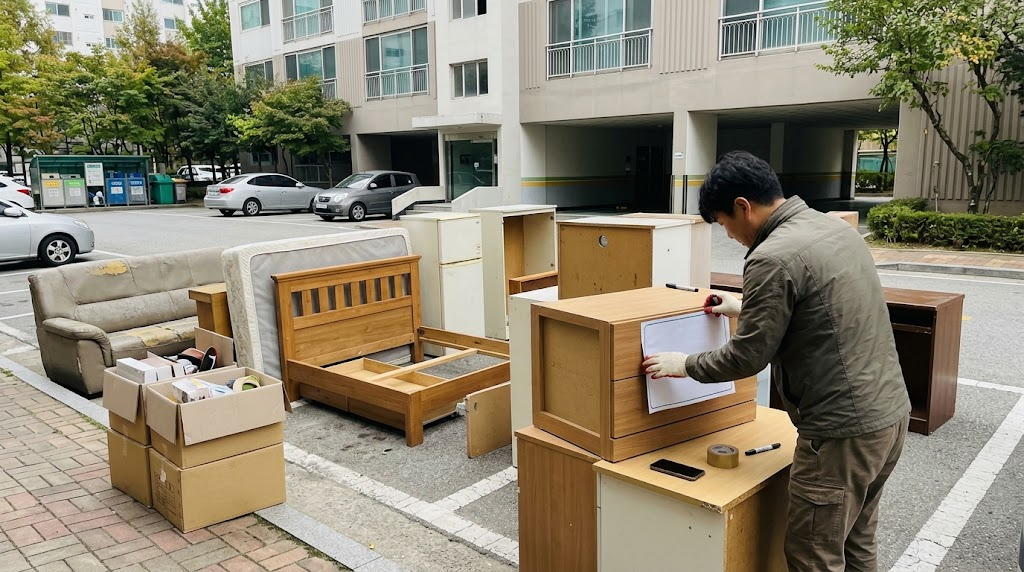
Old bed mattresses, broken chests of drawers, sofas, and other items that cannot be collected for free or sold secondhand must be discharged as bulky waste through the administrative procedures of the competent local government.
If you discard items without an unauthorized discharge declaration, fines may be imposed under the Waste Management Act, making it essential to understand the accurate discharge method and tips to prevent loss.
Comparison of 3 Discharge Application Methods: Which Method Suits Me?
You can choose from 3 channels for bulky waste discharge declarations depending on your residential type and convenience.
| Classification | Application Channel | Features, Pros, and Cons |
|---|---|---|
| Mobile App | Local government affiliated apps such as ‘Bbaegi’ and ‘Yeogiro’ | Automatic calculation of specifications and fees via smartphone photos, real-time tracking of payment and collection status (no printer needed) |
| Internet Registration | Bulky waste online reporting center of the competent district/city hall | 24-hour application available via PC, direct printing of payment certificate or recording registration number after payment |
| In-Person Registration | Community service center (administrative welfare center) or designated retailers (marts, convenience stores) | Directly buy and attach stickers with cash/card, suitable when unfamiliar with handling computerized systems |
Tips for Preventing Sticker Loss and Marking Discharge Numbers
After applying and attaching a sticker or payment certificate before taking it outside, unfortunate incidents often occur where someone peels off the sticker or it gets damaged by wind and rain, leading to an “illegal dumping sticker” being attached.
- How to write down the registration number by hand when you do not have a printer
- There is no need to worry even if you do not have paper printouts. If you clearly write [Waste Registration Number / Item / Discharge Date / Discharger Contact Information] in large letters with a thick permanent marker on an A4 sheet or cardboard piece and attach it tightly sealed with tape, it carries the exact same validity as an official payment certificate.
- Keep photos of the actual items
- Immediately after discharging at the designated spot and attaching the registration number, be sure to take verification photos showing both the background of the discharge location and the registration number together. You can immediately clarify the situation if a verification request arises due to loss.
Differences in Discharge Locations and Times by Housing Type
To ensure smooth collection by local government collection vehicles, items must be placed out at the designated location and time to prevent traffic obstruction or civil complaints.
- Apartments / Large Officetel Complexes
- Discharge at the designated “bulky waste collection site” inside the complex.
- It is convenient to notify the management office of the items to be discharged in advance and first check if fees can be added to the maintenance bill or if there is an internal handling procedure.
- Detached Houses / Villas / Multi-family Housing
- Discharge in front of your home’s main gate or at the 1st-floor parking lot entrance of the building (roadside accessible by vehicles). Take care not to block the front of other homes or the middle of sidewalks.
- Observe Discharge Times
- As a rule, discharge begins around sunset (after 18:00–20:00) on the day before the scheduled collection date. Leaving items unattended for long periods during daytime hours may cause traffic obstruction and can be mistaken for illegal dumping.
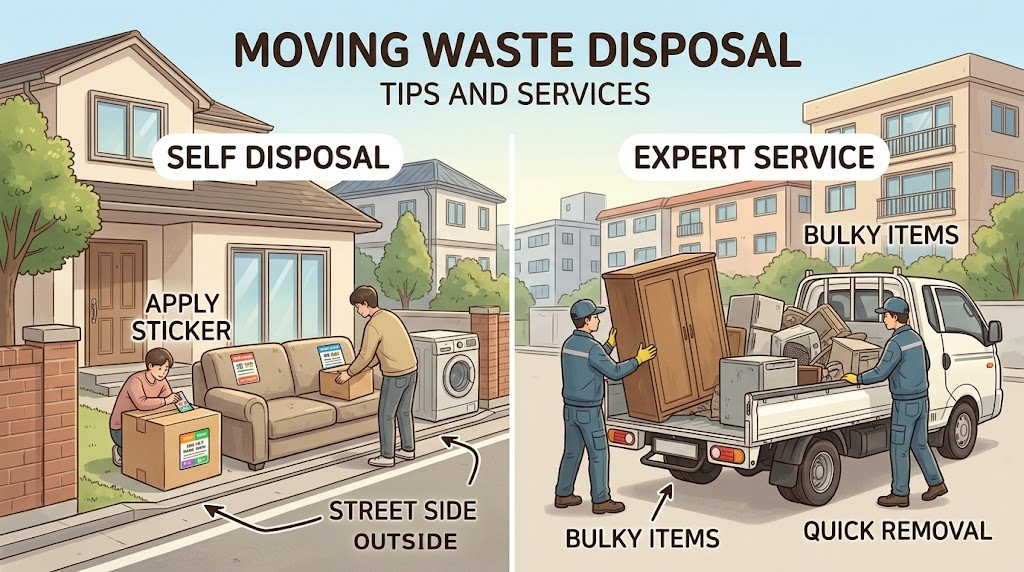
[Bulk Processing] When There Is Too Much Stuff: How to Hire a Moving Waste Disposal Specialist
When you have furniture that is impossible for an individual to disassemble or move—such as built-in wardrobe dismantling, heavy stone beds, or large massage chairs—or when miscellaneous items accumulated in balconies and storage rooms over several years pile up like a mountain, relying solely on local government sticker discharge reaches its limit.
To avoid disrupting ladder truck movement lines or balance payment schedules on moving day, hauling away and organizing everything at once via truck through a professional moving waste company is far more reasonable in terms of time and labor costs.
Self-Discharge vs. Professional Collection Company: Under What Circumstances Should You Hire One?
- Items requiring specialized dismantling labor: Wall-anchored built-in closets, sliding wardrobes, wall-mounted TV bracket removal, stone/clay bed boiler board separation, etc.
- Environments without elevators or with confined spaces: 3rd-to-5th-floor villas requiring stairs work, houses where ladder truck access is difficult due to narrow alleyways
- Bulk disposal without sufficient time: Cases where household waste (dishes, bedding, scrap metal, plastic sundries, etc.) pours out in quantities amounting to dozens of burlap sacks
Approximate Cost Estimate Criteria (Based on a 1-Ton Truck)
Moving waste collection costs are determined not merely by “vehicle load capacity (volume),” but also by “waste type (nature/composition)” and “work crew size and floor levels.”
| Classification | Approximate Baseline Cost | Cost Fluctuation Factors |
|---|---|---|
| One 1-ton truck (basic) | Around 300,000 won to 500,000 won range | Loaded mainly with furniture, elevator equipped, standard work crew of 1–2 persons |
| Demolition/dismantling work add-on | Additional 50,000 won to 150,000 won per item | Built-in wardrobe demolition, stone bed dismantling, large air conditioner piping clean-up, etc. |
| Special environment surcharge | Additional 50,000 won to 150,000 won | Stairs carrying without an elevator (surcharge by floor level), separate ladder truck dispatch |
If the proportion of heavy incombustible waste such as ceramics, tiles, and broken glass is high compared to wood products that merely take up volume like furniture, the treatment facility weighing unit price (based on weight) increases, which may lead to additional quote fees.
Top 3 Checklist to Prevent On-Site Surcharge Disputes
To prevent disputes where technicians visit on the day and demand hundreds of thousands of won in surcharges claiming that “there is more load than expected” or “the work is tricky,” a clear quote agreement in advance is essential.
- Send photos and videos in advance
- Photograph the front, side, and all opened interior spaces of the furniture to be discarded.
- Take wide-angle photos or videos of around 10 seconds showing the scale of miscellaneous items in the whole room, balcony, and utility room at a glance, and send them to 2–3 companies.
- Specify on-site environmental conditions
- Clearly state in text messages or written estimates the residential floor level, whether there is an elevator and whether it is usable (including whether management office elevator usage fees apply in the case of apartments), and whether a ladder truck can enter.
- Confirm included details (demolition fees, haul-away fees, waste disposal fees)
- Keep a confirmation text message showing whether the provided quote covers only “disposal fees after collection” or represents the final total amount including “haul-away and disassembly labor from inside the home” (check whether VAT is included).
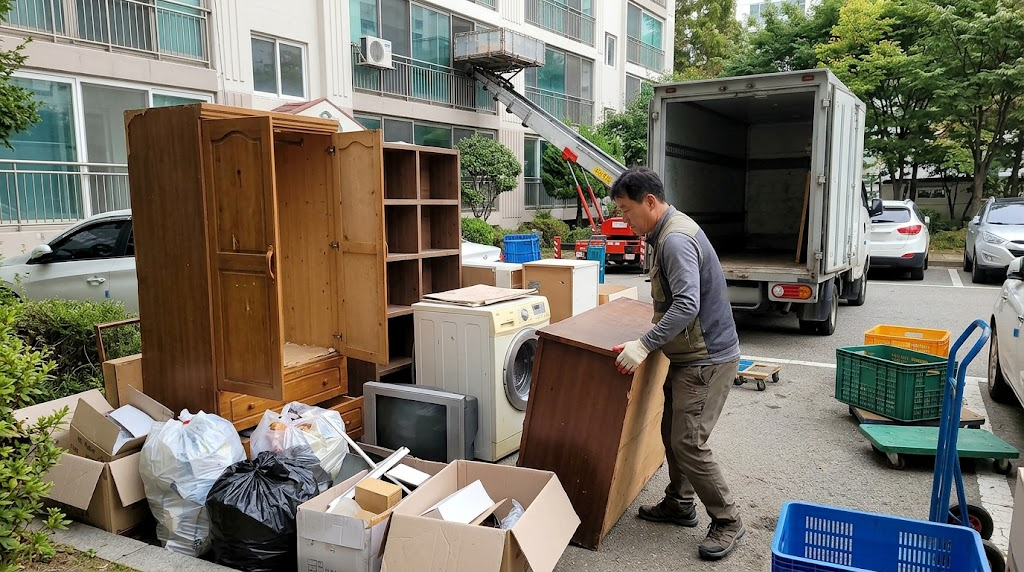
[Precautions] Common Moving Day Waste Disposal Mistakes & Fine Prevention
While frantically packing on moving day, people often carelessly discard items thinking, “I can probably just toss this into a standard pay-as-you-go bag,” or leave them unattended by the roadside under time pressure. However, under the Waste Management Act, incorrect discharge can lead not only to environmental pollution, but also to administrative fines of up to 1,000,000 won or less.
Here is a summary of the 3 most frequent discharge mistakes occurring on moving day and how to prevent fines.
- “Incombustible waste” that must not be put into standard pay-as-you-go trash bags
Broken dishes, ceramics, flowerpots, broken glass, mirrors, bathroom tiles, waste bricks, and similar items are non-flammable, incombustible waste. If you discharge these inside standard trash bags (combustible), entry into incineration plants may be rejected or fines may be imposed for illegal dumping.
- Correct discharge method: You must purchase and fill a “special-standard burlap sack (incombustible pay-as-you-go burlap bag)” from a community center or designated retailer (regular supermarkets, hardware stores).
- Breakage precautions: To prevent injuries to collection workers, it is basic courtesy to wrap broken glass or sharp fragments in multiple layers of newspaper or cushioning material before placing them in the sack.
- Discharge tips for waste wood, plywood, and disassembled furniture
Many people disassemble desks, storage units, chairs, and similar furniture themselves to save space, chop them into pieces, and cram them into standard trash bags.
- Principle: Even if furniture has been disassembled, wood materials are not recyclable pay-as-you-go items, so they must be discharged with bulky waste stickers attached.
- Tip: Although volume standards differ by local government, if you have flat wooden boards that can be tied together into a bundle with twine, reporting them under the “wood bundle” category (usually around 1,000 to 2,000 won) among local government bulky waste specifications can save on sticker costs.
- Illegal dumping fine standards and moving day dispute prevention
Fines for illegal dumping under the Waste Management Act are imposed differentially depending on the discharge method and items.
| Violation Type | Fine Standard |
|---|---|
| Dumping portable waste such as cigarette butts and tissues | 50,000 won |
| Dumping garbage using plastic bags, cloth wrapping cloths, etc. | 200,000 won |
| Failing to use standard pay-as-you-go bags and violating discharge time/location | 100,000 won ~ 200,000 won |
| Failing to attach bulky waste stickers and unauthorized dumping using vehicles/handcarts | 500,000 won ~ 1,000,000 won |
- Moving Day Precautions:
- To avoid receiving calls after moving out from the landlord, management office, or neighbors saying that “a fine notice arrived because of the belongings left behind,” it is safest to take photos of the attached declaration certificate and the discharge site on your smartphone on that day, and share them in advance with the real estate agency and management office.
- Items must be moved to the collection point specifically at the designated time on moving day (usually after sunset or the time specified by the management office) to prevent civil complaints regarding vehicle traffic obstruction.
Would you like me to also write an epilogue (concluding) text that neatly wraps up the entire post?
Korean version: 한국어로 읽기