Introduction: Why Checking House Cleaning and Cost Estimates Before and After Moving is Essential
When preparing for a move or relocating to a new space, clearing away invisible, ingrained grime and dust is just as headache-inducing as packing and organizing. Nowadays, it has become common to search for ‘move-in cleaning costs’ or ‘moving cleaning estimates’ on portal sites and enlist the help of professional companies.
“I have my hands full just preparing for the move, but why do cleaning costs vary so much and I don’t know who to hire?”
“What if I get a cheap estimate and sign a contract, but they demand extra fees later?”
To put it bluntly, carefully comparing interior cleaning and cost estimates before and after moving is an absolute essential course to prevent unnecessary disputes and guarantee a clean fresh start. This is because pricing criteria vary by branch and company depending on the cleaning scope, housing type, and degree of contamination.
To prevent surprise extra fee bombs stemming from vague anxiety and lack of information, and to clear out your space in the most reasonable and safe way, let’s take a detailed look at why you must check accurate cleaning cost estimates in advance and their key points.
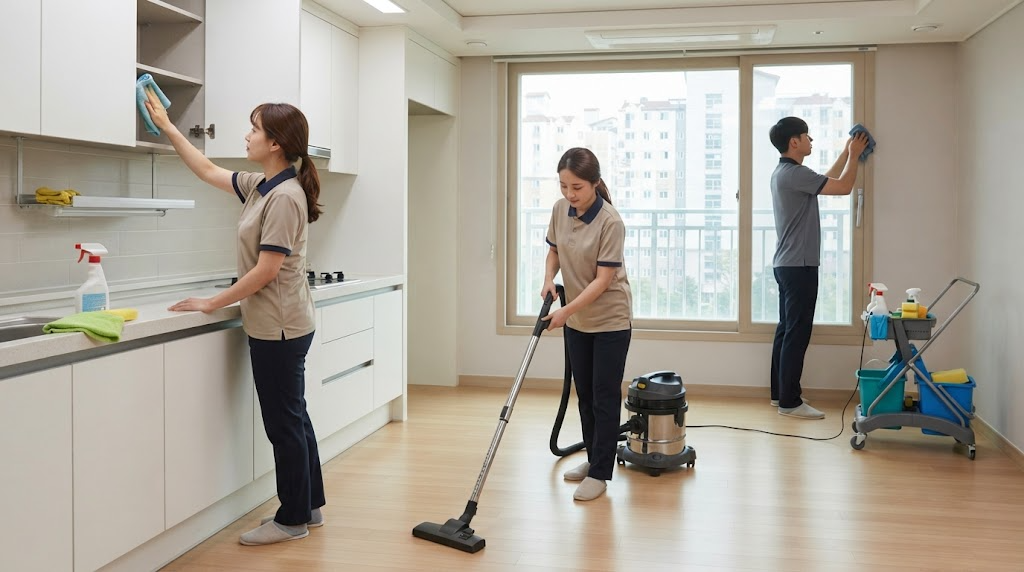
Step 1: Understand Cleaning Types (Differences Between Move-in Cleaning, Moving Cleaning, and Occupied Cleaning)
Before seriously looking into cleaning companies and comparing estimates, the very first thing you must clearly distinguish is the ‘type of cleaning’. At first glance, cleaning a house might seem like a similar process, but the scope of work, labor input, professional chemicals, and equipment vary completely depending on the residential status and characteristics of the space.
When inquiring about estimates from companies, you must convey the exact type of your home to prevent unexpected additional costs and enable a reasonable calculation.
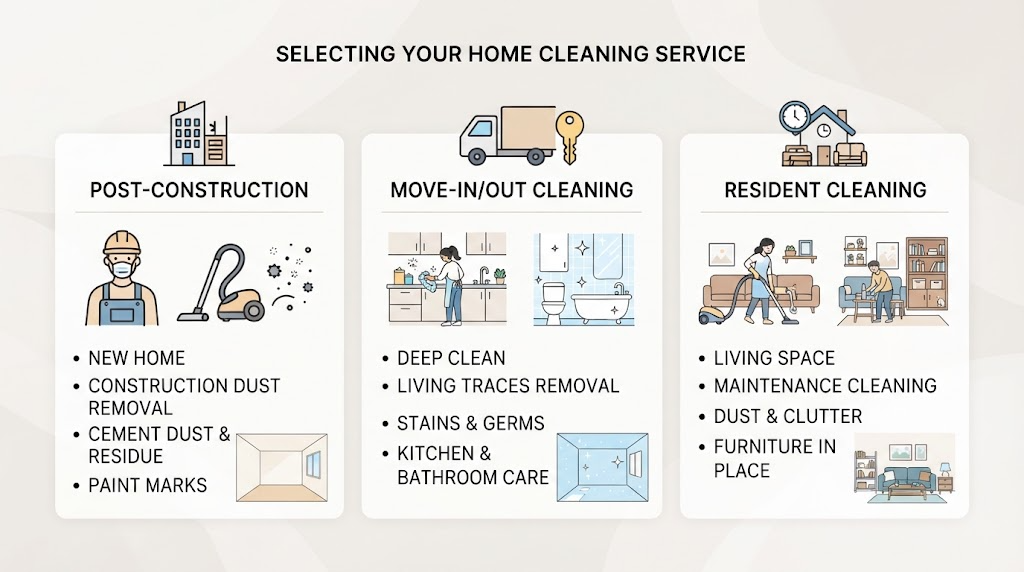
1. ‘Move-in cleaning’ performed immediately after new construction or major remodeling
This is cleaning performed right after a new apartment, new villa, or large-scale interior construction is finished. It focuses on cleanly removing hazardous building substances such as invisible fine construction dust, cement powder, wallpaper paste, paint marks, and silicone residues.
2. ‘Moving cleaning’ that erases the living traces of previous residents
This is the process of clearing out old, ingrained everyday grime and bacteria left behind by the previous tenant or landlord before moving into a house where someone used to live. It intensively cares for daily pollution such as heavy grease on the kitchen hood, old water stains and mold in the bathroom, and long-standing dust on window frames and balconies.
3. ‘Occupied cleaning’ performed while belongings are still present
This is the method chosen when you want to do a deep clean of the entire house or improve hygiene in specific areas without moving, while keeping your current furniture and belongings in place. It neatly cleans up hidden dust and household waste in every nook and cranny while maintaining the layout of furniture and home appliances.
💡 Key Summary: By accurately identifying whether your home’s current state is new construction, a place where someone else lived, or an occupied space with belongings, and selecting the right cleaning type, you can receive an accurate cost estimate without communication errors.
Step 2: Key Factors Determining House Cleaning Cost Estimates (Square Footage [Pyeong], Contamination Level, Additional Options)
Once you have determined the cleaning type, the next thing to check is the specific estimate calculation criteria that will apply to your home. Even for houses of the same square footage, estimate amounts vary wildly because there are key factors that determine cleaning costs.
When inquiring about estimates from companies, you must understand the factors below in advance to prevent unexpected cost additions and receive accurate consultation.
1. Residential square footage (pyeong) and spatial structure: The most basic framework of cleaning costs is the square footage based on supply area or exclusive area. In addition, the number of people deployed and the time required increase in proportion to the number of rooms and bathrooms, whether it is a duplex structure, and the presence or absence of an expanded veranda.
2. Site contamination level and living traces: The degree of contamination varies greatly depending on how the previous resident used the house. If heavy grease in the kitchen, old water stains and mold in the bathroom, hair and odors from pets, and wallpaper contamination are severe, special chemicals or additional work are deployed, which affects the cost.
3. Additional options and special care: These are items added according to customer requests or site conditions in addition to the basic cleaning scope (rooms, living room, kitchen, bathroom, etc.). Exterior window cleaning, floor wax coating, phytoncide sick house syndrome treatment, and internal disassembly cleaning of built-in appliances (air conditioner, washing machine, refrigerator, etc.) are priced as separate option costs.
💡 Key Summary: In addition to the basic condition of square footage, the final estimate varies depending on the actual contamination state of the house and required additional options, so it is important to share the home’s condition in detail through photos or videos before contract signing to receive an accurate estimate.

Step 3: Reasonable Estimate Comparison and Reliable Company Selection Process
Once you have figured out the cleaning type and your home’s contamination status, it’s time to seriously compare estimates from various companies and choose a reliable place. This is the stage where your worries grow: “Is the absolute cheapest place always best?” or “Does a high price guarantee perfection?” Let’s look at the company selection process to secure both reasonable costs and satisfactory service quality.
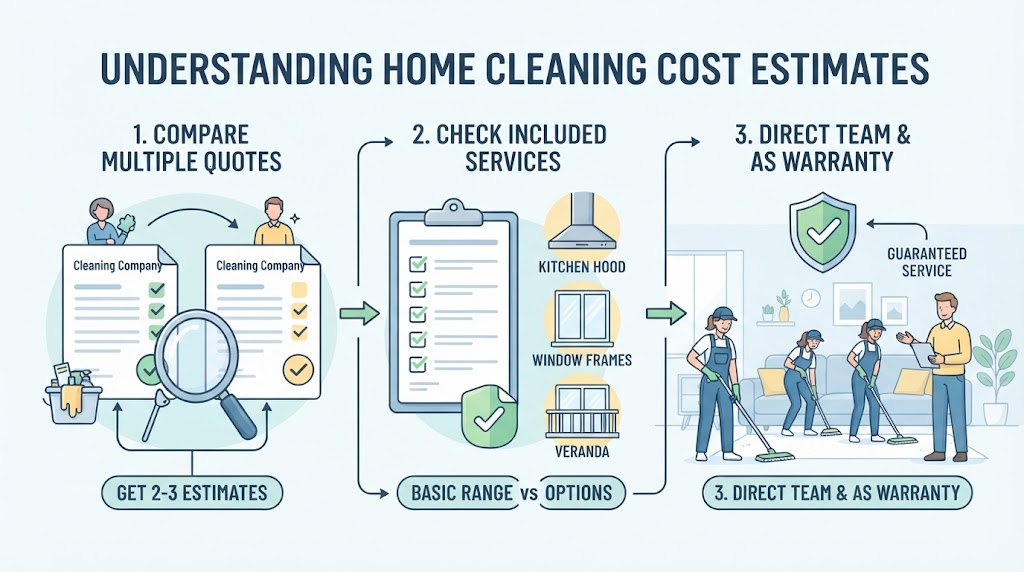
1. Compare multiple estimates from at least 2 to 3 places
Rather than rashly signing a contract based on just one estimate, it is safer to receive quotes from at least 2 to 3 places through cleaning comparison platforms or professional companies. Not only can you grasp the approximate market price, but it also serves as the surest defense line to filter out excessive rip-off pricing by certain companies.
2. Meticulously examine ‘included details’ as well as the total amount
Comparing only the visible total amount is a strict no-go. While some company estimates include verandas, window frames, and kitchen hood care by default, others have a narrower basic scope and may incur additional option costs, so you must cross-examine the estimate details item by item.
3. Check whether a direct management team is operated and whether AS is guaranteed
Choosing a company where a ‘headquarters direct management team’ that has completed professional training visits directly, rather than a place that deploys unverified daily part-timers or subcontracted personnel, is the secret to increasing finish perfection. In addition, you must check before signing a contract whether prompt feedback or AS is guaranteed if unsatisfactory parts are found after cleaning is completed.
💡 Key Summary: Rather than chasing just the lowest price, you must meticulously compare service inclusion details, direct management team operation, and post-management regulations to select a reliable company so you can finish successful cleaning before and after moving without stress.
Precautions: Preventing Additional Fee Disputes and Checkpoints to Verify Before Contracting
One of the most common complaints when using cleaning companies is disputes caused by requests for ‘unexpected additional fees’ occurring on-site on the day of cleaning. Even if you received a reasonable estimate and contracted in advance, missing a few precautions can lead to facing awkward situations or hurt feelings on the day.
“We clearly received all estimates and signed the contract, so why are they saying we have to pay extra fees on the day?”
“I paid the final balance because they said cleaning was done, but later I saw parts that were lacking.”
To prevent unnecessary conflicts and successfully finish cleaning, we highlight the core checkpoints you must verify before contracting.
1. Transparently sharing on-site contamination status and special notes in advance
If additional work is needed, such as a large amount of neglected waste, hair/feces traces from pets, severe mold, special contamination on window frames or wallpaper, or removal of adhesive sheets/stickers, you must accurately notify them with photos prior to contracting. This can prevent disputes where you are asked for extra fees on-site on the day by hiding these things.
2. Clearly stating details in writing on the contract instead of verbal promises
Promises made verbally during the consultation process are easily not properly conveyed to the on-site team members on the day, leading to friction. Service inclusion scope, conditions for extra fees, refund and AS regulations, etc., must be clearly left in writing on the estimate or contract to be safe.
3. Thorough on-site inspection and final confirmation after cleaning completion
Rather than paying the final balance immediately upon receiving notice that cleaning is done, it is essential to go around the house together with the manager (window frames, kitchen hood, bathroom drain, etc.) to meticulously inspect if there are any subpar areas. If there are any shortcomings, you should request feedback right on the spot.
💡 Key Summary: If you transparently share special notes in advance, record all promises in writing, and go through a thorough on-site inspection immediately after cleaning, you can safely and perfectly wrap up moving cleaning without extra fee disputes.

Conclusion: Clearing Spaces Cleanly Before and After Moving Without Burden Through Accurate Cost Estimate Comparisons
Amidst a schedule already overwhelming with moving preparations alone, pulling off cleaning perfectly to completely sweep away invisible ingrained grime and dust is by no means easy. However, if you accurately understand your home’s state based on the systematic guidelines we looked at today and meticulously compare estimates, anyone can clear out their space cleanly and comfortably without worrying about extra fees.
Shall we summarize the core points for successful and rational house cleaning once again?
Accurate cleaning type selection: Identifying tailored services suited to your home’s current residential state and characteristics, such as move-in cleaning, moving cleaning, and occupied cleaning
Multiple estimate comparison and inclusion verification: Cross-examining estimates from at least 2 to 3 places and carefully checking the basic inclusion scope and whether a direct management team is operated
Advance notification and thorough on-site inspection: Transparently sharing contamination levels or special notes and blocking extra fee disputes through meticulous on-site inspection after cleaning completion
Cleaning before and after moving goes beyond simple dust removal; it is the most important and exciting first step toward welcoming a fresh and pleasant daily life that will unfold in your new space.
Put down unnecessary footwork and cost burdens, and experience smart organization that saves both time and energy by taking the accurate cost estimate comparison guide provided today as your compass. We sincerely cheer for your brilliant new start in your new space!
Korean version: 한국어로 읽기