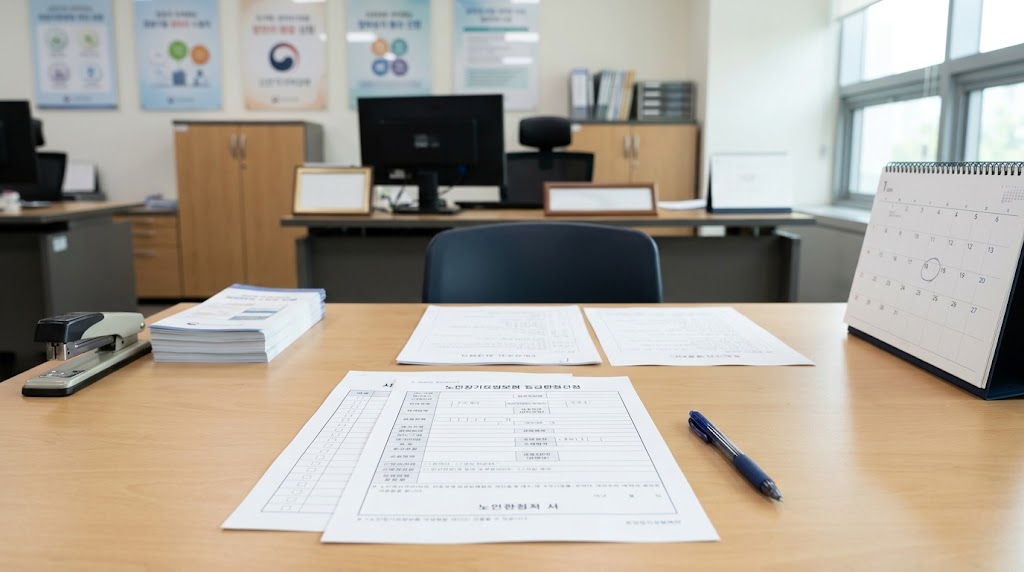
Eligibility Requirements for Long-Term Care Insurance Grade Application
This is a main text section draft applying an informative card news style and a friendly tone so that Naver blog readers can understand it easily at a glance.
- Eligibility Requirements for Long-Term Care Insurance Grade Application
To use a day and night care center with government support (an 85% reduction in co-payment), you must first receive approval for a “long-term care grade.”
However, not all seniors can apply right away. You must clearly check the eligible subjects and application conditions defined by the Corporation so that you do not make a wasted trip.
① Basic Eligibility Requirements (Age and Disease Criteria)
The targets of application are largely divided into two groups: those aged 65 or older and those under 65.
Seniors Aged 65 or Older
Cases where mobility is significantly inconvenient, or it is recognized that it is difficult to perform daily life activities alone for 6 months or longer due to dementia or other reasons
※ Regardless of the type of disease, the “need for physical and mental care” serves as the standard.
Persons Under 65
Even if not yet aged 65, you can apply if you have been diagnosed with a “geriatric disease” prescribed by Presidential Decree and have difficulty with daily life for 6 months or longer.
Major Recognized Geriatric Diseases:
Dementia (Alzheimer’s, vascular dementia, etc.)
Cerebrovascular diseases (cerebral infarction, cerebral hemorrhage, etc.)
Parkinson’s disease and related secondary diseases
However, individuals under 65 who have difficulty moving due to causes other than geriatric diseases, such as simple fractures, arthritis, and general traffic accident aftereffects, are excluded from eligibility.
② Subscriber and Beneficiary Conditions
Any citizen of the Republic of Korea is granted eligibility to apply regardless of income level.
National Health Insurance subscribers and dependents
Medical care assistance beneficiaries (National Basic Living Security recipients, near-poverty group, etc.)
In the case of medical care assistance beneficiaries, preliminary linked applications can proceed through a social welfare officer at a community service center (administrative welfare center).
💡 Blogger Check Point!
“My parent is not yet 65, but has aftereffects of cerebral infarction. Is it possible to apply?”
👉 Yes, it is possible! If a cerebrovascular disease (such as I60~I69) is stated in the disease classification code on a medical certificate or doctor’s opinion, they are eligible to apply for a long-term care insurance grade even if under 65.
Shall I proceed with writing the subsequent sections?
Write the Step 2 essential documents and preparation materials section
Immediately write the visit investigation practical tips section
Recommend representative image/diagram prompts suitable for the section
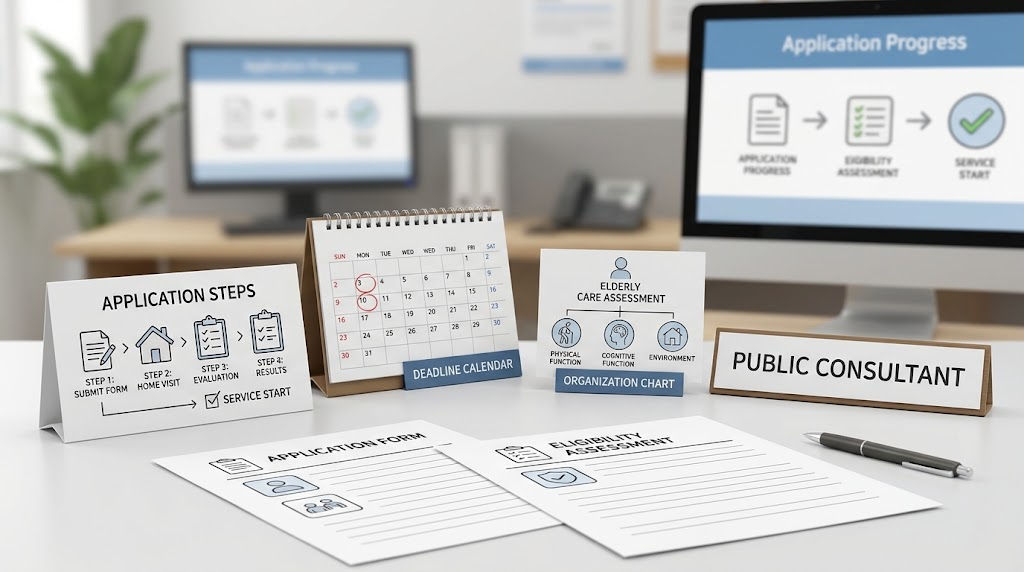
Application Preparation Items and 2 Essential Documents
These are 2 sub-heading styles great for immediate use in blogs or guides addressing the confusion Naver blog readers experience during the document preparation stage.
Option 1. Intuitive and neat information delivery type
Sub-heading: Essential check before applying! Preparation items and required documents at a glance
Feature: A form that gives a sense of trust so search visitors can quickly grasp the necessary documents.
Option 2. Practical tips type that encourages clicks
Sub-heading: Prevent a wasted trip! 2 essential documents you must bring when applying
Feature: A form that emphasizes passing at once without omissions, enhancing readability and attention.
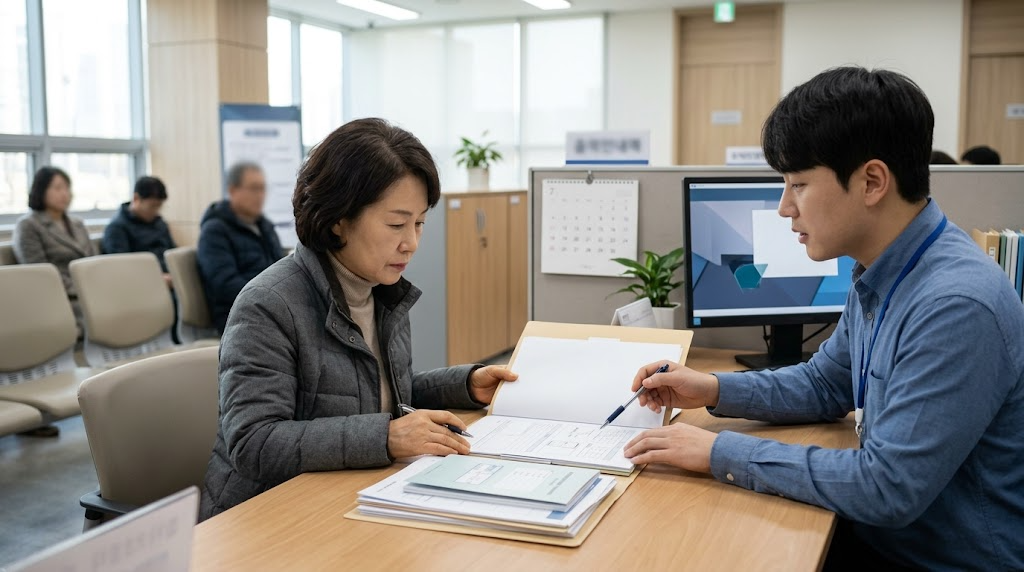
4 Steps of Long-Term Care Grade Application and Determination Procedure
This is a main text draft organized so that Naver blog readers can understand and follow complex administrative procedures easily at a glance.
- 4 Steps of Long-Term Care Grade Application and Determination Procedure
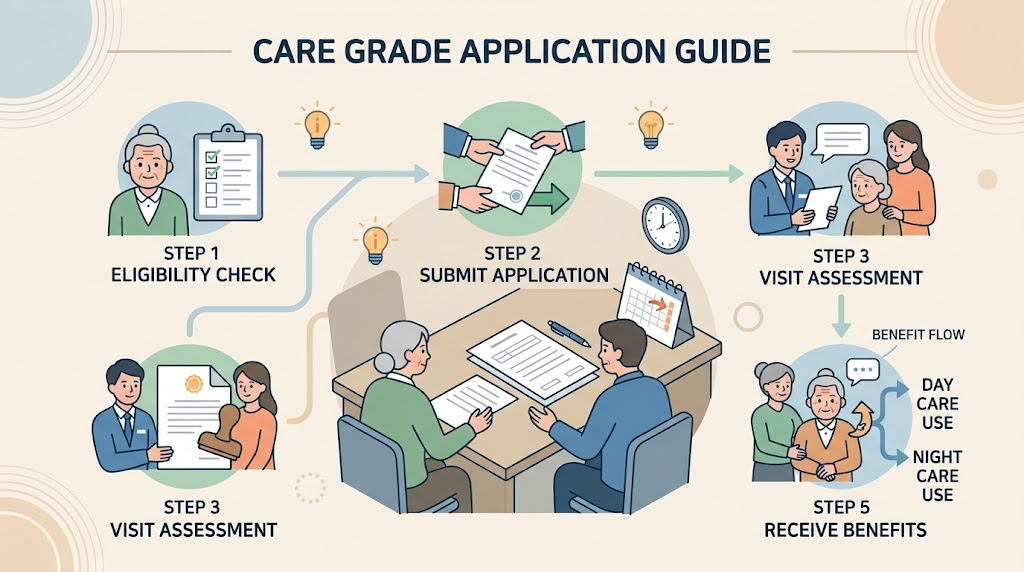
From applying for long-term care insurance to actually receiving a grade and using a day and night care center, it usually takes about 30 days (1 month).
If you know the overall flow of the order in advance, you can prepare without panic and with plenty of time for each step.
Step 1: Receipt of Recognition Application (Online/Offline)
First, you must submit the “Long-Term Care Recognition Application” to the National Health Insurance Service.
Applicant: The senior in person or family, relatives, representatives (social workers, etc.)
Application Methods:
In-person/Mail/Fax: National Health Insurance Service branch office (Long-Term Care Insurance Operation Center) having jurisdiction over the senior’s resident registration address
Online/Mobile: Can apply conveniently through the official Long-Term Care Insurance website or smartphone app (“The Health Insurance”)
Once receipt is completed, a staff member is assigned from the Corporation and will contact you to coordinate the schedule for a visit investigation.
Step 2: Home Visit Investigation by Corporation Staff
Within a few days after applying, a nurse or social worker belonging to the Corporation visits directly where the senior is located (home, hospital, etc.).
Main Investigation Contents:
Physical function (getting dressed, washing face, eating, using the restroom, etc.)
Cognitive function (memory, orientation, judgment, etc.)
Behavioral changes (wandering, delusion, depressive symptoms, etc.)
Nursing care and rehabilitation status, evaluating a total of 52 items
💡 Key Tip: On the day of the visit investigation, it is very important that a guardian is present together to objectively explain the senior’s actual usual care situation.
Step 3: Submission of Doctor’s Opinion and Deliberation by the Grade Determination Committee
Once the visit investigation is finished, you submit a doctor’s opinion according to the Corporation’s guidance, and it goes through final deliberation.
Submission of Doctor’s Opinion: Obtain an opinion from a hospital or clinic according to the issuance request form designated by the Corporation and submit it to the Corporation within the deadline. (If not submitted, the grade determination will be put on hold.)
Deliberation by the Grade Determination Committee:
By combining the visit investigation result score (computer-calculated 1st score) and the doctor’s opinion, a committee composed of experts such as medical doctors, oriental medical doctors, and social workers determines the final grade (Grades 1 to 5 and Cognitive Support Grade).
Step 4: Result Notification and Receipt of Service Use Documents
When deliberation ends, the grade determination result is guided via postal mail or Kakao Alimtalk.
3 Types of Received Documents:
Long-Term Care Recognition Certificate: Specifies the final assigned grade and validity period
Individual Long-Term Care Plan: Guidance on available benefit types (day and night care, home care, etc.) and monthly limit amount
Welfare Equipment Benefit Confirmation: Rental/purchase eligible items such as wheelchairs, walking sticks, anti-slip mats, etc.
Holding these documents, you can sign a contract with your desired day and night care center (daycare center) and start using the service immediately.
Shall I help write the subsequent sections right away?
Write the grades eligible for day and night care and co-payment
Write the visit investigation practical tips main text
Make a summary table showing the 4 steps of the procedure at a glance
Summary of Grades Eligible for Day and Night Care and Co-payment
This is a main text draft containing visual tables and key points so that Naver blog readers can compare the cost burden and grade system at a glance.
- Summary of Grades Eligible for Day and Night Care and Co-payment
Day and night care centers (daycare centers) are representative home care services that relieve the care burden of guardians by providing cognitive programs, meals, and rehabilitation exercises during the day, to the extent that they are often called “kindergartens for seniors.”
Then, from which grade can they be used, and how much is the actual cost that guardians must pay each month?
① Grades Eligible to Use Day and Night Care Centers
To state the conclusion first, all long-term care grade holders, from Grade 1 to Grade 5 and the Cognitive Support Grade, can use day and night care centers.
- Grades 1 to 2 (Severe): Seniors who entirely need assistance from other people (both day and night care and nursing home admission are possible)
- Grades 3 to 4 (Moderate): Seniors who partially need assistance (the grade group that uses day and night care centers the most)
- Grade 5 (Dementia Patients): Seniors with relatively good physical functions but in need of customized care for dementia due to cognitive decline
- Cognitive Support Grade: Seniors with normal physical functions but with mild dementia (can use day and night care services within certain limits, such as 3 times a week)
② Co-payment Rate (85% Government Support)
Since day and night care centers fall under home care benefits, the state basically supports 85% of the benefit cost, and the co-payment is at the 15% level. Additional reduction benefits apply depending on income and medical care assistance recipient status.
| Beneficiary Category | Co-payment Rate | Remarks |
|---|---|---|
| General Target Group | 15% | Majority of National Health Insurance subscribers (85% government support) |
| Reduced Target Group (40% reduction) | 9% | Those who meet the health insurance premium bracket criteria |
| Reduced Target Group (60% reduction) | 6% | Near-poverty group, Medical Care Type 2, etc. |
| National Basic Living Security Recipients | 0% (Free) | Medical Care Type 1 (Fully supported by national funds) |
📌 Actual Perceived Cost Example (Based on 8 hours a day):
Out of approximately 50,000 to 60,000 KRW worth of benefit costs per day, for a general target person (15%), only about the 8,000 to 10,000 KRW range per day incurs as a co-payment, so the burden is dramatically lower compared to private caregivers.
③ “Non-Benefit Items” (Meal and Snack Costs) That Must Be Noted
The part that guardians miss the most when using day and night care centers is precisely the non-benefit items.
- Meal and snack costs are 100% self-paid:
Long-term care insurance only supports care and program costs; lunch and dinner meal expenses and snack expenses are non-benefits that are not covered by insurance.
- Estimated additional costs:
It varies by institution, but is usually set around 3,500 to 5,000 KRW per meal and around 1,000 KRW for snacks. When using full-time for 20 days a month, about 80,000 to 120,000 KRW of out-of-pocket meal costs may be added, so it is recommended to check in advance during consultation.
- Caution on exceeding the monthly limit amount:
A “monthly limit amount” that can be used each month is set by grade, and days used exceeding this will be 100% fully self-paid.

Practical Tips for Visit Investigation (Increasing Grade Approval Rate)
This is a main text draft structured to address the confusion Naver blog readers experience in the actual field and convey realistic coping methods.
- Practical Tips for Visit Investigation (Increasing Grade Approval Rate)
After the application is received, a home visit investigation by a Corporation investigator (nurse or social worker) is carried out.
Many guardians let their guard down thinking, “My parent cannot do anything alone, so a grade will naturally come out,” only to be bewildered after receiving an “out of grade (rejected)” decision. We summarize the key tips that guardians must know to increase the approval rate during the visit investigation.
① Preparing for the senior’s “I am fine” way of talking
The most common cause of rejection in visit investigations is precisely the senior’s defense mechanism.
Realistic situation:
When an unfamiliar investigator visits and asks, “Senior, do you go to the bathroom well on your own?”, “Do you prepare meals by yourself?”, out of pride, seniors often show themselves forcing to stand up and walk even for things they usually cannot do, saying, *”Of course, I cook and clean all by myself.”*
Coping method:
Before the investigator visits, reassure your parent in advance: *”The country is coming out to check in order to give health subsidies or care benefits for seniors, so you need to speak honestly about the things that are usually difficult so that you can receive the benefits.”*
② Essential attendance of the guardian and preparing a “care diary”
Visit investigations usually end shortly in about 30 minutes to 1 hour. The visit investigation by National Health Insurance Service staff conducted after applying for long-term care insurance recognition is a core stage in judging the senior’s actual living standard and care necessity on site. Because the determined grade can vary significantly depending on the slight atmosphere or response attitude on the day of the investigation, preliminary preparation is essential.
Practical action guidelines to prevent unfair rejection and receive a grade matching the actual required level in the practical visit investigation are as follows.
- Guardian Prior Attendance and Prior Blocking of “Senior Psychology”
When Corporation staff visit, even seniors who usually had difficulty moving tend strongly to show off their health in front of unfamiliar guests, exerting force excessively and saying, “I can do everything alone,” “I also prepare and eat my own food.”
Prior communication: Before the visit, you must gently explain to the senior in advance that “it is not a test to look good, but a place where you must state where it usually hurts as it is in order to receive care support benefits given by the country.”
Guardian accompaniment: The primary care guardian must be present so that, if the senior gives an overly positive answer unreasonably, they can immediately supplement and explain specific accidents or difficulties that usually occurred.
- Explaining Based on the Condition of the “Worst Day”
On the day of the investigation, their condition may temporarily look good. However, long-term care insurance measures potential risks that may occur throughout the 365 days and the constant necessity of care.
Emphasize usual condition: You must clearly convey the risks when usual care gaps occur, such as “Today they stand up because they are in good condition, but usually the risk of falling upon standing is high, so moving to the bathroom is impossible without support.”
Eliminate abstract expressions: Instead of “They have a hard time” or “They often forget,” present specific numerical figures for frequencies and counts, such as “3 to 4 times a week they cannot find the bathroom and make mistakes in the living room,” or “There were 2 instances just last month where they left the gas stove on and went out, burning pots.”
- Prior Preparation of Objective Evidentiary Materials
Since the investigator must check evaluation items across 52 areas within a limited time, score reflection is much easier when there is visible evidence.
Care diary and records: Prepare a simple diary noting fall history, night wandering, delirium, abusive language, bowel/bladder incontinence time frames, etc., that occurred in the recent 1 to 2 weeks, and present it to the investigator.
Photo and video materials: If you take smartphone videos in advance of night wandering scenes, showing food being spilled while being unable to eat alone, or situations where they cannot put on clothes due to joint range of motion restrictions, immediate proof is possible on site.
Medications taken and medical certificates: Gather current prescriptions, cognitive scale test (CIST, MMSE, CDR) result sheets, arthritis/stroke medical certificates, etc., in one place and keep them available so the investigator can review them immediately.
- Concentrated Explanation on Core Areas of the 52 Investigation Items
The Corporation’s investigation sheet is largely divided into physical function, cognitive function, behavioral change, nursing care, and rehabilitation areas.
Physical function (basic daily living): In getting dressed, washing face, eating, changing position, using the toilet, etc., it may be checked as “able to do alone if they do it alone even if it takes a long time,” so you must clearly state that it is in a state executable only when someone watches right beside them or holds their hand due to fall risk.
Cognitive and behavioral changes: If there are suspected symptoms of dementia, describe all care burden factors that exhaust guardians the most, such as getting lost, hiding objects, delusion, suspicion, and sleep disturbance (day-night reversal), without omission.
- Checking Omitted Items Before the Investigation Concludes
Before the investigator finishes writing and leaves, ask politely, “Perhaps the senior was nervous today and performed much better than their usual condition; are there any additional parts to check?” and check whether major difficulties were reflected in the records. Because revision is very tricky after the investigation is completed, on-site communication determines more than 80% of the final judgment.
Korean version: 한국어로 읽기