
The Core 3 Types of 2026 Youth Housing Support at a Glance
Government support programs that ease housing cost burdens for the youth demographic are largely divided into three categories depending on their characteristics and assistance methods: cash subsidy type, financial loan type, and physical supply type.
- Cash subsidy of up to 200,000 KRW monthly: Special Youth Monthly Rent Support
A direct support initiative designed for young individuals with low income or in the early stages of independence for whom the monthly rent outgoing itself represents a major burden.
- Support details: Paid out in installments of up to 200,000 KRW per month within the limit of actual rent paid for up to 12 months (or up to 24 months depending on the specific round) (once in a lifetime or upon meeting extension requirements)
- Eligibility: Non-homeowning youth aged 19 to 34 residing separately from their parents
- Core criteria:
- Income: 60% or less of the standard median income for independent youth households AND 100% or less of the standard median income for the original household including parents (provided that only the youth’s own household is screened if aged 30 or older, married, or meeting independent livelihood requirements)
- Assets: Net assets of 122 million KRW or less for the youth household; total assets of 470 million KRW or less for the original household
- Key point: Because it comes in the form of a pure subsidy that does not need to be repaid, the perceived housing cost reduction is the greatest as long as requirements are met.
- At about half the market interest rate: Youth-Exclusive Beotimmok Jeonse Loan
A low-interest loan product from the National Housing and Urban Fund for youth lacking lump-sum deposit funds when signing Jeonse or semi-Jeonse contracts.
- Support details: Ultra-low interest loan support in the 1% to 2% range annually, up to a maximum limit of 200 million KRW (within 80% of the lease deposit)
- Eligibility: Non-homeowning heads of household (including prospective heads of household) aged 19 to 34
- Core criteria:
- Income: Combined annual income of 50 million KRW or less for married couples (or single individuals) (relaxed up to 75 million KRW for newlywed households, multi-child households, or households with 2 or more children)
- Assets: Net asset value of 345 million KRW or less (sum of real estate, financial assets, vehicles, etc., minus liabilities)
- Eligible housing: Exclusive lease area of 85㎡ or less; deposit of 300 million KRW or less in the Seoul metropolitan area (200 million KRW or less in non-metropolitan areas)
- Key point: Youth employed at small and medium-sized enterprises (SMEs) can also consider linking with the ‘SME-Employed Youth Jeonse/Monthly Rent Deposit Loan’ depending on conditions.
- Residing at 60–80% of surrounding market rates: Public Rental Housing (Happy Housing, Youth Safe Housing)
Public and public-private partnership rental housing where tenants can reside stably over the long term, away from high monthly rents in the private rental market and risks of deposit fraud.
- Supply types: LH/SH Happy Housing, Seoul Youth Safe Housing (public/private rental), youth purchase/Jeonse rental housing, etc.
- Move-in benefits: Affordable deposits and rental rates at 60 to 85% of market rates, securing stable tenancy for up to 6 to 10 years
- Eligibility: University students, job seekers, early-career workers (non-homeowners aged 19 to 39)
- Core criteria:
- Income: Average monthly income of the relevant household must be 100% or less (120% for single-person households, up to 150% when applying special youth brackets) of the average monthly income per household by household size for urban workers from the previous year
- Assets: Total assets around 254 million KRW or less based on youth bracket standards, with non-ownership of vehicles or compliance with individual notification vehicle value cutoffs mandatory
- Key point: Located largely around subway station influence areas with convenient public transit access, helping cut commuting and school transit costs concurrently.
Comparison Summary of the Core 3 Types
| Category | Special Youth Monthly Rent Support | Youth Beotimmok Jeonse Loan | Happy Housing / Youth Safe Housing |
|---|---|---|---|
| Method | Cash disbursement (rent subsidy) | Low-interest financing (deposit loan) | Physical supply (affordable rental residence) |
| Income Requirement | 60% or less of median income (100% for original household) | 50 million KRW or less combined annual income for couples | 100–120% of urban workers’ monthly average income |
| Asset Requirement | Individual 122M / Original household 470M KRW or less | Net assets of 345 million KRW or less | Total assets around 254M KRW or less (vehicle restrictions) |
| Recommended Candidates | Zero-income/part-time youth, rent payers | Employed youth preparing lease deposits | Youth seeking commute convenience and long-term stability |

[Key Requirement 1] Income Bracket Standards: Complete Calculation Guide for Median Income vs. Total Annual Income
The stage where the largest number of applicants are disqualified when applying for youth housing support is ‘income calculation.’
The benchmark indicators differ completely depending on the program you intend to apply for. Ministry of Health and Welfare-led rent assistance looks at ‘standard median income,’ the Ministry of Land, Infrastructure and Transport’s Beotimmok Jeonse Loan considers ‘total annual income,’ and LH/SH rental housing applies ‘monthly average income by household size for urban workers.’
Let us clearly examine the difference between the two and how to determine your income bracket.
- What is ‘Standard Median Income’? (The Core of Monthly Rent Support)
It refers to the income of the household situated exactly in the middle when all households in South Korea are lined up in order of income.
The government’s Special Youth Monthly Rent Support generally requires passing both tiers of hurdles.
- Independent youth household income: 60% or less of standard median income
- Original household (including parents) income: 100% or less of standard median income
💡 Exception Conditions Exempting Parental Income Scrutiny
① Aged 30 or older, or
② Married (including divorced), or
③ Even if aged 19 to 29, recognized as maintaining an independent livelihood separate from parents due to having a regular income of 50% or more of median income
👉 In this case, only the single-person youth household’s income (60% or less of median income) is evaluated.
📌 2026 Standard Median Income and Determination Thresholds
(Based on Ministry of Health and Welfare public notice, pre-tax monthly income standard)
| Household Size | 100% Standard Median Income | Rent Support Cutoff (60% or less) | Housing Benefit Cutoff (48% or less) |
|---|---|---|---|
| 1-Person Household (Youth) | 2,564,238 KRW | Approx. 1,538,543 KRW or less | Approx. 1,230,834 KRW or less |
| 2-Person Household (Newlyweds, etc.) | 4,199,292 KRW | Approx. 2,519,575 KRW or less | Approx. 2,015,660 KRW or less |
| 3-Person Household (Parents + Youth) | 5,359,036 KRW | Approx. 3,215,422 KRW or less | Approx. 2,572,337 KRW or less |
| 4-Person Household (General Original Household) | 6,494,738 KRW | Approx. 3,896,843 KRW or less | Approx. 3,117,474 KRW or less |
Tip: For full-time workers earning minimum wage on a 40-hour workweek, the income evaluated is calculated after applying the youth earned income basic deduction (income deduction per government guidelines); thus, even if actual pre-tax salary slightly exceeds 1.54 million KRW, criteria may still be met after deductions.
- What is ‘Total Annual Income’? (The Core of Beotimmok Jeonse Loan)
The National Housing and Urban Fund’s Youth-Exclusive Beotimmok Jeonse Loan looks not at median income, but at ‘pre-tax total annual income’ earned over 1 year.
- General Single / Combined for Couples: 50 million KRW or less annually
- Newlywed Households / Multi-Child / 2 or More Children: 75 million KRW or less annually
- Employees of Public Institutions Relocated to Innovation Cities / Employees Migrating from Other Regions: Maximum 60 million KRW or less annually
⚠️ Points to Note
- For unmarried single heads of household, only the youth’s own income is considered; however, if married, the spouse’s income is combined and must not exceed 50 million KRW (75 million KRW for newlyweds).
- Income here is based on the pre-tax total wage amount (excluding non-taxable income) on the withholding tax receipt, rather than the net amount deposited into the bank account.
- Income Proof Know-How for Part-Timers, Freelancers, and Early-Career Workers
Unlike regular salaried employees, youth with irregular income documentation must pay attention to the timing of document issuance.
- Regular Workers (Employed for 1 Year or More)
- Submit the previous year’s earned income tax withholding receipt or certificate of income amount
- Early-Career Workers (Employed for Less Than 1 Year)
- Calculated by annualizing the Certificate of Class A Earned Income Tax Withholding (Gabgeunse) or payslips stamped with company seal for the most recent months worked
- Part-Timers / Freelancers (3.3% Business Income Earners)
- Issue a certificate of income amount from global income tax filing for the previous year via National Tax Service Hometax
- If there is no prior year income and work commenced recently, utilize an income payment statement or appointment certificate issued by the business owner + bank deposit history
- Checkpoints by Income Indicator at a Glance
| Target Support System | Applied Income Standard | Assessment Method | Precautions |
|---|---|---|---|
| Special Youth Monthly Rent Support | Standard median income 60% (original household 100%) | Monthly average recognized income amount (deductions applied) | Be sure to check parental income if unmarried and under 30 |
| Beotimmok Jeonse Loan | Annual income of 50 million KRW or less | Annual pre-tax total wage amount | Spouse’s income is combined and reviewed for married applicants |
| Happy Housing / Public Rental | Previous year’s monthly average income of urban workers | Previous year’s pre-tax monthly average by household member | Check whether a 20%p addition (120%) benefit applies to single-person households |
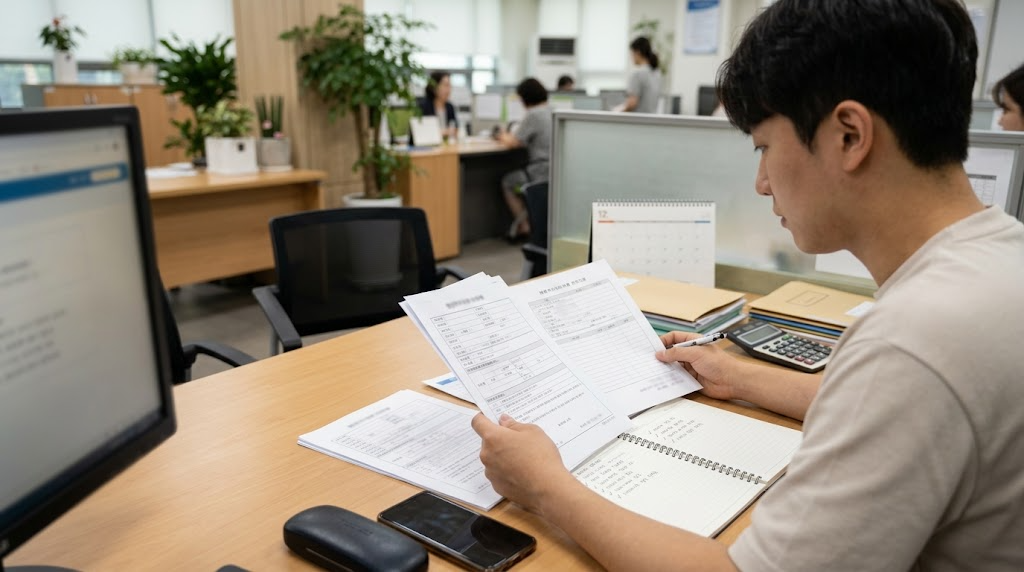
[Key Requirement 2] Asset Value Calculation: Precautions for Real Estate, Financial Assets, and Vehicle Value
Even if applicants successfully pass the income criteria, many are ruled ineligible due to an unexpected ‘exceeding asset threshold.’
In particular, for youth housing support, outcomes vary completely depending on whether net assets (assets – liabilities) or total assets (no deduction of liabilities) are examined, and the method of calculating vehicle values is also very strict. We detail the asset cutoffs by support initiative and the calculation method by item.
- Comparison of Asset Standard Cutoffs by Policy
Because the asset caps and liability deduction recognitions applied vary by program, you must first verify the detailed criteria of the product you intend to apply for.
| Support Policy Type | Asset Calculation Method | Asset Standard Cap | Liability (Loan) Deduction Recognition |
|---|---|---|---|
| Special Youth Monthly Rent Support | Youth household net assets / Original household total assets | Youth 122 million KRW or less
(Original household 470 million KRW or less) |
Recognized for youth household / Not recognized for original household |
| Youth Beotimmok Jeonse Loan | Combined net assets of applicant and spouse | 345 million KRW or less | Deduction recognized (financial debt, etc.) |
| Happy Housing (Youth Category) | Tenant’s personal total asset value | Approx. 254 million KRW or less | Liability deductions not reflected (based on total assets) |
| Youth Safe Housing (Public Rental) | Household or individual total asset value | Criteria by public announcement (approx. 200M to 250M KRW range) | Detailed public announcement criteria applied |
- 4 Core Items Included in Asset Value
The asset items queried through government systems (Social Security Information System or Housing and Urban Fund’s Gigeum e-Deundeun) largely fall into four categories.
- General Assets (Real Estate and Lease Deposits)
- Standard market value (officially assessed price) of land, buildings, and housing pre-sale/occupancy rights.
- Jeonse/monthly rent deposit for the current residence: An aspect that many youth miss; the full deposit on the lease agreement is included in general assets.
- Financial Assets
- Bank deposit/savings balances, stocks, funds, bonds, housing subscription account deposits, insurance cancellation refunds, etc.
- Checking and savings accounts are combined based on the average balance over the past 3 months; fixed deposits, savings, and stocks are tallied at their appraised value as of the inquiry reference date.
- Liabilities (Loans)
- Financial institution loans (credit loans, minus account balances used, collateral loans, etc.) and public institution loans.
- Caution: Personal loan promissory notes (private debts) or credit card cash advances (short-term card loans) are difficult to get recognized as official liabilities.
- Other Assets
- Golf/condominium memberships, union membership occupancy rights, etc.
- The Hidden Ambush Disqualifying the Most Applicants: ‘Vehicle Value’ Calculation Method
When applying for public rental housing (Happy Housing, Youth Safe Housing) or youth monthly rent support, the item looked at most strictly is the automobile value.
- Benchmark Amount Cutoff:
- For the Happy Housing youth demographic, vehicle value must typically be 37.08 million KRW or less (or 38 million KRW range or less depending on the announcement).
- For station-area Youth Safe Housing (public rental), non-owners of vehicles are in principle selected with priority, and unless there are unavoidable exception grounds such as livelihood use, disability, or accompanying infants/toddlers, move-in may be restricted if owning a vehicle.
- Vehicle Value Appraisal Standard:
- Rather than the new car price at the time of purchase, a residual value depreciated annually based on the Korea Insurance Development Institute’s vehicle standard value or the Ministry of Land, Infrastructure and Transport’s automobile standard market value is applied.
- Even if you purchased a used car cheaply, note that you will be disqualified if the Insurance Development Institute’s standard value exceeds the cutoff.
- Electric and eco-friendly vehicle benefits: For electric vehicles that have received government and local government subsidies, a special provision applies in which the corresponding subsidy amount is deducted when calculating the vehicle value.
- Advance Check Tips for Passing the Asset Screening
- Utilize Gigeum e-Deundeun Advance Asset Screening: If preparing for a Beotimmok Jeonse Loan, you can pre-screen whether the net asset size of yourself and your spouse is 345 million KRW or less via the Housing and Urban Fund portal before applying for the loan.
- Clean up unnecessary negative balance accounts (credit lines): In products applying net asset criteria, the entire ‘loan limit’ of a negative account is not recognized as a liability; only the actually used loan balance is counted as debt.
- Beware of joint vehicle ownership: If you share even a 1% share of a vehicle with your parents or siblings, the entire vehicle may appear as your asset or you may be classified as the owner regardless of the ownership percentage, so name reorganization is required before the announcement.
Which content should we cover in more detail next?

Custom Roadmap by Type: Finding Policies Tailored to My Income and Asset Situation
Income and asset requirements go beyond simply determining whether you “meet or do not meet the criteria”; they serve as a milestone that determines which support policy you should focus on to achieve high odds of success.
To avoid wasting time cross-checking complicated conditions one by one, we have organized the optimal housing roadmap for the 3 representative situations most commonly faced by young people.
CASE 1: Zero-Income University Students and Job Seekers (Part-time centered, unformed assets)
- Current Situation: No regular income or irregular short-term part-time jobs (around 1 million KRW per month), most assets held are at the level of small deposits and savings.
- Top Priority Recommended Policy: Special Youth Monthly Rent Support + LH Youth Purchased/Jeonse Rental Housing
- Strategy Points:
- For zero-income earners and job seekers with difficulty documenting income, limits are restricted or guarantee issuance is tricky when using loan products (such as Beotimmok). Therefore, cash subsidies (rent support) and physical move-in to public rental housing are the most realistic.
- Special Youth Monthly Rent Support: If you are an unmarried individual aged 19 to 29, first check whether the combined income of your parents (original household) is 100% or less of the median income. If you are aged 30 or older or have already met the separate livelihood criteria after household separation, you can secure up to 200,000 KRW monthly based solely on your own income (60% or less of median income).
- Targeting Youth Purchased Rental 1st Priority: If you belong to a priority supply target such as recipients of basic livelihood benefits, near-poverty households, or single-parent families, you can apply for 1st priority for purchased rental housing with deposits around 1 to 2 million KRW at 40 to 50% of market rates.
CASE 2: Early-Career Workers (1st to 3rd year of employment, annual income 35 million KRW or less)
- Current Situation: Salaried employees enrolled in the four major public insurances, saved seed money (deposit of 20 to 50 million KRW), searching for an independent residence (studio/officetel).
- Top Priority Recommended Policy: Youth-Exclusive Beotimmok Jeonse Loan or SME-Employed Youth Jeonse Loan
- Strategy Points:
- This is the timing to stop paying monthly rent out-of-pocket and minimize housing expenses by utilizing ultra-low interest Jeonse fund loans.
- Beotimmok Jeonse Loan: Because it easily meets the criteria of an annual income of 50 million KRW or less and net assets of 345 million KRW or less, you can take out a loan of up to 80% of the deposit (up to a limit of 200 million KRW) at low interest rates around 1.8% to 2.7% annually.
- Link with SME Loan: If you are an employee of a small, medium, or mid-sized enterprise with an annual income of 35 million KRW or less (single), first compare remaining eligibility requirements for the SME loan, which offers the benefit of a 1.5% fixed annual interest rate.
- Concurrent Strategy: It is advisable to pursue long-term housing stability by steadily applying for Youth Safe Housing (private rental special supply) or Happy Housing supplied near station areas.
CASE 3: Dual-Income Young Newlywed Couples (Combined income 60 to 75 million KRW or less)
- Current Situation: Within 7 years of marriage registration (or prospective newlyweds within 3 months), searching for apartments/two-room units with Jeonse deposits in the 200 to 400 million KRW range.
- Top Priority Recommended Policy: Newlywed Couple-Exclusive Beotimmok Jeonse Loan & Newlywed Hope Town / Happy Housing Newlywed Demographic
- Strategy Points:
- Because dual-income couples easily exceed the youth single criteria (50 million KRW per year), they should actively leverage the relaxed criteria for married couples.
- Newlywed Couple Beotimmok Jeonse Loan: The combined annual income requirement for married couples is raised up to 75 million KRW or less, allowing access to lowest rates in the 1% range within limits of up to 300 million KRW in the capital region and up to 200 million KRW in non-capital regions.
- Rental Housing Strategy: While general youth class public rentals carry the risk of disqualification due to exceeding income, the ‘Newlywed Couple Demographic’ permits up to 100% (120% for dual-income) of the previous year’s monthly average income for urban workers, significantly raising winning odds.
Summary Table of Priority 1 Support Programs by Situation
| Category | Zero-Income / Job Seeker | Early-Career Worker (Single Salaried Employee) | Dual-Income Newlywed Couple |
|---|---|---|---|
| Recommendation Priority 1 | Special Youth Monthly Rent Support | Youth Beotimmok Jeonse Loan | Newlywed Couple-Exclusive Beotimmok Loan |
| Recommendation Priority 2 | Youth Purchased / Jeonse Rental | SME Loan / Happy Housing | Happy Housing Newlywed Demographic / Public Pre-Sale |
| Core Caution | Check combined income standard of parents | Manage vehicle value and credit loan limits | Maintain combined income within 75 million KRW |
| Expected Housing Cost | Save 200,000 KRW on monthly rent | Resolve with monthly interest in 100,000–200,000 KRW range | Expand living space with low-interest loans |
What content should we draft as the next step to complete the post?
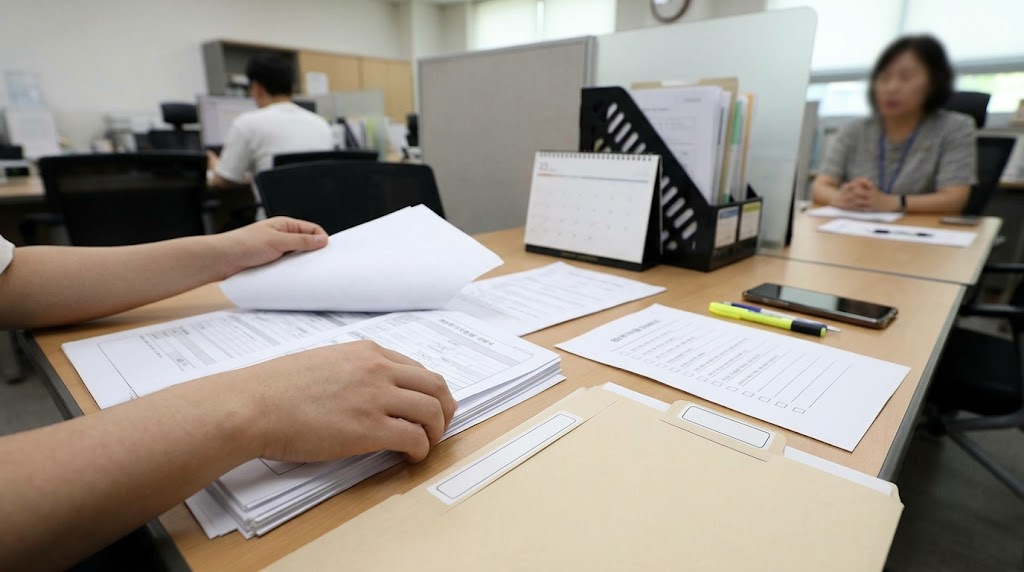
Pre-Application Essential Checklist & Online Simulation to Prevent Wasted Trips
Far more young people than expected visit community service centers or bank counters after checking conditions and preparing documents, only to turn away upon hearing “You exceed standard income” or “Asset verification documents are insufficient.”
Taking just 5 minutes for an online self-assessment and a thorough document checklist review prior to visiting a window can 100% prevent unnecessary wasted trips and lost time.
- Top Contributors to Preventing Wasted Trips: 3 Official Online Simulation Platforms
The government and Korea Housing & Urban Guarantee Corporation (HUG) provide free simulation tools allowing applicants to gauge whether they might be disqualified prior to applying.
- Bokjiro – Welfare Service Simulation Calculation
- Use cases: Special Youth Monthly Rent Support, Separate Youth Housing Benefit Disbursement
- Access path: Bokjiro website → Welfare Services → Simulation Calculation → National Basic Living Security / Youth Monthly Rent
- Advantage: Automatically factors in the basic earned income deduction for the youth applicant and asset conversion rates of the parental household, immediately calculating eligibility based on the ‘recognized income amount.’
- MyHome Portal – Self-Diagnosis Service
- Use cases: Eligibility for Happy Housing, Youth Safe Housing, and public rental housing
- Access path: MyHome portal → Self-Diagnosis → Public Rental Housing Self-Diagnosis
- Advantage: Entering age, non-homeowner status, previous year’s urban worker monthly average income bracket, and vehicle value instantly matches and displays the list of public rental housing types available to you.
- Housing and Urban Fund ‘Gigeum e-Deundeun’ – Loan Eligibility and Limit Wizard
- Use cases: Youth-Exclusive Beotimmok Jeonse Loan, SME Youth Loan
- Access path: Gigeum e-Deundeun portal/app → Loan Guide → Housing Jeonse Fund Loan Estimated Limit Inquiry
- Advantage: Entering the applicant’s and spouse’s annual income along with outstanding financial debts allows advance screening of compliance with net asset criteria (345 million KRW or less) and estimated available loan amounts.
- 5 Essential Documents Checklist Prior to Application
The basis of all housing support initiatives is “official verification.” When issuing documents, the principles of ‘displaying all rear digits of the Resident Registration Number’ and ‘issued within the past 1 month’ must be observed to ensure one-pass processing without document complement requests.
| No. | Essential Submission Document | Issuing Authority | Essential Checkpoint |
|---|---|---|---|
| 1 | Resident Registration Certificate & Abstract | Gov24 (Free) | All address changes over the past 5 years and household member relationships fully displayed |
| 2 | Family Relation Certificate (Detailed) | Supreme Court Electronic Family Relations Registration System | 1 copy for the applicant + 1 copy for parents (Detailed certificate mandatory) |
| 3 | Certificate of Income Amount / Withholding Tax Receipt | NTS Hometax / Current Employer | Company seal stamped for employees; global income tax version issued for freelancers |
| 4 | Lease Agreement with Fixed Date (Hwakjeong-ilja) | Community Service Center / Supreme Court Internet Registry Office | Fixed date stamp (or electronic contract) mandatory on the original lease contract |
| 5 | Lease Deposit Full Payment Receipt | Licensed Real Estate Agent / Landlord Transfer Receipt | Deposit payment receipt for 5% or more of the deposit paid (when applying for loans) |
- Final Check: Duplicate Benefits and Moving-In Notification Precautions
- No duplicate benefits with local government monthly rent support: If you have a history of receiving benefits from Seoul Youth Monthly Rent Support or local governments’ own programs, duplicate payments are restricted, so you must check the end date of those benefits.
- Consistency between moving-in notification and actual residence: For both youth monthly rent and Jeonse loans, the moving-in notification (Jeonip-singo) must be completed on the resident registration to the address on the lease agreement for them to take effect. Applications submitted without relocating your registered address will be rejected.
- Ban on contracts for housing owned by parents: Leasing housing owned by direct line ascendants/descendants, such as parents or siblings, is completely excluded from all government support programs from the outset.
Epilogue (Conclusion)
Monthly housing expenses are the largest fixed expenditure that slows down the wealth-building speed of early-career workers.
Do not give up prematurely just because your income slightly exceeds thresholds or your asset criteria seem ambiguous; make sure to meticulously cross-check the government’s deduction benefits and relaxed criteria. We encourage you to find the housing ladder tailored to you through simulations on MyHome Portal and Bokjiro, significantly easing your housing cost burden!
What task would you like to proceed with next to publish the entire blog post?
Korean version: 한국어로 읽기