Introduction: Haven’t You Been Putting Off Your Health Checkup?
This is a draft for the first subheading introduction of a Naver blog post. It has been written in a friendly yet informative tone suited for the blog aesthetic.
Introduction: Haven’t You Been Putting Off Your Health Checkup?
“I’m eligible for this year’s health checkup… but before I knew it, procrastinating pushed me all the way to the end of the year?”
Does this sound a little too familiar? With national health checkups coming around every year, if you keep putting them off thinking, “I’ll do it later when I have time,” you often find yourself cornered by deadlines or letting the entire year slip away.
Especially for office workers, busy self-employed individuals, and homemakers, dealing with everything from booking a hospital appointment to fasting the day before can feel like a major hassle. However, health checkups are the most reliable and fundamental shield to catch subtle signals from your body in advance and prevent major illnesses.
The general health checkup supported by the National Health Insurance is a precious opportunity to check your basic physical condition without financial burden. Through a simple blood check, you can review diabetes, liver function, and hyperlipidemia at a glance, and thoroughly check your lung health through a chest X-ray.
In this post, we will carefully organize what items are included in the general health checkup—including blood tests and chest X-rays—along with easy-to-miss precautions and how to check your results.
If you are an eligible recipient this year, be sure to read today’s post all the way to the end and breeze through that health checkup you’ve been putting off like homework!

From Basic to Detailed Exams: Complete Guide to Essential General Health Checkup Items
This is a draft organized cleanly with key information and enhanced readability in a Naver blog style.
From Basic to Detailed Exams: Complete Guide to Essential General Health Checkup Items
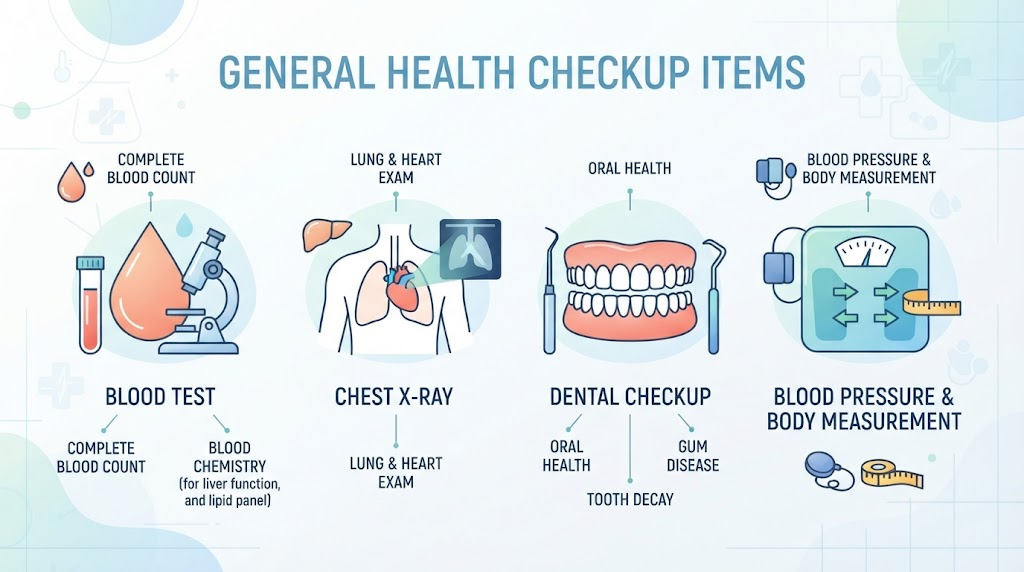
The National Health Insurance general health checkup is broadly divided into physical measurements and basic tests, blood tests, chest X-ray examinations, and dental checkups. Even though checkups come around every year or every two years, it is easy to get confused about what tests you are actually receiving once you get to the hospital.
Shall we take a closer look at the essential items that meticulously check your physical condition one by one?
- Body Measurements and Vital Signs (Basic Examination)
This is the initial stage where you lightly measure your physical condition upon arriving at the hospital.
Height, Weight, and Waist Circumference: These are the most basic indicators for measuring obesity, and they also check for abdominal obesity.
Blood Pressure Measurement: This is an essential test to screen for hypertension. It is important to take measurements after resting sufficiently beforehand.
Vision and Hearing Tests: These briefly check whether there are any abnormalities in the visual and auditory functions necessary for daily life.
- Urine Test (Urinalysis)
Proteinuria Test: This test checks whether protein is leaking into the urine, allowing early suspicion of kidney (renal) dysfunction or diabetic nephropathy.
- Core Check! Blood Test Items and Their Meanings
Blood tests, which can be called the highlight of the general health checkup, allow a broad inspection of our body’s metabolic state and major organ functions with a single blood draw.
Fasting Blood Glucose: Measured after fasting for 8 hours or more, this is the most basic figure used to screen for diabetes.
Serum Creatinine and eGFR (Kidney Function): This evaluates how well the kidneys filter out waste products to check for a decline in kidney function.
Liver Function Tests (AST, ALT, Gamma-GT): These are representative enzyme levels showing whether liver cells are damaged and indicating liver health status, helping to check for fatty liver or hepatitis.
Blood Lipid Tests (Total Cholesterol, HDL, LDL, Triglycerides): This is an item to diagnose hyperlipidemia (dyslipidemia), a red flag for vascular health, allowing you to gauge the risk of arteriosclerosis or cardiovascular and cerebrovascular diseases in advance.
- Chest X-ray (Radiography)
Lung and Chest Organ Examination: Through X-ray imaging, you can check at a glance not only various lung diseases such as tuberculosis, pneumonia, and chronic obstructive pulmonary disease (COPD), but also abnormalities in chest organs like cardiac enlargement. This is an item that smokers should inspect with particular care.
- Dental Checkup
Anyone aged 19 or older can receive this for free along with their general health checkup.
You can check for cavities (dental caries), gum disease (periodontal disease), and missing teeth, and receive guidance on whether scaling or additional dental treatment is needed.
💡 Wait a moment!
“What else is added to this for my age?”
Specific age groups (such as age 40, age 66, etc.) include additional life-cycle-specific examinations such as Hepatitis B antigen and antibody tests, depression screening tests, and cognitive dysfunction tests, so it is a good idea to check them together when looking up your eligibility.
In the next part, we will organize the precautions for the day before and the day of the checkup that you must follow to accurately receive your checkup results!
Check Additional Examination Items by Age and Gender
This is a draft organized cleanly with key information and enhanced readability in a Naver blog style.
Check Additional Examination Items by Age and Gender
Did you know that besides basic blood tests and chest X-rays, customized examinations essential for our bodies are added once you reach a certain age or gender?
Because physical changes and high-risk diseases vary depending on age, the national health checkup also supports life-cycle-specific specialized exams. Check in advance what additional examination items correspond to your age this year!
- Specialized Examinations by Transition Age Group (Representative Ages: Age 40, Age 66)
Comprehensive health checks are conducted at specific ages when the aging rate of our body changes and the incidence rate of major diseases increases.
Age 40 Life Transition Health Checkup:
Hepatitis B Antigen and Antibody Test: Checks the common Hepatitis B immunity status in Korea, and if there are no antibodies, you can receive guidance on vaccination.
Linkage to Cancer Screenings such as Stomach and Liver Cancer: Starting at age 40, you are included in the national cancer screening target and begin stomach endoscopies, upper gastrointestinal series exams, and liver cancer risk factor tests together.
Age 66 Senior Transition Health Checkup:
Senior Renal Function Test and Bone Density Test: Bone health is intensively checked in accordance with the age group with high osteoporosis risk.
Lifestyle and Physical Function Tests: Lower-limb muscle strength and balance tests, walking ability evaluations, etc., are added to prevent fall accidents in old age.
- Mental Health and Cognitive Function Tests
Mental and psychological health is also an important checkup item that cannot be missed.
Depression Screening Test (PHQ-9): Targets specific ages such as age 20, 30, 40, 50, 60, and 70 to check regular feelings of depression or stress levels, raising awareness about mental health and encouraging counseling.
Cognitive Dysfunction Test: Starting from age 66 and older, a brief cognitive function test for early detection of dementia is included every 2 years to carefully examine memory and orientation.
- Specialized Items for Female Examinees
Cervical Cancer Screening (Women Aged 20 and Older): Free cervical cytology tests are conducted on a 2-year cycle according to even/odd birth years. (This year targets those born in even years!)
Breast Cancer Screening (Women Aged 40 and Older): Mammography helps early detection of breast cancer.
💡 Pro Tip Guide
If you are confused about which exams you are eligible for this year, you can log in to the ‘National Health Insurance HealthiN’ website or mobile app (The Health Insurance) to easily check your eligibility. If you check in advance before your visit, you will be able to receive all examinations without missing any, right?
In the next part, we will organize the precautions for the day before and the day of the checkup that you must follow to accurately receive your checkup results!

Precautions Before and After General Health Checkups (Tips for a Flawless Checkup)
This is a draft organized cleanly with key information and enhanced readability in a Naver blog style.
Precautions Before and After General Health Checkups (Tips for a Flawless Checkup)
“What if you managed to book an appointment with difficulty and went to the hospital, only to find out you have to retake the test because you didn’t follow the precautions?” Just thinking about it is dizzying!
To increase the accuracy of figures like blood and urine tests and to prevent the hassle of visiting twice, we have organized the precautions and foolproof tips that you must check before and after your general health checkup.
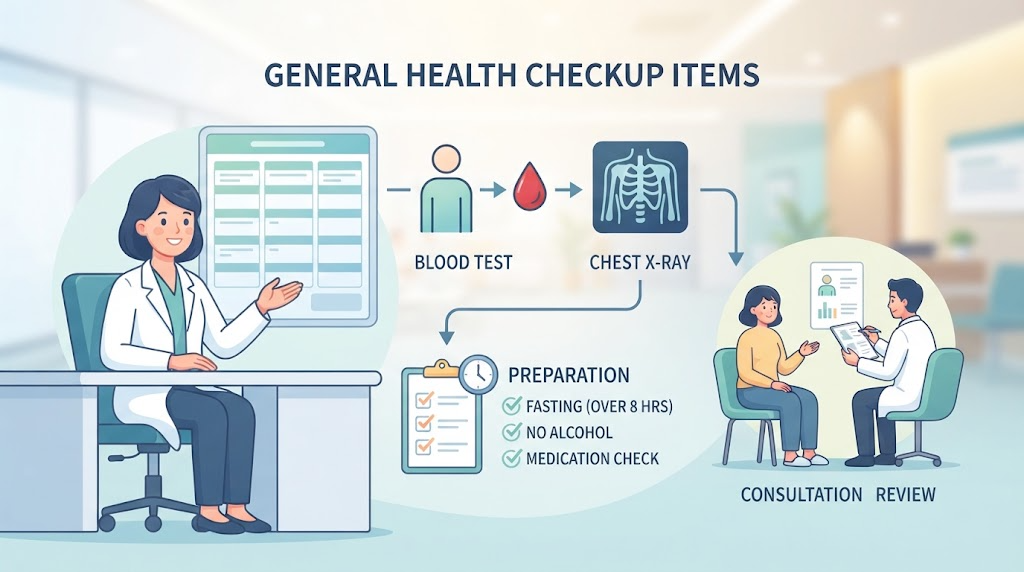
- The Day Before the Checkup: Please Be Sure to Keep This!
Strict Fasting Time (8 Hours or More):
For accurate blood tests (fasting blood glucose, lipid tests, etc.), you must strictly fast starting from 9 PM the night before the checkup.
Water, coffee, milk, gum, cigarettes, and all other items are strictly prohibited. (However, in some cases you may be instructed that a small amount of water is acceptable if you are extremely thirsty, but avoiding consumption altogether is safest.)
Diet Control and No Alcohol:
Please avoid overeating, greasy foods, and stimulating late-night snacks the day before your checkup. They can directly affect liver function or triglyceride levels.
Refraining from alcohol at least 2 to 3 days in advance is the shortcut to preventing distorted figures.
- The Morning of the Checkup: Check Medications and Preparation Items
No Breakfast, and No Water or Coffee: You must maintain a fasting state on the morning of the checkup as well.
Management of Medications Currently Taken:
Blood Pressure Medication: The rule of thumb is to take it with a small amount of water early in the morning on the day of the checkup (usually 2 to 3 hours before the checkup). (However, since this may vary depending on prior instructions from the hospital or checkup center, it is best to check with your prescribing doctor in advance.)
Diabetes Medication and Insulin: Because there is a risk of hypoglycemic shock, you must absolutely not take them on the morning of the checkup, and instead take them with a meal after the checkup.
Preparation Items for Female Examinees:
Because errors can occur in the results of urine tests or cervical cancer screenings during menstruation, it is best to avoid the menstrual period and reschedule if possible.
For X-rays and mammograms, wearing easy-to-change and light clothing is recommended.
- Tips for Immediately After and Post-Checkup Management
Bring a Simple Snack:
Due to the long fasting period, dizziness or symptoms of hypoglycemia may occur after blood draws. Hospitals sometimes provide simple refreshments, but bringing chocolate, candy, or a light beverage in advance can come in handy.
Avoid Strenuous Exercise:
On the day of the checkup, avoid excessive exercise or saunas, get plenty of rest, and recover your condition.
💡 Tips for a Flawless Checkup Reservation
Reservations crowd up at the end of the year (November–December), making it very difficult to get a checkup on your desired date. Rather than putting it off until the end of the year, if you make a reservation in advance during relatively relaxed periods like the first half of the year or summer, you can significantly reduce waiting time and comfortably complete your checkup!
How to Check Checkup Results and Post-Management
This is a draft organized cleanly with key information and enhanced readability in a Naver blog style.
How to Check Checkup Results and Post-Management
“I finished the checkup safely, but when and how do the results come out?”
Just as important as the health checkup itself is checking the results and responding accordingly. It doesn’t end with just getting the checkup; the process of carefully reading the report card your body sends you is essential.
Let’s cleanly organize how you can receive checkup results and how to respond if there are any abnormalities in the figures!
- When and How Can You Receive General Health Checkup Results?
Issuing Period: Typically, the result notification letter is mailed to the registered address within about 15 days from the date the checkup is completed. (Depending on the medical institution, you may receive it even faster if you choose mobile or email reception.)
Online and Mobile Simple Inquiry:
Without needing to wait for mail to arrive, if you log in to the National Health Insurance Service HealthiN website or mobile app The Health Insurance, you can check your past and recent health checkup results as a digital file at any time.
- Reading Your Checkup Result Report Smartly (Judgment Classifications)
When you receive the result notification letter, it is easy to panic due to numerous figures and English abbreviations. Let’s pick out just the core points!
Normal A / Normal B (General Judgment):
Normal A: Your health condition is very good with no abnormalities.
Normal B: This means a ‘borderline’ state requiring some self-care or lifestyle improvement. (Example: When blood pressure or blood sugar hangs on the very edge of the normal range) It is not enough to take medication immediately, but caution is required.
General Disease Caution (R1) / Suspected Hypertension or Diabetes (R2):
This means additional testing or a doctor’s consultation and examination are needed. If you receive this judgment, it is best not to brush it off casually, but to visit a nearby hospital and get an accurate re-examination.
- Response Upon Suspected Findings and Linkage to Secondary Health Checkup
Free Support for Secondary Health Checkup:
If you receive a ‘suspected’ judgment for hypertension or diabetes as a result of your general health checkup, you can use the secondary health checkup (confirmatory examination and consultation/treatment) supported by the government for free or with very low out-of-pocket costs.
Visiting Designated Hospitals and Clinics:
According to the instructions guided along with the result notification letter, visit a nearby neighborhood hospital or clinic to receive a doctor’s consultation and, if necessary, proceed with additional prescriptions or detailed examinations. Discovering and managing things early is the wisest way to prevent major illnesses.
💡 In Conclusion
A health checkup is a precious time to exchange a 1-year report card with your body. Do not panic too much if ‘caution’ or ‘suspected disease’ appears on your result report; rather, take it as an opportunity to correct your lifestyle, receive help from experts, and regain your health!

Conclusion: The Beginning of Health Starts with an Accurate Checkup
This is a draft of the closing remarks to adorn the end of the Naver blog post. It was written in a tone that elicits readers’ empathy and encourages action.
Conclusion: The Beginning of Health Starts with an Accurate Checkup
Up to this point, we have meticulously looked through everything from essential items of national general health checkups like blood tests and chest X-rays to age-specific additional examinations, precautions the day before, and result checking methods.
A health checkup that felt like homework coming around every year is actually the most reliable shield to receive your body’s 1-year report card in advance and prevent major illnesses. If you have been continuously putting it off under the excuse of a busy daily routine, make sure to book an appointment this summer or during an upcoming relaxing time to breeze through and take care of your health.
We hope today’s post was a small help in preparing for your healthy daily life, and we cheer for you to always spend a lively and healthy day!
If you have any questions, please feel free to leave a comment anytime. Thank you!
Korean version: 한국어로 읽기