Introduction: When Disposing of Large Waste Items, Why Should You Check Prices and Specifications First?
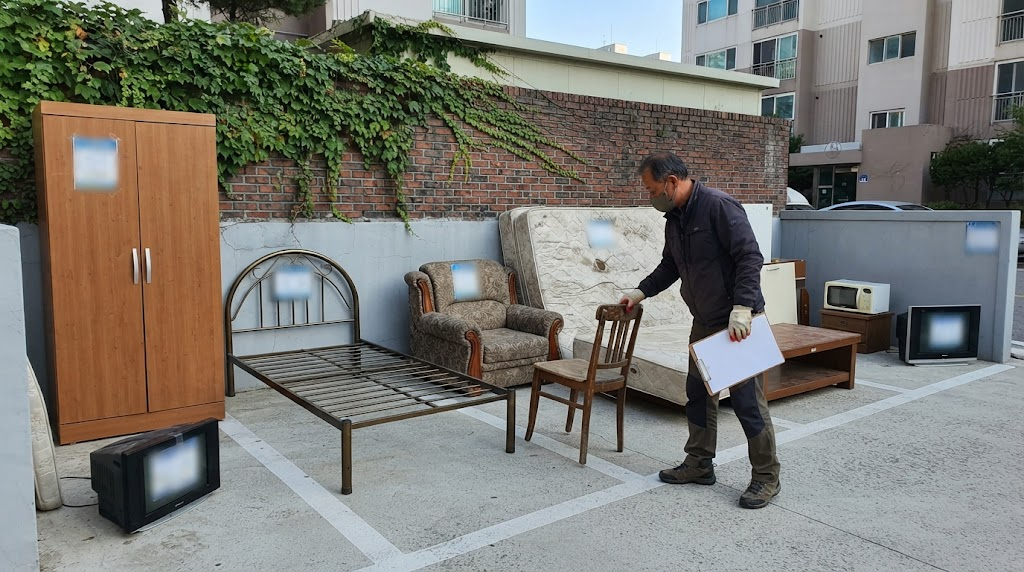
When organizing your home or disposing of unused furniture and home appliances ahead of moving, the first difficulty you encounter is ‘large waste disposal’. Bulky items like beds, wardrobes, and sofas cannot simply be dragged out of the house, and dumping them haphazardly is bound to cause big trouble.
There are a few reasons why many people panic after taking it lightly, thinking “I can just throw it away.”
Fine bomb due to illegal dumping: Large waste must be reported to the competent local government, disposal fees must be paid, and a collection certificate must be attached. If you violate this and dump it illegally, fines amounting to hundreds of thousands of won can be imposed according to relevant laws.
Fees that vary by local government and specification: Large waste fees are not common nationwide but differ slightly depending on local government ordinances. Furthermore, even for the same furniture, costs vary wildly depending on whether it’s ‘for 1 person or 2 persons’ and ‘what the width and height specifications are’.
Confusion with free collection target items: Home appliances like washing machines and refrigerators can be disposed of without spending any money by using the ‘Waste Appliance Free Home Pickup Service’, but quite a few people pay unnecessary fees without knowing this.
Ultimately, the key to disposing of large waste most cheaply and smartly is to understand the exact item and specifications of your belongings and compare our neighborhood’s standard fees in advance.
Then, let’s carefully compare how specifications and fees by item are determined, ranging from beds, wardrobes, and desks to ambiguous daily living items, one by one from now on!
💡 Blog Tip: In this part, you can significantly enhance readers’ understanding by lightly accompanying a large waste disposal guide screen from a community center or ward office website, or a sticker attachment example photo. Shall I continue writing the next content on ‘Comparison of Furniture Items by Specification and Fee’ as well?
Core Criterion ① Comparison of Specification Standards and Fees by Furniture Item (Bed, Wardrobe, Desk, etc.)
The frequent regular visitor among items applied for most often when reporting large waste disposal is by far ‘furniture’. Mattress beds, wardrobes, desks, dining tables, etc. have drastically different specifications and materials from house to house, so if you do not check the fee standards properly, you can easily pay the wrong amount or get rejected.
Although there are slight differences in detailed amounts depending on local governments, let’s examine the specification standards and fee comparison criteria by furniture item applied in common across the majority of regions.
■ 1. Bed (Mattress and Frame)
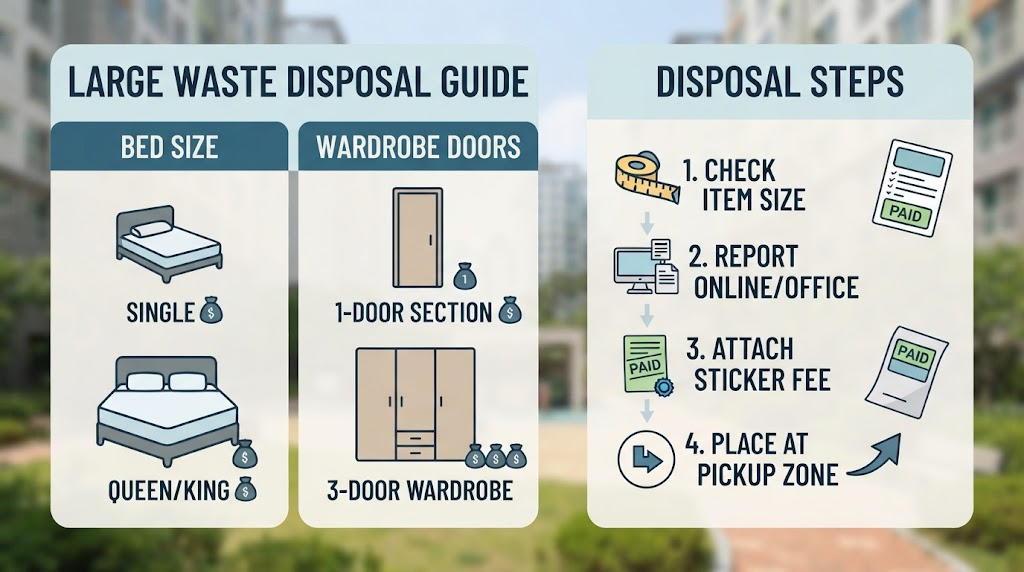
Single (for 1 person) vs Double·Queen·King (for 2 persons): Beds are the item with the largest difference in fees depending on specifications.
Single (for 1 person) mattresses and frames are relatively inexpensive, but Queen (Q) or King (K) sizes have a large volume and high disposal difficulty, so fees can differ by more than double.
Separate disposal tips: Frames and mattresses must be reported as separate items and fees must be paid individually. Mirrors or drawers attached to the frame must be checked for their fixed state, and if separable, tied up separately and reported so that smooth collection can take place.
■ 2. Wardrobe and Closet (Specification and Section Count Standards)
Section count (number of door panels) standard calculation: Wardrobes are usually priced based on the unit of ‘1 section (width of 1 door)’. For example, for a 3-section wardrobe, 3 times the fee is charged.
Height and custom furniture precautions: In addition to general household wardrobes, built-in closets or large products exceeding 2m in height must be accompanied by disassembly work, so you must accurately measure the specifications (width × height) with a tape measure before application.
■ 3. Desk and Dining Table (Top Plate Size Standards)
Single-person desk vs 2-person·large dining table: Desks, office tables, and dining tables are classified into fee grades according to the area of the top plate (width × length).
Separating glass top plates: For dining tables or desks paved with a glass top plate, glass must be separately safety-packed or designated as a separate item to prevent safety accidents and receive normal collection.
💡 Blog Tip: In this part, if you neatly organize and show local government large waste fee item tables (e.g., single mattress O won, per 1 section of wardrobe O won, etc.) in a simple table format or text list, it is useful because readers can immediately compare the cost of their own belongings. Shall I continue writing the next content on ‘Comparison of Fees by Item for Home Appliances and Other Large Wastes’?
Core Criterion ② Comparison of Fees by Item for Home Appliances and Other Large Wastes
The items discarded most often next to furniture are home appliances and various daily living items (other accessories excluding mattresses, etc.). These items are mixed with ‘targets for which you must pay money to buy stickers’ and ‘targets where you can save money unconditionally’, so knowing the criteria accurately is important.
■ 1. Home Appliances: The Crossroads of ‘Free Home Pickup’ and ‘Paid Disposal’
There is a core tip you must check first before reporting home appliances as large waste.
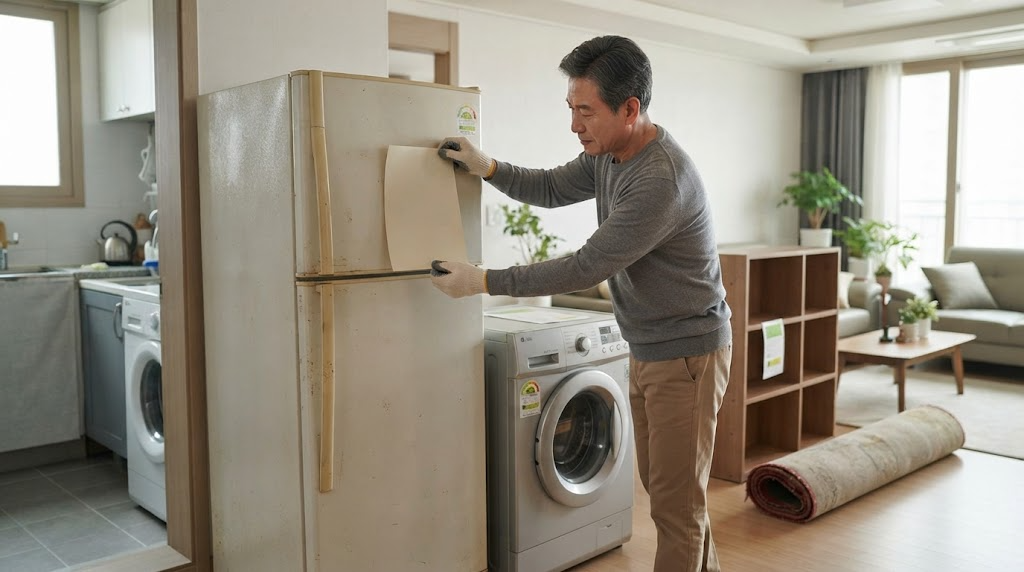
Free pickup target items (0 won): Large home appliances such as refrigerators, washing machines, air conditioners, and TVs, as well as set home appliances above a certain size or small home appliances (when discharging 3 or more simultaneously, etc.), can be collected for free as a technician directly visits inside your house if you use the ‘Waste Appliance Free Home Pickup Service (e-Circular Governance)’. Since there is no sticker cost at all, utilizing this service first is unconditionally advantageous.
Paid disposal (sticker attachment) targets: Small home appliance standalones (when throwing away only 1-2 items like fans or vacuum cleaners), very old outdated appliances excluded from free collection targets according to local government ordinances, or damaged accessories that have lost the shape of home appliances must be discharged by paying a fee after reporting to the community center or online according to the existing method.
■ 2. Ambiguous Other Large Waste Item Pricing Criteria
These are items that are bulky but ambiguous as to where they should belong since they are neither furniture nor home appliances. These are representative items frequently seen in local government fee reference tables.
Springs and bedding other than mattresses: Latex mattresses or thick toppers cannot be disposed of as general waste, and large waste stickers must be attached according to specifications (single/double).
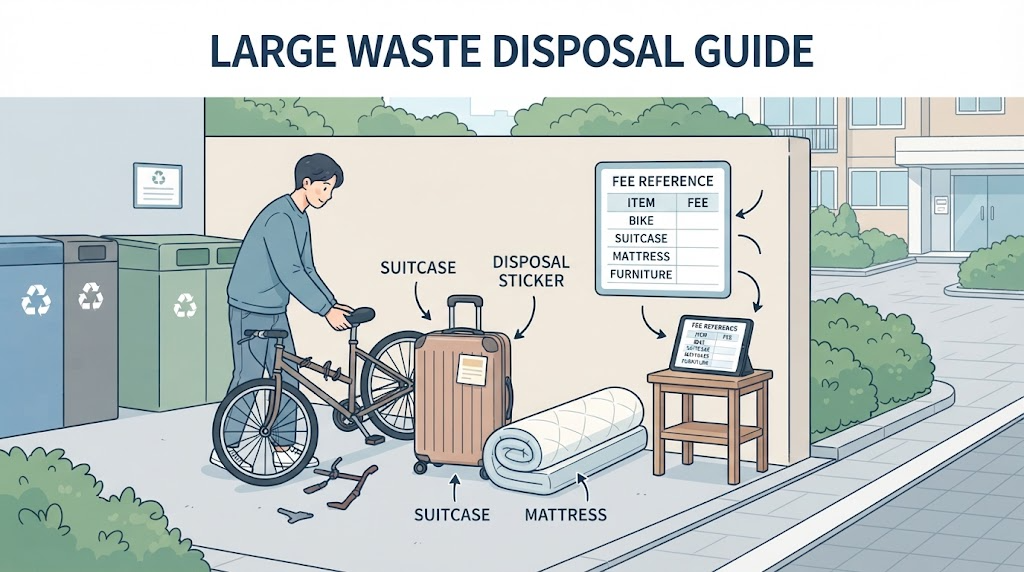
Bicycles, strollers, walkers: Vehicle types are charged a fixed fee per item (usually around 3,000 won to 5,000 won per unit) regardless of whether they are damaged. Removable accessories like locks or luggage racks must be firmly secured or tied together and discharged so as not to be rejected for collection.
Travel carriers, musical instruments (pianos, guitars, etc.): Carriers have different fees by large, medium, and small sizes, and large musical instruments like pianos have considerable weight and volume, so advance inquiry is essential as they often go through professional collection companies or are applied special specification fees.
💡 Blog Tip: In this part, if you accompany an image reminiscent of the ‘Waste Appliance Free Home Pickup Service’ logo or application guide banner, readers can save home appliance costs that they almost threw away with payment, maximizing information satisfaction. Shall I continue writing the next content on ‘Practical Guide for Large Waste Disposal Reporting’?
Practical Guide for Large Waste Disposal Reporting (From Online Application to Sticker Attachment)
Once you have figured out the items and estimated fees, let’s look into the practical procedures for reporting disposal that you can smartly handle at home without visiting a community center to actually throw them away. If you just follow this sequence from online application to sticker attachment and disposal, it will never be difficult.
■ Step 1: Access the Competent Local Government Website or Agency App
Large waste collection tasks are managed by each local government (ward office/city hall). You can search for “[Your residential region name] + large waste” on a portal site to access the official ward office website, or use private large waste simple collection mobile apps like ‘Ppegi’ or ‘Ugiok’.
After going through member registration or non-member simple authentication (mobile phone identity verification), move to the ‘Large Waste Disposal Report’ menu.
■ Step 2: Select Items and Enter Detailed Specifications
Accurately select the items to be discarded from the item-by-item classification (furniture, other daily living items, etc.) checked earlier.
When you enter detailed information such as the number of sections of a wardrobe, bed size (single/double), and desk width specification, the exact fee amount according to local government ordinances is automatically calculated.
Enter the desired disposal date and detailed location such as in front of the house or building-designated spot where collection will take place smoothly.
■ Step 3: Pay Fees and Process Payment Certificate (Sticker)
Pay the calculated fee using a credit card, real-time account transfer, etc.
Payment certificate (sticker) printing tips:
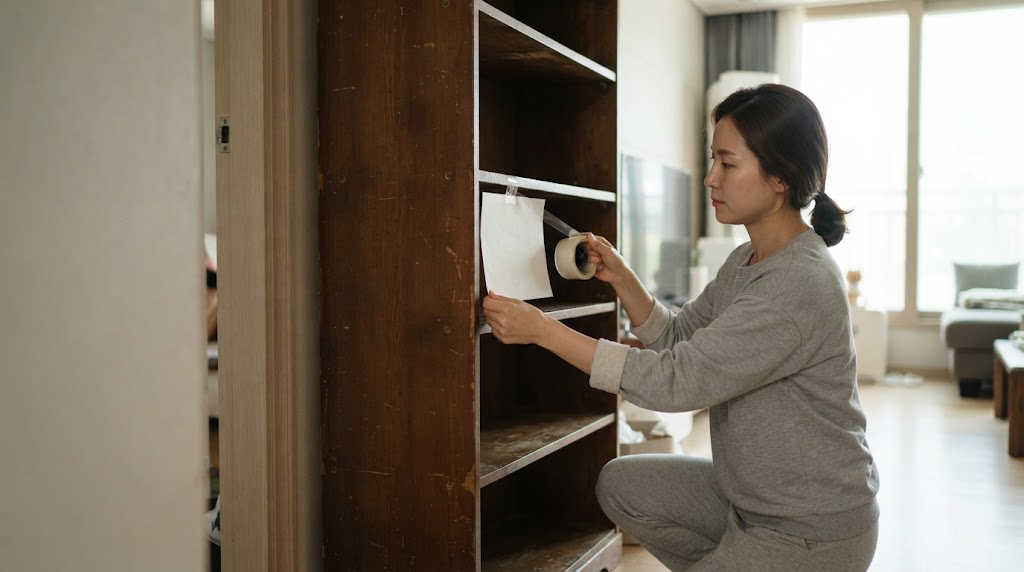
If you have a printer: Print the ‘Payment Certificate (Print)’ that appears on the screen after payment completion and firmly attach it to the item to be discarded with tape.
If you do not have a printer: Normal collection is possible even if you write [report certificate number, discharged item, receipt number, payment amount] in large letters in block letters on a blank piece of paper with an oil-based permanent marker and attach it firmly so that it does not fall off the item. (For some local governments, it is fine to just write the receipt number issued after smartphone payment with a marker.)
■ Step 4: Discharge at Designated Place and Time
The night before the collection company comes to collect (or early in the morning on the collection day), place the items matching the reported contents at the designated disposal location (in front of the building, in front of the main gate, etc.).
Be careful not to obstruct passage or trespass on someone else’s private property, and finally check whether the sticker (or written memo) is attached so that passersby can see it well, and you’re done!
Conclusion and Final Summary on Saving Large Waste Disposal Costs
So far, we have carefully examined how large waste item prices are determined, ranging from the comparison of specification standards and fees by furniture, home appliances, and other items to the practical guide for online disposal reporting.
Large waste disposal is a matter of cost, but if you discard items through wrong methods, you can experience difficult situations such as being mistaken for illegal dumping, incurring fines, or facing collection refusal. Lastly, here is the final summary of 3 core tips to surely reduce unnecessary expenses and organize your space most smartly.
💡 3 Final Summaries for Saving Large Waste Disposal Costs
- Always check ‘Waste Appliance Free Home Pickup Service’ first for home appliances:
Before paying money to buy stickers, make sure to check the ‘e-Circular Governance’ free pickup service first to see if bundle disposal of large home appliances or small home appliances such as refrigerators, washing machines, air conditioners, and TVs is possible, and save your fees to 0 won.
- Measure and compare the exact specifications (size and number of sections) of your belongings:
You must accurately measure whether a bed is single/double, the number of door panels of a wardrobe, and the top plate area of a desk in advance with a tape measure and compare them with the fee reference table of your resident local government (ward office/city hall) to prevent overcharging or report rejection.
- Thoroughly attach the payment certificate after online reporting:
After easily completing online payment on the ward office website, you must firmly attach the printed payment certificate (or a memo with the receipt number written on it) with transparent tape so that it is not lost, ensuring smooth and prompt collection.
Discharging large waste may feel complicated and cumbersome at first, but if you follow the standards and procedures introduced today step-by-step, anyone can easily and affordably resolve it. We hope you will refer to today’s posting to save unnecessary expenses and neatly organize your space!
If you have any further questions, please feel free to leave them in the comments anytime. Thank you!
Korean version: 한국어로 읽기