Introduction: Essential Support Fund for Single-Person Households, the Importance of Regular Application for the Earned Income Tax Credit
[Subtitle Body] Introduction: Essential Support Fund for Single-Person Households, the Importance of Regular Application for the Earned Income Tax Credit
Due to recently soaring prices and utility rate hikes, it is a time when the economic burden on single-person households making a living alone feels heavier than ever. There are truly many people who complain of helplessness because expenditures from monthly rent and food expenses to basic living expenses increase while their salaries or incomes stay in the same place.
Did you know that there is an essential government support system for single-person households that can provide economic breathing room in such an era of high inflation? It is the ‘Earned Income Tax Credit’, which practically supports working low-income households.
“Can office workers or freelancers living alone also receive it?”
“I heard the income and asset criteria are strict, will I be eligible?”
The Earned Income Tax Credit is designed so that not only multi-person households with dependents, but also single-person households without a spouse and children can receive solid support funds if they meet certain requirements. However, since the system is so diverse and the criteria change slightly every year, we frequently see unfortunate cases where people don’t even apply at all, thinking “Could it possibly be me?”, or miss the timing.
In particular, if you miss the regular application period held in May, disadvantages may arise where you have to wait more than half a year or fail to receive the support funds, so checking the eligibility requirements and screening criteria thoroughly in advance is more important than anything else.
Then, what are the eligibility requirements, expected payment dates, and screening criteria that must be checked for the regular application of the Earned Income Tax Credit for single-person households as of 2026? From now on, let’s organize them one by one so they are easy to understand!
If there are any subheadings that additionally need writing or modification, please feel free to let us know!

STEP 1. Understanding Basic Eligibility Requirements for Single-Person Households for the 2026 Earned Income Tax Credit
[Subtitle Body] STEP 1. Understanding Basic Eligibility Requirements for Single-Person Households for the 2026 Earned Income Tax Credit
If you have decided to apply for the Earned Income Tax Credit, the first thing you need to check is whether ‘you actually fall under the support target.’ In particular, for single-person households focused on in this posting, since the applied criteria and conditions differ from single-income dual-worker households or dual-income households, you must accurately compare your own situation.
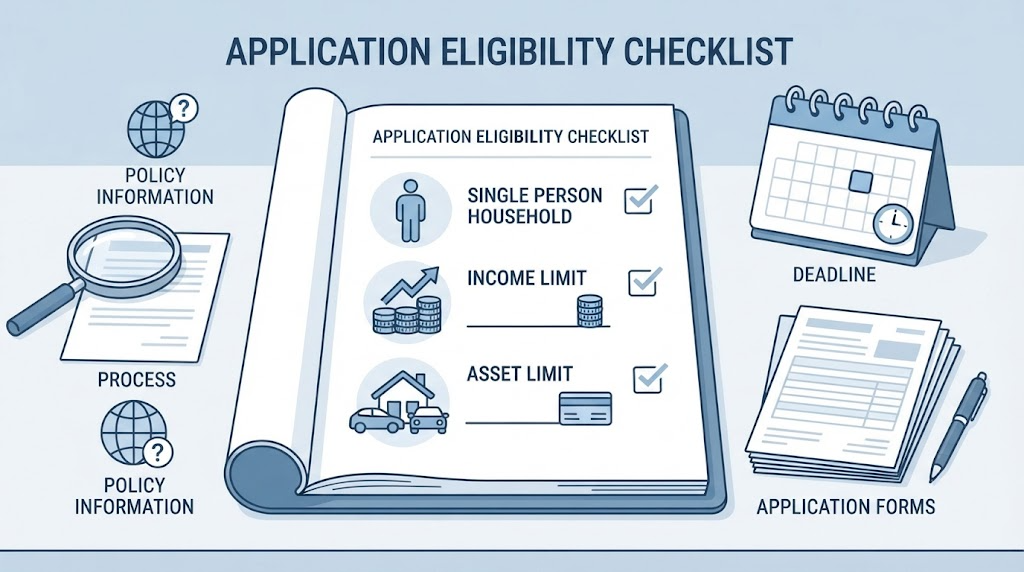
We will easily organize the 3 core basic eligibility requirements (household members, income, assets) for the single-person household Earned Income Tax Credit presented by the National Tax Service.
- Household Member Requirements (Definition of Single-Person Household)
This refers to a household with no spouse, dependents, or lineal ascendants aged 70 or older.
Even if there are co-habitants on the resident registration, as long as they are not in a spouse or dependent family relationship, you can be recognized as an independent single-person household (single-person household) and apply. Young single-person households or single-household head office workers listed alone on their resident registration fall under this category.
- Income Requirements (Annual Total Income Threshold)
For single-person households, the sum of annual total incomes must be less than the threshold amount.
The amount obtained by summing up the total incomes of all household members, such as earned income, business income, and religious income, must meet the single-person household total income criteria set by the government (usually adjusted annually based on inflation rates, starting from under 22 million won). Since exceeding the income criteria even slightly results in exclusion from eligibility, it is safe to check the National Tax Service Hometax notice.
- Asset Requirements (Total Sum of Assets Combined for Household Members)
Even if income satisfies the criteria, if you possess too many assets, you will be excluded from the tax credit payment targets.
The total sum of all assets owned by all household members, such as houses, land, buildings, passenger cars, and savings/deposits, must be less than 200 million won.
In particular, if it falls into the range where the total assets are 140 million won or more and less than 200 million won, 50% of the calculated earned income tax credit amount will be reduced (cut) and paid, so you must keep this in mind.
Like this, single-person household eligibility requirements are rigorously screened centering on three axes: household member type, annual total income, and held assets.
Then, let’s delve deeper in the next step into which items are specifically included and excluded when calculating income and assets!
STEP 2. Thoroughly Examining Income and Asset Screening Criteria
[Subtitle Body] STEP 2. Thoroughly Examining Income and Asset Screening Criteria
Once you have checked the basic eligibility requirements, it is time to look at the detailed calculation criteria for ‘income’ and ‘assets,’ which the National Tax Service examines most strictly during the screening process. Since there are surprisingly many cases where people fail due to unexpected income or asset aggregation while thinking, “Surely this level won’t be caught,” you must thoroughly familiarize yourself with the criteria.
We summarize the core points of income and asset screening that single-person household applicants must know.
- Income Screening Criteria: What Income is Combined and How?
Total income aggregation scope: Screening is conducted by adding up the annual total incomes of all household members, ranging from earned income (salary, part-time job pay, etc.), business income (freelancer 3.3% withholding income, other business income, etc.), religious income, to interest, dividends, pensions, and other income.
Exclusion of tax-exempt income: You can rest assured because government-funded training allowances, unemployment benefits (job-seeking benefits), and tax-exempt tuition are not included in income. However, if you are concurrently working as a freelancer or part-time, checking in advance whether accurate income data has been reported to Hometax is essential.
- Property Screening Criteria: The Scope Including Everything from Housing to Automobiles and Deposits
Included Property Items: Real estate such as houses, land, and buildings, as well as passenger cars (based on the standard market value), jeonse deposits, and financial assets (savings, installment savings, stocks, bonds, etc.) and membership rights are all included in the property.
Whether Liabilities Are Deducted: Unfortunately, general credit loans or revolving overdraft accounts are often not deducted from properties. However, for authorized liabilities such as mortgage loans or jeonse loans, they may be partially deducted or calculation methods may be applied depending on specific conditions, so you must check the National Tax Service guidance criteria.
- Be Cautious of the Property Reduction (50% Cut) Section
As examined earlier, if the total property sum of a single-person household is 140 million KRW or more and less than 200 million KRW, you are included in the subsidy payment targets, but 50% of the final calculated amount is reduced and paid.
Therefore, if your property evaluation value straddles this boundary line, you must take into account in advance that your actual received amount may be smaller than expected.
Income and property criteria are automatically linked based on public records held by the National Tax Service and are strictly screened.
Then, when you pass such strict screening, exactly how much money will flow into your bank account? Let’s look at the payment amount calculation criteria in the following content!

STEP 3. Payment Amount Calculation Criteria and Checking Expected Receiving Amounts
[Subheading Body] STEP 3. Payment Amount Calculation Criteria and Checking Expected Receiving Amounts
If you have successfully passed the strict income and property screening criteria, the next thing you are most curious about is naturally “So how much will actually enter my bank account?” The Earned Income Tax Credit is differentially paid closely through a formula determined by the household member type and annual total income amount.
We easily highlight the payment amount calculation criteria and expected receiving amount structure that single-person household applicants need to know.
- Checking the Maximum Payment Limit for Single-Person Households
For single-person households, the maximum payment amount supported by the government is 1.65 million KRW.
News World
This amount is the upper limit that a single-person household applicant located in the most ideal income bracket can receive, and it is designed in a structure where the payment amount gradually decreases as the income is too small or, conversely, close to the baseline (less than 22 million KRW).
News World
- Calculation Methods by Income Bracket (Incremental and Decremental Brackets)
Incremental Bracket (The bracket that increases as you work more): When your income is very small, as your income increases, the subsidy also increases proportionally. This is intended to encourage the motivation to work hard.
News World
Decremental Bracket (The bracket that decreases according to income): Once it exceeds a certain income level, as the total income gets higher, the payment amount gradually decreases and becomes 0 KRW when it reaches the final baseline amount.
Therefore, since the received amount varies depending on “roughly which bracket my annual salary is located in,” it is most accurate to utilize Hometax’s ‘Subsidy Calculator’.
- Utilizing the Hometax/Sontax ‘Expected Payment Amount Inquiry Service’
Without needing to calculate complex formulas yourself, if you log in to the National Tax Service Hometax website or mobile app (Sontax), you can immediately check the expected receiving amount with just a few clicks through the ‘Earned Income Tax Credit Expected Payment Amount Inquiry’ service.
If you received a notice (such as a mobile notification message) around the regular application period, referring to the expected amount stated on the notice is also a good method.
As it is a precious subsidy supported by the state in return for working hard, grasping the calculation criteria in advance is well worth utilizing for establishing a budget plan.
Then, once you finish the regular application in May, when will the actual money flow into your bank account? Let’s check the payment schedule and application tips in the next sequence!
TIP. Regular Application Payment Schedule and Simple Application Tips
[Subheading Body] TIP. Regular Application Payment Schedule and Simple Application Tips
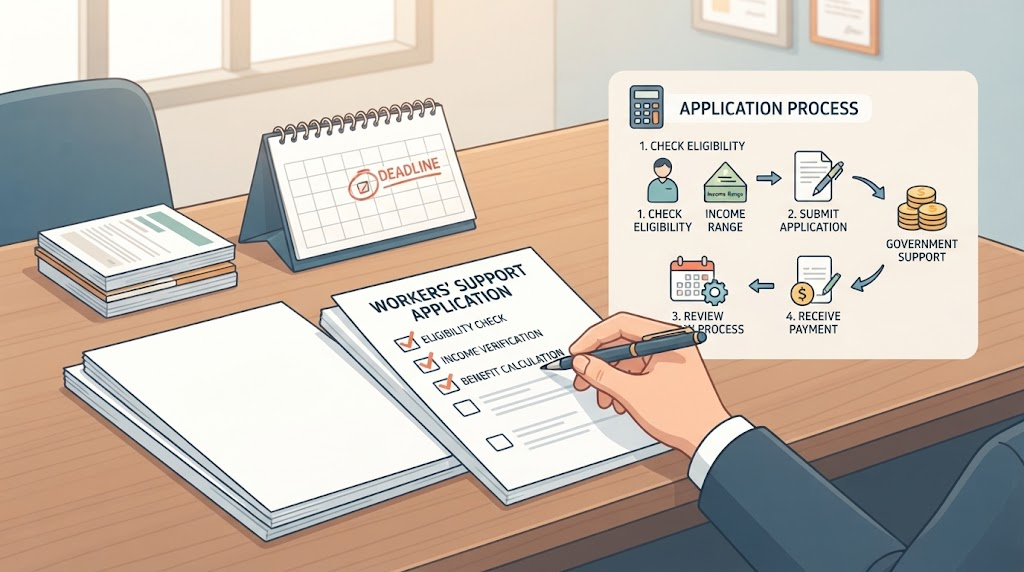
If you have thoroughly checked the qualification requirements and even confirmed the expected receiving amount, all that remains is ‘applying on the exact date and receiving payment safely.’ Since the Earned Income Tax Credit can fly away or have payments delayed for a long time if not applied for on time, knowing the schedule and method accurately is more important than anything else.
We have organized the regular application payment schedule and simple application tips for single-person household applicants.
- Regular Application Period and Actual Payment Date Schedule
Regular Application Period: Conducted nationwide for one month from May 1 to May 31 every year. Since single-person households cannot apply for the semi-annual application in the second half if they miss the May regular application period, they have to wait a whole year or apply after the deadline (with a 10% reduction), so you must circle May on your calendar.
Actual Payment Date: If you successfully complete the regular application in May, it goes through the National Tax Service’s strict income and property screening and is sequentially paid into your designated account, usually starting from mid-September (around the Chuseok holiday).
- Simple Application Method Tips You’ll Regret Missing
Utilizing Mobile Notices: If you received a ‘mobile notice’ sent by the National Tax Service via KakaoTalk or text message, you can complete your application in just 1 minute without a separate login by pressing the [Apply] button within the message and entering only the back digits of your resident registration number. This is the fastest and safest method.
Direct Application via Hometax / Sontax: If you didn’t receive a notice or need to check, you can log in to the PC Hometax or smartphone ‘Sontax’ app and easily submit your application through the [Apply/Submit] ➔ [Regular Application for Earned Income Tax Credit] menu.
ARS Telephone Application: If using a smartphone is cumbersome, you can easily complete your application following voice guidance through the dedicated ARS telephone for subsidies (National Tax Service without area code at 154-3636).
Merely thoroughly attending to and not missing the regular application opportunity held during the month of May becomes the surest way to secure solid household funds.
Now, lastly, let’s wrap up by neatly summarizing the contents of this post!

Conclusion: The Earned Income Tax Credit That Is a Loss to Miss, Prepare Perfectly Within the Deadline
[Subheading Body] Conclusion: The Earned Income Tax Credit That Is a Loss to Miss, Prepare Perfectly Within the Deadline
So far, we have taken a step-by-step look at the basic qualification requirements for the regular application of the Earned Income Tax Credit, meticulous income and property screening criteria, expected payment amounts, and the May regular application schedule and simple application tips for single-person household applicants.
To a single-person household living fiercely day by day while managing a livelihood alone amidst soaring prices, the Earned Income Tax Credit goes beyond a mere subsidy and is truly precious funding like rain in a drought. However, no matter how good the benefit is, if you fail to apply because you missed the period or delayed it out of hassle despite meeting the criteria, it directly leads to a loss.
For successful subsidy collection, we once again organize the core contents for you.
📌 Check Qualification Requirements: Confirm in advance whether you are a single-person household type without a spouse or dependents and whether you meet the annual total income and combined property criteria (less than 200 million KRW)
📌 Prepare for Screening Criteria: Check freelancer income or property ranges (housing, savings, automobiles, etc.) in advance and pre-run the expected payment amount on Hometax
📌 Strictly Observe the Application Deadline: Do not miss the regular application period conducted for one month every May, and easily submit through the mobile notice or Hometax/Sontax
As it is a precious benefit prepared by the state for hardworking workers, I sincerely cheer that you do not miss this opportunity, take thorough care of it, and achieve pleasant household stability along with solid support funds.
If today’s content was helpful, please widely share it with friends or acquaintances who live alone around you! I always cheer for your shining daily life.
Additionally, if there are any parts that need modification or supplementation, please feel free to let me know!
Korean version: 한국어로 읽기