Introduction: Why Earned Income Tax Credit Single Household Support Matters in the Era of Increasing Single-Person Households
As our society’s demographic structure and housing types change rapidly, the proportion of single-person households (single households) among all households is recording an all-time high. Those who make a living alone—such as the independence of the younger generation, the increase of single-household office workers, and the expansion of elderly single-person households—are establishing themselves as the mainstays of our society.
However, amid soaring prices, steeply rising monthly rent and maintenance fees, and the burden of fixed living expenses, the felt pain of single households carrying economic responsibility alone is greater than ever. Compared to multi-person households, their income base is relatively fragile and they lack a stepping stone for housing and living stability, so they possess a structural limitation where they can easily fall into poverty even from small economic shocks.
The most effective system where the state reaches out a helping hand for single households who work diligently and sweat but suffer from economic difficulties is the ‘Earned Income Tax Credit (Single Household).’
“Are you exhausted by massive housing and living costs while living alone?”
“Do you want practical support from the state commensurate with the taxes you paid and the reward of your labor?”
The Earned Income Tax Credit Single Household system plays a very precious safety net role that instills hope for self-reliance by boosting the income of working low-income single-person households and providing practical income support.
However, since there are clear differences in the applied income criteria and payout calculation method compared to multi-person households, you must understand the exact criteria unique to single households so that you can fully secure the benefits without missing them. Let’s examine in detail one by one from now on what the income requirements for single households according to the latest 2026 criteria are and how you can check your expected payout amount.

What Is an Earned Income Tax Credit Single Household? (Clearly Defining the Household Member Scope)
When preparing to apply for the Earned Income Tax Credit, the part that is easiest to get confused about first is the problem of judging ‘which household type our home belongs to.’ When screening the Earned Income Tax Credit, the National Tax Service classifies households into three types—single households, single-income households, and dual-income households—according to the composition form of household members, and applies different income criteria and payout amounts to each.
Among them, a ‘single household’ literally means a single-person household making a living alone, but since the criteria for the scope of household members defined under tax law are very strict, we must pinpoint and pass over them accurately.
- Clear Definition of ‘Single Household’ Under Tax Law
A single household in the Earned Income Tax Credit system means a household without a spouse, dependent children, and lineal ascendants (parents, etc.) aged 70 or older. In other words, even if you share the same household on the resident registration record, if there are no household members corresponding to the above requirements, you will be judged as a ‘single-person single household’ solely responsible for your own livelihood.
Spouse: Not only those in a legal marital relationship, but also spouses in a de facto marriage relationship are included in the household member calculation.
Dependent children: There must be no children under the age of 18 (with exceptions such as those with military service obligations) whose annual income amount is 1 million won or less.
Lineal ascendants: You must not be supporting parents or grandparents aged 70 or older.
- Precautions When There Is a Cohabitant on the Resident Registration
What if you think, “I am living alone, but I’m living together as roommates in a studio or two-room apartment with a friend, brother, or sister”?
Whether household members are separated on the resident registration record: Even if you live together with a brother, sister, or acquaintance, if you are separated into independent households or registered with different resident registration addresses, you will be recognized as an independent single household.
When bound into a single household: Even if you are bound into a single household with other relatives such as brothers and sisters on the resident registration, if they do not correspond to statutory dependents (spouse, children under 18, lineal ascendants aged 70 or older), there is often no obstacle to being recognized as a single household as an applicant with earned income alone. However, since the National Tax Service system checks whether households are accurately separated during the household member combined asset and income screening, it is advantageous to neatly organize your resident registration extract in advance.
💡 Core Checklist to Remember When Determining a Single Household
Among the Earned Income Tax Credit types, the single household has the lowest annual total income upper limit and maximum payout criteria among the three household types (single, single-income, dual-income).
Therefore, if you apply the criteria of another type by mistake even though you have no dependents, or conversely, if you meet the dependent requirements but mistakenly apply as a single household, you may be eliminated during the screening process or receive less than expected.
Please first check how your household members are accurately registered on the resident registration extract, and verify whether your unique household type securely conforms to a ‘single household.’ In the next section, we will delve in detail into the ‘2026 latest income requirements,’ which are the most decisive yardstick separating single household applications.
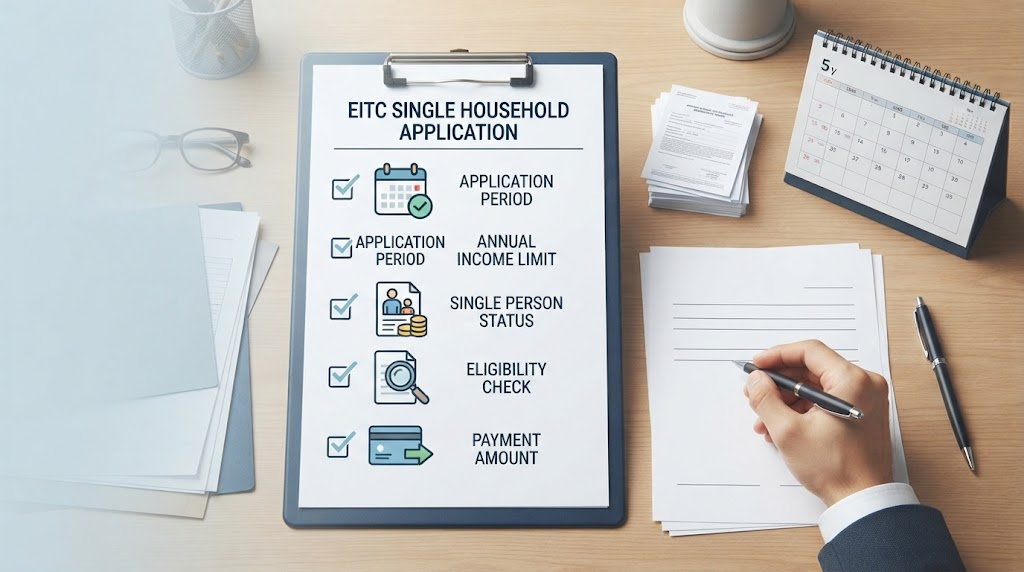
2026 Latest Criteria Single Household Income Requirements and Total Income Upper Limit
The most core and absolute criterion determining the Earned Income Tax Credit single household application is precisely the ‘annual household combined total income.’ As a system supporting low-income class labor encouragement and living stability through national funds, if you exceed the prescribed income upper limit even by just 1 won, you will unfortunately be eliminated from the screening.
Let’s carefully examine the income requirements and calculation methods for single households according to the latest 2026 criteria.
- 2026 Single Household Annual Total Income Upper Limit Criteria
The annual total income standard amount for single households is adjusted slightly every year according to the inflation rate and government fiscal plans.
Single household total income upper limit: Less than 22 million won in annual total income
(Reference comparison: Since criteria of less than 32 million won for single-income households and less than 38 million won for dual-income households are applied, the baseline for single households is set the lowest.)
When converted to an annual salary, you must be generating income falling short of about 22 million won on a pre-tax basis for eligibility to be granted. Calculated simply as a monthly salary, this means an income level of less than about 1.83 million won per month on average.
- Scope of Income Included in ‘Total Income’ (Aggregation Method)
The ‘total income’ reviewed by the National Tax Service when screening does not simply mean earned income alone, but is calculated by aggregating all various incomes earned by household members. Since it is a single household, only the income of you alone becomes the screening target.
Earned income: Total salary amount of regular workers and daily workers (excluding tax-exempt income)
Business income: Not only business income with business registration, but also income amounts of business income withholding targets such as freelancers or door-to-door salespeople (industry-specific adjustment rates applied)
Religious person income: Income received by religion-related workers
Property income and interest, dividend, and pension income: Financial income and pension income generated according to certain criteria, etc.
⚠️ Common Misunderstandings and Precautions During Income Screening
- Is it based on pre-tax amounts?
Yes, income used as National Tax Service screening data is judged based on the pre-tax total income (total salary amount, etc.) before deducting various taxes or national health/social insurance premiums. Even if your actual take-home pay is 20 million won, you must be careful because if your pre-tax total income exceeds 22 million won, you may be judged as exceeding the criteria.
- What if you narrowly crossed the income criteria?
Cases occur where you unexpectedly slightly exceed the baseline as recent minimum wage increases, year-end bonuses, or part-time job income worked during the year are aggregated. It is most accurate to check your last year’s attributed total income data in advance through the ‘Earned Income Tax Credit Expected Amount Inquiry’ menu on National Tax Service Hometax or Sontax.
If you have proudly passed the income requirements, before feeling relieved, there is another hurdle you must definitely clear. It is the ‘total asset criteria,’ which screens the assets of all household members. In the next section, we will pinpoint the specific cutlines for asset requirements.

Asset Requirements and Household Member Combined Total Asset Criteria Checkpoints
The decisive reason why you cannot feel relieved just because you passed the income requirements generously in the Earned Income Tax Credit single household screening is precisely because of the ‘property (asset) requirements.’ To screen out low-income families that practically need help, the state strictly screens not only income but also the total asset value held by all household members.
We have organized the core checkpoints for single household asset screening according to the latest 2026 criteria.
- 2026 Single Household Total Asset Cutline Criteria
Total asset combination criteria: Household member combined total assets must be less than 240 million won.
Since the total asset mentioned here is a single household, it means the amount aggregating the values of all assets under your own name.
- Payout Reduction Regulations by Asset Section (Based on 170 million won)
Even if the total asset amount does not exceed 240 million won, there are sections where the grant payout amount varies depending on the scale of owned assets.
100 million won or more ~ Less than 170 million won: 100% of the calculated Earned Income Tax Credit is paid in full.
170 million won or more ~ Less than 240 million won: 500 thousand is reduced from the calculated Earned Income Tax Credit and paid. (If there are some assets, the support range is cut in half)
240 million won or more: Completely excluded (eliminated) from the payout target.
- Scope of Assets Included in Aggregation Targets
The National Tax Service meticulously aggregates everything from tangible assets such as real estate, automobiles, and financial assets to cash-equivalent assets.
Real estate: Housing, land, buildings, etc. (based on standard market value)
Jeonse deposit: Jeonse deposit of leased housing (deemed jeonse money calculation method applied)
Automobile: Vehicle value of passenger cars, freight cars, etc. (standard market value applied for non-business passenger cars, etc.)
Financial assets and others: Deposits, savings, stock certificates, bonds, membership tickets, and rights to acquire real estate, etc.
Debt handling method: Unfortunately, loans you have received (mortgage loans, credit loans, etc.) are not deducted from total assets. In other words, they are evaluated based on ‘total asset value including debt’ rather than net assets minus debt, so you must pay special attention to this point.
💡 Tips for Pre-Checking Asset Requirements Before Applying
If the jeonse deposit under your name, vehicle value, and the total amount of deposits and savings deposited in your bank account greatly exceed 170 million won, the grant amount may be cut in half or you may be excluded from the target.
Especially in the case of jeonse deposits, since the actual amount you paid and the amount on the contract become the criteria, checking your asset value grasped by the National Tax Service in advance through Hometax’s advance inquiry service is the surest way. If you have thoroughly checked even the asset requirements, in the next section we will learn about ‘expected payout amount calculation and inquiry methods’ that you will actually hold in your hands.
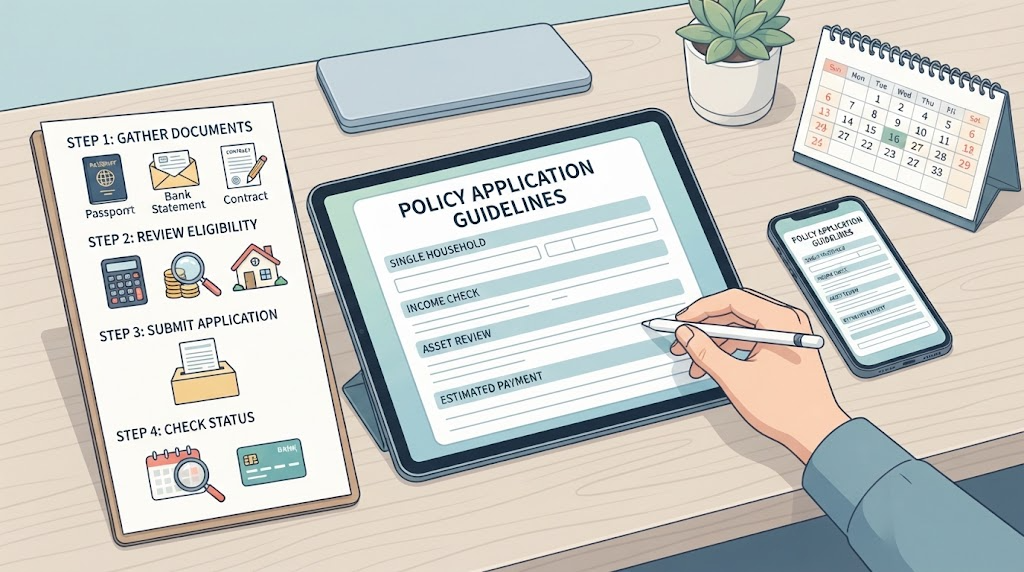
Single Household Expected Payout Calculation and Hometax/Sontax Inquiry Methods
If you have satisfied both the income requirements (annual total income of less than 22 million won) and asset requirements (total assets of less than 240 million won) for an Earned Income Tax Credit single household, it is now time to check the most anticipated moment: ‘How much will I actually receive?’
We have organized how the expected payout for a single household is calculated and how to accurately inquire within 1 minute through Hometax and Sontax.
- Single Household Earned Income Tax Credit Maximum Payout Amount and Calculation Structure
Single households have maximum payout limits set somewhat lower by income bracket compared to single-income or dual-income households.
Single household maximum payout: Up to 1.65 million won (on an annual basis)
Calculation method: Income is calculated interlocking in the form of an ‘increasing section – increasing section (maximum payout maintained) – decreasing section.’ In other words, even if there is too little income, the grant increases in proportion to income until it rises above a certain amount, and after passing a certain section, a maximum of 1.65 million won is maintained, followed by a structure where the amount gradually decreases as income increases.
- Expected Payout Inquiry Method via Hometax (PC)
The surest and easiest method is to use the National Tax Service official portal.
- Access Hometax: Access the National Tax Service Hometax (hometax.go.kr) website and proceed to log in (using a joint certificate, financial certificate, etc.).
- Move to Grant Menu: Among the top menus, click in order of [Grants·Year-end Settlement·Donations] ➡️ [Earned Income Tax Credit·Child Tax Credit].
- Utilize Expected Payout Calculator: Select the [Simple Calculator] or [Expected Payout Inquiry] corner and enter your total income amount and asset value to instantly check the expected receipt amount calculated based on the National Tax Service database.
- 1-Minute Inquiry Method via Sontax (Mobile App)
If you want to easily check with your smartphone, you can utilize the National Tax Service Sontax app.
- Run Sontax App: Run the ‘Sontax’ application installed on your smartphone and log in.
- Select Inquiry Service: Touch [Earned Income·Child Tax Credit Application/Inquiry] on the main screen or grant menu.
- Inquire Application Notice Target or Calculate Expected Amount: If you have already received a notice (KakaoTalk or postal mail) from the National Tax Service, you can directly view the confirmed expected amount through notice target inquiry, and if you want to calculate it yourself, you can calculate the amount with just a few touches through the simple calculator.
💡 Practical Points to Know When Inquiring Expected Payouts
The expected amount inquired through Hometax or Sontax is ultimately an ‘estimate’ calculated based on the applicant’s pre-entered data and data held by the National Tax Service.
When final screening is completed on the actual payout date (usually late August to early September for regular applications), a slight difference may occur between the inquired amount and the actual deposited amount depending on household member asset evaluations or income fluctuation details. Therefore, while establishing your household financial plan by referencing the inquired amount, it is safe to definitely check the final confirmation notice.
Now that you have checked income and assets and gauged the expected payout, only one thing remains: not missing the most important ‘application period.’ In the final section, we will convey key requests for a successful receipt.

Conclusion: A Request Not to Miss the Application Timing and to Claim Your Benefits
So far, we have looked closely at the “Earned Income Tax Credit single-household income requirements, property criteria, and expected disbursement amount inquiry method” based on the latest 2026 standards.
Amid soaring prices and fixed-cost burdens, for single-person households making a living on their own, an Earned Income Tax Credit reaching up to 1.65 million won is more than just simple cash support; it is a reliable pillar that brings significant breathing room to household finances. If our home perfectly matches the income requirements (total annual income of less than 22 million won) and property requirements (total assets of less than 240 million won), you must never miss this precious national benefit.
For a successful receipt, we have summarized the last words of advice you must remember.
- Strictly Observe the Regular Application Period (Defending the Golden Time)
It is most important not to miss the regular application period held every May.
If you miss the May regular application period and make a “post-deadline application” conducted between June and November, 10% of the final grant amount calculated according to the law will be deducted and paid, resulting in precious money being cut down.
If the National Tax Service notice (KakaoTalk or mail) arrives, it is wise not to postpone and immediately apply via Hometax or Sontax.
- Directly Check Your Eligibility Even If You Did Not Receive a Notice
Due to timing differences in the reflection of National Tax Service income and property data or changes of address, there are times when notices are occasionally not received on time.
Rather than giving up thinking, “I didn’t get a notice so I must not be the target,” log in directly to Hometax or Sontax and carefully check whether you meet the qualification requirements (income and assets). You can protect your benefits only by actively putting in legwork yourself.
- Register Accurate Account Information and Keep a Close Eye on Review Results
Final review results are announced between late August and early September after application completion, and upon approval, the grant is deposited into the applicant’s designated account in their own name.
If the account number is entered incorrectly or has errors, disbursement may be delayed, so it is best to double-check whether you wrote down the account information accurately during the application stage.
💡 Supporting the reliable futures of all single households living diligently!
Government support systems come with the hassle of having to look after conditions and criteria yourself since the benefits are substantial. However, if you take step-by-step preparations using the single-household income and asset criteria and inquiry methods we examined together today as a compass, you will be able to receive your precious subsidy without even 1 won being omitted.
Hoping that the sweat shed today and your diligent efforts return as complete compensation, we sincerely support the reliable financial stability of all single-person households stubbornly living on their own!
Korean version: 한국어로 읽기