
Overview of the National Health Checkup System for Infants, Toddlers, and Students
To help the healthy growth of children and adolescents who will lead the future of the Republic of Korea, the National Health Insurance Service and the government systematically operate a customized national health checkup system for infants, toddlers, and students as well as adults. Regular checkups during the growth period when physical and mental development takes place most rapidly play a core role in laying the foundation for lifelong health beyond the early detection of diseases.
Unlike general adult checkups, national health checkups for infants, toddlers, and students focus on the characteristics of each age group’s developmental stage. In infancy, the focus is on closely tracking developmental stages by month, such as physical development status and brain, cognitive, and social development, to early detect congenital diseases or developmental delays. On the other hand, student checkups entering school age comprehensively inspect factors that can affect school life and learning ability, such as decreased vision and hearing, scoliosis, obesity, and oral health.
In particular, these infant and student checkups are a public social security system supported in close connection between the National Health Insurance Service and schools at all levels (Ministry of Education), guaranteeing that eligible persons can safely receive checkups without financial burden (or through national and service support) at designated times. It is a precious opportunity for parents and guardians to check aspects that are easy to inadvertently overlook in a child’s growth signals through objective indicators.
In the following content, we will take a detailed look at the specific targets and timing of infant health checkups according to the life cycle, and the key features of student checkups.
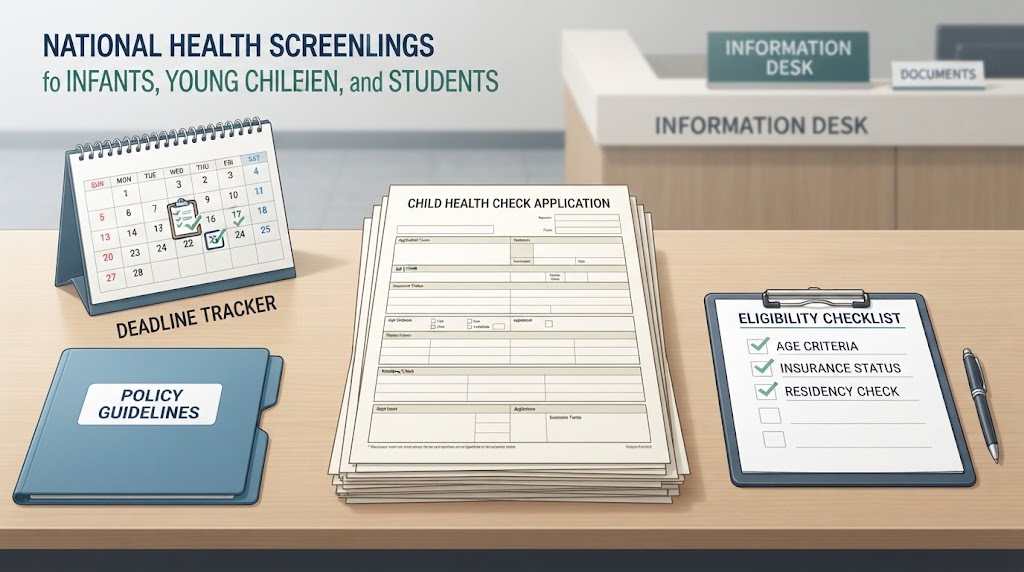
Support Targets and Major Checkup Timing by Month for Infant Health Checkups
The early infancy period is the most crucial time when the foundation for lifelong health and development is laid. To help the healthy growth of infants and toddlers and to early detect developmental disabilities or congenital diseases, the National Health Insurance Service operates a free health checkup system for infants and toddlers from 14 months to 71 months of age (approximately under 6 years of age).
Infant health checkups are conducted in a subdivided cycle across a total of 8 sessions, keeping pace with the child’s growth rate and developmental stage. The major checkup timing and stages by month are as follows.
- Early infancy and babyhood (Sessions 1 to 3): Ranging from 14 to 35 days (Session 1, specialized for the neonatal period), 4 to 6 months of age (Session 2), and 9 to 12 months of age (Session 3), weight, height, and head circumference are measured along with questionnaires and parenting counseling on feeding methods, sleep, nutrition, and more.
- Toddlerhood growth and development stage (Sessions 4 to 6): During the periods of 18 to 24 months of age (Session 4), 30 to 36 months of age (Session 5), and 42 to 48 months of age (Session 6), not only body measurements but also cognitive, social, and language development evaluations utilizing the Korean Ages and Stages Questionnaire (K-ASQ) are fully added.
- Pre-school childhood (Sessions 7 and 8): At 54 to 60 months of age (Session 7) and 66 to 71 months of age (Session 8), comprehensive pre-school health status checkups such as vision and hearing tests and blood pressure measurements are provided along with obesity and safety accident prevention education.
In addition to this, separate infant oral checkups (supported a total of 3 times) are run in parallel during infancy to protect dental health in addition to physical development. If you miss the designated examination period (monthly age bracket) for each session, it may be difficult to receive national support benefits, so it is essential for parents to check the exact checkup availability timing in advance through the National Health Insurance Service website or ‘The Health Insurance’ app according to the child’s birthday and manage the schedule.

Targets and Characteristics of Checkup Methods for Student Health Checkups (Elementary, Middle, and High School Students)
Children and adolescents after passing infancy and entering school are exposed to various environmental factors such as academic stress, changes in physical activity levels, and irregular lifestyles. The government and educational authorities are mandatorily implementing a student health checkup system targeting elementary, middle, and high school students to continuously monitor students’ physical development status and prevent various diseases.
The target school years and characteristics of major checkup methods for student health checkups are as follows.
- Mandatory examination target school years: Not all elementary, middle, and high school students receive it every year, but according to the Enforcement Rule of the Ministry of Education and the School Health Examination Rules, students enrolled in the 1st and 4th grades of elementary school, the 1st grade of middle school, and the 1st grade of high school become the core examination targets.
- School-managed checkups vs. designated hospital visit checkups: In the past, methods where medical staff from checkup institutions directly visited schools to conduct tests collectively were common, but recently, to expand choices for parents and students and increase convenience, methods where guardians accompany and individually visit hospitals and clinics designated by the National Health Insurance Service to receive checkups are actively utilized.
- Customized test items by school level: During elementary school, the focus is on the early detection of vision, hearing, oral health, and spinal diseases, while as it goes into middle and high school adolescence, items that precisely check chronic disease and metabolic syndrome risk factors, such as blood tests (anemia, liver function, cholesterol, etc.), chest X-rays, and urine tests, are covered with significant weight.
The student health checkup is not simply a school event, but the most certain opportunity to objectively check the health status so that growing adolescents can focus on their studies and early correct abnormal signals such as decreased vision, scoliosis, and obesity. Parents and students must carefully check the notices sent from schools and complete the checkups within the designated period.
In the next section, we will learn about easy ways to check infant and student checkup eligibility and essential items to prepare when making a reservation.
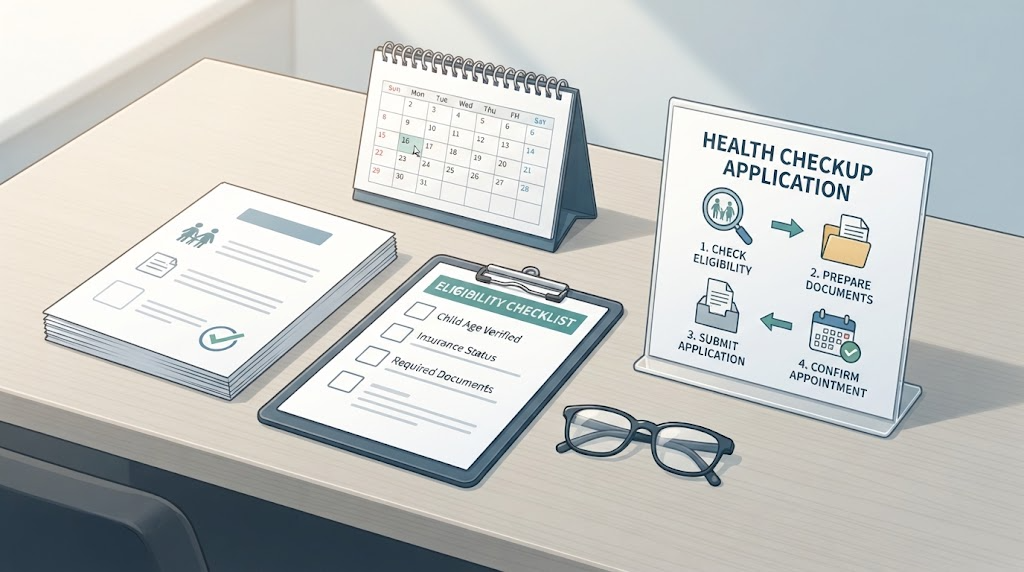
Methods to Check Infant and Student Checkup Eligibility and Essential Preparation Items When Booking
Since infant and student health checkups have precise examination timings determined according to the child’s age or school year, it is important for parents to check eligibility in advance and prepare their schedules with leisure. We have organized target checkup inquiry methods and essential preparation items when visiting hospitals so that you do not miss your child’s checkup opportunity amidst a busy daily life.
First, it is the method to check infant and student checkup eligibility.
- Utilizing the ‘The Health Insurance’ Mobile App: After installing ‘The Health Insurance’, the official app of the National Health Insurance Service, on your smartphone, logging in with a guardian account, and going through simple authentication and child registration, you can check infant health checkup eligibility by monthly age bracket and remaining period in real time.
- National Health Insurance Service Website Inquiry: By accessing the service website with a joint certificate or similar, you can check detailed examination target information through the ‘Infant Health Checkup Target Inquiry’ section within the ‘Health Checkup’ menu or student health-related guidance corners.
- Checking School Notices and Notification Notes (Student Checkups): For students enrolled in elementary, middle, and high schools, you can accurately receive guidance on the designated checkup period and the list of available designated hospitals through family correspondence or school notification notes sent from the school.
Second, these are essential preparation items and precautions when booking and visiting for a checkup.
- Advance reservation of designated checkup institutions: Because infant and student checkups are not available at all hospitals, you must check ‘infant health checkup designated institutions’ or ‘student health checkup institutions’ near your residence in advance on the National Health Insurance Service website or app, and visit after making a reservation.
- Essential items to bring (questionnaire and identification): By filling out the mobile questionnaire in advance via the service notification talk or app before visiting the hospital, you can greatly reduce waiting times. (If mobile completion is difficult, you must fill out a written questionnaire at the hospital, so it is recommended to bring the guardian’s identification and the child/student’s health insurance card, etc.)
- Importance of advance completion of questionnaires and developmental screening tests: Especially in the case of infant health checkups, guardians must carefully fill out developmental evaluation questionnaires such as the K-ASQ (Korean Ages and Stages Questionnaire) so that the doctor can conduct accurate developmental counseling and precise diagnosis.

Necessity of Customized Checkups during the Growth Period and Post-Management Guide
The national health checkup for infants, toddlers, and students is not simply a formality-based procedure, but the most important milestone that determines children’s lifelong health and proper growth. We have organized the core guide on why customized checkups are absolutely necessary during the growth period undergoing rapid physical and mental changes, how to utilize the results after the checkup, and how to perform post-management.
First, it is the necessity and significance of customized checkups during the growth period.
- Early detection of diseases and developmental delays: Congenital diseases in infancy, visual and hearing abnormalities, developmental delays, or scoliosis, obesity, and decreased vision in school-age students are easily overlooked in the early stages because children do not complain of discomfort. Customized checkups capture these hidden risk factors in a timely manner.
- Laying the foundation for lifelong health habits: Through the regular checkup process, children and parents can recognize physical changes together and internalize the importance of proper dietary habits, exercise habits, and personal hygiene management, making a healthy lifestyle a lifelong asset.
Second, it is the checkup result notice utilization and post-management guide.
- Carefully checking the checkup result sheet: Through the result notice (or mobile result sheet) sent within a few days after completing the checkup, you must carefully examine judgment results such as ‘normal’, ‘caution’, or ‘treatment required’. In particular, if a ‘further examination required’ finding appears in infant developmental evaluations or student health checkups, you must not take it lightly.
- Linking to precise examinations at specialized medical institutions: If you receive a judgment that abnormal findings or caution is required from the checkup results, you must immediately visit specialized medical institutions such as pediatrics, ophthalmology, otolaryngology, and orthopedics to receive confirmatory examinations and start professional treatment or correction by a doctor so as not to miss the golden time.
- Continuous lifestyle management within the home: In addition to hospital treatment, the most important role of parents is to improve problems pointed out in checkups through diet control, limiting smartphone usage time, and regular outdoor activities and exercise at home, and continuously support the balanced growth of the child.
The healthy smiles and vibrant growth of children begin with thorough prevention and regular inspection. We hope you actively utilize the infant and student health checkup opportunities that come with every cycle, and always accompany your child by their side so that they can grow up strong in both body and mind through proper post-management according to the results!
Korean version: 한국어로 읽기