
Introduction: The Trap of Duplicate Nutritional Supplement Intake That Cleans Out Your Wallet While Trying to Stay Healthy
Multivitamins in the morning, omega-3s and probiotics at lunch, and vitamin C and magnesium in the evening. When you line them up on your desk and take them with the determination to take care of your health, before you know it, a not-so-small amount of monthly expenditure occurs just for purchasing nutritional supplements.
It’s easy to think it’s not a waste since it’s an investment for health, but if you look closely at the ingredients of supplements, unexpected waste is often hidden. That is the problem of ‘duplicate supplement intake.’
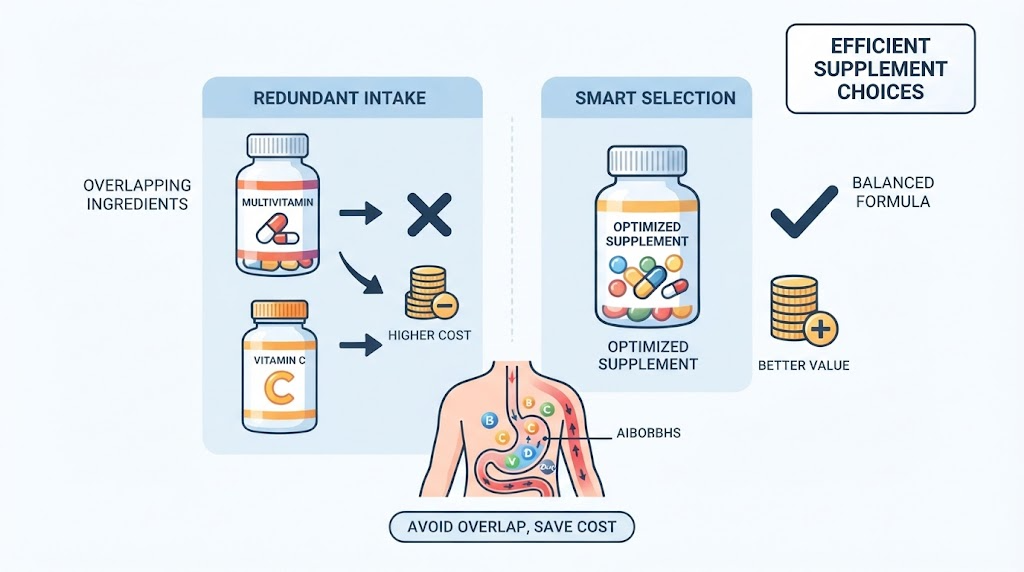
A typical example is habitually purchasing additional individual vitamin products even though you are already taking a multivitamin, or taking multiple products from different brands, resulting in duplicate intake of the exact same nutritional ingredients two or three times over. When this happens, not only does your wallet get emptied, but specific ingredients can far exceed the recommended daily intake, which can actually put a strain on your body.
In this article, we will examine the causes of expanding expenses due to indiscriminate supplement consumption, and thoroughly explore smart purchasing tips to avoid duplicate intake and maximize value by carefully analyzing nutrition fact tables. Check out the smart consumption strategy that reduces the burden on your wallet while maximizing health benefits right now!
Analysis of the Main Causes of Increasing Nutritional Supplement Intake Costs
Why does taking nutritional supplements, started to protect health, turn into a burdensome fixed expense at some point? Let’s closely examine the representative causes of nutritional supplement purchase costs snowballing.
- Ingredient Overlap Issue Between Multivitamins and Individual Supplements
The most common culprit that increases supplement spending is ‘indiscriminate duplicate intake of multivitamins and single products.’
Buying ingredients that are already included again: Multivitamins already fundamentally contain numerous nutrients such as vitamin B groups, vitamin C, vitamin D, zinc, and iron. However, without recognizing this fact, people often additionally purchase single vitamin C products or high-content vitamin B products and take them together.
Unnecessary double spending and overconsumption: As a result, identical ingredients are supplied simultaneously from multiple supplements, which not only directly leads to wasted costs but also causes specific ingredients to exceed the daily upper intake limit, imposing unnecessary burden on the body.
- Overconsumption Pattern Where Only Brand Names Differ but Ingredients Overlap
When impulsively purchasing supplements after seeing good reviews through social media or advertisements, you end up holding multiple products whose ingredients are largely similar but only their brands and packages differ.
Increasing items seduced by marketing: When purchasing supplements good for joints, supplements good for eye health, and supplements good for fatigue recovery separately, you belatedly discover that there are countless basic minerals and antioxidant ingredients that overlap on the nutrition fact tables.
Generation of disposal costs due to expiration: Having bought too many types of supplements at once and eventually letting them pass their expiration date without finishing them is also a major cause of hidden cost loss. Ultimately, money spent on things you bought but couldn’t eat repeatedly occurs.
Next, let’s examine the specific know-how on how to analyze nutrition fact tables to fundamentally block these unnecessary expenses and protect your wallet.

Nutrition Fact Table Analysis Method to Avoid Duplicate Ingredients and Maximize Value
To reduce supplement spending and maximize value, rather than being dazzled by flashy marketing phrases or reviews, analytical skills are needed to directly look into the ‘Supplement Facts’ on the back of the product.
Let’s examine the specific nutrition fact table analysis method to filter out duplicate ingredients hidden in the supplements you are taking and select essential value-for-money products.
- Tips for Comparing Nutritional Reference Values and Contents by Product
When looking at a supplement label, the first things to check are the ‘Serving Size’ and the ‘Percentage of Daily Nutritional Reference Value (%)’ indicated on each product.
Not getting caught in the trap of content labeling: When comparing the vitamin C content of product A and product B, you shouldn’t just look at the number of ‘milligrams (mg).’ You must carefully check the serving size unit to see whether it is based on taking 1 tablet or the content that must be fulfilled by taking a total of 2 to 3 tablets a day.
Duplicate addition relative to reference values: When taking a multivitamin and adding a single vitamin, you must add up the daily reference value percentages (%) of both products. For example, if your multivitamin already contains vitamin D at 100% of the daily reference value, taking an additional separate 1000 IU vitamin D product makes the total intake excessive, resulting in duplicate waste and overconsumption.
- Criteria for Filtering Out Essential Ingredients and Unnecessary Ingredients
When analyzing the countless supplement nutrition fact tables on the market, you must establish criteria to divide ‘essential expenses’ from ‘overconsumption items.’
Confirming basic base ingredients first: Considering your dietary habits and health status, first decide on one main supplement that serves as the foundation (e.g., multivitamin or omega-3, etc.), and fully understand that product’s nutrition fact table.
Mandatory duplicate checking when adding individual supplements: If there are minerals or vitamin groups already included in the main nutrient, when purchasing additional individual products, you should choose a single product excluding those ingredients or withhold the additional purchase altogether.
Stripping out the bubble of sub-ingredients and additives: Just because something is expensive doesn’t mean it’s unconditionally a good supplement. Rather than products where sub-ingredients like brand loyalty or unnecessary herbal extracts are complexly mixed to only raise the price, it is much wiser to choose an intuitive product with high purity content and value for money regarding the main ingredients.
Next, based on the nutrition fact tables analyzed in this way, let’s look into specific purchase and combination tips that save budget while producing optimal synergy.

Smart Nutritional Supplement Purchase and Combination Tips for a Reasonable Budget
Now that you have filtered out duplicates by analyzing the supplement facts, it is time to apply smart purchase and combination know-how in practice that can protect your wallet while maximizing health benefits. We have organized specific tips to boldly cut unnecessary expenses and keep only the essential synergy.
- Selection Guide for Value-for-Money Large-Capacity Products and Direct Import vs. Domestic Products
Utilizing large-capacity or family-size packaging for long-term consumption: Rather than periodically purchasing small-packaged products every month, choosing large-capacity products or bulk-packaged products that can be consumed generously for 2 to 3 months or more is the surest way to lower the price per unit (unit price). However, products vulnerable to moisture can spoil after opening, so storage environments must be considered.
Comparing pros and cons of overseas direct purchases and officially imported domestic products: Overseas direct purchase products with high price competitiveness offer excellent value for money, but shipping may take time and returns can be complicated. On the other hand, officially cleared domestic products may be slightly higher in price, but they are often designed to match Koreans’ dietary habits, nutritional status, and daily recommended intake standards, so it is wise to choose them appropriately according to your purpose.
- Synergy Combinations You Must Take Together vs. Ingredients You Don’t Need to Buy Separately
The best synergy combinations to increase value for money:
Multivitamin + Omega-3: This is the most basic and effective combination that evenly fills nutrients necessary for basic metabolism while simultaneously caring for blood circulation improvement.
Vitamin D + Calcium & Magnesium: Because vitamin D increases the body’s absorption rate of calcium and magnesium, synergy occurs when taken together. (However, as mentioned earlier, make sure to check if they are already included in your multivitamin.)
Overconsumption ingredients you don’t necessarily need to buy separately:
Buying individual vitamin B complex single formulations or high-content vitamin C products from different brands while already taking a multivitamin is a representative waste of budget. If nutritional ingredients overlap, it is much more economical to satisfy the content with a single main product or minimize costs by choosing just one value-for-money product for the lacking single ingredient.
Next, let’s summarize the final consumption habits and conclusion that protect health while saving your budget.

Conclusion: Wise Consumption Habits That Simultaneously Protect Your Wallet and Health
If the warm-hearted intention to take care of your health leads to indiscriminate supplement consumption and duplicate intake, the burden on your wallet may increase and your body may become fatigued with unnecessary ingredients.
A small habit of carefully examining nutrition fact tables
The wisdom to coldly distinguish between ingredients your body truly needs and those it doesn’t
Smart consumption that considers value for money without buying similar products redundantly
These small changes gather to block unnecessary fixed expenses leaking out every month and complete health management that is truly beneficial to your body.
Eating a lot is not the only answer. Starting today, calmly check the nutrition fact tables of the supplements piled up on your desk, and start a smart and economical supplement routine that protects both your wallet and your health!
Korean version: 한국어로 읽기