
Introduction: What Makes This Nutritional Supplement Combination for Fatigue Recovery Different?
Do you wake up every morning feeling heavy and exhausted, only to rely on coffee to get through the afternoon fatigue? Chronic fatigue follows modern people like a badge of honor, but leaving it unchecked can lead not only to a loss of daily vitality but also to a weakened immune system.
Many people look for supplements to recover from fatigue, but often find it overwhelming to figure out which products to combine and how to take them. While countless supplements exist on the market, if you had to name the combination that creates the most representative synergy for our body’s energy metabolism and fatigue toxin excretion, it is undoubtedly vitamin B complex and magnesium.
These two ingredients are exceptionally effective for improving fatigue, but did you know that their efficiency varies drastically depending on when and at what time of day you take them? Simply assuming they are good and swallowing them all at once, or taking them at the wrong time, can actually cause gastrointestinal disorders or prevent you from getting proper fatigue relief benefits.
In this article, we will thoroughly examine everything from the nutritional characteristics of vitamin B complex and magnesium to the most effective intake times of day, and the synergistic effects maximized when taking the two ingredients together. Check out the proper supplement timing guide that will help restore your body’s vitality right now!
Characteristics of Vitamin B Complex and Optimal Intake Timing
When talking about fatigue recovery supplements, vitamin B complex is an absolute core ingredient that cannot be left out. The vitamin B group is not just a single nutrient, but a complex where 8 water-soluble vitamins essential for human metabolism—such as B1, B2, B3, B5, B6, B7, B9, and B12—are organically intertwined.
Let’s take a closer look at the exact roles they play in our bodies and when they should be taken to see the best results.
- Mechanism of Action of Vitamin B in Helping Energy Generation
Vitamin B complex is often called the ‘vitality vitamin’ or ‘energy booster.’ This is because it plays an essential role as a coenzyme in the process where cells convert nutrients such as carbohydrates, proteins, and fats that we consume into energy (ATP).
Promotion of energy metabolism: If energy is not properly generated even after eating food, people easily become lethargic and feel fatigued. Vitamin B increases the metabolic efficiency of mitochondria, which act as the power plants within the body.
Nervous system health and stress relief: Vitamin B1 (thiamine), B6 (pyridoxine), B12 (cobalamin), and others support the normal functions of the brain and nervous system, and participate in neurotransmitter synthesis, helping to alleviate nerve dullness caused by chronic fatigue and stress.
Blood formation and immunity: Folic acid (B9) and vitamin B12 help red blood cell production to prevent anemia and promote cell growth.
- A Wise Choice Between Empty Stomach vs. Post-Meal Intake in the Morning
Since vitamin B is a water-soluble vitamin and the amount remaining after absorption in the body is excreted through urine, it is important to consume it consistently every day. However, the absorption rate and impact on the stomach vary depending on when you take it during the day.
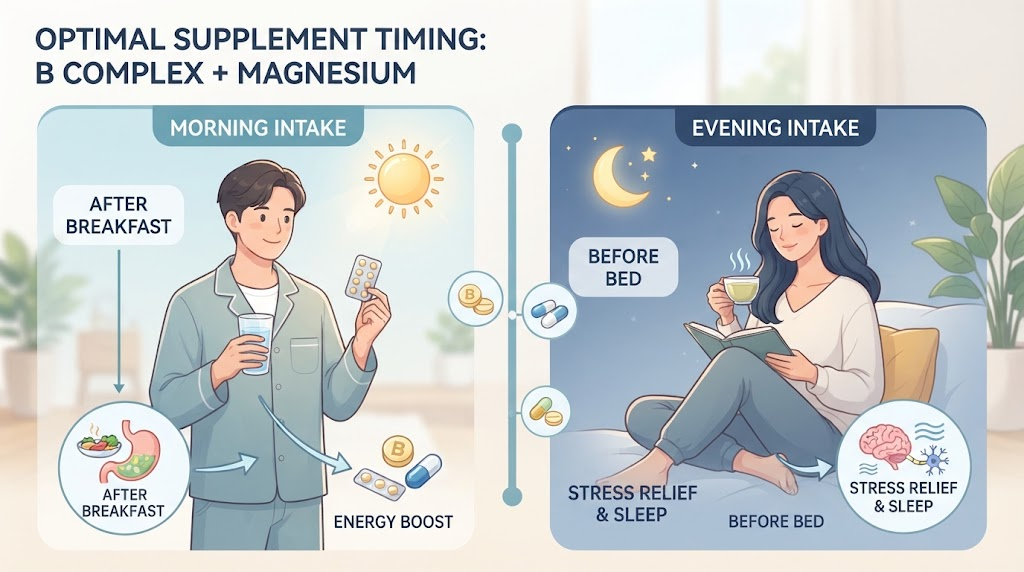
💡 Core intake timing: Immediately after breakfast (or during a meal)
Precautions when taking on an empty stomach: Due to its unique odor or high-content ingredient characteristics, taking vitamin B complex on an empty stomach can cause gastrointestinal disorders such as heartburn, nausea, and upset stomach.
Advantages of post-meal intake: Taking it after breakfast allows it to be absorbed along with food, which not only reduces stomach strain but is also most ideal for helping active energy metabolism during daytime hours when starting the day, thereby reducing fatigue.
Caution with late afternoon or evening intake: Because vitamin B has a stimulating effect that boosts energy, consuming it in the evening or before bedtime can activate nerves and interfere with sleep or cause restless sleep. Therefore, it is best to take it after breakfast or lunch if possible.

Efficacy of Magnesium and Why It Is Good to Take at Night
If vitamin B complex is the ‘vitality booster’ that lifts energy during the day, magnesium acts as a ‘natural tranquilizer’ that calmly relaxes the exhausted body and mind.
For modern people, magnesium is one of the representative minerals easily depleted due to stress and caffeine intake, among other factors. Let’s take a closer look at what amazing roles magnesium plays in our bodies and why taking it specifically at ‘night’ is best.
- Magnesium That Helps with Muscle Relaxation and Nerve Stabilization
Magnesium is an essential mineral involved in over 300 enzymatic reactions within the human body, and is particularly deeply involved in muscle and nervous system health.
Regulation of muscle contraction and relaxation: While calcium plays the role of contracting muscles, magnesium acts as a switch that comfortably relaxes muscles in the opposite way. When magnesium is deficient, not only twitching under the eyes but also leg cramps (getting a cramp) and overall body stiffness are prone to occur.
Nervous system calming and stress hormone regulation: It suppresses excitatory neurotransmitters and helps secrete serotonin (the happy hormone) to stabilize nerves, and has an exceptional effect in alleviating anxiety and hypersensitivity.
- Effects of Improving Sleep Quality and Relieving Fatigue When Taken Before Bedtime
Unlike vitamin B, the appeal of magnesium’s intake timing is completely different. Although it is fine to take it during the day, it is much more advantageous to take it after dinner or before bedtime to relieve the day’s fatigue and get a sound sleep.
💡 Core intake timing: Immediately after dinner or before bedtime
Improvement of sleep quality: Because magnesium gently relaxes tense muscles and calms brain nerves, taking it before falling asleep helps induce deep sleep (REM sleep). This is why magnesium is frequently recommended for those who toss and turn due to insomnia.
Prevention of nocturnal muscle cramps: Have you ever experienced waking up because a cramp suddenly hit your calf while sleeping? Taking magnesium before bedtime is very useful for preventing muscle contraction and cramps that occur during the night.
Support for overnight recovery processes: While we sleep, our bodies recover from the fatigue accumulated during the day and regenerate damaged cells. At this time, magnesium stably supports internal metabolism, creating a much more refreshed and light body condition when you open your eyes in the morning.
Next, let’s examine the intake tips by time of day on how to split these two ingredients within your daily routine to create the perfect synergy.
Synergistic Effects When Taking Vitamin B and Magnesium Together
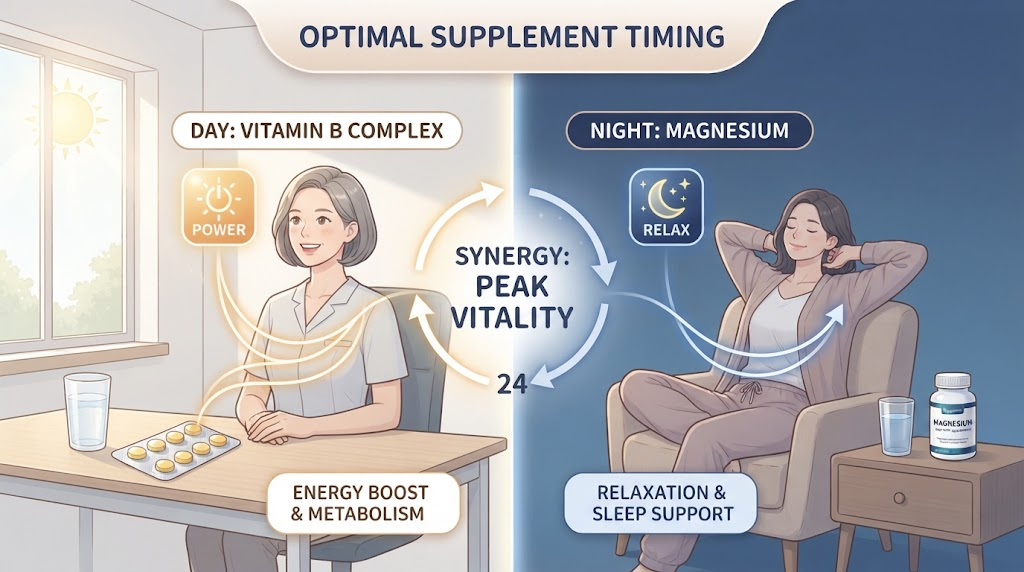
As examined earlier, vitamin B complex is the core of energy metabolism that infuses vitality during the day, and magnesium is a natural relaxant that relieves tension and aids sound sleep in the evening. While these two ingredients are wonderful on their own, they exhibit a powerful synergistic effect that is finally completed when taken together.
Let’s take a detailed look at what interactions occur in our bodies when these two nutrients meet, and how it is most ideal to split the time slots within our daily routine to consume them.
- Interaction of the Two Ingredients on Fatigue Recovery
Vitamin B and magnesium are reliable partners that help each other in the body’s metabolic processes.
Assisting the absorption and activation of vitamin B: Magnesium acts as an essential cofactor in the process where vitamin B groups are metabolized and activated within body cells. In other words, if magnesium is deficient, no matter how good the vitamin B you consume is, it is difficult for it to operate efficiently in the body.
Balance of energy production and fatigue waste excretion: If vitamin B turns the generator so that cells can smoothly produce energy, magnesium helps ensure that byproducts and fatigue waste generated during the energy metabolism process are handled smoothly.
Simultaneous care for nervous system fatigue: Modern people exhausted from excessive work and stress have their nervous systems always in a state of tension. Because vitamin B maintains the normal functions of the nervous system and aids stress metabolism, while magnesium calms the excitement of muscles and nerves, you can care for mental and physical fatigue simultaneously.
- Tips for Splitting Intake by Time of Day (Morning vs. Evening)
The wisest way to utilize the characteristics and synergy of vitamin B and magnesium is to consume them by splitting the time slots. Spreading out the intake timing according to your body’s biological rhythm rather than taking them all at once can increase absorption rates and prevent side effects.
💡 Customized intake routine by time of day
Immediately after breakfast (vitamin B complex): Take after breakfast to awaken daily vitality and induce vigorous energy metabolism. It helps prevent heartburn that can occur when taken on an empty stomach and maintain untiring energy during the day.
Immediately after dinner or before bedtime (magnesium): Take in the evening or before falling asleep to relax muscles that have been tense all day and stabilize nerves to induce sound sleep. It prevents nocturnal muscle cramps and creates a much more refreshed waking condition the next morning.
This routine of splitting intake between morning and evening is the smartest supplement intake method most recommended for office workers or test-takers suffering from chronic fatigue.
Next, let’s summarize precautions and proper intake guides where even such good supplements can rather become poison if taken incorrectly.

Precautions and Conclusion for Proper Supplement Intake
So far, we have carefully examined the characteristics of vitamin B complex and magnesium, their respective optimal intake times, and the synergistic effects created by the two ingredients. Supplements are excellent helpers that fill in the gaps in our bodies, but blindly taking large amounts is not a universal solution.
Finally, let’s summarize the precautions and conclusion to keep in mind for taking supplements healthily and safely.
- Gastrointestinal Disorder Prevention and Safe Intake Guide
Avoid taking on an empty stomach: High-dose vitamin B complexes or certain magnesium formulations can cause gastrointestinal disorders such as heartburn, nausea, and diarrhea if taken on an empty stomach. It is safe to take them immediately after a meal when gastric acid secretion is appropriate and they can be absorbed along with food.
Take with plenty of water: Rather than swallowing supplements hastily with saliva or a small amount of water, you should take them with a sufficient amount of water (more than one cup) to increase internal absorption rates and prevent irritation to the esophagus or gastric mucosa.
Check content and daily recommended allowance by product: In the case of magnesium, excessive intake can cause diarrhea or abdominal pain, and vitamin B is also water-soluble and excreted through urine, but an upper intake limit exists depending on the product. It is necessary to first build the habit of checking the daily nutritional reference value and intake guide on the product label.
Consultation with an expert is essential if you are taking existing medications: If you have chronic conditions or are taking prescribed medications (e.g., antibiotics, diuretics, cardiovascular medications, etc.), they may interact with the nutritional ingredients, so it is desirable to consult a doctor or pharmacist before taking them.
- Conclusion: A Wise Supplement Routine Tailored to Your Body’s Biological Rhythm
Chronic fatigue cannot be easily resolved simply by sleeping more. Accurately understanding our body’s metabolic system and supplying the right nutrients tailored to it at the proper timing is the shortcut to true fatigue recovery.
In the morning, start your day freshly with vitamin B complex to awaken vitality,
and in the evening, prepare for a deep and comfortable sound sleep with magnesium to relieve tension.
Small changes in habits can gather to create an amazing change of waking up briskly every morning. Try practicing the supplement timing routine that fits best into your daily life starting today!
Korean version: 한국어로 읽기