Introduction: Applied for Youth Worker Subsidy with Great Effort, Why Was It Ruled “Ineligible”?
For young beginners in society and young people continuing their working lives, the youth worker subsidy provided by the government and local governments is like a refreshing rain that breathes economic relief. Amid soaring prices and the burden of fixed costs, many diligently prepare documents and manage to finish their applications, only to hide their bewilderment at the bolt-from-the-blue “ineligible” notice that arrives a few days later. It is common to feel at a loss, wondering, “Why did I fail when I thought all the conditions matched?”
In fact, the review process for the youth worker subsidy is stricter than expected and proceeds linked with various administrative data, so even a minor standard error or missing document can instantly classify someone as ineligible. The problem is that if you feel unfairly treated or give up without accurately knowing the causes of such failure, you will end up missing out forever on the precious benefits you could have received.
Then, for what exact reasons does a diligently applied youth worker subsidy end up receiving an ineligible judgment, and what are the hidden causes and coping measures behind it? In this post, we will thoroughly dissect the main causes of failure and carefully examine practical know-how to prevent or resolve them in advance.
Causes of Ineligibility Due to Exceeding Income and Property Standards and How to Cope
By far the number one most frequent reason for ineligibility occurring in youth worker subsidy reviews is “exceeding income and property standards.” Even though individuals often think their monthly salary matches or falls short of the standard, they frequently receive a failure notice, which stems from the difference in standards between the income calculated by administrative agencies and the actual take-home pay perceived by individuals. We have organized the main causes of failure due to exceeding income and property standards and methods to correct or cope with them.
- Common Mistakes and Calculation Errors When Calculating the Standard Median Income
Confusion between pre-tax income vs. actual take-home pay: Many young people judge application eligibility based on the monthly actual take-home pay captured in their bankbooks, but government subsidy reviews are based on the “pre-tax total salary” or “monthly remuneration” before taxes and 4-major insurance premiums are deducted. Because of this, cases occur where increased annual salaries or bonuses are reflected, slightly exceeding the threshold and causing failure.
Reflection of income on health insurance premium payment confirmation certificates: Most support projects do not directly calculate applicants’ income, but instead estimate income levels through health insurance premium co-pay payment amounts. Due to recent job changes or wage negotiations, income has fluctuated, but the timing of the health insurance premium reflection is delayed, creating an optical illusion where past high-income standards are applied.
- Check Points for Verifying and Reflecting the Inclusion Scope of Household Member Income and Property
The trap of including original household income: In projects where the income and assets of not only the youth themselves but also household members (original household) such as parents are evaluated together (e.g., youth monthly rent support, etc.), unfortunate situations occur where the youth themselves fail because their parents’ assets or income exceed the standard. The process of administratively verifying whether household separation has been completely achieved is essential.
Exceeding financial assets and vehicle value: Even if income meets the standard, you will receive an ineligible judgment if the standard market value of a vehicle under your name exceeds the standard, or if financial assets such as savings/deposits and stocks are queried to be above a certain amount. It is safe to check the accurate evaluated values of real estate, vehicles, and financial assets in advance.

Solving Mismatch Issues in Employment Type and Tenure Requirements
Even after completely passing the income and property standards, there are quite a few cases where people experience setbacks in youth worker subsidy reviews because their “employment type” or “tenure” requirements do not match. Since the employment type and minimum tenure criteria required for each support project vary wildly, you are likely to face trouble unless you accurately compare your current employment status. Here are the checklist points to resolve disqualification issues caused by employment type and tenure mismatches.
- Familiarizing with Enrollment Requirements by Employment Type, Such as Regular Employees, Contract Workers, and Freelancers
Importance of 4-Major Public Insurances Enrollment Status: Most youth worker subsidies target regular employees who are enrolled in all 4-major public insurances (National Pension, Health Insurance, Employment Insurance, and Industrial Accident Compensation Insurance). If classified as a freelancer or a 3.3% business income earner, even if you are working like an office worker on the outside, you may be excluded from the support targets or required to apply through a separate special employment track.
Confirmation of Short-term Worker and Contract Worker Standards: Part-time workers or ultra-short-term contract workers whose weekly scheduled working hours fall short of certain standards (e.g., 15 or 30 hours or more per week) may fail to meet the support requirements. You must carefully cross-reference the working hours and employment type on your employment contract with the support project announcement notice.
- Tips for Checking Whether Minimum Tenure Requirements Are Met
Calculation of Consecutive Tenure: Many subsidies require strict period requirements such as “working at the same workplace for a minimum of 3 months or 6 months or more.” If you have changed jobs recently, the tenure at your previous workplace is not combined and only the current workplace standard is applied, frequently resulting in disqualification due to insufficient duration.
Caution in Reflecting Leaves of Absence and Gaps: If work provision was suspended during the tenure due to parental leave, sick leave, or if a history of loss of 4-major public insurance qualification occurred, errors may arise in the tenure calculation and lead to an ineligible judgment, so you must accurately check the enrollment period in advance through an employment insurance history inquiry.
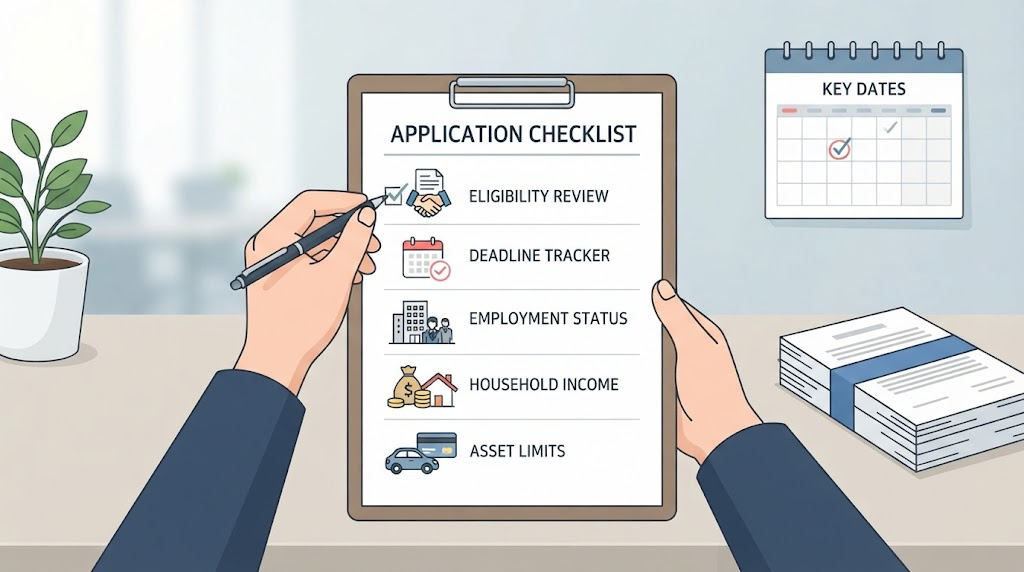
Dealing with Overlapping Receipt Restriction Violations and Incomplete/Erroneous Documents
Another major reason for unfortunately receiving an ineligible judgment despite meeting all qualification requirements, income standards, and tenure is “violating overlapping receipt restriction rules” and “incomplete documents and entry errors.” Since these are close to human errors that can be sufficiently prevented with a little care, special inspection is needed before and after application. Let us find out how to cope with avoiding the trap of overlapping receipts and preventing rejection due to document errors.
- Checking the Regulation Prohibiting Overlapping Receipts Among Similar Central Government and Local Government Projects
Impossibility of Simultaneous Benefits from Similar Welfare Projects: The government and local governments strictly prohibit overlapping receipts between support projects of similar nature in order to evenly distribute benefits to more young people with a limited budget. For example, receiving youth monthly rent support from the central government while simultaneously applying for a local government’s own monthly rent support project, only to be caught in the computer network and processed as ineligible, is a representative case.
Conflict with Previous Receipt History: If you have already received similar subsidies in the past or are currently receiving other employment- or housing-related subsidies, you must carefully read the “provisions restricting simultaneous participation in other projects” specified in the announcement notice. Determining whether the benefit periods overlap or if it is a lifetime one-time project comes first.
- Tips for Preventing Omission of Mandatory Supporting Documents and Entry Errors
Prevention of Automatic Rejection Due to Incomplete Documents: If even a single item among mandatory documents such as a resident registration copy, employment certificate, and income amount certificate is missing or exceeds the validity period of the issuance date (usually issued within 1 month), you may be processed as ineligible immediately without even undergoing evaluation. We recommend creating a checklist before submission and checking them off one by one.
Review of Manually Written Items and Account Number Errors: If there are typos in contact numbers, account numbers, or employed company names entered directly on the application form, identity verification becomes impossible, resulting in an ineligible notice or omission of subsidy payments. Before pressing the final submission button, you must double-check visually to ensure that the entered information matches the official supporting documents without a single character error.

Practical Guide to Objection and Re-application Procedures After Receiving an Ineligible Judgment Notice
If you unfortunately receive a youth worker subsidy “ineligible judgment” notice, it is wiser to immediately go through the objection or re-application procedure rather than sitting down and giving up. This is because there are quite a few cases where results are overturned if simple errors in the administrative agency’s review process are corrected or missing explanation materials are supplemented. Here is a practical guide on how to cope without panic when you receive an ineligible notice.
- How to Prepare Explanation Materials and File an Objection with the Responsible Department of the Jurisdiction Local Government
Clearly identifying the reason for rejection: You must accurately grasp the specific reason for rejection stated in the ineligible notification text or notice (e.g., exceeding income standards, insufficient tenure, missing documents, etc.). Checking which item received a deduction or exceeded the standard is the first step of an objection.
Equipping with objective explanation materials: Quickly prepare objective supporting documents that can prove your legitimacy, such as non-taxable items not reflected during income calculation, recent income decrease details, personnel appointment records, and 4-major public insurance report corrections. Afterwards, contact the jurisdiction local government or the responsible department of the reception office by phone within the objection period guided in the announcement notice (usually within 7 to 14 days after result announcement) and submit an objection form.
- Strategy for Re-challenging the Next Round or Alternative Support Projects After Supplementing the Reasons for Rejection
Aiming for the next round and additional recruitment: Even if you were ultimately eliminated in this round due to early budget depletion or temporary failure to meet requirements, depending on the local government, additional recruitment in the second half or next year’s project round often opens. By taking the ineligible reasons pointed out this time as a mirror and adjusting the conditions in advance, you can dramatically increase the probability of acceptance in the next opportunity.
Actively discovering similar alternative support projects: Flexibility is needed to newly explore similar youth support policies operated by the central government or other local governments in addition to the eliminated project (e.g., Youth Tomorrow Chaeum Deduction, youth allowances, housing/transportation subsidies, etc.). We hope you find another breakthrough that perfectly fits your current employment type and income level and smartly re-challenge.
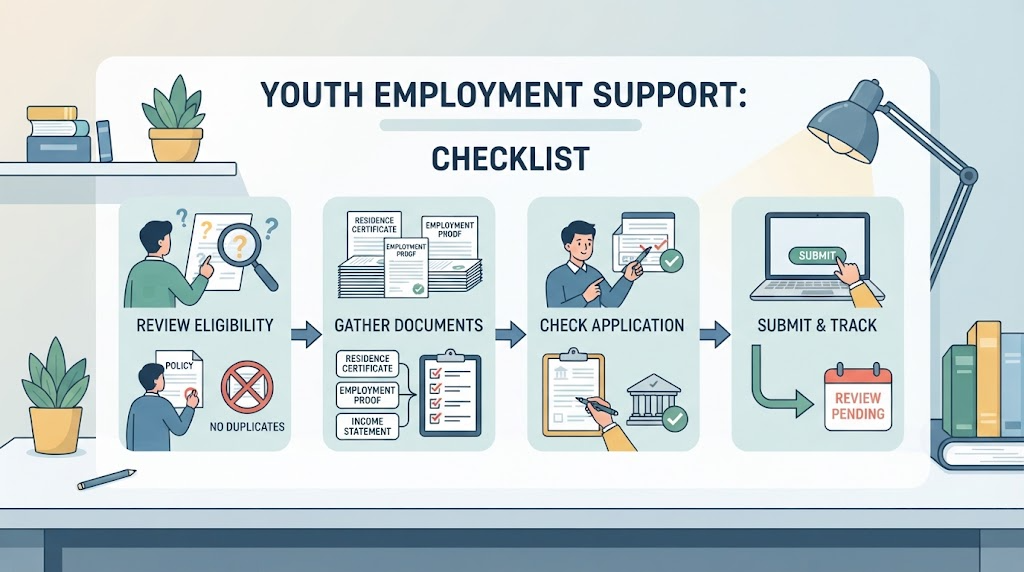
Conclusion: 100% Reception of Youth Worker Subsidy through Thorough Pre-Inspection and Careful Management
We have thoroughly examined everything from the main causes of receiving an ineligible judgment after applying for the youth worker subsidy, to how to cope with exceeding income and property standards, tips for checking employment type and tenure, tips for preventing overlapping receipts and document errors, and the practical guide for objection and re-application after receiving a rejection notice.
For young people working hard and fiercely living through each day, the subsidy is a precious fruit with meaning beyond simple cash. However, if you are unfairly processed as ineligible due to administrative inexperience, minor standard errors, or missing documents, there can be nothing more upsetting than that. The key is to accurately analyze the causes of failure and fundamentally block ineligible factors through thorough preliminary inspection and preparation in advance.
Even if you unfortunately experienced the hurdle of elimination this time, if you actively utilize the objection and alternative re-challenge strategies guided today, you can sufficiently create an opportunity for a turnaround. We sincerely cheer you on to receive 100% of the youth worker subsidy you rightfully deserve through thorough pre-inspection and airtight post-management, and wonderfully build a solid footing for economic independence!
We hope this post was useful for your successful subsidy reception and fruitful practical daily work life. We will return with more substantive and accurate youth welfare and living economy information. Have a happy and secure day today!

Korean version: 한국어로 읽기