The Importance of Frequent Mistakes When Using Waste Disposal Companies
The increase in moments requiring waste disposal in daily life, such as major cleaning, moving, and interior remodeling.
When facing big changes in life, such as doing a major cleaning, repairing a house, or moving, one of the biggest headaches is dealing with waste that piles up more than you can handle. From household waste generated in homes or offices to construction waste from interior demolition and bulky large home appliances and furniture, the moments when we need to borrow the hand of a professional company in our daily life come more often than you might think.
However, when you actually try to use a waste disposal company, it is often difficult to figure out where and how to start, leading you to simply search through a portal site, contact the most prominent place, or select a company chasing only cheap prices.
Financial losses, fines, and illegal disposal risks caused by unintentional mistakes
If you think lightly of waste disposal and deal with it carelessly, it is easy to make unexpected big mistakes. Typically, problems such as the following can occur:
Unexpected additional fee bomb: You may suffer financial damage of being charged much more than the amount initially promised verbally on the day of work due to reasons such as “the amount is large” or “a ladder truck is needed” at the site.
Fines and legal responsibility due to illegal dumping: If the company you hired is an unauthorized company without formal permission, they may illegally dump the collected waste in a remote place instead of a designated location, so the damage falls entirely on the generator (you), leading to a fine or police investigation in a thrilling situation.
Site damage and safety accident disputes: You may also experience the absurd situation where unskilled workers damage building walls, elevators, floors, etc. during demolition and transportation, yet avoid responsibility or lose contact.
Minor mistakes made when using waste disposal companies can lead to massive financial losses and legal responsibilities beyond simple inconveniences. This is precisely why we must carefully examine what points we need to watch out for in order to dispose of waste safely, legally, and economically.
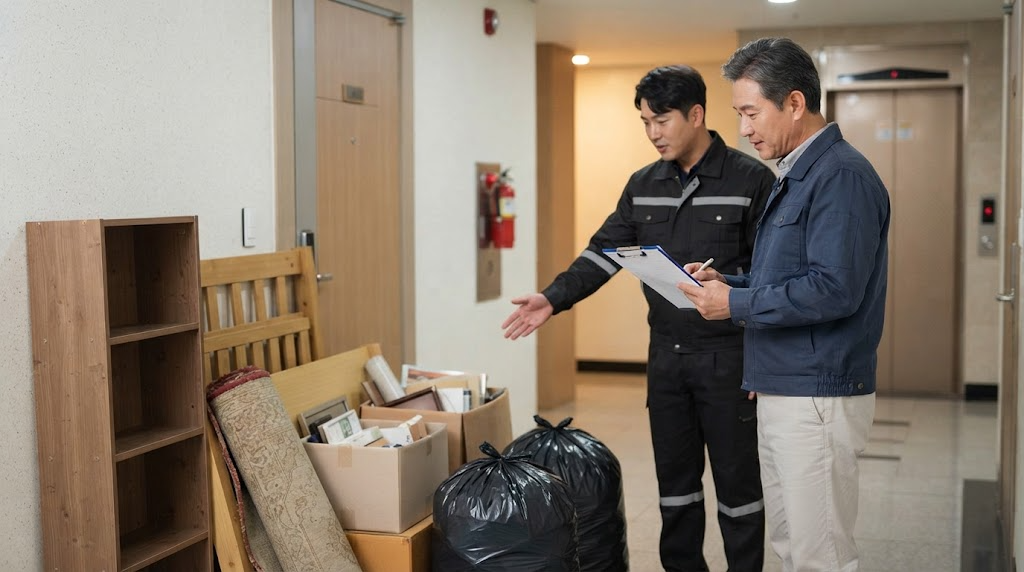
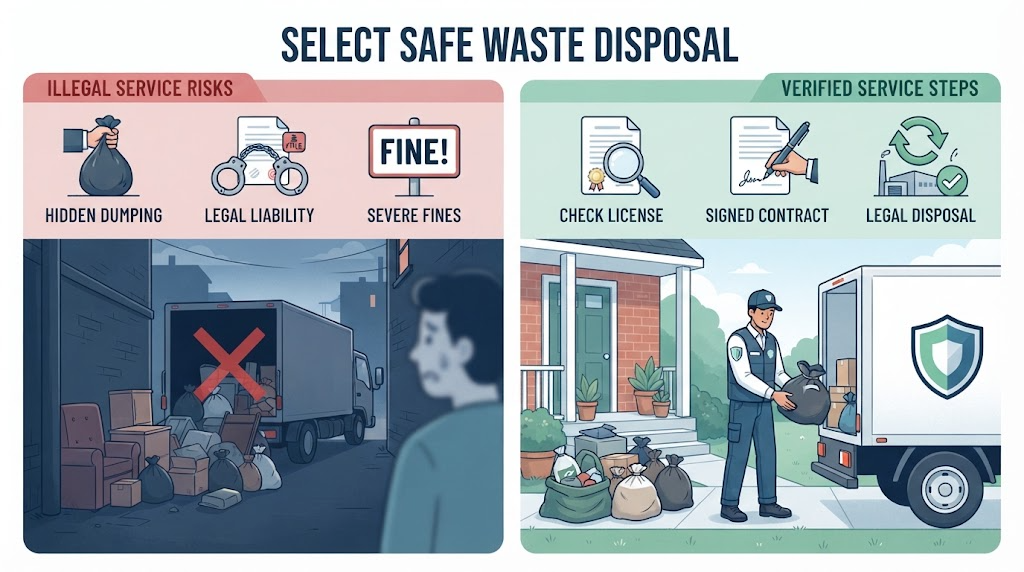
Mistakes in Selecting Unauthorized Companies and Illegal Disposal
The most frequent and fatal mistake made when selecting a waste disposal company is “entrusting waste disposal to an unauthorized company without checking if they are a licensed official company.” Very often, people get into difficult situations after signing a contract abruptly just because the cost is cheap or trusting internet advertisements.
Risk of involvement as an accomplice in illegal dumping caused by failing to verify official licensed companies
According to the Waste Control Act, business waste or large amounts of household and construction waste must be discharged through waste collection, transportation, and treatment companies that have received proper official permits.
However, unauthorized companies often commit “illegal dumping” where they secretly throw away waste in unpopulated mountains, vacant lots, roadsides, etc., to save legitimate treatment costs (such as waste treatment certificate costs) incurred when taking waste to official incineration plants or landfills.
If an unauthorized company commits illegal dumping without the generator’s knowledge and is caught, the generator (you) who produced the waste is also unlikely to avoid responsibility.
If clues that can identify the generator’s identity, such as receipts, courier invoices, and documents, are found among the illegally dumped waste during a police investigation or local government crackdown, the generator may also be implicated as an accomplice in illegal waste dumping and become subject to massive fines and criminal punishment.
💡 Prevention Tip: How to thoroughly check whether a company is an official licensed company
To fundamentally block the risk of illegal treatment by unauthorized companies, you must check the following items before signing a contract:
Check official permits and business registration certificates: Ask the company for a copy of the official “Waste Collection and Transportation Permit” or “Waste Treatment Business Permit” to verify that the business owner’s name, permitted area, and permit number match.
Utilize the Allbaro system and local government inquiries: In the case of bulky waste or business waste, it is safe to check whether the company can transparently track the normal treatment flow through the national “Allbaro system.” If you are not sure, it is also a good idea to contact the cleaning administration department of the relevant local government and inquire whether the company is a legitimate official licensed company.
Omitting Prior Estimate Comparisons and Additional Fee Bomb Mistakes
Ahead of waste disposal, many people call a company and simply ask, “How much is it for about this much?” over a rough phone call due to being busy, and then call the company to proceed with collection. However, this “omission of prior estimate comparisons” is the most common cause of getting hit with an “additional fee bomb” ranging from hundreds of thousands to millions of won after work is completed.
Representative cases of receiving rough estimates over the phone and then being asked for additional costs on-site
The amount, type, and volume of waste are difficult to accurately gauge with just words or photos. During phone consultations, companies induce visits while only guiding low basic rates or rough unit prices, and then the company that arrives at the site on the day of collection frequently changes its attitude.
Frequent excuses for requesting on-site additional fees: They force additional costs on-site on the day by giving reasons such as “Now that we are here, there is much more luggage than expected,” “It is a high-rise floor without an elevator, so more manpower is needed,” “Large home appliances or heavy piles of stones are included, requiring special treatment,” or “We cannot work without calling a ladder truck.”
Exploitation of situations backed into a corner: They exploit the desperate psychology of the generator who must finish disposal on this date or is chased by moving schedules and has no time to call another company, leaving them helpless against the tyranny of bad companies demanding extra money during or right before the completion of work.
💡 Prevention Tip: Guidelines for clearly finalizing the total cost in advance
To prevent additional fee bomb damages and dispose of waste transparently, you must strictly follow the following principles:
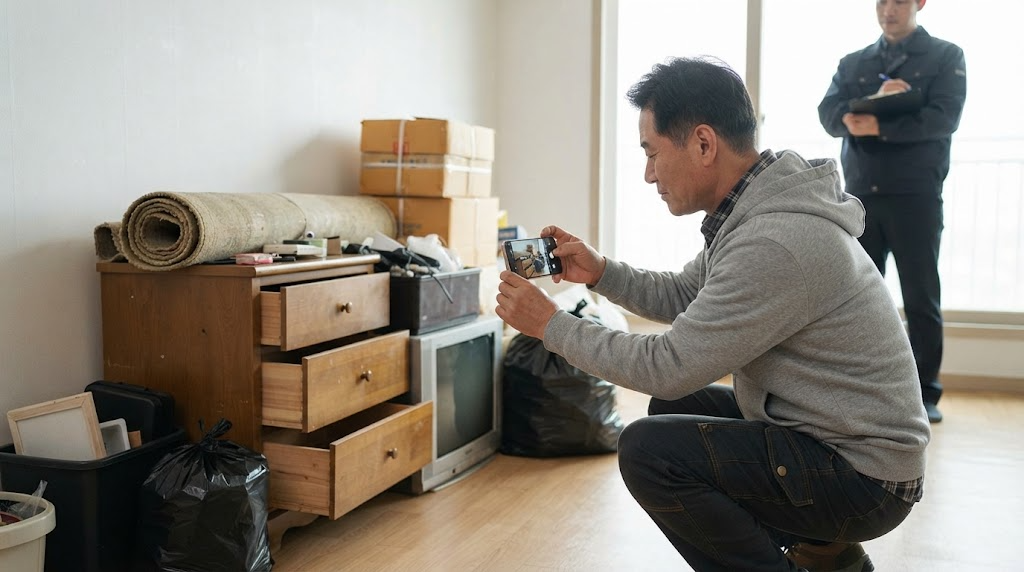
Request photo-based detailed estimates or on-site visit estimates: Photograph the overall appearance of the waste to be disposed of (furniture, home appliances, miscellaneous items, interior debris, etc.) from various angles, send them via text message, and clearly receive a final total amount including all incidental costs such as transportation costs, labor costs, and waste disposal costs (treatment certificate costs) confirmed in writing.
Pre-specify additional occurrence conditions: If there are exceptional clauses where additional costs may inevitably occur depending on-site conditions, you must negotiate specific criteria in advance via writing or messenger before contract signing regarding under what circumstances and how much is added, so that you can confidently refuse if unreasonable fees are demanded later.
Failure to Check Waste Disposal Items and Separate Disposal Regulations
One of the things that many people casually overlook when disposing of waste is “checking the exact classification and regulations of disposal items.” When organizing a house or doing demolition, it is easy to make the mistake of stuffing items into sacks, hemp bags, or collection boxes all at once without considering the type, or handing them over to a company, only to have collection refused or face a fine bomb.
Cases where collection is refused due to not knowing the exact classification of household waste, bulky waste, and construction waste
Waste is strictly classified legally by type regarding disposal methods, treatment costs, and collection entities. If you ignore this and mix and dispose of waste haphazardly, the collection company may refuse collection, or you may get caught in local government crackdowns and face severe trouble.
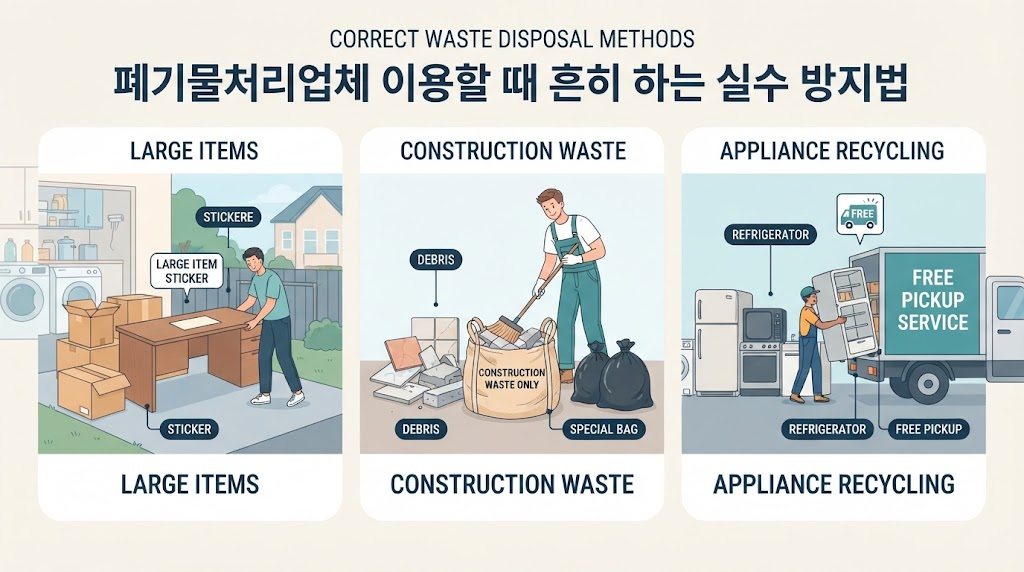
Confusion regarding local government bulky waste sticker targets: Large furniture or home appliances such as beds, wardrobes, sofas, and desks must be reported for bulky waste disposal fees through the jurisdiction administrative welfare center or internet homepage, attached with a sticker, and disposed of at a designated location. Disposing of these just like general household waste or blindly mixing them to send to a private company constitutes a regulation violation.
Prohibition of mixed disposal of household waste and construction waste: Waste generated from interior remodeling or veranda tile demolition is classified as “construction waste” and must be processed through exclusive hemp bags or specialized collection vehicles. However, if you stuff these into general standard waste bags or household large sacks or mix them with household waste for disposal, sanitation workers will not only refuse collection but fines will also be imposed for illegal mixed disposal.
Special regulation items (free collection of home appliances, etc.): Waste home appliances such as refrigerators, washing machines, and air conditioners can be collected free of charge by using the “Waste Home Appliance Free Visit Collection Service (E-Circular Governance),” but people sometimes make the mistake of paying money to call a private company or abandoning them without knowing this system.
💡 Prevention Tip: Creating a disposal item list and correct separate disposal methods
To avoid disadvantages caused by violating item regulations during the waste disposal process, you must check the following matters in advance:
Pre-list disposal items: Carefully organize the list of items to be disposed of along with photos. First check whether home appliances are eligible for free visit collection, accurately classify whether bulky furniture is subject to local government reporting, and whether interior debris is subject to construction waste-exclusive treatment.
Prior coordination with professional treatment companies: Even when commissioning private waste disposal companies, you must clearly notify “what items and how much are included (whether household waste or construction waste),” and proceed only after confirming that the company has the capability to legally process those items to prevent collection refusals or unexpected situations.
Omission of Contract Writing and Dispute Mistakes Caused by Verbal Contracts
When entrusting waste disposal, people often schedule and proceed with work only over the phone or verbally without a written contract, under the excuse of trusting each other or finding paperwork bothersome. However, this “omission of contract writing and verbal contracts” becomes a fatal mistake that prevents you from getting your rights protected when serious disputes arise with the company over work scope, costs, responsibility for damages, and more.
Responsibility battles arising from failing to document the collection date and included work scope (demolition, transportation, cleaning, etc.)
If waste disposal is carried out with only verbal promises, when problems occur, both sides’ claims clash, saying “A said they would do it” or “B is an item requiring an additional cost,” easily escalating into major fights.
Difference in stance on work scope: The client naturally assumed the amount included clearing away all garbage inside the house and finishing cleaning, but the company demands extra costs or withdraws without finishing the work, claiming, “It was a condition to collect only designated large waste, and cleaning up miscellaneous items or debris is separate.”
Evasion of responsibility for physical damage and facility destruction: Accidents can occur during the process of moving heavy furniture or waste out via ladder trucks or stairs, denting or damaging building elevator walls, hallway tiles, front doors, etc. If only a verbal contract was made at this time, the company might play dumb saying “It was a pre-existing scratch” or cut off contact, leading to an unfair situation where the building owner or tenant has to pay for the repair costs out of pocket.
💡 Prevention Tip: Requesting estimates and contracts issuance and specifying liability ranges
To prevent disputes caused by verbal contracts and safely finish waste disposal, you must practice the following tips:
Request issuance of estimates and acceptance certificates (contracts): Official licensed companies do not state amounts only verbally, but issue an “estimate” detailing collection items, quantities, total costs, work dates, etc., and a “waste treatment confirmation (acceptance certificate)” issued after work completion. Leave clear agreement details in written documents or text messages before contracting.
Check liability clauses for building damage: If damage occurs to the building’s common spaces (elevators, hallways, etc.) or private property during interior demolition or bulky furniture removal, explicitly specifying in advance in the contract or messenger chat how the company will take responsibility for repairs and compensation due to their negligence ensures smooth compensation and handling even in the event of an accident.

Conclusion and Core Tips for Choosing a Reliable Waste Disposal Company
So far, under the topic of how to avoid common mistakes when using waste disposal companies, we have thoroughly examined the fatal mistakes we commonly make in daily life, such as the risks of selecting unauthorized companies, additional fee bombs, violations of separate disposal regulations, and disputes caused by verbal contracts.
Waste disposal is an important process that goes beyond simple garbage discharge and must be completed legally and safely. Finally, we summarize the core checklist for selecting a reliable company for a regret-free treatment.
💡 3 Core Tips for Choosing a Reliable Waste Disposal Company
First, definitely prove whether they are an official licensed company
Check if they are a legitimate official licensed company holding not only a business registration certificate but also a “Waste Collection and Transportation Permit,” thereby fundamentally blocking the risk of involvement in illegal dumping conspiracies.
Second, finalize the “final total amount” through photo-based detailed estimates
Do not be swayed by rough amounts over the phone, but share photos of the waste to be treated and receive a final estimate in writing or via text message that includes transportation costs, labor costs, treatment costs, and more.
Third, avoid verbal contracts and specify work scope and liability for damages
Eliminate the possibility of disputes by clearly leaving collection schedules, items, work scope (demolition, cleaning, etc.) as well as liability for compensation in case of building damage during work as a contract or messenger record.
Through meticulous prior information checking and thorough company verification, we hope you will finish waste disposal safely and refreshingly without worries of financial loss or legal trouble!
Korean version: 한국어로 읽기