
Introduction: Why Government-Funded Education is Attractive to Non-Majors
For those dreaming of a career transition or career jump, there is a giant mountain you face first. It is the overwhelming uncertainty and fear: “Can I really do well in this field without majoring in it?”
Especially for practice-centered professions like IT, data, design, and marketing, the barrier to entry feels high, making people hesitate even to start. Going to an academy feels burdensome due to the hefty tuition fees, and self-studying worries you because it’s hard to find the right direction and you might just waste time.
The most realistic and powerful alternative that neatly resolves these concerns of non-majors is ‘government-funded education’. Why are many non-majors succeeding in new challenges through government-funded courses? Let’s take a look at the attractive reasons.
Minimization of economic barriers: By dramatically lowering the tuition burden through tools like the National Tomorrow Learning Card and receiving a modest training allowance during the training period, you can focus entirely on learning.
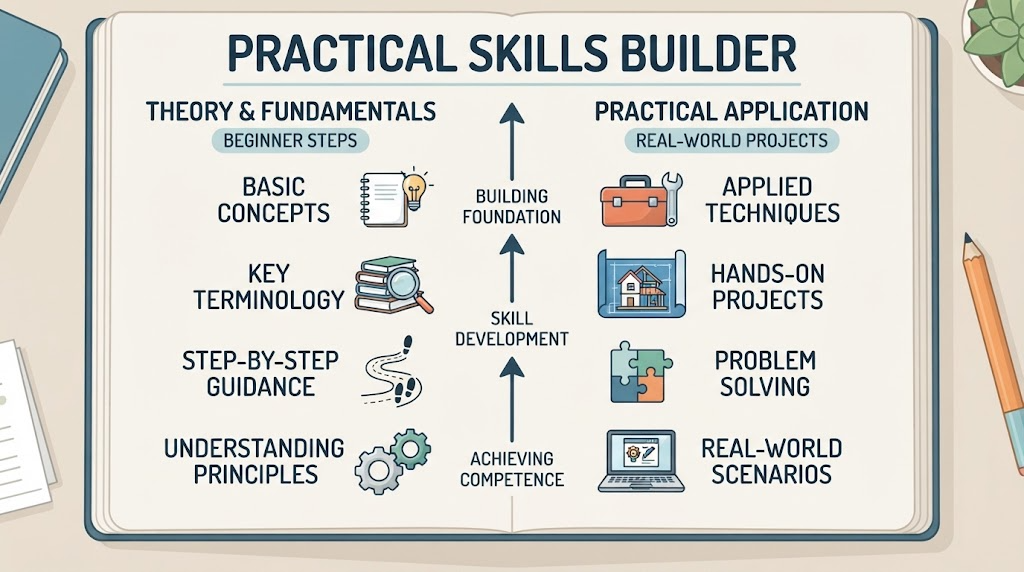
Systematic approach starting from the basics: Tailored to the level of non-majors, it builds up step by step, from terminology organization and basic concepts to core technologies used in practice.
Overcoming the limitations of self-study: An environment is created where blocks encountered while studying alone (errors, loss of direction) are immediately resolved through feedback from instructors and tutors, allowing you to complete the course without giving up.
“Are you hesitating because your major is different or you lack related experience? Government-funded education, which allows you to grasp both solid basics and practical competencies at the same time, becomes the most reliable wing for non-majors.”
What is ‘Practice-Centered’ Education? Cultivating Field Competency Beyond Theory
Who are the talents most preferred by companies in the job market? They are ‘people who can be deployed into the field right away’. Knowledge learned only from books and acquired solely through certifications easily becomes useless in front of the complex practical work in the field. Therefore, the most powerful weapon of government-funded education is by far the title of ‘practice-centered’.
Then, what specific characteristics does true practice-centered education have?
Project-centered curriculum beyond theory: Classes where you just sit at a desk and memorize concepts are a thing of the past. From service planning to development, design, data analysis, and marketing strategy establishment, you directly perform real tasks faced in the field and complete your own portfolio. Through this process, live problem-solving skills are cultivated.
Acquiring tools and processes actually used in the field: Collaboration tools actually used by companies (e.g., Slack, Notion, Jira, etc.), professional programs by job role, and practical processes are completely integrated into the training course. Thanks to this, even if you join a company after completion, you can quickly adapt to an unfamiliar work environment.
“An experience of solving problems actually encountered in the field, rather than standardized examples floating around the market or appearing only in books. That is the secret to non-majors acquiring practitioner competencies in a short period and receiving love calls from companies.”

Characteristics of Step-by-Step Curriculums Tailored for Non-Majors
“Can I really keep up even though I don’t know anything about programming languages or professional tools because I’m not a related major?” This is the most common concern among non-majors considering government-funded education. It is because of the anxiety that they might fall behind in the middle due to the pace being too fast or encountering unfamiliar terms.
However, a well-designed government-funded course lays a solid stepping stone so that you can be reborn as a skilled person through systematic steps tailored to the level of non-majors. What are the representative characteristics of a curriculum tailored for non-majors?
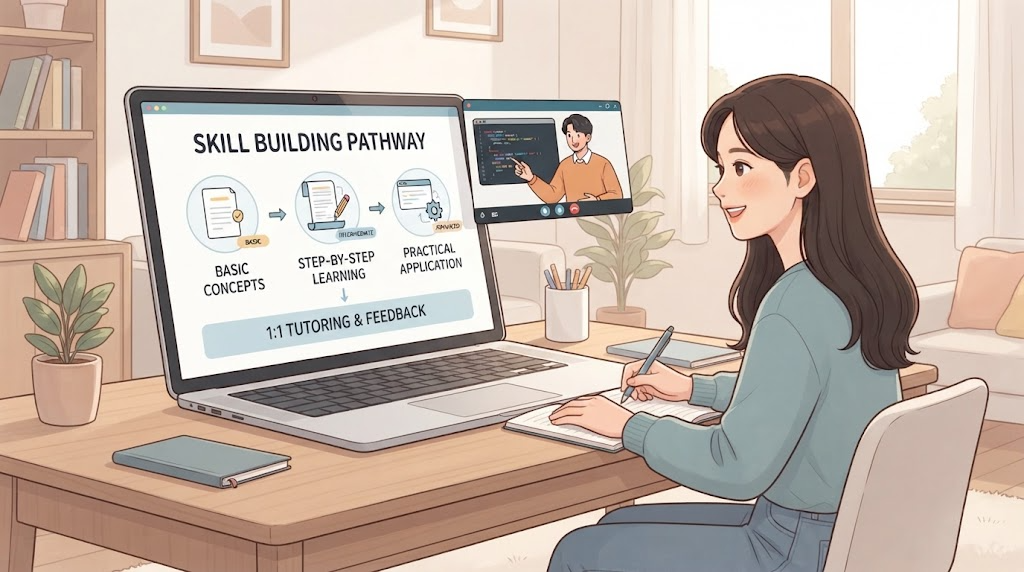
Introductory course that allows you to follow step by step even without any basic knowledge: It starts from establishing very basic concepts so that there is no difficulty even if you start with zero base. It is designed to explain complex professional terms easily, build confidence step by step through step-by-step difficulty adjustment, and enter advanced courses.
1:1 tutoring and feedback system helping learning without stragglers: When you study alone and get stuck, your progress easily stops right there, but government-funded education is different. Instructors and dedicated tutors with rich field experience stay on-site to answer questions in real-time, and immediately supplement areas of deficiency through code reviews or assignment feedback.
“Even though the beginning may feel vague, if you step on the systematic stepping stones connected step by step, you will soon find yourself equipped with solid fundamentals along with the confidence that ‘I can do it too’.”
From Relieving Economic Burdens to Assured Employment Connections
Among the realistic barriers blocking new challenges, the two biggest ones are ‘cost burden’ and ‘uncertainty about employment’. If you have to afford expensive tuition without an immediate income, or if you have to jump into the job hunting war alone after education ends, you naturally hesitate to start no matter how good the course is.
However, well-equipped government-funded education becomes a reliable fence for students from start to finish. What benefits and support can we expect?
Support for the National Tomorrow Learning Card and reliable training allowances: By utilizing the government-supported National Tomorrow Learning Card, you can dramatically lower the tuition burden. (Full support or heavy discount benefits applied depending on the course) In addition, if certain requirements are met, you can receive a modest training allowance every month during the training period, creating an environment where non-majors who must balance livelihood and studies can immerse themselves entirely in learning.
Systematic employment linkage process that doesn’t end with completion: The real strength of government-funded education lies in the close employment support that follows course completion. From 1:1 resume and portfolio corrections by professional employment consultants, mock interviews to build practical sense, to interview connections with numerous partner companies affiliated with the training institution. We accompany you through the entire process of job hunting, which would have been overwhelming alone, to help you achieve a successful employment goal.
“Lightening the economic burden at the start of learning, and opening the door to certain employment at the moment of finally bearing fruit. This is why government-funded education becomes the most realistic and powerful career jump-up tool for non-majors.”

Tips for Successful Completion and Employment, and Conclusion
Just because you have chosen a good government-funded course does not mean everything will be resolved automatically. To maximize effectiveness within a limited time and achieve the desired results, an active attitude and a wise strategy from the student are required. What are the practical tips you must remember for successful completion and reaching the employment goal?
Choosing a course that suits your propensity and goals: Rather than blindly chasing popular courses or courses others say are good, you must carefully compare and choose whether it is a job and curriculum that you are truly interested in and want to continue in the future so that you can complete it without giving up halfway. Referring to consultations or reviews from senior graduates is also a good method.
Active participation and building your own portfolio: Do not just listen to classes like a bystander, but participate proactively in assignments and team projects. The experiences of every moment solved through trial and error accumulate to eventually become a portfolio, the most powerful weapon that will prove you in the job market.
“The title of a non-major is not a handicap, but can be another strength that allows you to view problems from a completely new perspective and take on challenges. If you keep moving forward without giving up on the stepping stone of reliable government-funded education, anyone can achieve a wonderful leap into the career they desired. We sincerely cheer for your new beginning!”
Korean version: 한국어로 읽기