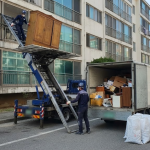
Introduction: Furniture and Old Clothes Piling Up High When Moving—Where Should You Even Start?
As you begin packing your bags with excitement ahead of moving to a new home, a moment arrives when you look around the house and your heart sinks. The large wardrobe and old sofa that have been sitting there for years, and the piles of unwearable clothes tumbling out every time you open the closet door. It is a moment when deep sighs naturally escape: “How on earth am I supposed to clear out all this stuff?”, “Where on earth should I even start so it’s not overwhelming?”
In particular, if you name the biggest headaches during the moving process, they are by far ‘bulky furniture’ and ‘hard-to-handle old clothes’. Because they are so large and heavy, you cannot simply toss them into standard trash bags like you usually do, and if you just casually leave them out on the street, you are bound to get caught for illegal dumping within the apartment complex and hit with a massive fine of hundreds of thousands of won.
Then why is organizing furniture and old clothes so burdensome and chaotic every time you move? There are a few unavoidable, realistic concerns.
- Furniture You Might Throw Away Once in a Lifetime: The Wall of Complex Disposal Procedures
You rarely have a reason to throw away furniture in your daily life unless you are moving. Because of this, many people feel overwhelmed and confused about basic disposal procedures, such as: “Do I have to go directly to the community center to buy a sticker?”, “How do I report it online?”, or “Do I have to carry this down myself all the way to the designated spot?” If you delay it simply because you don’t know the method and end up scrambling to handle it right around moving day, the scene instantly turns into chaos.
- The Complacent Thought “I Can Just Put Them in the Clothing Donation Bin” and the Trap of Old Clothes
When dealing with old clothes filling up the closet, it is easy to assume the problem will be solved simply by dumping them into the neighborhood clothing donation bin. However, cotton futons, cushions, seat cushions, electric mats, and stained clothing fall under items that cannot be disposed of in clothing donation bins. If you carelessly pile these around the donation bin or try to stubbornly cram them into standard volume-rate garbage bags and fail, you will end up spending more energy clearing out trash than packing your moving boxes.
- The Tight Schedule and Twisted Logistics on Moving Day
Moving day is a time measured in split seconds, where ladder trucks are rented and packaged-moving company employees move around without a break. Amidst this busy hustle, if furniture or old clothes that need to be thrown away get tangled up with moving boxes or if you miss the unloading timing, it can lead to delays in the overall moving schedule or serious conflicts with your neighbors.
As such, cleanly clearing out furniture and old clothes is not just simple trash disposal; it is a very important preliminary preparation stage that determines a successful move.
In the upcoming sections, we will step-by-step examine everything from accurately classifying furniture to throw away and conveniently filing online reports for bulky waste, to perfect disposal tips for confusing old clothes and large bedding, and designing a practical logistics route without confusion on moving day. Complete a lighthearted move with no worries about fines through thorough preliminary preparation and a smart emptying strategy!
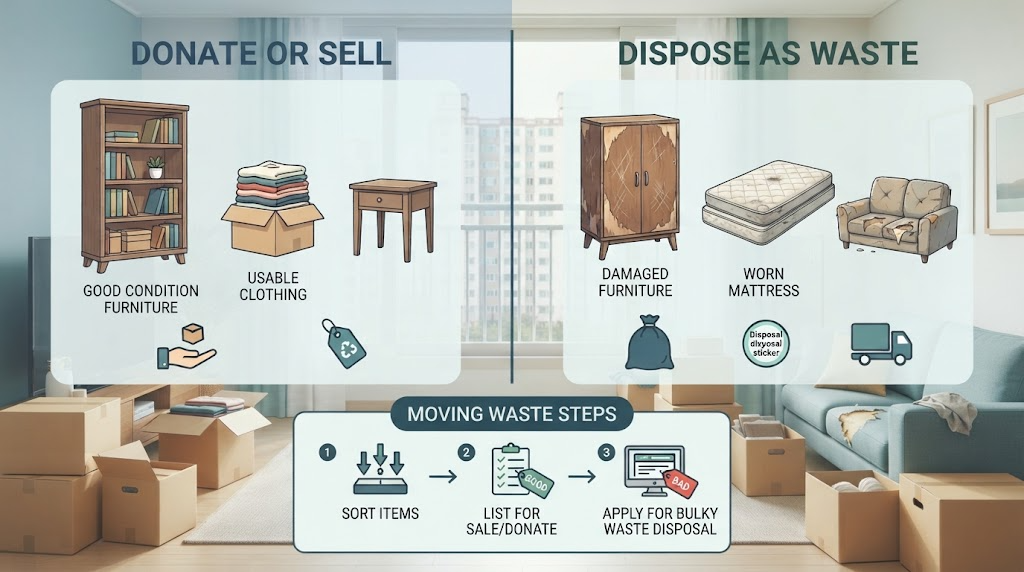
Step 1: The Complete Guide from Sorting Furniture to Disposing of Bulky Waste via Local Governments
The first step in moving preparation and the one that takes up the largest portion is clearing out the bulky furniture occupying your home. If you neglect furniture that needs to be discarded because it doesn’t fit the layout or interior design of your new home, you will suffer from extreme stress right up until the day before the move.
Here is the complete guide to cleanly sorting furniture to throw away without worrying about fines, and smartly completing your bulky waste report without visiting the community center.
- Establishing Clear Criteria Between Reusable Furniture and Waste Furniture to Be Discarded Boldly
The very first thing you need to do when organizing furniture is to decide whether to “keep using it” or “dispose of it,” and if you are disposing of it, “what method to use to clear it out.”
Candidates for free sharing and secondhand transactions: Wooden desks, storage units, dining tables, etc., that are in good condition and function without issues are best handled by giving them away for free or selling them at a low price a few weeks before the move through secondhand platforms like Danggeun Market or Junggonara. Disposing of them on moving day under the condition that the buyer picks them up directly yields the dual benefit of reducing the volume of your moving luggage.
Immediate disposal targets (bulky waste): Furniture with severely peeled veneer, mattresses wobbling from long use, broken drawers, etc., cannot be traded secondhand, so they must be classified as bulky waste without hesitation and subjected to the local government’s reporting procedure.
- How to Report Conveniently via Internet and Mobile Apps Without Visiting the Community Center
In the past, to throw away bulky waste, you had to visit the community center (administrative office) in person on a weekday to purchase a sticker with cash, but nowadays you can handle it easily at home 24 hours a day.
Utilizing the Official City, County, and District Office Websites: Access the district office website of your current region and enter the ‘Civil Petition’ or ‘Bulky Waste Disposal Report’ menu. After identity verification, select the items (e.g., wardrobe, 2-seater sofa, etc.) and enter the specifications to automatically calculate the fee.
Utilizing Mobile Convenience Apps: Using mobile apps introduced by many local governments recently (such as ‘Ppaegi’), you can simply take and upload a picture of the furniture to be discarded, which automatically recognizes the item and lets you conveniently complete the payment—very useful for busy office workers.
Securing a Report Certificate (Disposal Number): Once payment is completed, a unique receipt number (disposal number) is issued on the screen. Since normal collection only takes place when you have this number, you must make sure to write it down or capture it.
- Handwritten Payment Certificate Writing and Attachment Tips Useful When You Don’t Have a Printer
Even if you finish reporting and paying online, situations frequently arise where you cannot print out a paper sticker because you don’t have a printer at home. In times like this, don’t panic and utilize handwritten tips as follows:
Writing in Neat Print on an A4 Sheet: Prepare a clean blank sheet of paper, then press down firmly with a ballpoint pen in large and clear writing to record the [Receipt Number, Item Name, Fee, Disposal Location, Applicant Contact Info] that appear on the internet issuance completion screen.
Sealing and Attaching Securely with Clear Tape: Wrap and attach the written paper prominently on the surface of the furniture using clear tape so that it does not get erased by rain or snow. Sanitation workers must be able to check the receipt details at a glance even from a distance to completely prevent collection refusal or misunderstandings of illegal dumping.
Furniture organization is the most physically demanding and labor-intensive task in the moving schedule. However, if you finish reporting bulky waste online in advance as soon as the moving date is confirmed, you can cleanly clear out your house without needing to rush around frantically on moving day.
In the next step, we will take a detailed look at the complete disposal tips for old clothes and large bedding that cause headaches for both homemakers and single-person households!

Step 2: Clothing Donation Bins vs. Volume-Rate Bags vs. Bulky Waste: Everything About Old Clothes Disposal
One of the most troublesome items to handle while preparing for a move is the ‘old clothes’ and various bedding piled high in the closet. If you blindly stuff all these clothes into neighborhood clothing donation bins or cram them into volume-rate garbage bags, you are bound to exhaust yourself in no time.
Because clothes and blankets have disposal locations that vary wildly depending on their material and condition, not knowing the exact criteria makes it easy to be mistaken for illegal dumping within the apartment complex and receive a warning notice. Here are 3 disposal routes to cleanly and completely clear out old clothes and bedding.
- “Can I Just Put Any Clothes In?” Distinguishing Between Clothes That Can Be Placed in Donation Bins and Items That Cannot
Clothing donation bins, which are commonly seen in neighborhood alleys or apartment complexes every step of the way, are a very useful space that comes to mind first when moving. However, the boundary between items that can be placed in the bins and items that absolutely must not be is very strict.
Clothing Donation Bin Eligible (O): Clean and wearable regular clothing (outerwear, pants, shirts, etc.), shoes (matching pairs and usable), bags, hats, curtains, blankets, etc.
Clothing Donation Bin Ineligible (X – Absolute Dumping Prohibited): Cotton futons, pillows, cushions, seat cushions, electric mats, carpets, rugs, and heavily stained or torn old clothes. (Putting these into clothing donation bins not only results in collection refusal by the collection company but is also regarded as illegal dumping and becomes a subject for crackdown.)
- Proper Disposal Methods for Confusing Large Bedding Such as Cotton Futons, Electric Mats, and Cushion Items
Cotton futons and bedding that do not fit into clothing donation bins or whose disposal is prohibited must be handled in different ways according to their size and material to avoid fines.
Utilizing Volume-Rate Garbage Bags (Large): Regular cotton futons or thick winter blankets can be packed tightly and disposed of in the largest standard volume-rate bags sold by local governments (50L or 100L). By squeezing out as much air as possible and packing them down while stepping on them with your feet, a much larger quantity fits than you might think.
Bulky Waste Report Target: Electric blankets, electric mats, etc., that are too bulky to possibly fit into volume-rate garbage bags or contain internal wires inside must be reported as bulky waste through the city, county, and district office websites just like furniture, and then discharged with a fee payment certificate attached.
- Utilizing the Most Economic and Clean Collection Solution When Disposing of Old Clothes in Bulk
If the amount of old clothes that have accumulated in the closet for decades is so large that it feels a waste to use dozens of volume-rate bags or it is difficult to carry them out yourself, it is much wiser to use a professional ‘old clothes home-visit collection service’.
Utilizing Visit-Collection Companies: Recently, private collection companies have become active that visit homes directly to purchase old clothes, pots, frying pans, small appliances, etc., by weight.
Dual Benefits: If you apply for a visit collection timed to your moving date, paying money to throw away heavy piles of clothes instead turns into receiving a small cash settlement while clearing them out neatly—making it the ultimate cheat key to drastically lower your moving stress.
Because old clothes and bedding are bulky, even a moment of carelessness makes them the main culprit that instantly messes up the moving scene. If you appropriately combine clothing donation bins, volume-rate bags, bulky waste reports, or visit collection services according to the state of your closet, processing moving waste becomes much smoother.
In the next step, we will take a detailed look at practical logistics route design and precautions to maintain the waste logistics route without confusion and wrap up cleanly amidst the hectic scene on the morning of moving day!
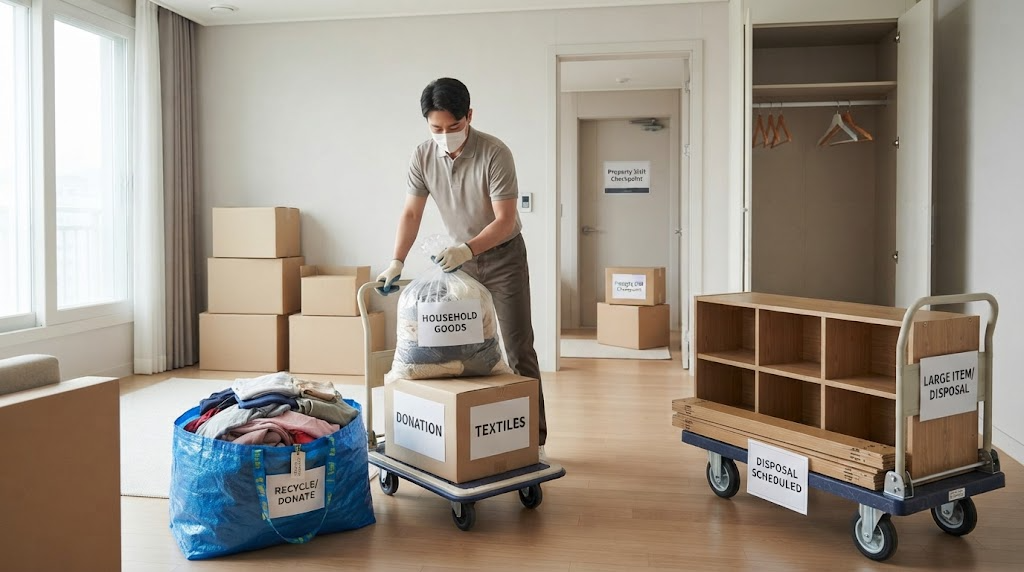
Step 3: Furniture and Waste Disposal Routes and Precautions with No Confusion on Moving Day
Even if you thoroughly finish reporting bulky waste online in advance and even complete the arrangement of old clothes and bedding, once the morning of moving day arrives, numerous variables and personnel become entangled, and the site inevitably turns into chaos in an instant. Particularly in multi-family housing (apartments, villas, etc.) where elevator use times or ladder truck operating hours are strictly limited, tangled waste disposal routes can lead to a fatal disaster where the entire moving schedule is delayed.
Here are practical furniture and waste disposal routes and key precautions to completely block confusion and wrap up smoothly on moving day.
- Adjusting the Waste Unloading Timing to Match Ladder Truck and Elevator Usage Times
The busiest time period on moving day is the early morning when packaged-moving companies begin unloading luggage in earnest. If you push large furniture or heavy waste out into elevators or shared corridors during this time, it will completely entangle with the moving luggage route.
Pre-Unloading Principle: It is most ideal to move furniture and bedding down to the designated bulky waste disposal location right before the moving truck arrives (in the early morning hours) or the night before with the permission of the management office.
Distributing Time Slots: If there is truly no time to unload on the morning of the day, you need the ability to adjust timing to quickly clear them out by utilizing the time when moving luggage loading is somewhat finished or during the lunch break.
- Know-how for Communicating Clearly with Packaged-Moving Company Employees Regarding ‘Items to Throw Away vs. Items to Bring’
As soon as the packaged-moving employees enter the house, they start packing luggage quickly into boxes with skilled craftsmanship. At this time, if the boundary between the pre-classified waste and the luggage to be brought is vague, major confusion arises at the site.
Zone Separation and Marking: Gather small household waste, volume-rate bags, and clothing collection boxes decided to be discarded in one corner of the master bedroom or veranda, completely separated from the moving luggage, and attach a noticeable notice reading ‘Waste (To Be Discarded)’.
Communication with the Team Leader Before Work: Clearly communicate verbally to the field team leader before the packaged-moving work starts, saying, “Everything in this zone is to be thrown away, so absolutely do not pack it as moving luggage and do not touch it,” to prevent beforehand the absurd situation where valuable volume-rate bags or furniture to be discarded are wrongly loaded onto the new home.
- Final Cleanup of Scrap Waste Right After Moving and Management Office Final Check Checklist
Before loading all moving luggage onto the truck and leaving the empty house, this is the final step of inspecting the site and putting a period on it.
Sweeping Up Scrap Waste: Holding an extra volume-rate bag you kept aside, sweep the house one last time and thoroughly scoop up pieces of tape, dust, and scrap waste tucked away in corners.
Absolute Prohibition of Stacking in Front of the Entrance: Doing things like casually dropping volume-rate bags or waste near the front door hallway or in front of the elevator just before finishing while saying, “I’ll throw this down on my way down later,” is prohibited. If waste bags get in the way of the busy route of unloading all moving luggage, it will invite immediate protests from neighbors and the management office. Right before the truck departs, or as you step out of the house, they must be headed straight to the 1st-floor designated location or separation collection area.
Final Greetings to the Management Office: Stop by the management office to finish settling elevator usage fees and interim management fees, lightly check if there are any special notes regarding the bulky waste disposal location, and then step out of the house with a light heart for perfection.
Waste disposal on moving day relies on speed and accuracy. If you move systematically according to pre-established routes and thorough communication know-how, you can smartly put a period on it without trouble with neighbors or worries about fines even amidst the hectic moving scene.
In the final upcoming sequence, we will deliver closing remarks containing the pleasant meaning of a fresh start welcomed after cleanly clearing out furniture and old clothes to be thrown away!
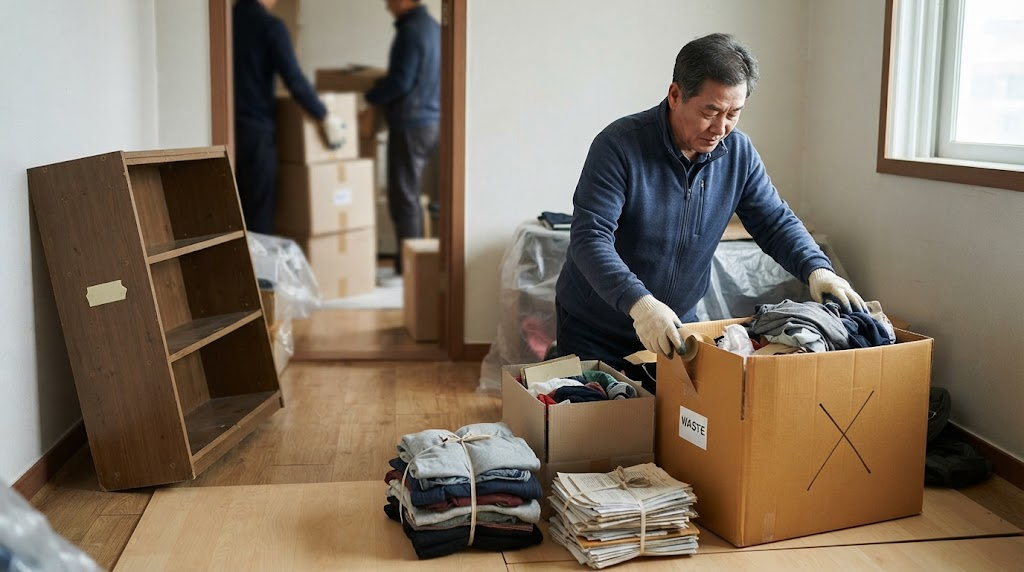
Conclusion: A Lighthearted Fresh Start Beginning by Emptying Heavy Luggage Lightly
It is time to put a period on the preparation for moving that began with half excitement and half worry. Along the path toward your new home, what troubled us the most might not have been the exhaustion of packing and unpacking luggage, but those moments when it felt overwhelming not knowing how to handle the stale furniture and old clothes piled up like mountains throughout the house.
However, through this process, we have clearly learned how much power thorough criteria and wise coping methods wield.
We established clear criteria for furniture to throw away and reusable furniture, followed legal procedures through local government internet reports and handwritten payment certificates,
completely erased confusion with accurate disposal tips for items ineligible for clothing donation bins, cotton futons, and large bedding,
and perfectly blocked out confusion through thorough elevator route design on moving day and clear communication with packaged-moving companies.
Emptying out the heavy luggage and old clothes that filled the house properly goes beyond simply cleaning up a space neatly; it is the very first ritual to start your life in a new space freshly and orderly. This is precisely why you can stand proudly and lightheartedly at a new starting line and open the door without worries about messy illegal dumping or friction with neighbors.
Organizing furniture and old clothes that once felt only complex and cumbersome is no longer something to fear when accompanied by the systematic know-how we learned today. Amidst a comfortable environment completed through thorough preparation and proper emptying, we sincerely root for your pleasant fresh start and dazzling future!
Korean version: 한국어로 읽기