Introduction: Why Is the ‘Share House’ Becoming a Trend Among Young Adults These Days?
The first realistic wall that young adults dreaming of living alone and preparing for independence face is soaring housing costs.
Especially for one-room apartments in Seoul or the metropolitan area, the deposit is burdensome, and on top of the fixed monthly rent and maintenance fees, utility bomb bills that snowball like an avalanche whenever you turn on the air conditioner in summer or start heating in winter often send chills down your spine.
To wisely alleviate this housing cost burden, the ‘share house’ has recently emerged rapidly as a new housing alternative among young adults. With share houses, common spaces like the living room and kitchen are shared while individual rooms are kept private, but how much of an advantage do they really offer in terms of rent and utility bills compared to standard one-room apartments?
In this post, we will thoroughly compare and analyze the housing costs of standard one-rooms and share houses, and share practical tips for saving on utility bills. If you are preparing for a reasonable independent life, please stay with us until the end!
💡 Recommended blog posts to read together
[Youth Jeonse Deposit Return Guarantee Fee Support Program Application Method] (Link inserted)
[Youth Monthly Rent Special Support Beneficiary Verification and Application Guide] (Link inserted)

Standard One-Room vs. Share House Basic Rent (Monthly Rent) Structure Comparison
When choosing a housing type, the very first thing to compare is the basic rent (deposit and monthly rent) structure. One-rooms and share houses show quite significant differences ranging from the contract method to the cost pricing structure. Let’s take a look at the characteristics of each.
- Standard One-Room: The Weight of High Deposits and Fixed Monthly Rent
- Deposit Burden: Generally, one-rooms in Seoul and the metropolitan area require a deposit ranging from a minimum of 5 million won to tens of millions of won. For young adults starting their careers or college students lacking lump-sum cash, raising this deposit is a major barrier from the start.
- Monthly Rent and Maintenance Fee Structure: Lowering the deposit increases the monthly rent, and lowering the monthly rent requires raising the deposit. On top of this, maintenance fees billed as a fixed amount or actual expenses every month (usually around 50,000 to 100,000 won) are added as fixed expenditures.
- Characteristics: While it has the advantage of enjoying a completely private space all to oneself, the tenant must fully bear the entire amount of rent and maintenance fees alone.
- Share House: Low Deposit Barrier and Reasonable Monthly Rent Sharing
- Deposit Burden: Share houses often have significantly lower deposits compared to standard one-rooms. (Usually ranging from several hundred thousand won to 1 million ~ 2 million won). It greatly relieves the burden of lump-sum money, making it attractive for young adults lacking initial capital.
- Monthly Rent and Room Type Structure:
- Single room: A form where you use a room alone but share the living room and kitchen (monthly rent may be slightly more reasonable or similar to a one-room, but the deposit is low)
- Multi-person room (2-person, 3-person room, etc.): A form where you share a single room with other mates (monthly rent is much cheaper compared to a single room or one-room)
- Characteristics: The scale of monthly rent borne by the individual is reduced compared to a one-room, and especially when choosing a multi-person room, housing costs can be drastically saved.
💡 Cost Structure Comparison Summary at a Glance
| Category | Standard One-Room | Share House |
|---|---|---|
| Deposit | Several hundred to tens of millions of won (High) | Several tens to millions of won (Low) |
| Monthly Rent | Fully borne by self (Relatively high) | Shared depending on room type (Reasonable) |
| Initial Entry Barrier | High (Lump sum required) | Low (Light start possible) |
As you can see, share houses definitely reduce the burden of initial costs in terms of basic monthly rent and deposits. However, the true value of share houses shines even more brightly not just in monthly rent, but in ‘utility bills and maintenance fees’. In the next section, we will thoroughly explore the decisive reasons why you can save on utility bills!
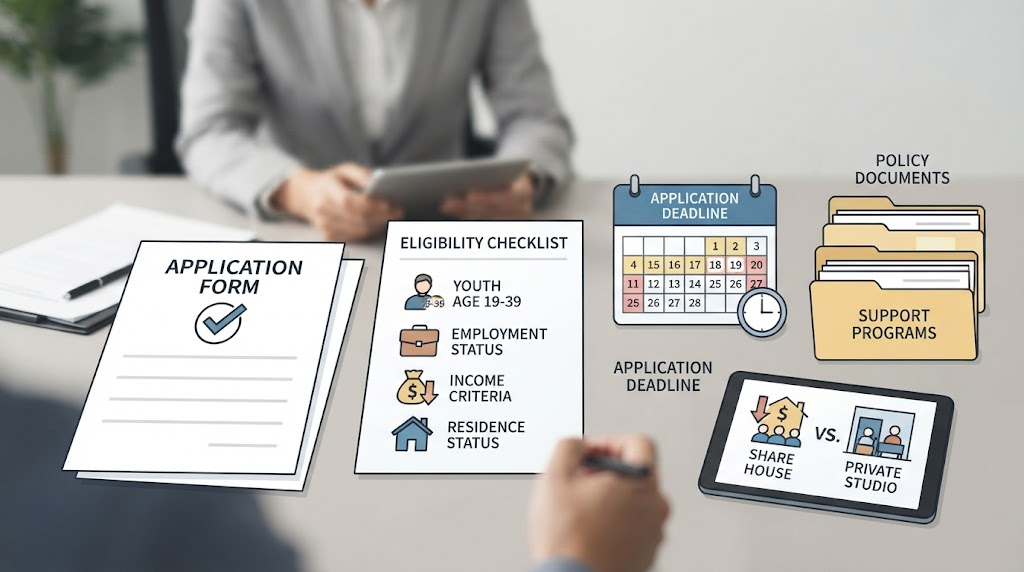
Preventing ‘Utility Bill Bombs’! Maintenance Fee and Public Utility Cost Reduction Effects
Anyone who has lived alone knows the nightmare of the summer ‘air conditioning utility bill bomb’ and the winter ‘city gas bill bomb’. In a one-room where you live alone, you have to bear all these public utility costs entirely by yourself, making them a main culprit that gnaws away at your living expenses like drizzle soaking clothes.
Then, what kind of cost reduction effect does a share house show in terms of these maintenance fees and utility bills?
- Hidden Expenditures of Standard One-Room: All Kinds of Fees ‘Borne Individually’
The Sorrow of Individual Billing: In standard one-rooms, electricity bills, city gas (heating and hot water), and water bills come out as separate individual bills or are billed included in the monthly rent as a flat maintenance fee.
Reduced Efficiency: Even if you live alone, there is a baseline amount of power consumed by basic home appliances such as the refrigerator, washing machine, and boiler. Especially in the summer when you come home alone after work and turn on the air conditioner, the power efficiency relative to the space is low, causing the bills to come out much higher than expected.
Additional Expenses: If internet and Wi-Fi usage fees and public cleaning fees are added on top of this, the incidental costs that go out as a fixed monthly amount reach an undeniable level.
- Strengths of Share Houses: Public Utility Fees and Maintenance Fee ‘N-Split (Sharing)’ System
Cost Distribution Effect: In share houses, common spaces like the living room, kitchen, and bathroom are shared by multiple housemates. When utility bills such as electricity, water, gas, and internet fees occur, they are divided equally among the residing members (split by N).
Economies of Scale: For example, when turning on the living room air conditioner or boiler, instead of heating or cooling the entire one-room alone, dividing the total cost incurred in a space where multiple people live together significantly lowers the actual perceived cost per person.
Ease of Fixed Cost Prediction: Some share houses bundle a certain amount of maintenance fees with all utility bills every month as a flat rate, or operate with minimized fluctuation ranges, making budget management much easier.
- Perceived Effects Through Actual Saving Examples
Summer Air Conditioner Use: Those who lived alone in a one-room and faced an electricity bill bomb (over 100,000 won) without holding back on air conditioning often experience their personal burden dropping sharply to the 20,000 to 30,000 won range after moving to a share house, because utility bills are shared even when operating the living room air conditioner together.
Zero Internet and Incidental Management Expenses: Without individuals needing to sign up separately for internet or paid broadcasting, the infrastructure already set up in the house is used as-is, fundamentally blocking additional expenditures.
💡 Core Checkpoint for Saving Utility Bills
Before signing a share house contract, be sure to check whether ‘maintenance and utility bills are included in the monthly rent (flat rate) or settled monthly based on actual expenses (split by N)’!
Asking in advance about the average billing method for utility bills during peak seasons in summer and winter will be of great use in setting your budget plan.
The appeal of share houses seems sufficiently proven just by the fact that they sharply lower the risk of utility bill bombs that used to threaten your wallet every month. In the next sequence, we will look into tips for saving on initial home appliance and furniture costs besides monthly rent and utility bills!

Initial Home Appliance and Furniture Preparation Costs & Living Expense Saving Tips
When starting independent living, the main culprit that turns our bank accounts empty just as much as monthly rent and utility bills is ‘initial home appliance and furniture preparation costs’.
Starting from painting the room to bed mattresses, desks, wardrobes, refrigerators, washing machines, microwaves, and routers… When you write down the list of things to buy, millions of won easily break even before you move in. Share houses possess massive strengths in terms of these initial costs and living expenses as well.
- Standard One-Room: The Burden of ‘Hidden Luggage’ That Must Be Filled Even in Full-Option Rooms
The Trap of Options: Nowadays, one-rooms are often advertised as ‘full option’, but upon closer inspection, most only include a washing machine, refrigerator, and air conditioner.
Additional Purchase Items: Bed mattresses for comfortable sleep (which must be newly bought or covered for hygiene reasons), wardrobes, clothes racks, desks, chairs, curtains, mirrors, and various kitchen utensils (pots, frying pans, tableware) must be entirely filled with your own money.
Disposal Costs Upon Moving: The cost of disposing of or moving these large pieces of furniture when moving out after the contract period ends is also no small stress.
- Share House: The Magic of ‘0 Won’ for Home Appliance and Furniture Preparation Costs
Perfect Full Options Where You Can Move in With Just Your Body: In share houses, common spaces such as the living room and kitchen are already perfectly set up with large refrigerators, water purifiers, microwaves, rice cookers, washing machines, dryers, vacuum cleaners, and more.
Personal Room Configuration: Beds, desks, and wardrobes (or clothes racks) are basically provided inside the rooms as well, so all individuals need to pack are a blanket, personal clothing, and toiletries.
Initial Capital Reduction Effect: You can save tens to hundreds of thousands of won in initial expenses for decorating your solo-living room, dramatically easing the economic burden for young adults starting their careers or college students.
- Hidden Tips Exclusive to Share Houses That Even Save Living Expenses
Sharing Common Consumables: Things that quietly drain money when living alone are daily consumables such as toilet paper, laundry detergent, dish soap, wet wipes, and standard waste bags. In share houses, these consumables are often purchased and used together through common maintenance fees or house rules, significantly reducing personal expenditures.
Grocery Sharing (House by House): If you get along well with your housemates, you can also experience the subtle joy of saving on food expenses by jointly purchasing and sharing rice, seasonings, kimchi, etc., or cooking together.
💡 Tips for Smart Independent Living
Since the scope of basic options provided varies slightly by share house (e.g., whether bedding is provided, presence of a dryer, etc.), be sure to thoroughly check the option list before moving in!
Isn’t a share house that saves on initial appliance and furniture costs while even reducing living expenses truly attractive? However, since it is a living space where multiple people gather to live together, there are definitely points to watch out for. In the next section, we will point out precautions and checkpoints that you must consider when living in a share house.
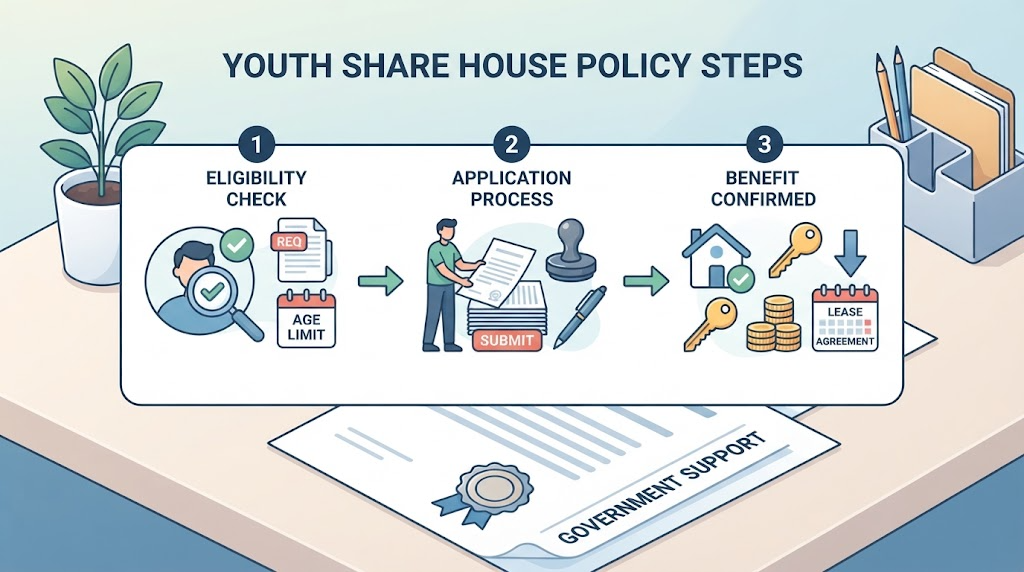
Precautions & Checkpoints to Consider When Living in a Share House
A share house where you can save on rent, utility bills, and even initial costs! While it might seem like it only has advantages, because it is a housing type where multiple people live together, there are realistic precautions and checkpoints that you must verify before moving in.
Carefully examine the items below for a regret-free solo-living experience!
- Understanding the Limitations of Privacy and Personal Space (Single Room vs. Multi-Person Room)
Sharing of Space: Since major common spaces such as the living room, kitchen, and bathroom must be shared with others, it is difficult to expect completely independent personal space and privacy.
Importance of Choosing Room Type:
You must choose a ‘single room’ where you use the room alone, even if you pay a little more, to preserve at least some privacy.
Multi-person rooms with two or more beds have very cheap monthly rent, but if your sleep patterns or personalities do not align, it can cause extreme stress, so you must decide prudently.
- Checking Living Rules (House Rules) with Housemates
Core of Communal Living: Every share house has its own unique ‘House Rules’, such as dividing cleaning duties, restrictions on shower and washing machine usage times, curfew times, and banning outsiders.
Understanding the Management Style: It is advisable to check in advance whether it is a systematic place where a manager or house owner resides and manages, or a place operated autonomously among housemates. Overly strict rules that do not fit your disposition or, conversely, overly lax management can become the spark for conflicts.
- Carefully Checking Contract Periods and Mid-Term Move-Out Regulations
Mid-Term Move-Out Penalty: Share houses tend to have stricter adherence to contract periods (usually on a 6-month to 1-year basis) than standard one-rooms. If you have to leave midway due to conflicts with housemates or personal circumstances, there may be strict regulations such as ‘you must find the next tenant yourself to get your deposit back’ or penalties occurring.
Read Contract Clauses Thoroughly Before Moving In: You must visually confirm and sign whether refund regulations upon mid-term move-out and maintenance fee settlement methods are clearly specified in the contract.
💡 Checklist for a Fail-Proof Share House Selection
- Check room structure matching your preference—whether it is a single room or multi-person room
- Check the assignment method for common area cleaning and garbage disposal
- Understand the age group or atmosphere of housemates in advance (inquiries to management companies, etc.)
- Clearly verify deposit refund conditions upon mid-term move-out
If mutual consideration and basic rules are well maintained, a share house can become the ultimate housing type that captures both cost savings and the alleviation of loneliness. Lastly, here is the concluding remark summarizing today’s content!

Conclusion
Today, for young adults exhausted by the burden of soaring monthly rent and maintenance fees, we thoroughly compared the rent and utility bill structures of standard one-rooms and ‘youth share houses’.
Share houses, which relieve initial capital burdens with low deposits and allow you to save on utility bills and daily consumables by splitting them by N, are clearly an attractive housing alternative for young adults dreaming of frugal solo living. However, because it is a space where people live together, wisdom is needed to carefully weigh individual inclinations, house rules, and contract conditions, right?
We sincerely cheer for you to wisely choose the housing type that best fits your budget and lifestyle, easing housing cost stress and starting a fruitful independent life preparing more solidly for the future!
We hope today’s post was a small help to your reasonable room hunting, and we will return next time with more useful and informative housing and lifestyle tips. Thank you!
📌 If you found this post helpful?
Please share it with your young friends struggling with room hunting!
If you have any questions or your own solo-living tips, please leave a comment anytime.
Korean version: 한국어로 읽기