
Health Insurance Health Checkup: How Much Is Really Free? (Support System at a Glance)
When receiving an annual or biennial national health checkup notice, the first question that often comes to mind is: “Is it really completely free, or will additional costs arise on-site?” To state the conclusion first, health checkups provided by the National Health Insurance Service are clearly divided into full coverage by the Corporation (100% free) and partial co-payment (10%), depending on the checkup type and the recipient’s age, gender, and income criteria.
- Basic Support Principles: General Health Checkup vs. National Cancer Screening
National health checkups are broadly categorized into ‘General Health Checkups’ for verifying fundamental health conditions and ‘6 Major Cancer Screenings’ for early detection of critical diseases, and each operates under a different cost support framework.
- General Health Checkup (0 KRW Co-payment)
- Support Rate: 100% fully covered by the Corporation
- Target Population: Local subscribers (household heads and household members aged 20 or older), employee subscribers, dependents aged 20 or older, Medical Aid beneficiaries (ages 20–64)
- Essential basic tests such as physical measurements, vision and hearing, blood pressure, chest X-ray, basic blood tests (fasting blood glucose, liver function, etc.), urine test, and oral examination require absolutely no out-of-pocket costs from the examinee.
- Items added according to age and gender (e.g., gastroscopy for ages 40 or older, cervical cancer screening for women, dyslipidemia test, etc.) are also provided free of charge when tested according to statutory standard cycles.
- 6 Major Cancer Screenings (Differential Support by Item and Target)
- Support Rate: 90% covered by the Corporation / 10% co-payment (However, specific cancer types and eligible individuals receive 100% free coverage)
- Age and frequency conditions vary depending on the cancer type (stomach cancer, colorectal cancer, liver cancer, breast cancer, cervical cancer, lung cancer), and since the government supports 90% for basic test items, examinees typically need to pay only a minor co-payment of around 10%.
- Comparison at a Glance: Items Fully Covered by the Corporation vs. Co-Payment Criteria
To help intuitively assess cost responsibilities, the support standards for major checkup types are summarized below.
| Checkup Classification | Major Test Items | Examinee Co-payment | Notes and Detailed Criteria |
|---|---|---|---|
| General Health Checkup | Questionnaire, measurements, chest X-ray, blood/urine test, oral checkup | 0 KRW (Free) | 100% fully supported by the National Health Insurance Service |
| Cervical Cancer | Pap smear (Women aged 20 or older, 2-year cycle) | 0 KRW (Free) | Fully covered by the Corporation |
| Colorectal Cancer | Fecal occult blood test (FOBT, ages 50 or older, 1-year cycle) | 0 KRW (Free) | Basic colonoscopy free of charge if fecal test shows a positive result |
| Cancer Screening (General) | Stomach cancer, breast cancer, liver cancer, lung cancer | 10% | 90% supported by the Corporation (Free for low-income recipients eligible for the National Cancer Screening Program) |
| Non-benefit / Optional Items | Stomach/colon sedation fee (sedation care fee), additional ultrasound, comprehensive blood tests | 100% out-of-pocket | Optional additional costs incurred upon examinee request |
💡 Key Points Where Additional On-Site Payments Occur
Although the basic checkup itself is free or requires only a 10% contribution, separate out-of-pocket expenses may be billed under the following circumstances, so it is recommended to be aware of them prior to booking.
- Sedation (conscious sedation) care fee: For upper and lower endoscopies, standard (non-sedated) procedures are covered under the support scope, but conscious sedation care costs incurred when undergoing sedation (typically around 50,000 to 100,000 KRW) are non-benefit items and must be fully paid by the individual.
- Therapeutic procedures during examination: When polyps are discovered during a colonoscopy and excised, or when Helicobacter pylori tests or biopsies are performed concurrently, the relevant procedures and biopsy fees are converted to health insurance clinical coverage (covered benefit), resulting in partial medical fees being billed.
- Package add-on tests: If optional items outside the national checkup scope are added—such as brain/chest CT scans, abdominal ultrasound, or comprehensive blood panels recommended by the hospital—the corresponding expenses are processed entirely as non-benefit services.
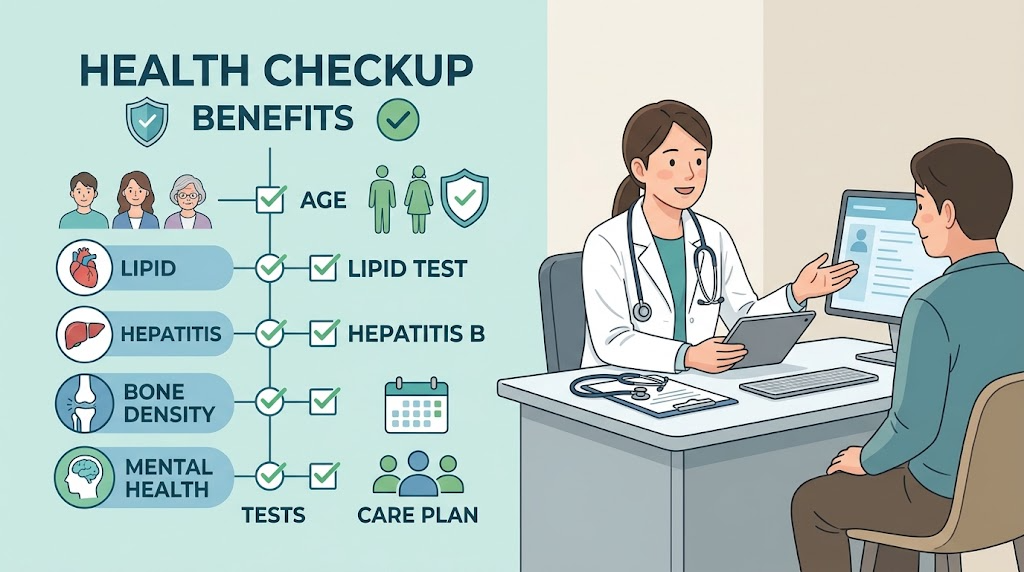
National General Health Checkup: Fully Supported Items and Examination Scope
The general health checkup supervised by the National Health Insurance Service focuses fundamentally on the early detection of chronic diseases that show few early symptoms, such as hypertension, diabetes, and kidney disease. If you are eligible for the checkup, it is conducted with 0 KRW in co-payments (fully covered by the Corporation), ranging from basic screening to age-specific selective tests.
- Primary Basic Examination Items (Common to All Ages)
These are common examination items basically provided to all examinees selected according to their birth year (even or odd years).
- Basic Physical Measurements and Sensory Function Tests
- Height, weight, waist circumference, body mass index (BMI): Calculation of obesity and abdominal obesity risk
- Vision and hearing tests: Measurement of corrected vision and verification of basic hearing loss
- Blood pressure measurement: Primary screening for hypertension via systolic and diastolic blood pressure
- Chest radiography (X-ray)
- Screening for lung diseases including tuberculosis, pneumonia, and thoracic masses
- Blood test (mandatory fasting blood collection)
- Hemoglobin (Hb): Verification of anemia
- Fasting blood glucose: Early screening for diabetes
- Liver function tests (AST, ALT, Gamma-GTP): Review of hepatitis, fatty liver, and abnormal liver function
- Kidney function tests (serum creatinine, e-GFR): Assessment of chronic kidney disease and glomerular filtration rate
- Urine test (urine protein)
- Checking the risk of kidney damage and urinary system diseases through the presence of proteinuria
- Oral examination
- Verification of dental caries and periodontal disease through dentist consultation and visual inspection of teeth and periodontal tissue
- Tailored Fully Supported Items by Gender and Age
To prevent chronic diseases and specific functional decline whose prevalence surges with increasing age, these examination items are provided additionally and free of charge when reaching specific ages according to statutory cycles.
| Examination Item | Target Criteria | Checkup Cycle and Detailed Objective |
|---|---|---|
| Dyslipidemia test
(Total cholesterol, HDL, LDL, triglycerides) |
Men aged 24 or older
Women aged 40 or older |
4-year cycle
Assessment of cardiovascular and cerebrovascular disease risks such as dyslipidemia, myocardial infarction, and arteriosclerosis |
| Hepatitis B antigen and antibody test | Age 40 | Once in a lifetime
Verification of Hepatitis B carrier status and antibody formation (excluding past carriers) |
| Bone mineral density test | Women aged 54 and 66 | Once at the corresponding age (2 times total)
Early diagnosis of osteoporosis progressing rapidly after menopause |
| Cognitive dysfunction screening test | Aged 66 or older | 2-year cycle
Early screening for dementia and cognitive decline based on the KDSQ-C questionnaire |
| Mental health (depression) screening | Ages 20, 30, 40, 50, 60, 70 | 10-year cycle (examine once within the corresponding age group)
Mental health assessment via depression scale evaluation |
| Lifestyle evaluation | Ages 40, 50, 60, 70 | Once at the corresponding age
Counseling on lifestyle improvement including smoking, alcohol consumption, exercise, nutrition, and obesity |
| Geriatric physical function test | Ages 66, 70, 80 | Once at the corresponding age
Assessment of physical functions including fall risk, lower extremity strength, and sense of balance |
💡 Essential Points to Remember Before Undergoing a General Checkup
- Maintain fasting for at least 8 hours: For accurate blood glucose levels and blood test results, all food intake including water, coffee, and chewing gum must be discontinued after 9:00 PM the night before the examination.
- Caution regarding early examination in non-applicable years: If specific age/cyclical tests such as the dyslipidemia test (4-year cycle) are requested individually in a year outside your designated examination cycle, they are excluded from Corporation support and full out-of-pocket expenses may occur; therefore, pre-checking during reservation is essential.

Comparison of Co-payment and Support Limits by 6 Major Cancer Screening Items
National cancer screenings are operated to improve cure rates by detecting major cancers with high incidence and mortality rates early. Unlike the general health checkup, which is completely free, for the 6 major cancer screenings (stomach cancer, colorectal cancer, liver cancer, breast cancer, cervical cancer, lung cancer), the support limits and co-payment ratios apply differently depending on the characteristics of the cancer type and the examinee’s income level (health insurance premium imposition standards).
- Screening Cycles and Cost-Sharing Structures by the 6 Major Cancer Types
The basic principle of national cancer screenings is that the National Health Insurance Service covers 90%, and the examinee pays 10%. However, according to occurrence frequency and national health policies, cervical cancer and colorectal cancer are provided completely free of charge (100% covered by the Corporation) to all eligible individuals.
| Cancer Type | Target Criteria and Cycle | Primary Basic Examination Method | General Target Co-payment |
|---|---|---|---|
| Stomach Cancer | Men and women aged 40 or older (2-year cycle) | Gastroscopy (biopsy included) | 10% (around 10,000 KRW) |
| Colorectal Cancer | Men and women aged 50 or older (1-year cycle) | Fecal occult blood test (FOBT, stool test) | 0 KRW (completely free) |
| Cervical Cancer | Women aged 20 or older (2-year cycle) | Pap smear | 0 KRW (completely free) |
| Breast Cancer | Women aged 40 or older (2-year cycle) | Mammography | 10% (around 5,000 to 10,000 KRW) |
| Liver Cancer | High-risk group aged 40 or older (6-month cycle) | Liver ultrasound + Serum alpha-fetoprotein test | 10% (around 10,000 KRW per session) |
| Lung Cancer | High-risk group aged 54 to 74 (2-year cycle) | Low-dose chest CT scan | 10% (low 10,000 KRW range) |
Actual 10% co-payments may vary slightly depending on the medical institution category addition rates for clinics, hospitals, general hospitals, etc.
- Criteria for ‘0 KRW (Completely Free)’ Co-payment Support Targets
Even for cancer types where a 10% co-payment basically occurs (stomach cancer, breast cancer, liver cancer, lung cancer), if you meet any of the conditions below, the 10% co-payment is waived and you can receive the screening 100% free of charge.
- Medical Aid beneficiaries: All Type 1 and Type 2 beneficiaries
- Subscribers in the lower 50% of health insurance premiums: Subscribers whose health insurance premium imposition amount is in the lower 50% according to Corporation standards as of November of the previous year (including local and employee dependents)
- If it is specified as ‘No co-payment’ when checking the screening notice sent annually by the Health Insurance Corporation or on the National Health Insurance Service website (The Health Insurance app), you can undergo all basic items free of charge without the 10% contribution.
- Selection Conditions for Liver Cancer and Lung Cancer ‘High-Risk Groups’
Liver cancer and lung cancer do not target the entire general public, but are supported selectively only for high-risk targets whose disease onset risk has been verified.
- Liver cancer high-risk group (Supported twice a year, once each in the first and second half)
- Those aged 40 or older whose medical treatment history has been confirmed in the Corporation’s electronic records as being in the high-risk group for liver cancer development (liver cirrhosis, hepatitis B virus surface antigen positive, hepatitis C virus antibody positive, or chronic liver disease caused by hepatitis B or C virus) within the 2 years prior to the corresponding year
- Lung cancer high-risk group (Supported on a 2-year cycle)
- Heavy smokers among men and women aged 54 to 74 whose smoking history of 30 pack-years or more (e.g., 1 pack per day for 30 years, or 2 packs per day for 15 years) is confirmed through questionnaires or health insurance electronic records
💡 Cost-Saving Tips Often Missed During Cancer Screenings
- Comply with colorectal cancer screening procedures: For colorectal cancer, the primary fecal occult blood test (stool test) must be conducted first. Only when a ‘positive occult blood (suspected bloody stool)’ reaction appears in the fecal test results can the cost of the secondary colonoscopy be fully supported by the Corporation. If you undergo a colonoscopy directly without the primary test, national screening support benefits will not apply, and non-benefit medical expenses will be billed.
- Distinguish between sedation fees and biopsy costs: During a gastroscopy, standard (non-sedated) screening is a 10% co-payment or completely free, but sedation (conscious sedation) care fees are non-benefit items outside the Corporation’s support scope. However, biopsy costs performed when suspicious areas are found during the examination fall under health insurance benefit items, so only a small statutory co-payment is added.
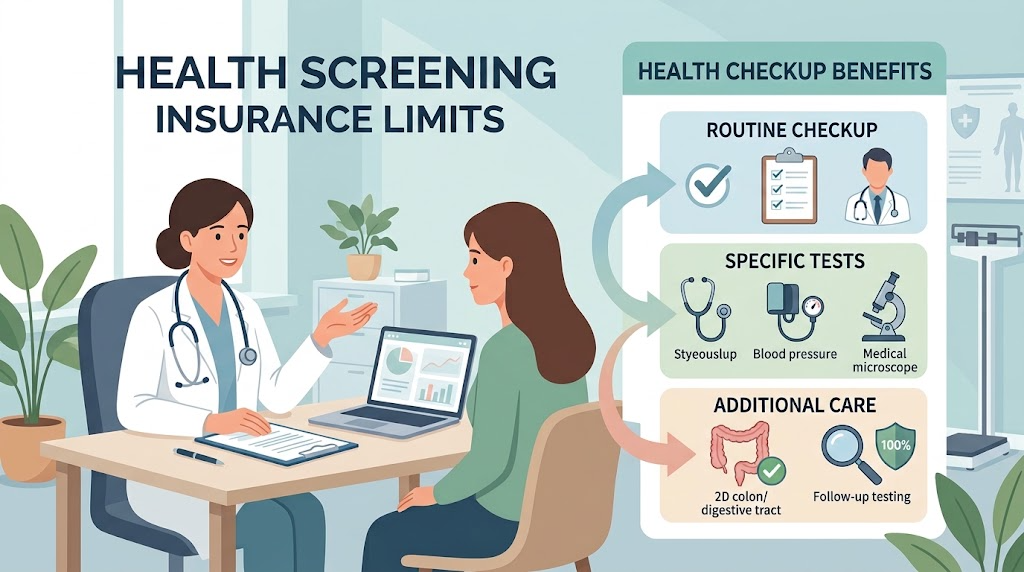
Cost Criteria Incurred for Additional Tests and Detailed Examinations
Basic national health checkups (general checkups and cancer screenings) are conducted with full coverage by the Corporation or a minor 10% co-payment; however, from the moment abnormal findings are detected during an examination or the examinee chooses additional tests, the medical billing calculation criteria change completely.
From this stage, costs are clearly divided into health insurance-covered ‘benefits,’ fully out-of-pocket ‘non-benefits,’ and ‘confirmation tests’ fully supported by the government on a one-time basis, making it essential to thoroughly understand these upfront criteria in advance.
- Upon Abnormal Findings in the Primary Checkup: Free Support Criteria for Secondary Confirmation Tests
If a person is suspected of having a major chronic disease such as hypertension or diabetes from general health checkup results, or if abnormalities are found in the primary colorectal cancer screening, the government fully supports (or partially covers under health benefits) the cost of the subsequent confirmation test on a one-time basis for early diagnosis and treatment.
- Hypertension and Diabetes Confirmation Tests
- Eligible Recipients: Examinees suspected of having hypertension (systolic 140 mmHg or higher, or diastolic 90 mmHg or higher) or diabetes (fasting blood glucose 126 mg/dL or higher) from the primary general health checkup results
- Support Scope: Full 100% waiver (0 KRW) of the co-payment for consultation fees and designated tests (blood pressure re-measurement, fasting blood glucose or HbA1c test, etc.) once
- Usage Deadline and Location: Applicable when visiting a nearby hospital or clinic (clinic-level medical institutions recommended) with the examination result sheet by January 31 of the following year
- Secondary Detailed Examination for Colorectal Cancer (Colonoscopy)
- Eligible Recipients: Those who received a ‘positive occult blood (blood mixed in stool)’ result from the primary fecal occult blood test (stool test)
- Support Scope: Full coverage of consultation fees and basic examination costs for the secondary colonoscopy
- Caution: If the primary stool test is skipped and a colonoscopy is performed directly, this support will not apply.
- Therapeutic Procedures During Endoscopy: Transition to Health Insurance Benefits and Private Health Insurance Criteria
When a lesion is detected during a standard endoscopy (gastroscopy/colonoscopy) and therapeutic management is performed, that treatment transitions from the ‘health checkup’ domain to ‘therapeutic health insurance medical care (benefit).’
- Biopsy and Helicobacter pylori Test
- If tissue is removed during a gastroscopy or colonoscopy due to suspected inflammation, ulcers, or tumors, health insurance benefits apply, adding a co-payment of around 20,000 to 40,000 KRW.
- Colon Polyp Removal (Polypectomy)
- When polyps found during the examination are removed immediately, it is classified as ‘surgery (procedure).’ Depending on the polyp size, count, and excision method (endoscopic mucosal resection, snare polypectomy, etc.), a statutory co-payment of around 80,000 to 200,000 KRW is incurred.
- Private Health Insurance (Indemnity Insurance) Claim Tips
- Health checkup costs for purely preventive purposes are not eligible for private health insurance compensation; however, biopsy fees, polyp removal costs, and clinical fees performed to treat diseases detected during the examination can be claimed through private health insurance. (Depending on the enrolled insurance policy, disease surgery special riders may provide additional payouts)
- Representative Optional Non-Benefit Test Items and Cost Guide
Tests individually added to the basic national checkup package when booking at a hospital are mostly 100% out-of-pocket (non-benefit) items. Because fees are set autonomously by each medical institution, it is essential to understand the approximate cost standards prior to testing to avoid unnecessary expenses.
| Classification | Major Test Items | Average Non-Benefit Cost Range | Characteristics and Health Insurance Applicability |
|---|---|---|---|
| Endoscopy Management | Sedation (conscious sedation) care fee | 50,000 – 100,000 KRW (per site) | The national checkup endoscopy test itself is free or requires 10%, but sedation anesthesia fees are paid entirely out-of-pocket |
| Ultrasound Examination | Abdominal (liver, gallbladder, pancreas, kidney)
Thyroid, breast, prostate ultrasound |
50,000 – 150,000 KRW (per site) | Processed as non-benefit when taken for purely preventive purposes without symptoms (benefit coverage possible if disease is suspected) |
| CT / MRI | Low-dose chest CT, brain CT
Brain MRA / MRI |
CT: 100,000 – 250,000 KRW
MRI: 400,000 – 800,000 KRW |
Elective scans are entirely out-of-pocket, except for national low-dose CT for high-risk lung cancer groups (10% co-payment) |
| Special Detailed Tests | Colonoscopy bowel prep tablets (OraPang, etc.)
Detailed cancer biomarker blood tests |
Tablets: 30,000 – 50,000 KRW
Blood: 50,000 – 150,000 KRW |
Conventional liquid bowel preps are supported for free, but tablet-type agents for ingestion convenience are non-benefit |
💡 Practical Tips to Prevent Incurring Additional Costs
- Confirm consent for polyp removal prior to endoscopy: When registering for a colonoscopy, you will fill out a consent form regarding “whether to remove polyps immediately upon discovery.” If you do not wish to have them removed on the same day, discussing this in advance with the medical staff will help control on-site additional costs.
- Screen excessive non-benefit packages: Ultrasound or blood test packages recommended by hospitals under names such as “special discount packages for national screening recipients” are optional, not mandatory. Selecting and adding only areas relevant to your personal medical history or family history is the wisest way to reduce wasted expenses.

Summary and Final Checklist to Not Miss Any Benefits
The national health checkup is the most fundamental medical welfare benefit that anyone enrolled in the National Health Insurance can enjoy. If you visit without familiarizing yourself with the support standards and procedures beforehand, unnecessary on-site expenses may arise, or you may miss out on benefits by exceeding the examination deadline.
Here is a checklist summarizing the core items that must be kept in mind, from checkup reservation to on-site settlement on the day of the exam.
- Mandatory Verification Steps Prior to Screening: Eligibility Inquiry and Examination Deadline
- Inquiry into Individual Eligibility and Applicable Cancer Types
- Access the National Health Insurance Service website (nhis.or.kr) or the mobile app ‘The Health Insurance’ and log in using a simple authentication certificate.
- Under the menu Health iN > My Health Management > Health Checkup Target Inquiry, you can verify in advance whether you are eligible for this year’s general checkup, which cancer types among the 6 major cancers have been assigned, and whether you qualify for ‘No co-payment’.
- Comply with the Examination Deadline (Until December 31)
- The validity period for receiving the national health checkup is until December 31 of the corresponding year.
- Typically, from October through the end of the year, examinees flood in at once, causing endoscopy reservations at major designated hospitals to completely book up or waiting times to surge sharply; therefore, completing the screening in the first half of the year (January to June) or at the latest before September is the safest approach.
- Postponement Application Tip for Those Who Missed the Previous Year
- If you were unable to undergo screening in the immediately preceding year due to a busy schedule, you can apply for ‘Registration of targets who missed the previous year’s examination’ through a Corporation branch office (1577-1000) or via the mobile app. Upon completing the application, you can continue to receive this year’s general health checkup with the same Corporation support benefits. (Employee subscribers can apply through their workplace department in charge)
- Pre-Check Items to Prevent Additional On-Site Payments on the Day of the Exam
- Advance Verification of Sedation Endoscopy and Non-Benefit Test Costs
- For upper and lower endoscopies, standard (non-sedated) exams are fully covered by the Corporation or supported with a 10% co-payment, but conscious sedation anesthesia fees (sedation care fees) are entirely non-benefit expenses around 50,000 to 100,000 KRW. Choose whether to undergo sedation when booking and inquire with the hospital in advance regarding exact additional charges.
- Mandatory Prior Submission of the Primary Colorectal Cancer Stool Test
- To receive colorectal cancer screening benefits normally, the stool collection kit must be submitted to the screening institution first. Only when a ‘positive’ result is received from the primary stool test will basic costs for the secondary colonoscopy be fully supported, so take care not to skip the kit submission procedure and proceed straight to a colonoscopy, which would result in non-benefit medical charges being billed.
- Set the Scope of Consent for Colon Polyp Removal and Biopsy
- If polyps discovered during an endoscopy are removed immediately, the procedure transitions to disease treatment (benefit), generating an additional co-payment of around 80,000 to 200,000 KRW. If you wish for same-day removal, prepare your payment method in advance, and obtain a medical certificate, detailed medical bill, and surgery confirmation letter (or procedure record) from the hospital administration desk for subsequent private health insurance claims.
- Screen Hospital-Recommended ‘Optional Packages’
- Expensive comprehensive precision screening packages recommended at the reception desk (brain MRI, whole-body CT, precision cancer genetic tests, etc.) should only be selectively added based on individual health conditions or family history to avoid excessive expenditures.
📋 Final Checklist for the Day of Examination at a Glance
| Inspection Item | Details to Confirm | Check |
|---|---|---|
| Fasting Compliance | Maintain fasting for at least 8 hours from 9:00 PM the night before the examination, including water, coffee, and food | [ ] |
| Carry Identification | Must carry Resident Registration Card, driver’s license, or mobile identification card (identity verification mandatory) | [ ] |
| Adjust Medications Taken | Users taking aspirin or anticoagulants must check with their attending physician beforehand regarding temporary discontinuation in preparation for endoscopic biopsy | [ ] |
| Complete Questionnaire in Advance | Complete the preliminary medical questionnaire in advance via the mobile The Health Insurance app or KakaoTalk notification | [ ] |
| Prepare Return Transportation | Driving yourself on the day is strictly prohibited when undergoing sedation endoscopy; use public transportation or be accompanied by a guardian | [ ] |
Korean version: 한국어로 읽기