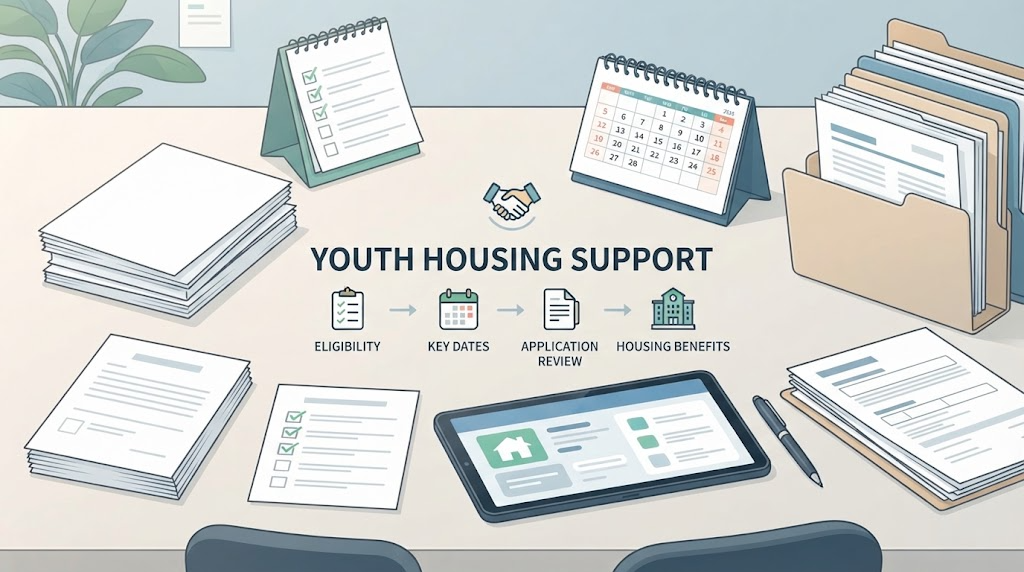
Introduction: Skyrocketing Housing Costs, Are Youth Housing Supports Different in Our Neighborhood?
[Main Text Draft]
Have you ever dreamed of independence while looking for a room, or sighed while checking your bank account on the monthly rent due date?
Skyrocketing jeonse and monthly rent prices and burdensome housing costs are the realities that weigh most heavily on the shoulders of early-career and young office workers. With nearly half of a monthly salary going toward housing costs, people naturally say that money slips away just by breathing, let alone building assets.
Did you know that besides standardized policies supported by the government, much more diverse and useful youth housing support benefits are hidden depending on your current place of residence (local government)? The monthly rent support provided by Seoul City differs, and housing welfare systems provided by Gyeonggi Province or local metropolitan cities are operated in various ways.
If you have been wondering, “What kind of youth housing benefits are available in our neighborhood?” or “Is there a subsidy I can receive separately?”, please pay attention!
In this post, we will compare at a glance the youth housing support criteria and application eligibility that you must carefully check by region, ranging from Seoul to Gyeonggi Province and local metropolitan cities. We hope you don’t miss out on customized benefits that fit your region and make the most of them!
If you need a draft of the next chapter or any additional content afterward, please feel free to let us know at any time!

Seoul Metropolitan Government Youth Housing Support Core Benefits
This is a draft of the second section of the Naver blog post, [2. Seoul Metropolitan Government Youth Housing Support Core Benefits]. It organizes representative housing support systems that young people living or working in Seoul can utilize most usefully.
[Main Text Draft]
Capital Seoul, where the largest number of young people reside! As such, the burden of housing costs is also among the highest in South Korea. To help stabilize the housing of young people, Seoul City is variously deploying unconventional and practical independent support projects separate from central government policies. Shall we check out the core housing support benefits that Seoul youth must check?
- Seoul Youth Monthly Rent Support
This is a representative project that directly supports a certain amount of monthly rent every month to ease the housing cost burden of homeless young people living in Seoul suffering from soaring monthly rent.
Support Target: Homeless young people aged 19 to 39 who are registered as residents in Seoul and live separately from their parents (must meet income and lease deposit/monthly rent criteria).
Key Benefits: You can receive monthly rent of a certain amount (applying a maximum monthly support limit) for the longest support period, which substantially lowers the fixed expenses of office workers and college students living on their own.
Core Point: Since applications are only accepted during fixed recruitment periods such as the first and second halves of every year, watching the Seoul Housing Portal notice and applying quickly during the application period determines success or failure.
- Station Area Youth Housing (Youth Safe Housing) and Jeonse Deposit Interest Support
This is a system that supplies affordable housing spaces in station areas with convenient transportation, or lends funds to young people burdened by interest in preparing jeonse or monthly rent deposits at rates cheaper than commercial banks.
Support Target: Homeless young people and newlyweds within Seoul who meet income and asset criteria.
Key Benefits:
Youth Safe Housing: Provides opportunities to move into newly built housing in station areas at rents cheaper than surrounding market prices.
Jeonse Deposit Interest Support: Receives a jeonse deposit loan through a bank recommended by Seoul City, and Seoul City supports part of the loan interest (or support by income bracket), drastically lowering the interest burden.
Core Point: If you are a young resident of Seoul who finds it burdensome to prepare a deposit or is looking for a clean, well-connected residence, it is recommended to prioritize Seoul City’s partnered products, which are much more advantageous than general commercial loans.
💡 Seoul Youth Housing Support Tip Checklist!
Since housing-related information and applications provided by Seoul City are all centrally managed through ‘Seoul Housing Portal (housing.seoul.go.kr)’, bookmarking it and checking for news frequently is the trick.
Since duplicate benefits with support projects from other local governments are often restricted, be sure to check whether duplication with other systems is possible before applying for Seoul City subsidies.
Gyeonggi Province and Metropolitan Area Youth Housing Support Benefits
This is a draft of the third section of the Naver blog post, [3. Gyeonggi Province and Metropolitan Area Youth Housing Support Benefits]. It organizes representative housing welfare systems that young people living in the metropolitan area, including Gyeonggi-do and Incheon, should not miss.
[Main Text Draft]
Places where countless young people reside and commute just as much as Seoul are the metropolitan areas such as Gyeonggi Province and Incheon. While choices may be relatively broader compared to Seoul, you can dramatically save on living expenses by well-utilizing high-value housing support systems tailored to regional characteristics. Let’s look at representative housing support benefits that metropolitan area youth should pay attention to.
- Gyeonggi Youth Housing Welfare Policy and Separate Payment of Housing Benefits
Gyeonggi Province is deploying various independence support and housing cost reduction policies for the housing stability of young people.
Support Target: Homeless young people and college students/job seekers residing within Gyeonggi Province (meeting income and age criteria).
Key Benefits:
Separate Payment of Youth Housing Benefits: By separately paying housing benefits in the name of the youth within low-income households, it helps young people living apart from their parents due to entering college or getting a job in other regions receive stable housing cost support.
Other Youth Housing Cost Support by Local Governments within the Province: Concurrent operation of youth monthly rent support or moving cost support projects independently operated by each city/county (e.g., Suwon, Seongnam, Goyang, etc.).
Core Point: Since Gyeonggi Province may have differences in support details or budget sizes by city/county, it is essential to carefully check youth welfare notices on the Gyeonggi job platform ‘Job-A-Ba’ or the website of your resident city/county office.
- Incheon Metropolitan City and Other Specialized Housing Support by Metropolitan Local Governments
Regions adjacent to the metropolitan area, including Incheon, are also actively deploying independent support projects for the influx of youth population and housing stability.
Support Target: Homeless young office workers and newlyweds with resident registration in the corresponding metropolitan area.
Key Benefits:
Youth monthly rent and jeonse deposit interest support by region such as Incheon: Cash-like support and loan interest preservation benefits to reduce the burden of initial housing costs for young people.
Preferential supply of public rental housing: Granting eligibility to move into youth-exclusive purchased rental and jeonse rental housing located at transportation hubs.
Core Point: Even if you have a job in Seoul, if you are a youth living in Gyeonggi Province or Incheon, you must knock on local government support projects based on your place of residence rather than Seoul City policies to receive benefits.
💡 Metropolitan Area Housing Support Tip Checklist!
If you are a Gyeonggi youth, you can view youth housing support projects for the city/county where you reside at a glance through ‘Gyeonggi Minwon 24’ or the ‘Job-A-Ba’ portal.
Since support eligibility is granted in most cases only when resident registration is completed, it is safe to finalize the fixed date and resident registration of your residence immediately after moving.

Local Metropolitan Cities and Provincial (Do) Area Youth Housing Support Benefits
This is a draft of the fourth section of the Naver blog post, [4. Local Metropolitan Cities and Provincial (Do) Area Youth Housing Support Benefits]. It organizes customized housing support benefits for young people residing or settling in local metropolitan cities and each provincial (Do) area.
[Main Text Draft]
Not only in the metropolitan area, but also in local metropolitan cities such as Busan, Daegu, Gwangju, and Daejeon, as well as each provincial (Do) area, unconventional housing support policies are being deployed to prevent the outflow of local youth and help stable settlement. Shall we check out local youth housing benefits that are just as valuable as those in the metropolitan area?
- Youth Housing Allowances and Rent Support by Major Metropolitan City
To stabilize the lives of young people active mainly around major metropolitan areas, each metropolitan city operates independent housing cost support projects.
Support Target: Homeless young people residing in the corresponding metropolitan cities such as Busan, Daegu, Gwangju, and Daejeon (meeting income criteria and standard median income requirements).
Key Benefits:
Payment of monthly rent support funds or rent subsidy allowances of a certain amount every month.
Housing safety net strengthening benefits such as support for guarantee fees for youth jeonse deposit return guarantee subscription.
Core Point: Since support ages (e.g., ages 18 to 39, etc.) or income criteria differ slightly by metropolitan city, detailed requirements must be checked through official youth platforms operated by each city (e.g., Busan Youth Platform, Daegu Youth Integrated Platform, etc.).
- Housing Benefits for Youth Relocating to Rural Areas and Young People Residing/Employed in Provincial (Do) Areas
To respond to the crisis of local extinction and vitalize local small and medium-sized enterprises, provincial (Do-level) areas provide even stronger settlement-support-type housing benefits.
Support Target: Young people residing in cities and counties within provinces (Do) or employed (or starting a business) in small and medium-sized enterprises.
Key Benefits:
Youth housing allowances in rural and small-to-medium cities: Housing cost subsidies in the nature of settlement support funds for young people residing in areas with relatively vulnerable housing infrastructure.
Rental housing support for young people returning to farming/rural areas and locally employed youth: Preferential supply of public purchased rental housing where they can reside at low rents and support for housing remodeling and repair costs.
Core Point: Since young people living in local areas often receive support by simultaneously linking central government projects and local government’s own projects, directly inquiring at the city/county office civil service room or local youth center is the surest information gathering method.
💡 Local Residence Housing Support Tip Checklist!
Since local government housing subsidies are often recruited for a limited time 1 to 2 times a year or experience early budget exhaustion, setting up notice notifications is essential.
In the case of young people who migrated from other regions to local areas, residence period requirements based on the resident registration date are often attached, so read the advance notice carefully.
Customized Application Methods by Residential Region & Essential Checklist
This is a draft of the fifth section of the Naver blog post, [5. Customized Application Methods by Residential Region & Essential Checklist]. It organizes how to find and apply for housing support systems that vary by region, along with an essential checklist.
[Main Text Draft]
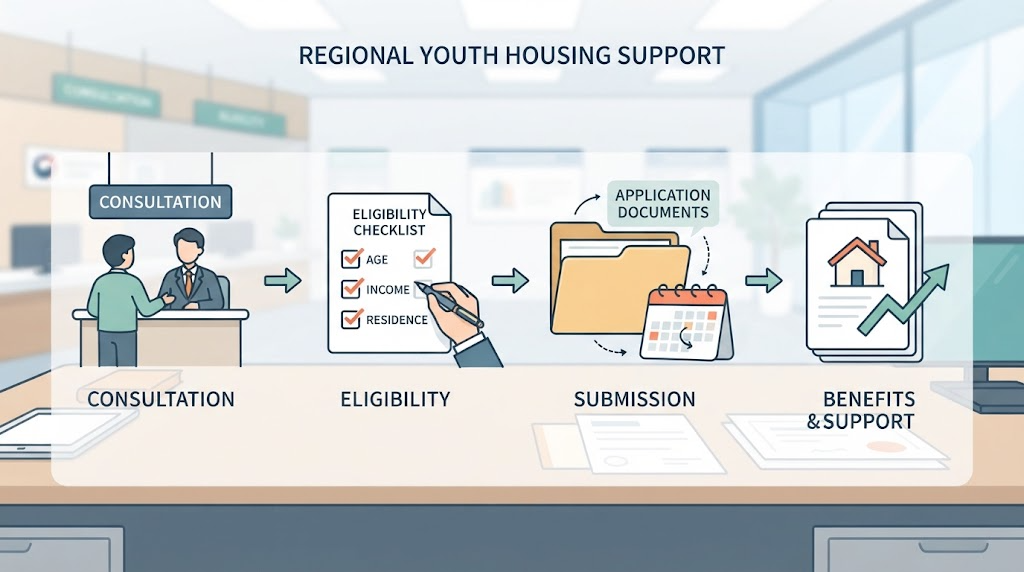
We have looked at various youth housing support benefits so far, ranging from Seoul to the metropolitan area, and local metropolitan cities and provincial (Do) areas. “Then where should I find the benefits that fit my region and how should I apply?” We have organized customized platforms and an essential checklist for a successful application!
- Customized Application Platforms by Region at a Glance
| Residential Region | Main Utilization Platforms and Sites | Core Inquiry Method |
|---|---|---|
| Central Government / Common | Bokjiro (bokjiro.go.kr) / Subsidies 24 | Nationwide integrated housing subsidies and customized inquiry |
| Seoul Metropolitan City | Seoul Housing Portal (housing.seoul.go.kr) | Check notices for Seoul youth monthly rent, jeonse deposit support, and youth safe housing |
| Gyeonggi Province / Metropolitan Area | Gyeonggi Minwon 24 / Job-A-Ba | View youth housing costs and housing welfare policies for each city/county within the province at a glance |
| Local Metropolitan Cities & Provinces | Youth integrated platforms by region (e.g., Busan Youth Platform, etc.) | Access local government websites and youth-exclusive pages of jurisdictions, cities, counties, and districts |
- 3 Essential Checklists to Verify When Applying for Housing Support
- First, check whether your ‘residence on your resident registration’ matches your actual residence!
- Most local government support projects grant eligibility only if you are registered as a resident in the corresponding region as of the application date. It is safe to receive your fixed date and complete your resident registration immediately after moving.
- Second, carefully examine income and asset criteria (including whether the original household is included)!
- In many cases, depending on the support project, not only the young person’s own income is considered, but also the income and asset criteria of the entire household including parents. Calculate in advance the standard median income percentage specified in the notice.
- Third, check restrictions on duplicate benefits between similar housing support projects!
- Projects with similar characteristics, such as state-supported monthly rent and local government’s own monthly rent support, are in most cases ineligible for duplicate benefits. You must select the system with the largest support amount and most advantageous conditions for your situation and apply intensively.
This is steadily completing the drafting of the Naver blog post body! If you need a draft for the final chapter [6. Closing Remarks], English SEO metadata, HTML conversion for blog publication, or related AI image generation prompts, please feel free to let us know at any time.

Closing Remarks: Pack a Solid Bundle with Customized Housing Support for Your Region!
This is a draft of the final closing course for the Naver blog post, [6. Closing Remarks: Pack a Solid Bundle with Customized Housing Support for Your Region!]. It is written to convey warm encouragement to readers and inspire action.
[Main Text Draft]
So far, we have carefully examined the youth housing support benefits and application methods that you must look after according to where you live, ranging from Seoul to Gyeonggi Province, local metropolitan cities, and provincial (Do) areas.
While worries about preparing monthly rent and jeonse deposits every month are the burdens that weigh heaviest on young people’s minds, it turns out that various practical housing stability programs await you in each local government more than you might think. Rather than giving up thinking, “Would it really be me?”, why not start with a light inquiry through the customized platforms for each region introduced today and ‘Subsidies 24’?
Small interest and footwork will gather to become a solid stepping stone that eases your precious housing cost burden and prepares you for a better tomorrow.
We hope today’s post was a small help in setting up your nest and saving on living expenses. If it was useful, please leave a neighbor add, sympathy, and comments! We will come back with more substantial and practical living information next time. Thank you!
If you need English SEO metadata (descriptions and keywords) related to the completed blog body, HTML conversion for Naver blog publication, or AI image generation prompts suited for the post, please feel free to let us know anytime!
Korean version: 한국어로 읽기