
Why Should We Compare Youth Monthly Rent Support by Local Government?
To alleviate housing costs, which are one of the biggest fixed expenses for youth, not only the central government but also various local autonomous governments are operating diverse monthly rent support projects. However, even under the same name of ‘youth monthly rent support’, there are considerable differences in support amounts, income criteria, age limits, and selection methods depending on the region of residence.
Many young people know that government or local government support systems exist, but they often miss out on more advantageous projects for themselves because they do not carefully compare “what extra benefits can I receive where I live?” In particular, since duplicate benefits between central government support projects and local government’s own projects are often restricted, it is essential to accurately weigh the pros and cons according to the place of residence criteria.
In this article, we will compare the differences in youth monthly rent support funds by major local government at a glance, and look at how to wisely find and apply for the most practical benefits in your place of residence.
Comparison of Youth Monthly Rent Support Systems in Seoul and the Metropolitan Area
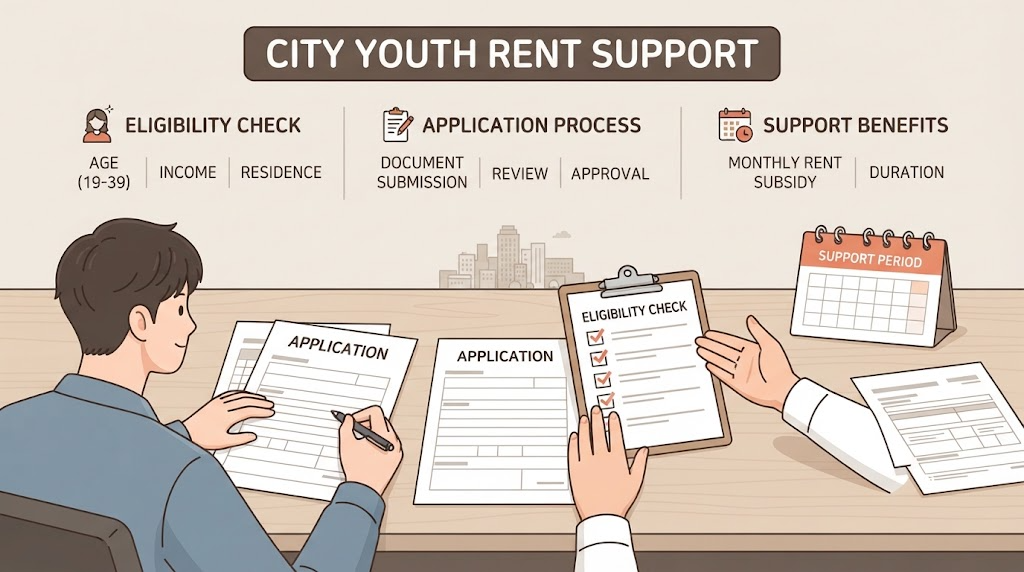
The metropolitan area (Seoul, Gyeonggi, Incheon), where South Korea’s population and youth demographic are most densely concentrated, is the region with relatively the highest housing cost burden. Accordingly, each local government operates independent yet bold monthly rent support systems for the housing stability of youth. Let’s compare the major monthly rent support systems of Seoul, Gyeonggi Province, and Incheon Metropolitan City.
① Seoul Metropolitan Government: Seoul Youth Monthly Rent Support
Seoul City is actively deploying its own monthly rent support project to lower the housing entry barrier for youth and reduce the perceived burden of housing costs.
Target Eligibility: Homeless youth registered as residents and actually residing in Seoul (Ages 19 to 39)
Income Criteria: 150% or less of standard median income (detailed reflection of the youth’s own criteria or household income criteria, rather than the original household criteria)
Support Amount: Support of up to 200,000 won per month (up to 10 months, total maximum limit of 2 million won)
Major Features: The biggest advantage is that by applying a relatively broad income criterion of 150% or less of the standard median income, early-career workers or employed youth with a little income can also relatively easily receive benefits.
② Gyeonggi Province: Youth Basic Welfare Linkage and Monthly Rent Support by City/County
Gyeonggi Province organically links practical housing cost support policies for each basic local government (city/county) along with the youth basic income stance at the metropolitan government level.
Target Eligibility: Homeless youth residing within Gyeonggi Province (Ages 19 to 39, detailed ages may vary by local government)
Income and Housing Criteria: Residents of housing units with 120% to 150% or less of standard median income and a certain amount or less of rental deposit (jeonse/monthly rent)
Support Amount: Cash payment of around 100,000 won to 200,000 won per month for a certain period (e.g., 10 to 12 months) according to local government budget and own ordinances
Major Features: Since Gyeonggi Province concurrently operates independent ‘youth monthly rent support’ or ‘jeonse/monthly rent deposit interest support’ projects by city/county (e.g., Seongnam, Suwon, Goyang, etc.), you must check the detailed public announcement of the city or county where you reside.
③ Incheon Metropolitan City: Incheon-style Youth Monthly Rent Support
Incheon City deploys regional-customized projects to strongly protect youth groups placed in the blind spots of central government support or in relative need of housing support within the metropolitan area.
Target Eligibility: Single-household homeless youth with addresses in Incheon Metropolitan City (Ages 19 to 39)
Income Criteria: 150% or less of standard median income and residing in housing meeting deposit and monthly rent conversion value criteria
Support Amount: Support of up to 200,000 won per month (based on actual monthly rent paid within the annual maximum support limit)
Major Features: While applying a median income criterion similar to that of Seoul City, it serves as a practical housing cost lifeline for youth who meet the residency period and homeless requirements within Incheon.

Comparison of Youth Monthly Rent Support Benefits in Major Metropolitan Cities (Busan, Daegu, etc.)
Outside the metropolitan area, major metropolitan cities are also operating diverse monthly rent support systems from various angles to prevent the outflow of local talent and help the stable regional settlement of youth. Let’s compare the youth monthly rent support benefits of Busan Metropolitan City and Daegu Metropolitan City, which are representative metropolitan cities.
① Busan Metropolitan City: Busan Youth Monthly Rent Support Project
Busan City, a center of marine tourism and industry, is implementing practical cash support measures to ease the housing cost burden of youth residing in the region.
Target Eligibility: Single-household homeless youth with addresses in Busan and actually residing there (Ages 18 to 34 or younger)
Income Criteria: 150% or less of standard median income (provided, however, that detailed screening criteria for the youth’s own and original household income are applied)
Housing Criteria: Residing in housing with a rental deposit of less than 100 million won and monthly rent of 600,000 won or less (support may be excluded if exceeded)
Support Amount: Support of up to 200,000 won per month for up to 10 months (total maximum limit of 2 million won)
Major Features: It directly lowers the perceived housing cost burden for single-household youth residing within Busan City and has effectiveness in supporting a certain amount without differentiation by income bracket.
② Daegu Metropolitan City: Daegu Youth Monthly Rent Support
Daegu City, a center of education and culture with a high proportion of the youth population, is deploying customized monthly rent support policies to promote the housing stability of youth.
Target Eligibility: Homeless youth registered as residents in Daegu Metropolitan City (Ages 19 to 39 or younger)
Income Criteria: 150% or less of standard median income (need to check youth’s own income criteria or household income criteria)
Housing Criteria: Housing located in Daegu with a rental deposit of 100 million won or less and monthly rent of 600,000 won or less (exceptions can be recognized even if monthly rent exceeds 600,000 won if deposit conversion value criteria are met)
Support Amount: Support of up to 200,000 won per month (paid within annual support rounds and limits)
Major Features: Embracing a relatively broad age group up to age 39, it provides practical benefits tailored to studio and officetel lease environments where university students or early-career workers mainly reside.
Common Checkpoints and Precautions When Applying for Support Projects by Local Government
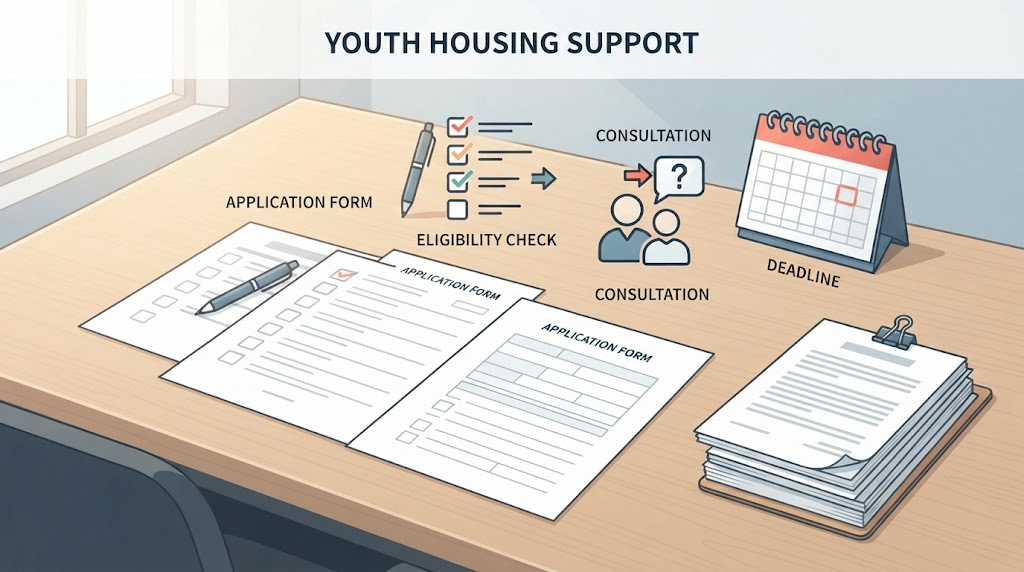
Although youth monthly rent support projects by local government work to your advantage in terms of benefits and conditions depending on your region of residence, there are common precautions that are easy to miss during the actual application stage. We have summarized the core checklist that must be verified before applying for support funds.
① Accurate Residence and Move-in Report Requirements
Matching Address on Resident Registration: Most local government support projects require that you must be registered as a resident and actually residing in the corresponding city, county, or district as of the application date. If you have transferred in from another region, you must check whether you have met the minimum residency period required by each local government (e.g., mandatory completion of move-in report, etc.).
Lease Agreement Name: The lease agreement must be concluded in the name of the youth receiving support themselves, and it can only be recognized when a fixed date and move-in report have been normally completed.
② Restriction on Duplicate Benefits with Central Government Support Projects
Local government’s own monthly rent support projects are in most cases strictly prohibited from duplicate receipt with cash-like housing support projects of a similar nature implemented by the central government, such as the ‘Special Youth Monthly Rent Support’ or housing benefits.
If you are already receiving government support funds, you must carefully weigh in advance whether duplicate application for the local government project is possible or which system is more advantageous to you (comparing support amounts and duration) before making a choice.
③ Housing Ownership Status and Household Member Income Calculation Criteria
Homeless Requirements: In many cases, not only the applicant themselves but all household members living together on the resident registration must be homeless. The housing ownership status of parents or household members can be a cause of disqualification during screening.
Checking Income and Asset Criteria: When calculating criteria such as 150% or less of standard median income, income is often converted based on health insurance premium payment amounts. If there are recent income fluctuations or health insurance premium adjustment details, it is safe to check them in advance.
④ Compliance with Budget-Depletion-Type Projects and Reception Periods
Since local government projects select recipients on a first-come, first-served basis or through screening within a limited budget, missing the timing when public notices are posted can result in early closing.
You must frequently check the notices on each city, county, or district office website or youth policy integrated platforms (e.g., Seoul Youth Mongttang Information Tong, Gyeonggi Civil Petition 24, etc.) and submit mandatory documents (lease agreement, monthly rent payment proof, bankbook copy, etc.) without omission within the deadline.

Conclusion: Wisely Finding the Most Advantageous Support Fund for My Residence
So far, we have carefully examined the main characteristics and differences of youth monthly rent support systems by local government ranging from Seoul, Gyeonggi, and Incheon to major metropolitan cities (Busan, Daegu), as well as common matters to watch out for when applying.
The perceived benefits of youth housing support vary completely depending on your region of residence, income criteria, and whether it is linked with central government projects. Systems that you might have absentmindedly passed by thinking, “Were there such support funds in our neighborhood too?”, can actually be precious opportunities that can significantly lighten your monthly fixed expense burden.
Based on what we’ve organized today, visit the youth policy page of the city, county, or district office where you currently live or regional integrated platforms (e.g., Seoul Youth Mongttang Information Tong, Gyeonggi Civil Petition 24, etc.). By wisely finding and applying for the support fund that is most advantageous and reliable for you, we sincerely cheer for you to reduce your housing cost burden and firmly build the stepping stone for asset formation for the future!
Korean version: 한국어로 읽기