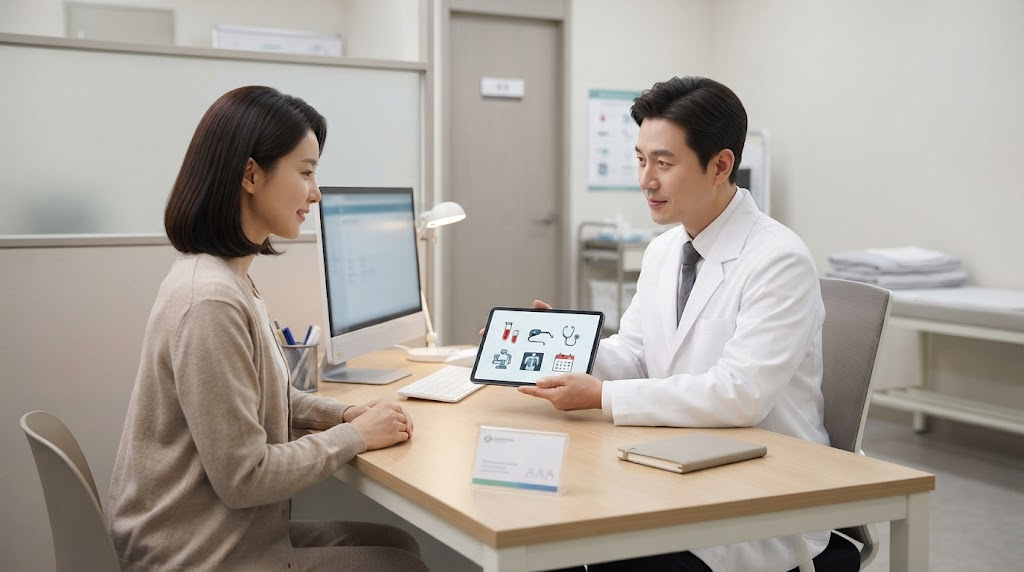
Introduction: The Annual Health Screening, Should It Be Taken Separately from Cancer Screening?
Every year around the end or the beginning of the year, health screening guide mailings from the National Health Insurance Service arrive without fail, and everyone has probably received them at least once. Many of you have likely wondered, “It says I am a target for this year’s general health screening, but it also says I am a target for cancer screening?”
Many people mistakenly think that general health screenings and cancer screenings are separate examinations that must be taken on different days. Because of this, it is very common that they have to visit the hospital twice, or miss the screening period amidst busy schedules and end up skipping the year entirely.
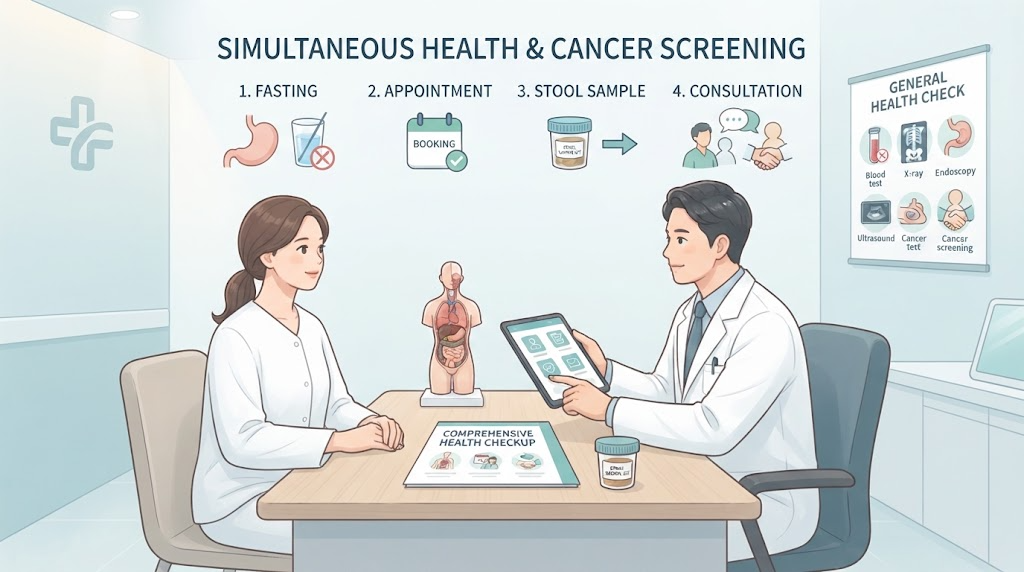
To tell you the conclusion first, if you fall under the target year, the National Health Insurance general health screening and national cancer screening do not need to be taken separately; you can receive them ‘simultaneously’ all at once.
In particular, major cancer screenings such as stomach cancer, colorectal cancer, liver cancer, breast cancer, and cervical cancer are the most decisive examinations to early detect cancer, which is the number one cause of death in South Korea, and increase the cure rate. When you visit the hospital to receive a general health screening and apply for the cancer screening items applicable to you at the same time, you can efficiently process the route from reception and consultation to blood collection, endoscopy, and imaging all in one go.
Then, how can you accurately check whether you are a target for health and cancer screenings this year in just 1 minute, and what should you prepare in advance to receive these two important tests simultaneously and perfectly in a single day? Let’s take a detailed look one by one from now on.
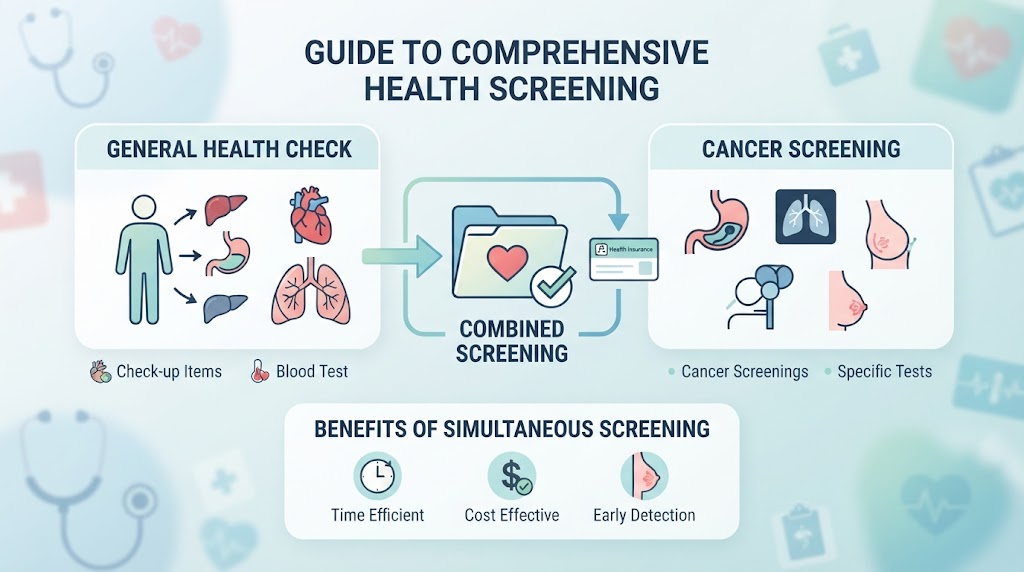
How to Check This Year’s Health and Cancer Screening Eligibility in Just 1 Minute
Before receiving state-supported health and cancer screenings, the very first essential step you need to check is to inquire whether “I am indeed a screening target this year.” General health screenings provided by the National Health Insurance are designated based on the birth year (odd or even years), and cancer screenings are also determined according to age-based criteria, so it is safe to check in advance.
We guide you through 3 ways to perfectly check whether you are a target for health and cancer screenings in just 1 minute using a smartphone or PC.
- Using the Mobile App (‘The Health Insurance’ App) — The Easiest Method
This is the easiest and fastest way to check whether you are a target anytime, anywhere as long as you have a smartphone.
App Installation and Login: Download and launch the official ‘The Health Insurance’ app from your smartphone app store, then log in using simple authentication (financial certificate, Naver certificate, etc.).
Menu Navigation: Select the [Health Screening] ➔ [Health Screening Eligibility Inquiry] (or Check Screening Eligibility) menu from the home screen or the full menu.
Result Verification: You can see at a glance whether you are a target for this year’s general health screening, along with the target items for cancer screenings (stomach cancer, colorectal cancer, liver cancer, breast cancer, cervical cancer, etc.) corresponding to your age.
- Using the PC Homepage (Official National Health Insurance Homepage)
This is a useful method when you want to carefully check detailed screening items and past history on a larger screen.
Homepage Access and Login: Access the official National Health Insurance homepage (nhis.or.kr), click the login button at the top, and log in using a joint certificate or similar method.
Inquiry Path: Click in order of [Civil Petitions Here] ➔ [Health Screening] ➔ [Health Screening Eligibility Inquiry] among the top menus.
Detailed History Check: You can check not only your eligibility for general and cancer screenings this year, but also the results history of health screenings you received in the past, making it very useful.
- Inquiring by Phone with the National Health Insurance Customer Center
This is the most certain and convenient method if you are not accustomed to using the internet or smartphone apps.
Customer Center Connection: Call the National Health Insurance Service Customer Center (1577-1000).
Guidance after Identity Verification: After undergoing identity verification (such as your [RRN Redacted]) with the counselor, you can immediately receive guidance on whether you are a target for this year’s general health screening and cancer screenings.
💡 Tips for Checking This Year’s Health Screening Targets
Check Based on Birth Year: Basically, for general health screenings, those born in odd-numbered years are targets in odd-numbered years, and those born in even-numbered years are targets in even-numbered years. (※ Office workers are targets every year, and non-office workers are targets once every 2 years)
Cancer Screening Age Criteria: Cancer screenings have different target ages for each item. (e.g., stomach and breast cancers for women aged 40 and older, cervical cancer for women aged 20 and older, etc.) You must make sure to check together whether cancer screenings corresponding to your age are included this year.
💡 Checkpoint
Once both general and cancer screening eligibility have been confirmed through the target inquiry, the next step is the specific application and reservation procedure to efficiently receive these two examinations simultaneously in a single day. We will look into this in detail in the next chapter.
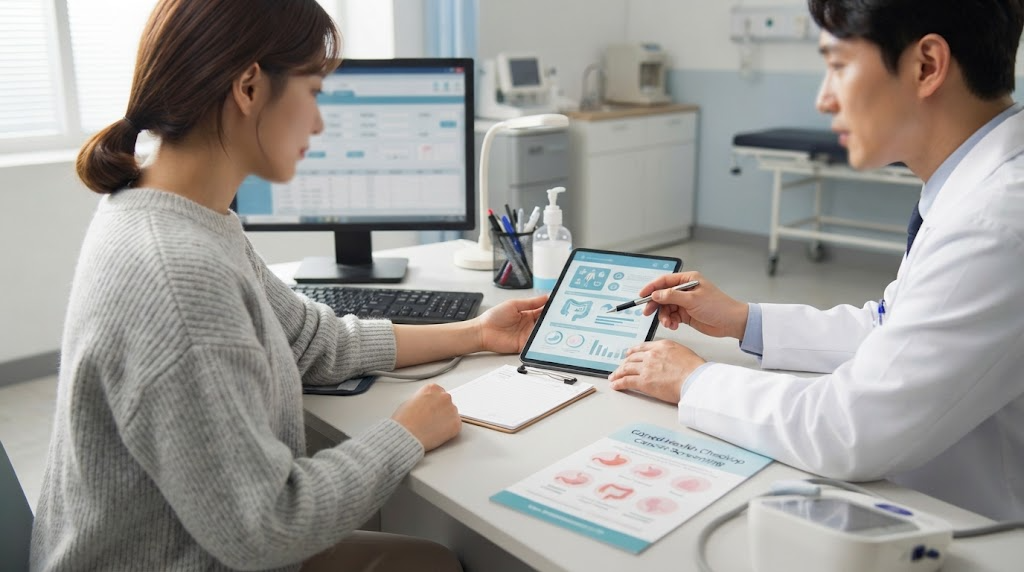
3 Methods and Procedures for Receiving General Health Screenings and Cancer Screenings ‘Simultaneously’
If you are a target for the National Health Insurance general health screening and at the same time a target for the national cancer screening, it is most efficient to avoid the hassle of visiting the hospital twice and finish all examinations in a single day. We guide you through 3 methods and practical procedures to perfectly complete both screenings ‘simultaneously’.
- Advance Reservation Stage: Check National Health Insurance Designated Screening Institutions and Book Simultaneously
General health screenings and cancer screenings cannot be received simultaneously at all hospitals.
Check Designated Hospitals: You must make sure through the National Health Insurance Service homepage or ‘The Health Insurance’ app to check whether a nearby designated institution can perform both general health screenings and your desired cancer screening items (stomach cancer, colorectal cancer, breast cancer, etc.) by using ‘Find Screening Institution’.
Apply Simultaneously When Booking by Phone: When you call or visit the hospital to make a reservation, you must clearly state, “I am a target for this year’s general health screening, and I would like to receive stomach cancer (endoscopy) and colorectal cancer (fecal) screenings simultaneously,” so that the hospital side can coordinate the schedules for those test items all at once.
- Questionnaire Completion: Check Electronic Questionnaires or On-Site Questionnaires Without Omission
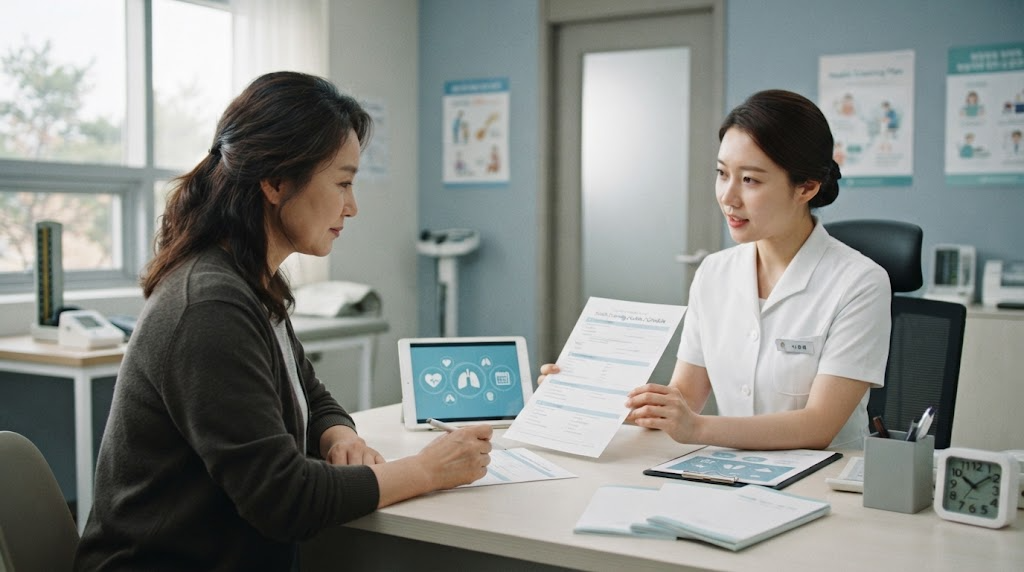
You will complete questionnaires on the day of the screening or through a mobile link sent in advance by the hospital.
Prevent Omission by Item: In addition to the questionnaire for general health screenings, questionnaire items related to cancer screenings (medical history, family history, smoking history, etc.) are also included together.
Meticulous Recording: Especially since cancer screenings can be linked to precision tests depending on symptoms or family history, you must accurately check your health status and questionnaire items without falsification or omission so that simultaneous screenings proceed without setbacks.
- Optimizing Examination Routes on the Day: Reconfirming Simultaneous Progress at Reception and Counters
When you arrive at the hospital on the day of the screening and visit the reception counter, it is important to finally confirm whether both screenings are proceeding simultaneously.
Re-notifying at Reception: When you take a number ticket and check in at the counter, let the staff know once more by saying, “I have reserved to receive my national cancer screening (e.g., gastric endoscopy, cervical cancer test, etc.) simultaneously with my general health screening today.”
Efficient Examination Route: Depending on the examination order guided at reception, you can adjust waiting times for general health screening items such as blood tests, urinalysis, and chest X-rays along with cancer screening items (endoscopy, mammography, etc.) to complete your exams along the most efficient route.
💡 Useful Tip to Keep in Mind During Simultaneous Screenings
Advance Preparation of Colorectal Cancer Screening Kit: If a colorectal cancer screening (fecal occult blood test) is included, you must receive a stool collection container from the hospital in advance and make sure to bring the stool sample collected on the morning of the screening (or the previous day) so that you can finish all screenings in a single day.
💡 Checkpoint
Thorough advance reservations and smooth communication on the day are essential to receive general health screenings and cancer screenings simultaneously. In the next chapter, we will go over 4 key precautions that you must never miss when proceeding with both screenings at once.
4 Key Precautions Never to Be Missed During Simultaneous Screenings
If you have booked to proceed with your general health screening and national cancer screening simultaneously in a single day, you have made a very wise choice that can greatly save time and effort. However, because you are receiving two or more exams packed together at once, cases frequently occur where people fail to receive some exams on the day or receive a retest notice due to minor carelessness.
We carefully go over 4 key precautions that you must thoroughly understand for a successful and perfect simultaneous screening.
- Strict Adherence to Fasting and Water Intake Criteria (When Proceeding with Gastric Endoscopy, Abdominal Ultrasound, and Blood Tests Simultaneously)
If blood tests and urinalysis for the general health screening and a gastric endoscopy (or abdominal ultrasound) for the cancer screening are scheduled at the same time, maintaining a fasting state is most important.
Fasting Time: Strictly prohibit the intake of all foods, including water, gum, candy, and cigarettes, from 9:00 PM (or 10:00 PM) on the night before the screening.
Caution Regarding Water Intake: If a gastric endoscopy is included, you must visit the hospital without drinking even a single sip of water in the morning to secure a clear view inside the stomach and prevent safety accidents.
- Advance Preparation of the Fecal (Stool) Sample Kit for Colorectal Cancer Screening
If colorectal cancer screening (fecal occult blood test) is included in your national cancer screening items, this is an essential step you must take care of.
Advance Receipt and Collection: You must collect a small amount of a stool sample in a stool collection container received from the hospital in advance on the night before or the morning of the screening.
Bringing on the Day: You must submit the collected stool sample to the hospital reception desk on the day of the screening to wrap up the general health screening and colorectal cancer screening all at once. If you omit the sample, the hassle arises of having to visit the hospital separately again just for the colorectal cancer test.
- Checking Menstrual Period and Pregnancy Status During Women’s Cancer Screenings (Breast and Cervical Cancer)
For female examinees, breast and cervical cancer screenings are conducted simultaneously along with the general health screening, so checking your physical condition is essential.
Avoiding the Menstrual Period: During menstruation, it is difficult to obtain accurate cell collection during a cervical cancer test, and errors can occur in urinalysis (hematuria, etc.) results, so it is safe to receive the screening 2 to 3 days after menstruation has completely ended.
Advance Notification of Pregnancy Possibility: Radiation tests such as chest X-rays, mammography, and CT scans can have a fatal impact on the fetus, so if you are pregnant or there is even a slight possibility of pregnancy, you must inform the medical staff in advance at reception so that the relevant radiation tests can be safely excluded or postponed.
- Familiarizing with Chronic Disease Medication Rules (Blood Pressure Medication vs. Diabetes Medication)
If you are regularly taking medication for chronic diseases such as hypertension or diabetes, you are prone to experiencing confusion on the day of simultaneous screenings.
Blood Pressure Medication: The rule of thumb is to take it as usual on the morning of the screening with a minimum amount of water. If you skip your blood pressure medication and go to the hospital, your blood pressure may rise, resulting in the cancellation of today’s endoscopy or blood tests.
Diabetes Medication / Insulin: Taking diabetes medication or administering insulin in a fasting state can cause a serious hypoglycemia shock, so you must never take diabetes medication on the morning of the screening, but instead bring it to the hospital and take it with a meal after the completion of the tests.
💡 Checkpoint
Receiving general health screenings and cancer screenings simultaneously is the best way to maximize time efficiency, but it must be backed by thorough advance preparation. Please carefully look after the 4 precautions shared today to successfully complete your perfect simultaneous screening without a wasted trip.
Conclusion: Perfectly Preparing My Health with an Efficient Health Screening Completed in a Single Day
So far, starting from how to check this year’s health screening eligibility, we have examined in detail 3 methods and practical procedures for finishing general health screenings and national cancer screenings ‘simultaneously’ with a single hospital visit, along with 4 key precautions that you must never miss when proceeding with both screenings at once.
A health screening is not simply a troublesome annual routine event that must be fulfilled obligatorily at the hospital, but the most certain and powerful shield to early capture subtle abnormal signs sent by our bodies and prevent major diseases. However, if you schedule general and cancer screenings on separate dates amidst a busy daily life, or miss out on fasting times and preparing the colorectal cancer stool kit so that you end up visiting the hospital multiple times, you will end up wasting precious time and energy.
Please engrave just the core points of today’s content in your heart once again.
📝 Core Summary for Successful Simultaneous Health Screenings
- Essential Advance Eligibility Check: Check in advance whether you qualify as a target for both general health screenings and cancer screenings (stomach cancer, colorectal cancer, etc.) this year through the ‘The Health Insurance’ app or the National Health Insurance homepage.
- Simultaneous Reservation and Re-notification at Reception: Clearly notify when booking a designated screening institution and at the reception desk on the day of the screening that “general health screenings and cancer screenings are proceeding simultaneously” to efficiently optimize your test routes.
- Thorough Advance Preparation: Prevent wasted trips by meticulously taking care of strict adherence to fasting times for gastric endoscopy and blood tests, advance collection of stool samples for colorectal cancer screening, avoiding the menstrual period and notifying pregnancy status for women’s cancer screenings, and rules for taking chronic disease medications.
There is nothing more valuable than listening to the minor signals your body sends and protecting your health even amidst a busy daily life through smart advance preparation and simultaneous screenings. Based on the guide provided today, I hope you successfully complete your health and cancer screenings for this year and firmly safeguard a vibrant and healthy daily life.
Korean version: 한국어로 읽기