
Introduction: What Differs Between Health Screenings and Health Insurance Depending on Subscriber Type?
National health checks that return every year or periodically, and health insurance premiums that are steadily deducted from our bank accounts every month.
We all receive health insurance benefits as citizens of the Republic of Korea, but it is rare for us to accurately know the criteria by which we become eligible for health screenings and how our insurance premiums are calculated. In particular, it is easy to overlook the fact that the regulations and procedures applied subtly differ depending on the subscriber type of yourself and your family.
“My office-worker friend says the company takes care of it, but what should I do as a freelancer or business owner?” You must have wondered about this at least once.
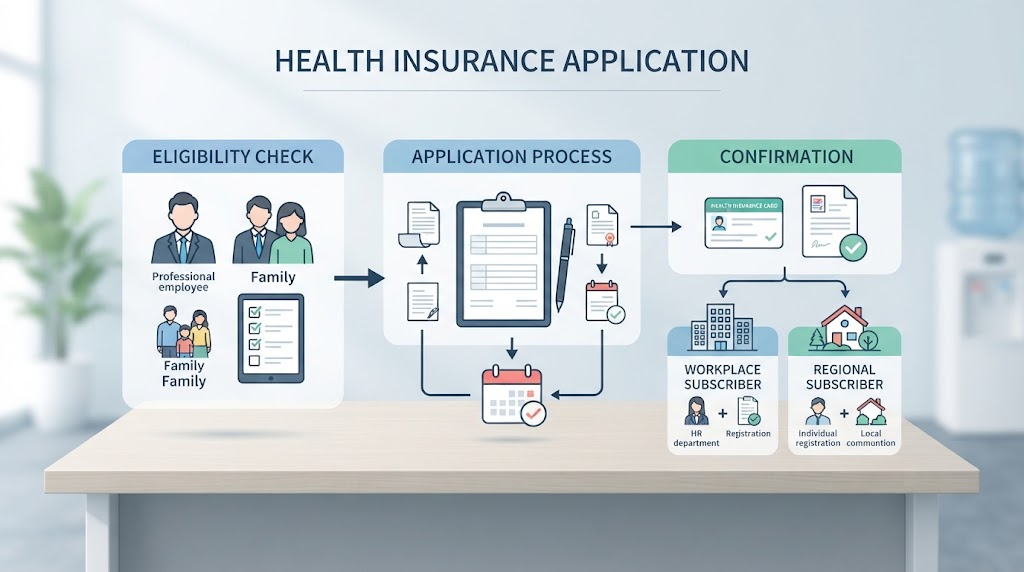
The National Health Insurance system is broadly divided into two major pillars: “employee subscribers” and “local subscribers.” Accordingly, there are considerable differences ranging from the method of selecting health screening targets to the insurance premium imposition system, application, and change procedures.
Employee Subscriber: Based on stable income (monthly remuneration), the company and the individual share insurance premiums fifty-fifty, and qualification management and screening guidance are systematically carried out through the workplace.
Local Subscriber: Imposed on a household basis by comprehensively evaluating income, property (land, housing, etc.), automobiles, etc., and individuals must carefully take care of qualification changes or payment status themselves.
If you do not properly understand the characteristics of each subscriber type, you may suffer the misfortune of paying unnecessary extra insurance premiums or missing out on precious health screening periods.
Then, what types do you and your family fall under, and by what criteria should each use health screenings and the insurance system? In the next part, let’s look into the core details for employee subscribers and local subscribers one by one in detail.
Core Guide to Health Screening and Insurance Application for Employee Subscribers
This is a Naver blog post draft on the Core Guide to Health Screening and Insurance Application for Employee Subscribers. We have clearly and easily organized the screening criteria and core points of insurance qualification management that office workers must know.
“Employee subscribers” working while affiliated with a workplace have many relatively convenient aspects because health insurance qualification management and four major public insurances reporting are handled through the company. However, for that very reason, it is easy to miss one’s screening cycle or qualification change details.
For employee subscribers, we outline the core guides for health screening eligibility criteria and insurance application and management that you must know.
- Health Screening Eligibility Criteria for Employee Subscribers (Office Workers vs. Non-Office Workers)
Health screenings for employee subscribers are applied with different cycles depending on the work type and job duties.
General health screening cycle:
Non-office workers: They become eligible every year (every 1 year) without exception. Field workers and production workers are regulated to receive regular screenings every year considering physical activity and the possibility of exposure to hazardous factors.
Office workers: They become eligible once every 2 years (alternating depending on whether the birth year is an even-numbered or odd-numbered year). (Example: For those born in even-numbered years based on 2026)
Major screening items: Questionnaires and medical examinations, blood pressure measurements, blood tests (fasting blood sugar, liver function, cholesterol, etc.), chest X-rays (tuberculosis test), and oral examinations are provided as basics, and cancer screenings (stomach cancer, colorectal cancer, breast cancer, cervical cancer, etc.) are added by age group and gender.
- Insurance Qualification Acquisition, Change, and Application Procedures Through the Company
Health insurance for employee subscribers is structured to be reported to the Corporation through the human resources and general affairs department of the workplace (company) rather than through individual applications.
Qualification acquisition report: Based on the date of employment, the company proceeds with the employee subscriber qualification acquisition report to the National Health Insurance Service. At this time, health insurance premiums are calculated based on monthly remuneration (salary).
Application for dependent registration: If there are a spouse, lineal ascendants (parents), or lineal descendants (children) who maintain a livelihood supported by the employee subscriber, you can register them as dependents to ease the burden of local insurance premiums. You must satisfy income and property criteria (annual income of 20 million won or less, etc.) and submit supporting documents such as a family relationship certificate to the company person in charge to apply.
Resignation and qualification change: When resigning, the company reports the withdrawal of the employee subscriber, and afterward, you are automatically converted to a “local subscriber” or can choose voluntary continued coverage (a system that maintains the employee insurance premium level for up to 3 years after retirement). Since a qualification change notice is sent to your address, you must check it carefully.
- Practical Tips to Keep in Mind During Employee Subscriber Health Screenings
Notification of screening targets to the company: Since the National Health Insurance Service notifies the company of the list of eligible persons, you can check whether you are a target this year through the HR team or internal announcements.
Checking whether official leave (paid leave) can be utilized: If you check in advance company regulations on whether you can be guaranteed the necessary time for health screenings according to the Occupational Safety and Health Act and the Labor Standards Act and coordinate your schedule, you can receive your screening leisurely.
If you are an employee subscriber, the company sets the basic framework, but you must personally take care of detailed screening item reservations or dependent qualification requirements so that there are no disadvantages.
Then, on the contrary, for “local subscribers” who must manage everything themselves rather than through a company, by what criteria are health screenings and insurance operated? Let’s check further in the next part.
Core Guide to Health Screening and Insurance Application for Local Subscribers
This is a Naver blog post draft on the Core Guide to Health Screening and Insurance Application for Local Subscribers. We have neatly organized the health screening eligibility criteria and insurance premium management core points for local subscribers, which individuals must manage themselves without company support.
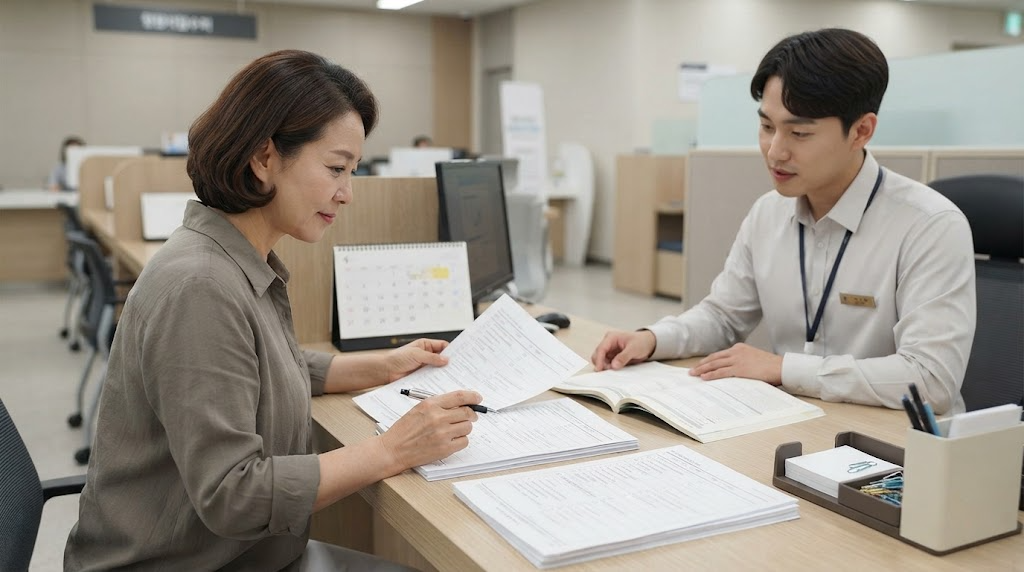
Unlike employee subscribers affiliated with a workplace, self-employed individuals, freelancers, retirees, and daily workers are classified as “local subscribers.” Since the company does not handle qualification management or insurance premium payments on your behalf, if you do not personally look after the benefits of the system, you may miss precious health screening opportunities or suffer unexpected disadvantages.
For local subscribers, we outline the health screening eligibility criteria and insurance premium management core guides that you must know.
- Health Screening Eligibility Criteria for Local Subscribers
Health screenings for local subscribers are fairly selected based on household units and age.
General health screening eligible persons:
Householders and household members aged 20 or older: Unlike employee subscribers, not only the householder but also all household members aged 20 or older (upon meeting age criteria such as 20–64 and birth year conditions) become eligible for general health screenings every 2 years (depending on whether they were born in even or odd years).
Example: If you are a householder or household member born in an even-numbered year based on 2026, you must check whether you are eligible for a health screening this year.
Check the National Health Insurance Service notice guide: You can most reliably grasp whether you fall under the targets for general health screenings and cancer screenings (stomach cancer, colorectal cancer, breast cancer, cervical cancer, etc.) this year through the targeted health screening notices sent to your address usually at the beginning of each year (around January–February) or National Health Insurance Service Kakao AlimTalk.
- Local Subscriber Health Insurance Qualification Changes and Insurance Premium Imposition System
The health insurance premiums of local subscribers are tricky because they are not assessed based on a simple monthly salary like office workers.
Comprehensive evaluation of income, property, and automobiles: Insurance premiums for local subscribers are assessed and imposed by calculating scores based on income (business income, financial income, etc.), property (housing, land, jeonse/monthly rent and owned property, etc.), and automobiles.
Imposition on a household basis: Since the property and income of all household members are aggregated and imposed on the householder, insurance premiums may fluctuate depending on changes in household members.
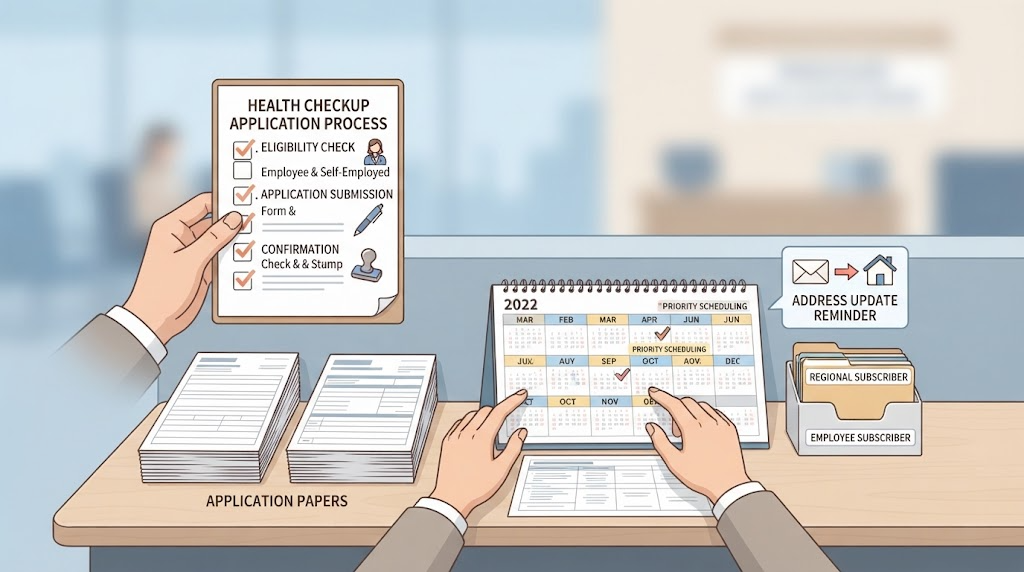
Qualification acquisition and change reporting: When your address changes due to a move, when you are automatically converted from an employee subscriber to a local subscriber after resignation, or when major changes occur in your income or property (business closure, property sale, etc.), you must actively apply for qualification changes and insurance premium adjustments to the National Health Insurance Service.
- Practical Precautions That Local Subscribers Must Take Care Of
Check mail upon address relocation: Immediately after moving, health screening notices or insurance premium bills are frequently misdelivered to the previous address, causing you to miss screening opportunities. It is recommended to keep your address and contact information up to date through Gov24 or the National Health Insurance Service app.
Advance reservation for designated screenings: Since local subscribers do not have separate group screening schedules within a workplace, it is wise to make advance reservations at designated hospitals during the first half of the year or between March and September before hospitals become crowded in the second half of the year to comfortably finish your screening.
Compared to employee subscribers, it may feel cumbersome as there are many parts you have to take care of yourself, but if you understand and utilize the system well, you can secure all benefits without omission.
Then, what is the fastest and most certain way to check what subscriber type you and your family currently belong to and whether you are eligible for a health screening this summer or this year? In the next part, we reveal a practical inquiry method that finishes in 1 minute.
Practical Method to Check Your Subscriber Type and Screening Eligibility in Just 1 Minute
This is a Naver blog post draft on the practical method to check your subscriber type and screening eligibility in just 1 minute. We have organized it step-by-step and easy to understand so that anyone can follow along directly with their smartphone and check within 1 minute.
Earlier, we looked at the differences between employee subscribers and local subscribers and their respective screening criteria. Then, what is the fastest and most reliable way to check, “What type do I and my family belong to right now, and are we eligible for a checkup this year?”
Without needing to turn on a PC and look for a public certificate, we guide you through a practical method to check in just 1 minute using your smartphone.
Step 1: Launch the National Health Insurance Service Official App (‘The Health Insurance’)
First of all, launch the National Health Insurance Service official app (The Health Insurance) installed on your smartphone.
If you don’t have the app yet, search for ‘The Health Insurance’ on the Google Play Store (Android) or App Store (iPhone) and download it for free.
When you open the app, without complex membership registration procedures, you can log in safely in 1 second using simple authentication that you frequently use in daily life (Kakao, Naver, Toss, PASS, etc.) or biometric authentication such as fingerprints and faces.
Step 2: Check Your Health Insurance Subscriber Type (Qualification)
Immediately after logging in, if you go to the main screen or My Page, you can immediately grasp your current health insurance qualification status.
- Access the qualification status inquiry menu: Touch the quick menu or the ‘My Health Insurance’ / ‘Qualification Inquiry’ tab on the main screen.
- Check subscriber type: It is clearly displayed on the screen whether you are currently an ’employee subscriber’, a ‘local subscriber’, or registered as a ‘dependent’ of an employee subscriber.
- Check change history: If you have recently changed jobs or had changes in your household composition, you can review at a glance here whether your qualification status is properly reflected.
Step 3: Instantly Check This Year’s Health Screening Eligibility and Items
Once you have checked your subscriber type, it is time to immediately check whether you are eligible for the health screening you should receive this year.
- Select the ‘Health Screening Eligibility Inquiry’ menu: Touch the [Health Screening Eligibility Inquiry] item from the health management or screening menu on the home screen.
- Check this year’s screening eligibility: Based on your resident registration number, it immediately appears on the screen whether you are eligible for a general health checkup this year, or eligible for specific cancer screenings such as oral checkups or stomach, colorectal, or breast cancer screenings.
- Link to finding designated screening institutions: If you are confirmed as eligible, you can look up the location of nearby designated hospitals (screening institutions) linked at the bottom along with a map, making it easy to call for reservations or schedule appointments right away.
Through the mobile app, all of this process is simple enough that it takes less than 1 minute. If you accurately understand the screening items you need to take care of according to your subscriber type, wouldn’t you be able to prevent wandering around looking for a hospital during the busy year-end in advance?
Now, let’s wrap up by neatly organizing today’s content.

Conclusion: Customized Checking by Subscriber Type Without Missing Any Benefits!
This is a Naver blog post draft on Conclusion: Customized Checking by Subscriber Type Without Missing Any Benefits! It has been written to warmly wrap up the post and encourage readers’ practical actions.
So far, we have explored together from the clear differences between employee subscribers and local subscribers, to their respective health screening eligibility criteria, and practical methods to check your qualification and eligibility status in just 1 minute through a smartphone app.
The health insurance premiums we pay every month and the national health screenings that come around periodically are precious rights and benefits that citizens should enjoy without omission. However, since the way of utilizing the system differs subtly depending on whether you are an employee subscriber, a local subscriber, or a dependent, if you pass by carelessly, you might miss precious screening opportunities or experience unnecessary hassle.
Wondering if you are eligible for a health checkup this year? Turn on the National Health Insurance Service app right now and check your qualification status and screening eligibility.
Moved or changed jobs? Carefully check whether your address change or qualification change details have been properly reflected in the Corporation.
Small interest and checking gather to protect the healthy and solid daily life of you and your family. This weekend, how about lightly checking your health schedule that you’ve been putting off?
We hope the content prepared today has been a small help to your convenient and healthy daily life. If you have any questions, please feel free to leave a comment anytime. Thank you!
Korean version: 한국어로 읽기