
Introduction: How Does Changing the Householder Affect Health Insurance Premiums and Status?
Due to moving, forming a separate household, or changes in family members, changing the householder on the resident registration is something we frequently encounter in life. It is easy to brush it off, thinking, “Changing the householder is just a simple administrative procedure on the resident registration, so surely nothing will change regarding health insurance?”
However, starting with the conclusion, changing the householder is an important variable that has a very direct and decisive impact on the health insurance premium imposition system and the maintenance of dependent status.
South Korea’s health insurance applies completely different criteria for calculating premiums depending on the type of subscriber (local subscriber or employee subscriber). Especially in the case of local subscribers, the property and income of all household members forming a single household on the resident registration are added together to calculate the tax base. Therefore, when a ‘householder change’ occurs, such as households merging or separating, an unexpected health insurance premium bomb may hit, or the precious dependent status that was difficult to maintain could be instantly lost.
Then, how do the health insurance premiums for local and employee subscribers specifically change when the householder changes, and what critical variables affect dependent status? From now on, let’s examine the core issues and response tips that must be known when changing the householder, one by one in detail.
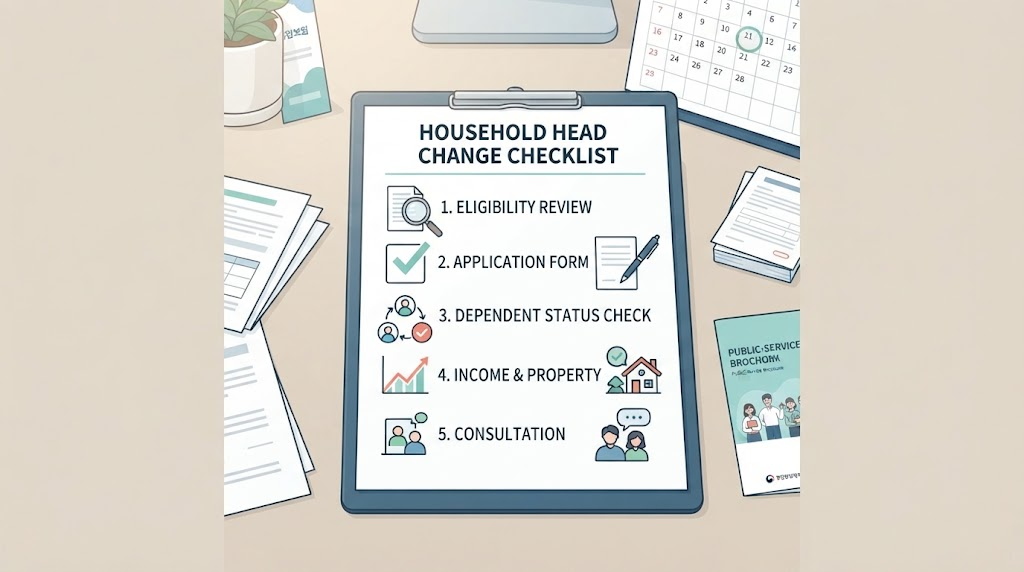
The Impact of Householder Changes on Health Insurance Premiums (Local Subscribers vs. Employee Subscribers)
The act of changing the householder is not a light matter of simply changing a name on the resident registration copy. Since South Korea applies completely different methods of imposing health insurance premiums depending on the subscriber type, when the householder changes due to household separation or merging, the health insurance premium amount can noticeably change.
Let’s clearly compare the premium imposition principles according to householder changes for local subscribers and employee subscribers respectively.
- Local Subscriber Households: Major Fluctuations Due to ‘Household-Level Aggregation’ of Property and Income
Health insurance premiums for local subscribers are not assessed individually; instead, they are calculated by aggregating all income and property (real estate, vehicles, etc.) of all household members forming a single household on the resident registration.
When merging households and changing the householder: For example, if a child with income or property joins a parent’s household, or if the number of household members increases due to a change in the householder, the property and income of those household members are fully reflected in the aggregated tax base. As a result, the health insurance premium assessment score of the entire household increases, which can cause health insurance premiums to suddenly rise.
When separating households: Conversely, if you separate your household by becoming independent from a householder with substantial property, your premiums may decrease compared to before depending on the separated householder’s financial situation. However, if you become a single-person householder without any income or property, minimum premium criteria may apply, or you could encounter unexpected calculation standards.
- Employee Subscriber Households: Assessment Based on the Individual and the Linkage of Dependent Status
Health insurance premiums for employee subscribers do not aggregate the property of all household members; they are calculated based solely on the employee subscriber’s own ‘monthly remuneration income’ and ‘monthly income amount’.
Independent premium calculation: Therefore, regardless of whether the employee subscriber is the householder or a member of another household member’s household, as long as the employee subscriber’s earned income does not change, changing the householder does not directly change the employee subscriber’s own health insurance health insurance premium.
Close correlation with dependent status: However, from the perspective of a ‘dependent’ belonging to an employee subscriber’s household, changing the householder is a very sensitive issue. If households are separated or members change during the householder change process, it affects the property tax tax base or aggregated income criteria reflected during the dependent status screening, which can become a decisive reason for losing dependent status.
💡 Checkpoint
Depending on whether you are a ‘local subscriber’ or an ’employee subscriber’, the impact of a householder change is completely different. In particular, if you are a local subscriber household, the property and income of household members are immediately reflected in health insurance premiums when combining or splitting households, so you must carefully check the expected premiums in advance before making changes.

3 Critical Variables That Occur in ‘Dependent Status’ When Changing the Householder
Administrative changes such as changing the householder, separating households, or merging households go beyond a simple movement on the resident registration and can deliver a decisive blow to the health insurance dependent status. Since the National Health Insurance Service conducts real-time screening of income and property changes every year through the National Tax Service and local tax computer networks, the following 3 critical variables may occur during the householder change process.
- Re-application of Property Tax Tax Base Standards (Risk of Exceeding 540 Million Won and 900 Million Won)
To maintain health insurance dependent status, strict property criteria must be met simultaneously along with income criteria.
Property tax base between 540 million won and 900 million won: If the sum of the property tax tax bases of the household to which you (or your dependent) belong exceeds 540 million won due to a householder change or household separation, and your annual combined income exceeds 10 million won, you will immediately lose your dependent status.
Property tax base exceeding 900 million won: If the total property tax tax base within the household exceeds 900 million won, your dependent status will be unconditionally revoked even if you have no income at all or 10 million won or less. For this reason, special care must be taken to ensure that the tax base criteria are not exceeded when combining households with family members who own property or when changing the householder.
- Individual Screening and Disqualification of Income and Property Requirements When Forming an Independent Household
When parents and children live together and then separate their households to become individual single-person householders, major changes occur in dependent status.
Re-evaluation of income criteria: Aspects that were previously advantageous due to household aggregation are evaluated independently due to household separation, and if either the dependent or the supporter exceeds the annual combined income criterion of 20 million won, their status may be revoked.
Fulfillment of housing type and support requirements: During the process of separating households, if the residence on the resident registration becomes completely different or the substantiality of the support relationship is not proven, there is a high risk of being excluded from the employee subscriber’s dependents due to failing to meet the dependent recognition criteria during the corporation’s screening process.
- Conflict with Strict Additional Requirements When Maintaining Sibling Dependent Status
If a sibling of an employee subscriber is registered as a dependent, changing the householder acts as the most critical variable.
Strengthened property and income criteria for siblings: Very strict criteria apply for siblings to become dependents, such as the sum of property tax tax bases being 300 million won or less.
Conflict during householder changes: At this time, if the composition of household members on the resident registration changes due to a householder change or household merging, cases frequently occur where they violate the strengthened property and income criteria for siblings during the corporation’s ex officio screening process, instantly losing their dependent status and being converted to local subscribers.
💡 Checkpoint
If you plan to change the householder or split households, you must simulate in advance whether our household’s total property tax tax base and the annual combined income of all household members exceed the corporation’s dependent criteria (income of 20 million won or less, property tax base of 540 million won or less, etc.) after the change.
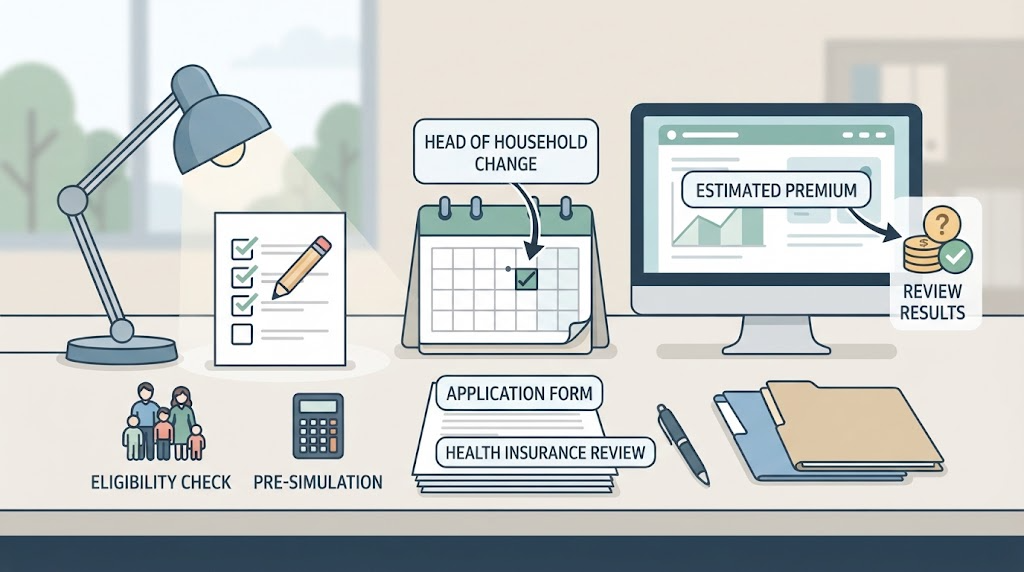
Pre- and Post-Checklist & Coping Strategies to Verify Before and After Changing the Householder
Changing the householder looks like a simple administrative procedure on the resident registration, but it is a major issue that causes direct ripples in the health insurance premium imposition system and dependent status. Therefore, if you are about to change the householder due to moving, separating households, or merging households, or if you have already completed the change, you must familiarize yourself with the checklist and coping strategies that must be implemented to prevent unnecessary health insurance premium bombs or revocation of status.
- Pre-Inquiry with the Corporation and Advance Simulation of Expected Premiums
If you are planning to change the householder or separate households, you must check the expected changes in advance through the National Health Insurance Service before executing them.
Utilizing the ‘The Health Insurance’ App: Accurately understand the current health insurance premiums and dependent registration status according to the current household member composition through the official smartphone app.
Inquiring with the Customer Center in Advance: It is safest to contact the National Health Insurance Service Customer Center (1577-1000) and specifically request a simulation or guidance on “what changes will occur to local subscriber premiums or dependent status if the householder is changed or households are separated.”
- Strategy for Controlling the Timing and Schedule of Household Changes
Strategically coordinating the timing of income and property fluctuations and the householder change timing can prevent unnecessary expenditures.
Considering the Taxation Base Date: By understanding the recalculation timing of health insurance premiums according to changes in property tax tax bases or income amounts, flexibly adjusting the timing of household separation or merging can defend against sharp premium increases.
Preparing to Prove Substantial Support Relationships: Even if you separate households to maintain dependent status, you must prepare documents in advance that can prove you are actually living together or providing support (such as an explanation for separate residences) to prepare for the corporation’s ex officio disqualification measures.
- Utilizing the ‘Voluntary Continuous Coverage System’ Upon Conversion to a Local Subscriber
If you suddenly lose your employee subscriber dependent status due to a householder change or separation, are converted to a local subscriber, and receive a health insurance premium bill so high that it is hard to bear, you must actively utilize the relief system supported by the state.
What is the Voluntary Continuous Coverage System?: A system that allows you to maintain and pay at the average premium level you paid while at your previous workplace for up to 36 months (3 years) instead of local insurance premiums when health insurance premiums become much higher after converting to a local subscriber than when you were working.
Application Deadline: You must visit a National Health Insurance Service branch or apply by phone within ‘2 months from the bill payment deadline’ starting from the day you receive the first local subscriber premium bill in order to receive the benefits, so you must be careful not to miss the timing.
💡 Checkpoint
There is a huge difference between ‘knowing and preparing for’ and ‘being caught unaware by’ changing the householder. Based on the advance checklist provided today, please thoroughly inspect the risks before and after the change, and wisely protect your precious assets from unexpected health insurance premium burdens.

Conclusion: Preventing Health Insurance Premium Bombs through Thorough Advance Checks Before Changing the Householder
So far, we have examined in detail the impact of householder changes on the health insurance premium imposition system for local and employee subscribers, the 3 major variables that deal a critical blow to dependent status during household separation and merging (property tax base criteria, income criteria, sibling requirements), practical coping strategies to prevent unnecessary health insurance premium bombs, and the voluntary continuous coverage system.
Changing the householder is not a light administrative procedure of simply changing a name listed on the resident registration copy. Depending on how your household’s property and income are bundled and evaluated, the health insurance premium, which is a fixed monthly expense, can differ by hundreds of thousands of won or more, and it can also cause the precious dependent status that was difficult to maintain to be revoked in an instant. Wisdom is required to accurately understand the institutional standards and go through advance simulations so that you do not get flustered by a bomb bill arriving out of nowhere while being careless and thinking, “Surely health insurance premiums won’t change drastically just from moving or separating households?”
Please engrave the core points of today’s content in your heart once again.
📝 Essential Checklist & Core Summary Before and After Changing the Householder
- Understand the Impact by Subscription Type: Bear in mind that local subscribers’ income and property of all household members are aggregated and taxed, so the fluctuation range of premiums is large when changing the householder. For employee subscriber dependents, thoroughly check whether they violate the property tax tax base (exceeding 540 million won and 900 million won) and income criteria (20 million won per year) when separating households.
- Advance Inquiry with the Corporation Before Changes: Before executing changes, simulate expected premiums and status changes in advance through the ‘The Health Insurance’ app or the National Health Insurance Customer Center (1577-1000).
- Utilize Relief Systems and Timing: If you are converted to a local subscriber due to a household change and hit with an excessive health insurance premium bomb, actively apply for the ‘Voluntary Continuous Coverage System’ within the deadline (within 2 months from the payment deadline of the first bill) which maintains the previous workplace insurance premium for up to 36 months.
When changing the householder due to changes in family living environments or administrative necessities, a little bit of interest and thorough advance checks are the surest shields to prevent unnecessary economic expenditures. Based on the guide provided today, we hope you prepare perfectly for change risks and safely protect your precious household finances and health insurance status.
Korean version: 한국어로 읽기