Introduction: The Annual Health Screening, Am I a Target This Year?
Every year around the end or the beginning of the year, health screening guide mailings or notification text messages arrive without fail, and everyone has probably received them at least once. It is easy to brush it off lightly thinking, “Am I a screening target this year?”, or “Since I got it last time, don’t I skip it this year?”, but health screenings are the most certain and fundamental way to detect and prevent diseases early.
In particular, general health screenings and cancer screenings implemented by the state are precious benefits that National Health Insurance subscribers can receive with almost no financial burden or for free. However, targets change every year depending on the birth year, and screening items are also carefully divided by age and gender, so there are many cases where people are confused about exactly what tests they need to get and by when.
In addition, when you actually try to schedule a screening, practical questions and concerns naturally arise, such as “From what time the day before the screening should I fast?”, and “What is the difference in fasting times between morning and afternoon exams?” If you fail to properly follow the fasting time or do not understand the precautions in advance, you may not receive the examination properly on the day and make a wasted trip, or errors may occur in the test results, creating the hassle of having to retake the test.
Then, how can you easily and quickly check whether you are a target for a health screening this year, and exactly how should you follow the fasting times for morning and afternoon exams for a successful screening? Let’s take a detailed look one by one from now on.
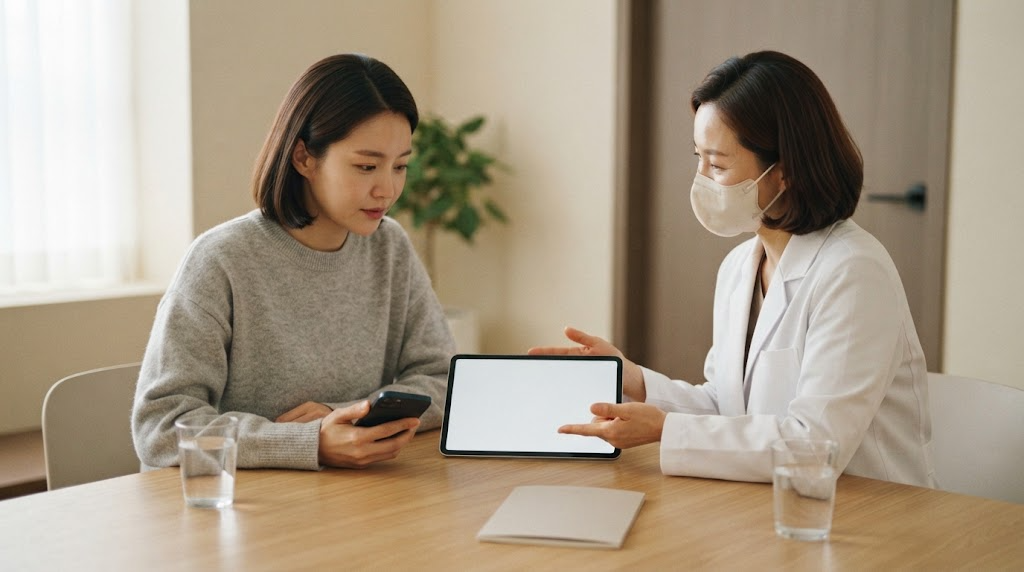
Complete Guide on How to ‘Check Health Screening Eligibility’ in Just 1 Minute
Before receiving a health screening supported by the state, the very first thing you need to check is whether “I am indeed a screening target this year.” Since health screenings provided by the National Health Insurance are designated based on the birth year (odd or even years), checking in advance is essential.
We will explain how to perfectly check whether you are a health screening target in just 1 minute using a smartphone or PC, divided into 3 paths.
- Using the Mobile App (The Health Insurance App) — The Easiest Method
This is the easiest and fastest way to check anytime, anywhere as long as you have a smartphone.
App Installation and Login: Download and launch the official ‘The Health Insurance’ app from your smartphone app store, then log in using simple authentication (financial certificate, joint certificate, etc.).
Menu Navigation: Select the [Health Screening] ➔ [Health Screening Eligibility Inquiry] (or Check Screening Eligibility) menu from the home screen or the full menu.
Result Verification: You can see at a glance whether you are a target for this year’s general health screening along with whether you are a target for cancer screenings (stomach cancer, colorectal cancer, liver cancer, breast cancer, cervical cancer, etc.).
- Using the PC Homepage (Official National Health Insurance Homepage)
This is a useful method when you want to carefully check target items on a larger screen.
Homepage Access and Login: Access the official National Health Insurance homepage (nhis.or.kr), click the login button at the top, and log in with a certificate.
Inquiry Path: Click in order of [Civil Petitions Here] ➔ [Health Screening] ➔ [Health Screening Eligibility Inquiry] among the top menus.
Detailed History Check: You can check not only your screening eligibility for this year, but also the results history of health screenings you received in past years, making it very useful.
- Inquiring by Phone with the National Health Insurance Customer Center
This is the most certain and convenient method if you are not accustomed to using the internet or smartphones.
Customer Center Connection: Call the National Health Insurance Service Customer Center (1577-1000).
Guidance after Identity Verification: After undergoing identity verification ([RRN Redacted], etc.) with the counselor, you can immediately receive guidance on whether you are a target for this year’s general health screening and cancer screening.
💡 Tips for Checking This Year’s (2026) Screening Targets
Based on Birth Year: Basically, for general health screenings, those born in odd-numbered years are targets in odd-numbered years, and those born in even-numbered years are targets in even-numbered years. (※ Office workers are targets every year, and non-office workers are targets once every 2 years)
Regardless of Receipt of Screening Form: Even if you have not yet received or have lost the screening guide mail, if you are confirmed as a target through the inquiry method guided above, you can receive examinations at any designated screening institution.
💡 Checkpoint
Once you have finished checking your eligibility, the next step is to check ‘Fasting Time’ to obtain accurate results on the day of the screening. Since the fasting method differs depending on whether it is a morning or afternoon exam, please pay close attention to the following content.
[The Secret of Fasting Time] Why Should We Fast Before a Health Screening?
The guidance you hear until you are tired of it from the hospital when scheduling a health screening is “You must fast from the evening of the day before the screening.” Occasionally, there are people who take it lightly, thinking, “Is it really not even okay to drink a sip of water?”, or “Can’t I skip breakfast because I’m busy and go at lunch?”, but fasting before a screening has very scientific and important reasons.
Then, let’s look into the secrets of why we must maintain a fasting state for an accurate health screening, and what happens inside our bodies.
- Accurate Measurement of Blood Sugar and Triglyceride Levels
When we consume food, it goes through the digestion process, is broken down into glucose, and absorbed into the blood, and fat components also directly affect blood levels.
Blood Sugar Test: Immediately after eating food, blood sugar levels rise sharply. If you take the test without fasting, your blood sugar may temporarily appear high even though you do not have diabetes, resulting in a suspected diabetes judgment. To measure accurate fasting blood sugar and determine the presence of diabetes, fasting for at least 8 hours is essential.
Hyperlipidemia (Dyslipidemia) Test: Cholesterol and triglyceride levels are among the items most sensitive to food intake. In particular, if you get tested after eating a meal containing fat, fat particles (chylomicrons) float in the blood, making the serum turbid and white (lipemic serum), and triglyceride levels are measured ridiculously higher than actual levels, hindering accurate diagnosis.
- Securing a Clear View Inside the Gastrointestinal Tract (Gastric Endoscopy, etc.)
If you have a gastric endoscopy or an abdominal ultrasound test coming up, fasting is truly an ‘absolute rule’.
Gastric Endoscopy: If food residue remains inside the stomach, it blocks the endoscope lens, making it impossible to accurately observe minute lesions, polyps, early gastric cancer, etc., of the gastric mucosa. In addition, the risk of safety accidents caused by vomiting or aspiration of foreign substances during the test increases.
Abdominal Ultrasound: If you eat food or water, your stomach and intestines expand and fill with gas, covering major organs located behind them such as the liver, gallbladder, pancreas, and kidneys, making it difficult to obtain accurate ultrasound images.
💡 Checkpoint
Fasting is not simply “time enduring hunger,” but a process of creating the most perfect baseline (reference point) to transparently peer into your body’s true health condition without errors. Then, how should fasting times change according to reservation times? In the next chapter, we will compare in detail the differences between morning and afternoon exams.
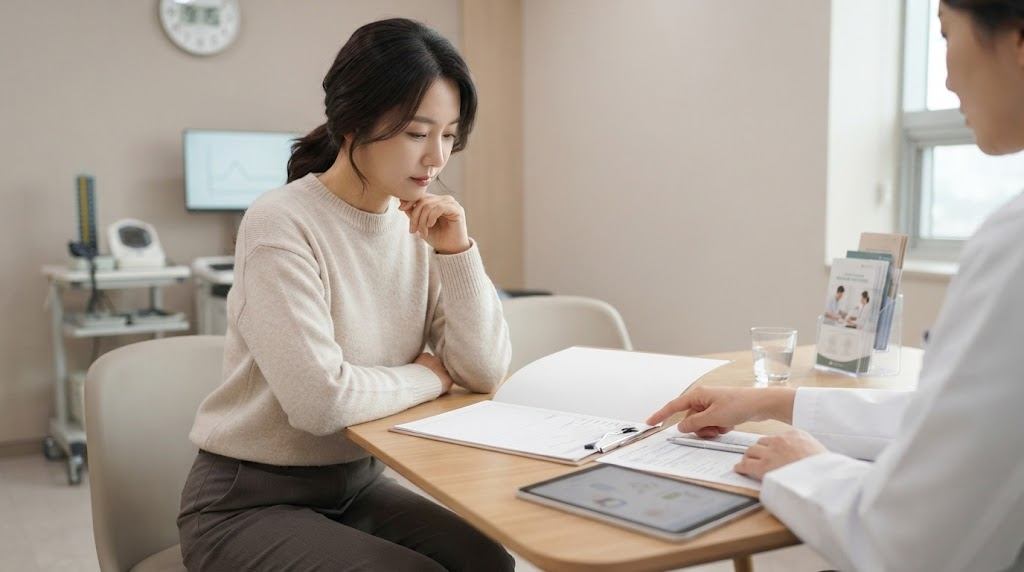
Morning Exam vs. Afternoon Exam: Differences in Fasting Time and Preparation Requirements
When booking a health screening, the part that office workers worry about the most is whether to “choose a morning exam or an afternoon exam.” It might seem like you can just choose a convenient time to match your schedule, but depending on the reservation time for the screening, there are clear differences in the time you must fast and the preparation process.
We will compare the specific fasting time calculation methods and the pros and cons of each for morning and afternoon exams.
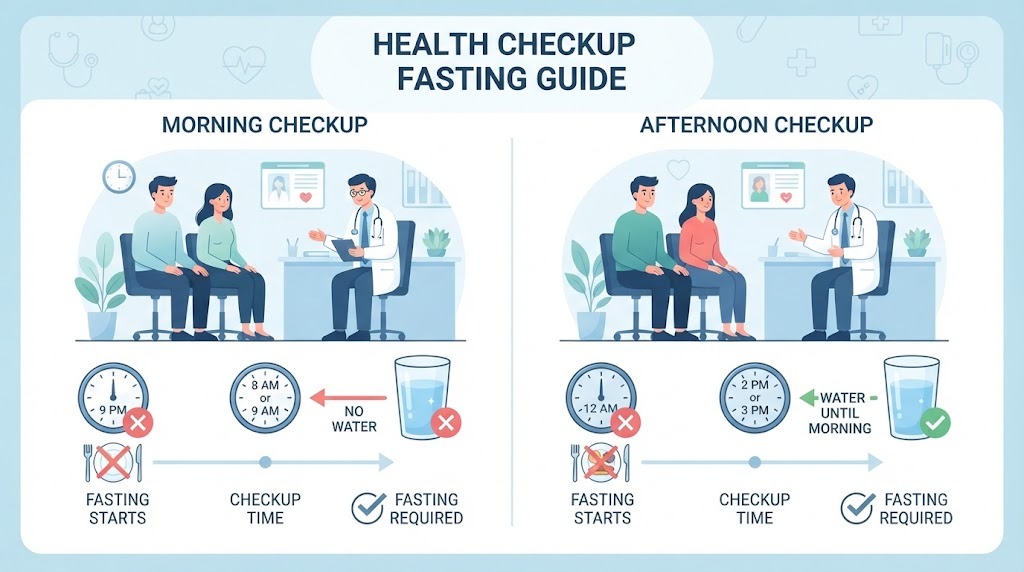
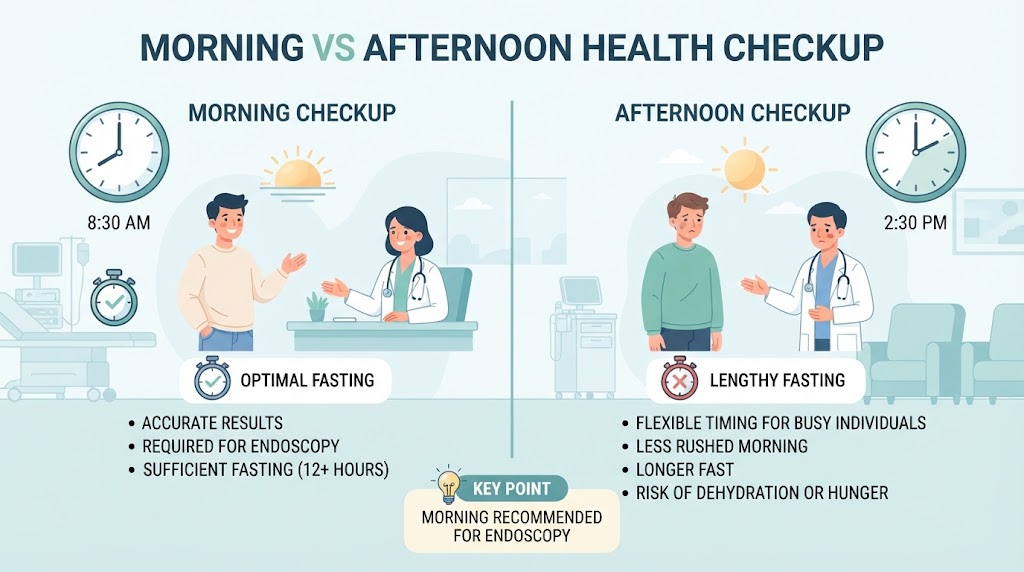
- For Morning Exams: The Standard Method of Fasting from the Evening of the Day Before
This is the most traditional screening method chosen by many people. It is the easiest to maintain a fasting state based on your body’s rhythm.
- Fasting Start Time: Completely prohibit the intake of all foods, including water, from 9:00 PM (or 10:00 PM) on the evening before the screening.
- Fasting Maintenance Time: Since you generally maintain a sufficient fasting state of 12 hours or more, the accuracy of blood test results (blood sugar, cholesterol, etc.) and gastric endoscopy results is the highest.
- Recommended for: Those planning a comprehensive health screening including gastric endoscopy or sleep endoscopy, or those who find it relatively easy to get through the morning hours on an empty stomach.
- For Afternoon Exams: Breakfast Status on the Day and Fasting Time Calculation Method
This is a method mainly chosen by office workers or self-employed individuals who find it difficult to make time in the morning. However, you must be careful because the method for calculating fasting time is completely different from morning exams.
- Fasting Start Time: Since you must maintain a fasting state of at least 8 hours or more depending on the screening reservation time, in many cases you must lightly finish a light porridge or meal on the morning of the screening (or before 7-8 AM) and then enter a fasting state from then on. (※ However, since guidance may vary by hospital—such as having to fast from midnight on the day of the screening depending on hospital guidelines or endoscopy requirements—advance confirmation is essential.)
- Fasting Maintenance Time: Rather than starving through the morning until lunch just because it’s an afternoon exam, or fasting from the previous night, it is a method of adjusting breakfast on the day. If you are also having a gastric endoscopy, many hospitals require fasting from the previous night even for an afternoon exam.
- Recommended for: Office workers who have difficulty adjusting their morning work hours, or those who want to take a health screening with a little leisure in the morning.
- Morning Exam vs. Afternoon Exam Comparison at a Glance
| Classification | Morning Exam | Afternoon Exam |
|---|---|---|
| Fasting Start | Fast from 9-10 PM the night before | Fast after a light breakfast on the day of the exam or from the night before, depending on the reservation time |
| Advantages | Highest accuracy of test results due to maintaining sufficient fasting (12 hours or more), smooth progress of essential tests such as endoscopy | Office workers who find it difficult to clear their morning work or schedules can visit relatively leisurely |
| Disadvantages | Burden of traveling early in the morning or before work because you must visit the hospital early | May induce extreme hunger or dehydration symptoms because you have to endure in a fasting state until late in the afternoon |
💡 Checkpoint
If precision digestive exams such as a gastric endoscopy or colonoscopy are included, it is advisable to choose a morning exam if possible. This is because doing an endoscopy in the afternoon can make the fasting period excessively long, leading to dehydration or hypoglycemia symptoms, and hospitals often limit endoscopy hours to the morning. In the next chapter, we will go over detailed precautions that you must never miss before your screening.
5 Precautions Easily Overlooked for a Successful Health Screening
Even if you book a health screening date and strictly follow the fasting time, there are surprisingly many cases where people fail to receive the examination properly on the day or receive a retest notice due to minor carelessness. We will carefully go over 5 precautions that we commonly overlook for a successful and accurate health screening.
- “Can I Drink Water?” — Criteria for Water Intake When Thirsty
Many people feel extreme thirst in the morning due to the fasting that started from the night before the screening.
For regular water, drinking a small amount (about half a paper cup) up to 2 to 3 hours before the screening is often not a major problem, but if you are facing a gastric endoscopy, even a sip of water is completely prohibited to secure a view inside the stomach and for safety.
Beverages containing sugar or colorants, such as coffee, tea, milk, juice, and carbonated drinks, directly cause errors in test results and must never be drunk.
- Do Not Arbitrarily Stop Medications You Are Taking (Blood Pressure Medication, Diabetes Medication, etc.)
This is the part that people taking medications for chronic diseases such as hypertension and diabetes are most confused about.
Blood Pressure Medication: The rule of thumb is to take it as usual on the morning of the screening with a small amount of water. If you go to the hospital without taking your blood pressure medication, your blood pressure may rise sharply, resulting in the cancellation of the day’s endoscopy or blood test. (However, since guidelines may vary depending on the hospital or screening items, advance inquiry is essential.)
Diabetes Medication / Insulin: Taking diabetes medication or administering insulin in a fasting state can cause a serious hypoglycemia shock, so you must never take diabetes medication on the morning of the screening, but bring it to the hospital and take it with a meal after the test.
- Foods to Avoid the Day Before Screening and Vigorous Exercise
It is best to finish dinner the night before the screening by 8:00 PM with light and easily digestible food.
Greasy Foods and Meat: Eating fatty foods such as pork belly, chicken, and jokbal affects blood triglyceride levels until the next day, distorting hyperlipidemia test results.
Drinking and Vigorous Exercise: You must abstain from alcohol at least 2 to 3 days before the screening, and intense exercise such as excessive weight training or marathons can temporarily cause liver enzyme levels (AST, ALT, CPK, etc.) to skyrocket, making them mistaken for liver disease, so it must be avoided.
- Precautions for Women’s Screenings (Menstruation Period and Pregnancy Status)
For women, accurate testing can be difficult if the screening date overlaps with their menstruation period.
Cervical Cancer Screening and Urinalysis: Since it is difficult to obtain accurate results from vaginal cell collection and urinalysis (hematuria test, etc.) during menstruation, it is safe to receive the screening 2 to 3 days after menstruation has completely ended.
Pregnancy Possibility: Radiation tests such as X-rays (chest scans), CT scans, and mammograms can have a fatal impact on the fetus, so if you are pregnant or there is even a slight possibility of pregnancy, you must inform the medical staff in advance before the screening so that the relevant tests can be safely excluded or postponed.
- Caution Regarding Smoking, Chewing Gum, and Minor Habits
No Smoking: Smoking contracts the gastrointestinal tract due to nicotine and affects respiratory and blood pressure readings. In particular, smoking on the morning of the screening has a negative impact on gastric endoscopy or pulmonary function tests, so it is strictly prohibited.
Gum, Candy, and Eundan: There are some people who chew gum thinking, “I haven’t eaten food, so a piece of gum should be fine,” but the act of chewing gum itself secretes digestive juices and stomach acid, interfering with gastrointestinal examinations, and absorbed sugar can cause errors in blood test results.
💡 Checkpoint
A health screening is a precious opportunity to accurately diagnose your body’s health condition. Since a single minor habit can change the entire test result, please thoroughly familiarize yourself with the precautions shared today and safely complete your screening in perfect condition.
Conclusion: Taking Good Care of My Health Through Advance Preparation for Health Screenings
So far, starting from how to check this year’s health screening eligibility, we have examined in detail the importance of fasting time that must be known before the screening, the differences between morning and afternoon exams, and 5 easily overlooked precautions.
A health screening is not simply a troublesome annual routine event mandatory at the hospital, but the most certain shield to early detect and protect against abnormal signs in your body that progress invisibly. However, no matter how good the screening program is, if you omit checking eligibility, fail to follow fasting times, or do not properly understand medications or precautions, you will not get accurate results, leading to wasted trips or unnecessary retests, thus wasting precious time and effort.
Please engrave just the core points of today’s content in your heart once again.
📝 Core Summary for a Successful Health Screening
- Essential Advance Eligibility Check: Check in advance whether you are a target for this year’s general health screening and cancer screenings through the ‘The Health Insurance’ app or the National Health Insurance homepage.
- Strict Adherence to Fasting Time: Accurately calculate whether to eat breakfast on the day and the fasting time according to your reservation time—from 9 to 10 PM the night before for morning exams—to increase the accuracy of gastrointestinal and blood tests.
- Familiarize with Detailed Precautions: Carefully look after even minor habits, such as water intake criteria, whether to take blood pressure medication, abstaining from alcohol and vigorous exercise, and prohibiting smoking and chewing gum, to approach your screening in perfect condition.
There is no wiser health management method than listening to the minor signals your body sends and preparing in advance through regular screenings. Through the guide provided today and thorough advance preparation, I hope you successfully complete your health screening for this year and protect a vibrant and healthy daily life.
Korean version: 한국어로 읽기